NEW YORK (AP) — The central character of Beth de Araújo’s shattering film “Josephine” is an 8-year-old girl modeled on Araújo as a child. While walking in San Francisco’s Golden Gate Park, she and her father interrupt a rape, an experience that has taken Araújo much of her life to process.
But one of Araújo’s biggest influences, when turning autobiography into drama, was Travis Bickle of “Taxi Driver.”
“It’s so complicated because you see the world through his eyes,” Araújo says. “The world is dark and dangerous, and there’s some really horrible people in it. He’s like, ‘Well, I’m going to do something about it.’ You’re like, ‘But the darkness has taken over you. You can’t be the vigilante you want to be.’ ”
In “Josephine,” which opened in theaters Friday, point of view plays a big role. Starring Mason Reeves as the 8-year-old protagonist and with Channing Tatum and Gemma Chan as her parents, the film is largely told from Josephine’s perspective. After her glimpse of a grim adult world, we watch her struggle so much so that she, like Travis Bickle, is nearly overtaken by darkness.
But that’s not what happens to Josephine, and it wasn’t what happened to Araújo. She became a filmmaker instead.
“There is a way to find true resilience,” Araújo said in a recent interview. “It's in the way — how do I say this — I've become an artist. For me, the ‘Taxi Driver’ ending isn't true. At one point, the incident did almost completely overturn me. But it didn’t.”
It has taken time for Araújo, 41, to get to this point. Her memory of the incident was only triggered in adulthood. In 2014, she recounted her experience in a “Moth” talk. For a time, Araújo also volunteered for a rape and battering hotline in Los Angeles. Eventually, she, in a fit of catharsis, poured out what she calls “a vomit draft” of 70 pages.
But as she developed it, “Josephine” became both about Araújo’s own story and about moving beyond it. When the film premiered earlier this year at the Sundance Film Festival, it won both the grand jury prize and the audience award.
“Josephine” is by any measure a triumph. It’s one of the most searing and memorable films of the year: an uncommonly accurate portrait of childhood and the rare film to unblinkingly confront sexual abuse. But it hasn’t been easy.
“To make this career work, to make money on your films about things that people don’t deem a moneymaker, it’s daunting. Somehow I’m suited for it,” Araújo says. “I don’t mean this in a good way. Go be happy and be a dairy farmer in Ireland. I don’t know if I wish this on people.”
Araújo has carved out an uncompromising start as a filmmaker. Her first movie, 2022’s “Soft & Quiet,” followed a female white supremacist and elementary school teacher. It caught Tatum's attention.
“Beth’s first movie was just …,” says Tatum, clapping his hands. “It was singular. I watched it and I was like: (Expletive), that is someone who made a choice.”
In “Josephine,” the parents struggle with how to talk to Josephine about what she has seen. Tatum’s father, Damien, believes in training Josephine to protect herself. Her mother, Claire (Chan), longs for more sensitivity. But they both struggle, unprepared for the sudden onset of adult horrors in their young daughter’s life, or their churning repercussions.
“When I read the script, I found myself going back and forth, at times empathizing more with Claire and other times with Damien, and other times just wanted to shake the both of them,” says Chan. “They’re two people who are just trying their best but they bring their own flaws and traumas with them, and the way they were raised.”
For Tatum, the father of a 13-year-old daughter, the connections were profound. He has learned, he says, that there is no handbook for parenthood.
“I could see a lot of my dad and a lot of myself in how to handle moments like that,” says Tatum. “I’m a mix of both of us: the uncompromising rage but also trying so very hard to be a softer person than maybe what Beth had. That exploration, I didn’t know what would come out of it. Each scene was kind of an unfolding moment.”
That includes the widely hailed performance by the nine-year-old Reeves, whom Araújo discovered at a farmers market. Given the nature of the film, efforts were made to shield her from the story’s uglier aspects. She never read the script; her mother read it aloud to her. At the Sundance premiere, she arrived midway through the movie, after the park scene. But again and again, Reeves impressed Araújo by her instincts as an actor.
“Sometimes when you’re talking to Mason, you feel like you’re talking to your grandmother. She’s ageless,” says Araújo. “The biggest difference was that she needed snacks.”
After Araújo’s experience as a child, her parents’ solution was to avoid any discussion of it. Araújo doesn’t know when children should be talked to about sexual assault. But she believes ignoring it isn't the answer.
“I will say for me, silence was really not helpful,” she says. “It left me to spiral into this dangerous imagination without some clear guidance. Some adult guidance could have been very helpful to me. I didn’t get it not for lack of love but for lack of understanding. We hope kids aren’t retaining as much as they are sometimes.”
Araújo’s experience fielding calls on the Los Angeles hotline helped her see the patterns of sexual assault. It only fueled her anger in how little public funding there is in studying rapists or in educating young men.
“We have decided that we’re OK telling young girls: ‘It’s sort of your job to keep yourself safe because no one else is going to do it. You have to not go into the woods alone. You have to not get into the Uber late at night,’” Araújo says.
“Look at the mess we’re in,” she adds, citing the lack of charges related to the Jeffrey Epstein case. “We’re telling all the little girls in the world: It is on you to keep yourself safe.”
Araújo tries to compartmentalize her reactions. She grants that “Beth, the citizen, is infuriated.” But as a filmmaker, she's not a policymaker. And making “Josephine,” and selling it, has been hard enough.
“It’s a tough space to live in. It’s an incredibly tough film to edit. I’m looking forward to challenging myself and moving on,” Araújo says. “I’m kind of ready to keep making art.”
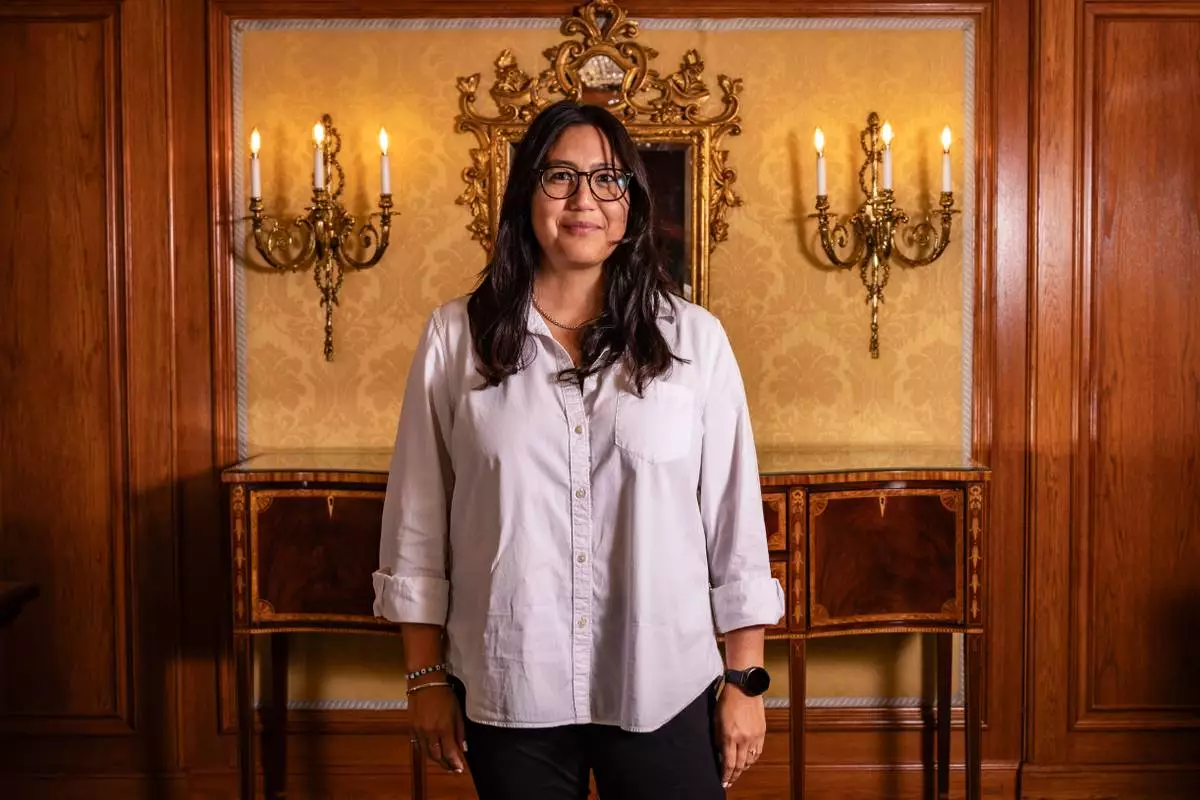
Director Beth de Araújo poses for a portrait to promote "Joesphine" during the Toronto International Film Festival on Saturday, Sept. 12, 2026, in Toronto. (Photo by Joel C Ryan/Invision/AP)
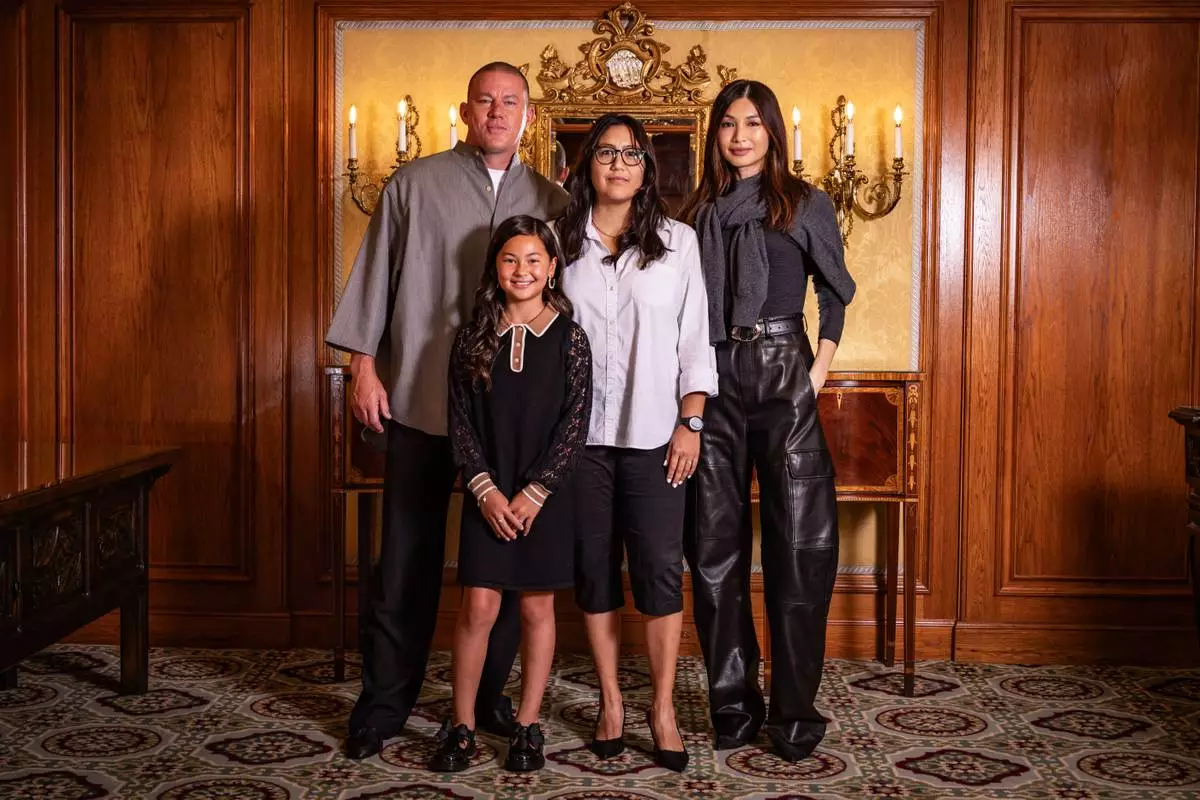
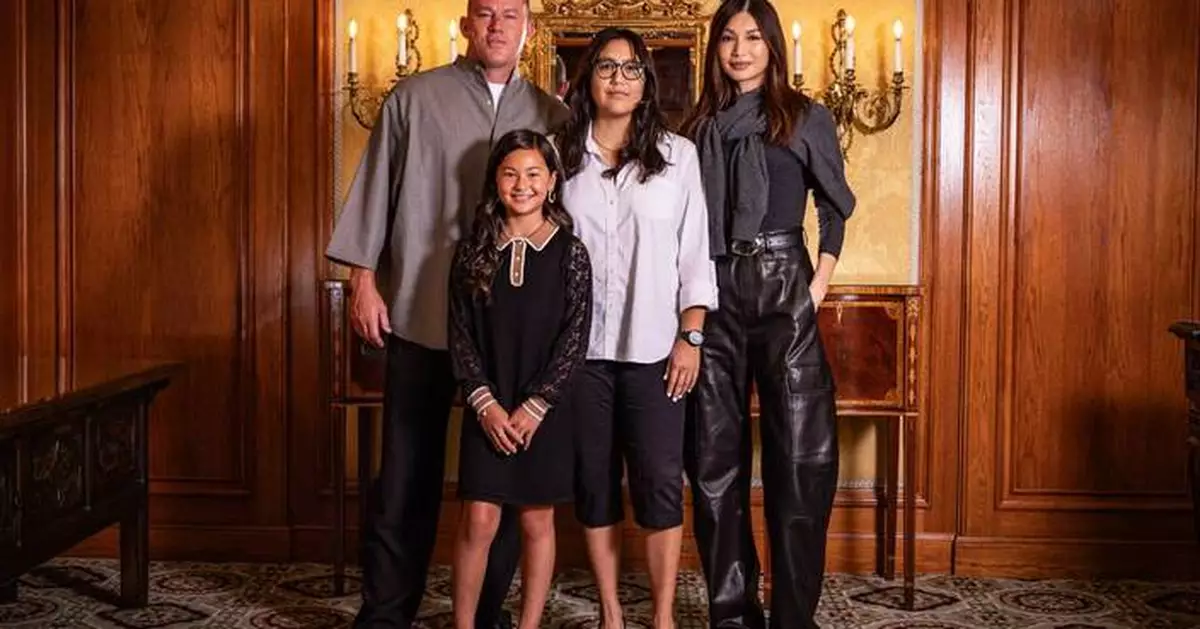
Channing Tatum, from left, Mason Reeves, director Beth de Araújo, and Gemma Chan pose for a portrait to promote "Joesphine" during the Toronto International Film Festival on Saturday, Sept. 12, 2026, in Toronto. (Photo by Joel C Ryan/Invision/AP)