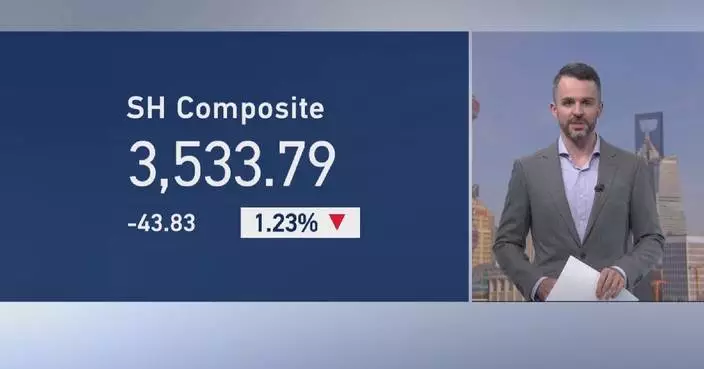
Fears over artificial intelligence (AI) financing and stretched valuations triggered a sharp sell-off in Japanese tech and chip stocks on Friday, dragging the Nikkei 225 down more than 5 percent, according to a market analyst.
After Nvidia's strong earnings and Anthropic's record-breaking IPO, investors are looking pretty confident about AI technology, but still very concerned about AI financing, and even the AI trade, said Timothy Pope, a market analyst at China Global Television Network (CGTN).
Highlighting the steepest drops in Tokyo, Pope said tech and semiconductor stocks bore the brunt of the sell-off.
"Over in Tokyo, that was where the real carnage was. The Nikkei 225 was down 5.1 percent, leaving it more than 7 percent lower for the week. The tech investor SoftBank was absolutely hammered. It fell 14 percent. And the semiconductor sector wasn't far behind. The memory chipmaker Kioxia was down12 percent, and chip-testing equipment maker Advantest down around 10 percent," said Pope.
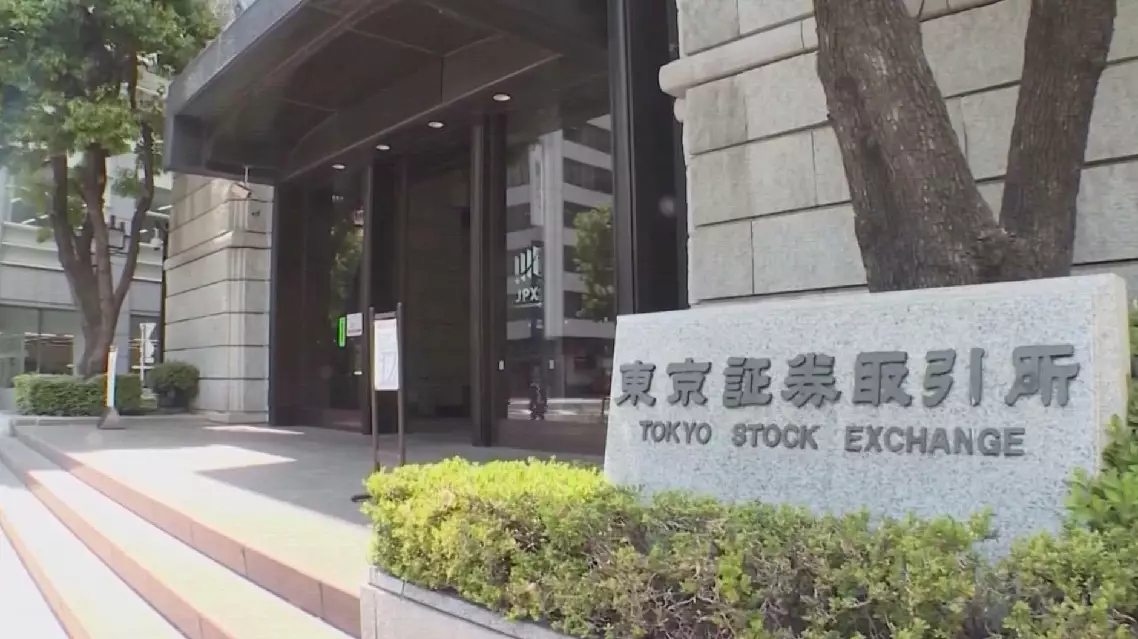
Japan's Nikkei plunges over 5 pct as AI concerns hit tech, chip stocks: analyst
The first-ever trilateral meeting among the leaders of the United States, China and Russia as well as the APEC meeting in Shenzhen City, south China's Guangdong Province carried particular significance amid global tensions and divisions, said Erik Solheim, former Norwegian Minister of Climate and Environment on Thursday.
During an interview with China Global Television (CGTN), Solheim described the trilateral meeting chaired by Chinese President Xi Jinping as highly consequential, emphasizing the importance of maintaining dialogue among countries with different political systems, cultures and economic models.
At the summit, the three leaders held an in-depth exchange of views on the current international situation and committed to maintaining strategic stability and international security.
"I think this is a very consequential meeting. Maybe the most important message is a very simple one; to normalize dialogue between different countries and mostly needed dialogue in the world. For the foreseeable future, we will have different political systems, different cultures, different religions, different economies in the world and we need to talk together, so we should normalize dialogue. There have been far too many boycotts, far too many sanctions and far too many leaders saying, 'Oh I cannot talk to this or that other leader'. So normalizing a global dialogue is an enormous success for Chinese diplomacy, and we should all applaud it," he noted.
Solheim also welcomed President Xi's call for greater economic cooperation, free trade and a more multipolar world during his speech delivered at the Asia-Pacific Economic Cooperation (APEC) CEO Summit 2026 on Wednesday, saying that avoiding protectionism is essential to sustaining global economic growth.
During his speech, titled "Forging Ahead with Resolve Toward a Bright Future for the Asia-Pacific", Xi called for building a bridge of openness and cooperation so that the region can prosper together, urging support for free and open trade and investment as well as efforts to keep global industrial and supply chains stable and smooth.
Solheim noted that the Asia-Pacific region, together with North America, remains a major engine of global growth, highlighting the importance of closer economic ties and coordinated development.
"China, of course, is the number one trade partner with nearly all nations coming together for this meeting. Pacific is the great growth engine in the world with Asia but also North America providing most of global growth. So avoiding protectionism in this era is very essential. This is somewhat in the shadows of the leaders' meetings, but China has organized something like 300 different meetings between foreign ministers, finance ministers from all these nations, with the aim of providing more trade and a common approach to economic development. So I think this is very, very important," he said.
The two-day gathering drew more than 2,000 representatives from 21 APEC economies and 13 non-APEC economies, including Britain, France, Germany and Switzerland.
Held annually since 1996, it serves as the highest-level platform for leaders of APEC economies and business representatives to compare notes and advance regional economic development.

Former Norwegian official hails APEC meeting as vital platform for global dialogue, economic cooperation