Skip to Content Facebook Feature Image

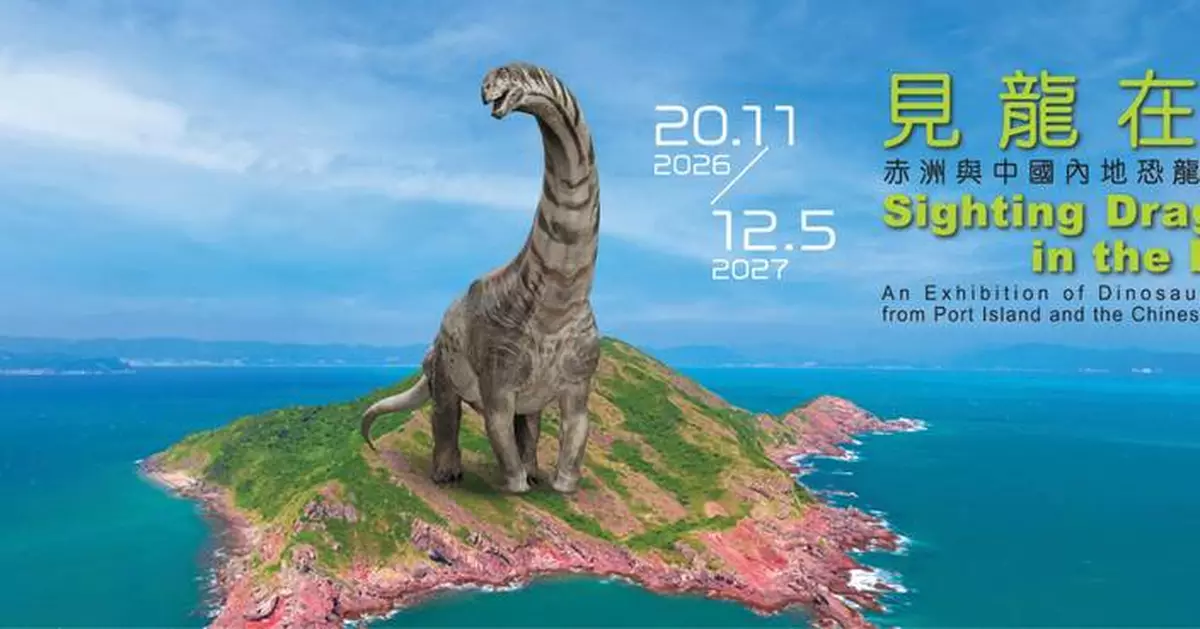
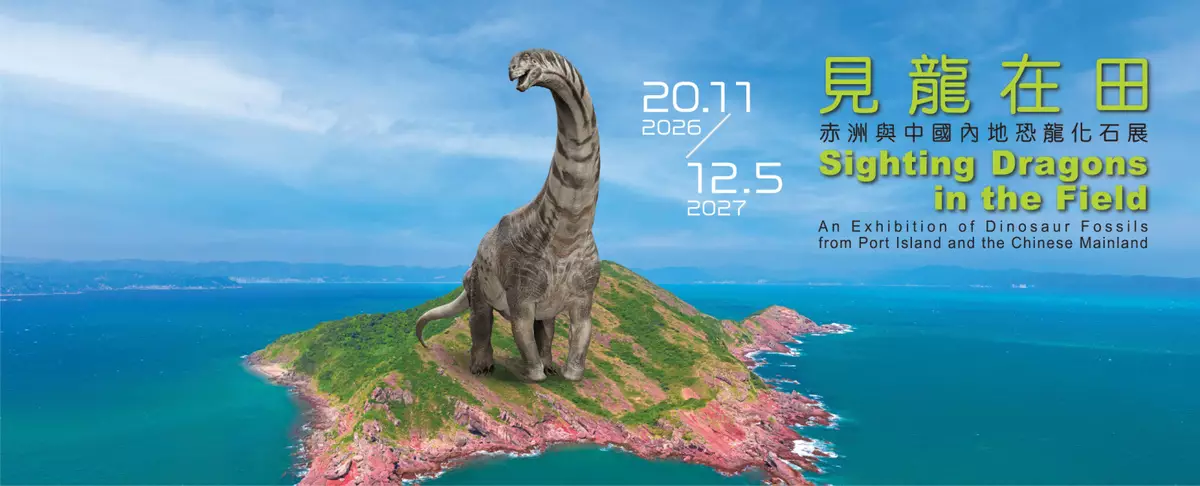
Sighting Dragons in the Field: An Exhibition of Dinosaur Fossils from Port Island and the Chinese Mainland

Asia Pacific

Sighting Dragons in the Field: An Exhibition of Dinosaur Fossils from Port Island and the Chinese Mainland
Asia Pacific

Asia Pacific

Sighting Dragons in the Field: An Exhibition of Dinosaur Fossils from Port Island and the Chinese Mainland

2026-11-20 23:53 Last Updated At:11-21 00:12

HONG KONG SAR – Media OutReach Newswire – 20 November 2026 – The opening ceremony of "Sighting Dragons in the Field: An Exhibition of Dinosaur Fossils from Port Island and the Chinese Mainland" was held today (November 19) at the Hong Kong Heritage Discovery Centre. Jointly presented by the Development Bureau (DEVB) and the Institute of Vertebrate Paleontology and Paleoanthropology (IVPP) of the Chinese Academy of Sciences, the exhibition features dinosaur fossils discovered on Port Island, unveiling the mystery of Hong Kong's giant dinosaur. It also offers a comprehensive overview of the evolution and paleoecological landscape of dinosaurs in China by showcasing fossil treasures from other parts of the Guangdong-Hong Kong-Macao Greater Bay Area (GBA) and various parts of the country.
Sighting Dragons in the Field

Sighting Dragons in the Field

Speaking at the opening ceremony, the Secretary for Development, Ms Bernadette Linn, said that excavation work for the dinosaur fossils on Port Island commenced in October 2024. With preparation and research work gradually completed, the exhibition not only marks the rare discovery of dinosaur fossils in Hong Kong for the first time, but also highlights the fossils' reflection of the prominence of the dinosaurs in their era, the history they preserved, and Hong Kong's palaeoenvironment. She expressed special gratitude to the IVPP for providing professional guidance and assistance in the excavation, preparation and research of the dinosaur fossils, as well as in exhibit selection, curation and the loan of precious fossil specimens for display. She also thanked the Natural History Museum of Guangxi, the Zhejiang Museum of Natural History and the Zhucheng Dinosaur Culture Research Center in Shandong for co-organising the exhibition and lending valuable collections. Through the curatorial team's careful planning, the exhibition brings together dinosaur fossils from different places for joint display and dialogue, telling good stories of dinosaurs.

The Director of the IVPP, Professor Xu Xing, said in the ceremony that the collaboration marks an important milestone in Hong Kong's palaeontological research. He expressed gratitude to the DEVB for its full support of the collaborative research and popular science education initiatives. Professor Xu hoped that through the exhibition, members of the public can learn about the latest research findings on the Port Island dinosaur fossils, recognise Hong Kong's unique position in the evolutionary history of dinosaurs in China and worldwide, and gain opportunities to closely engage with palaeontology to enhance their interest in and knowledge of prehistoric life.

Other officiating guests at the opening ceremony were the Permanent Secretary for Development (Works), Mr Ricky Lau; the Chairman of the Antiquities Advisory Board, Professor Desmond Hui; and the Chairman of the Advisory Committee on Built Heritage Conservation, Professor Douglas So.

The exhibition features 66 sets of invaluable exhibits, including all the dinosaur fossils unearthed on Port Island, as well as Cretaceous dinosaur fossils from other parts of the GBA and areas of the Mainland beyond Guangdong Province. Of the 46 sets of fossils from the Mainland, 34 are National Class I key protection fossils. Most of the fossils from the Mainland are on display in Hong Kong for the first time. Highlights of the exhibition include the dinosaur fossils unearthed from Port Island (several bones of which are likely from a single titanosauriform dinosaur); the Asiatyrannus xui skeleton with a complete cranium; the Banji long cranium fossil featuring a prominent bony crest and no teeth in either the upper or lower jaws; the gigantic Zhuchengtyrannus magnus jawbone fossils; elongated eggs laid by oviraptorosaurs; and dinosaur egg fossils preserved with embryos.

Supplemented by models, the exhibition illustrates the evolution of dinosaurs in China in an easy-to-understand manner. To promote palaeontology-related knowledge, the Hong Kong Heritage Discovery Centre will organise a series of public talks and diverse workshops, offering the public an in-depth understanding of palaeontological fossils and palaeoecology.

Admission to the exhibition is free. Details are as follows:

Date: November 20, 2026, to May 12, 2027
Opening hours:
Monday to Wednesday and Friday: 10am to 6pm
Saturday, Sunday and public holidays: 10am to 7pm
Closed on Thursdays (except public holidays), the first and second days of Chinese New Year
Venue: Hong Kong Heritage Discovery Centre, Kowloon Park, Haiphong Road, Tsim Sha Tsui

For details of the exhibition, related activities, and highlight videos, please visit the Antiquities and Monuments Office's website (www.amo.gov.hk/en/visitor-centre/exhibitions/heritage-discovery-centre/dinosaur-exhibition/index.html).

For event photos, please visit: https://drive.google.com/drive/folders/1AzF0o9VD-E_Dcs1xxLPgLHbbxf9AZfn2

For factsheet and exhibit photos, please visit: https://drive.google.com/drive/folders/1r_HSkQnByy_rTHx-kZtCOULN8Ti9LmZJ

Hashtag: #SightingDragonsintheField

The issuer is solely responsible for the content of this announcement.

** This press release is distributed by Media OutReach Newswire through automated distribution system, for which the client assumes full responsibility. **

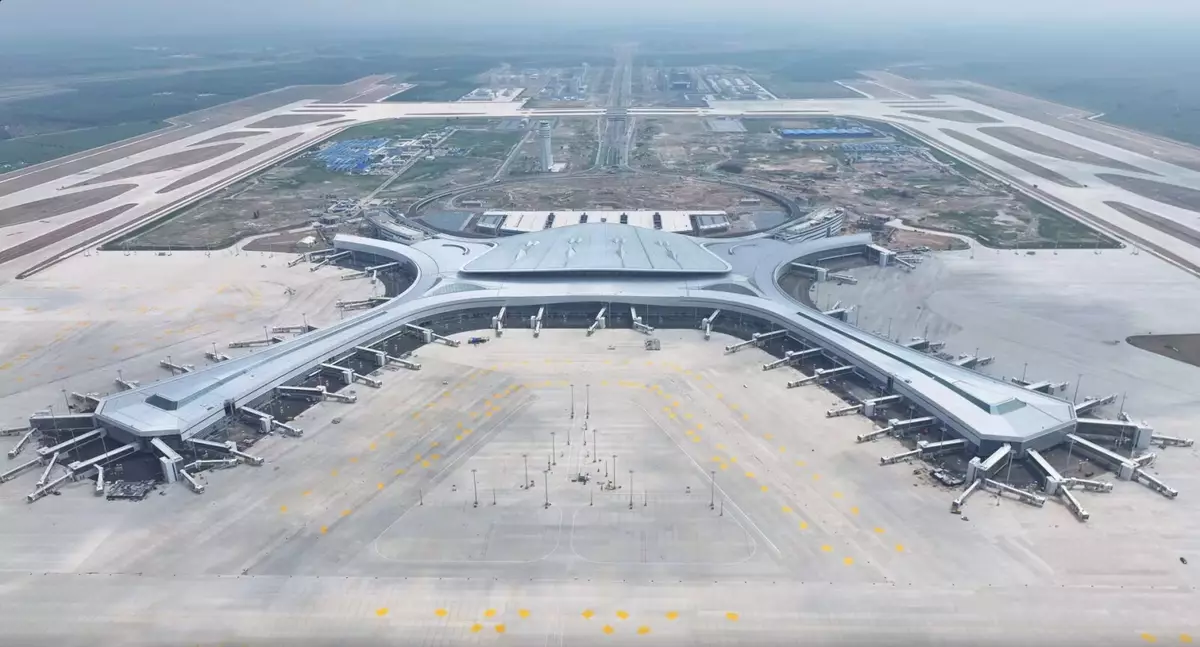
HOHHOT, CHINA – Media OutReach Newswire – 20 November 2026 – Hohhot Shengle International Airport will officially begin operations on November 26, with final preparations now under way for Inner Mongolia Autonomous Region's first 4F-class international airport. The move from Baita to Shengle represents more than a change of location: it marks a major increase in the capacity of Inner Mongolia's air links with the outside world.

The construction site of Hohhot Shengle International Airport.

The construction site of Hohhot Shengle International Airport.

As Inner Mongolia Autonomous Region's first 4F-class international airport, Shengle will replace Baita International Airport after 68 years of service. It will serve as a regional aviation hub, one of the main alternate airports for the Beijing–Tianjin–Hebei airport cluster, a national Class I air port of entry, and an important transport node for the Belt and Road Initiative.

Expanding Infrastructure and Capacity

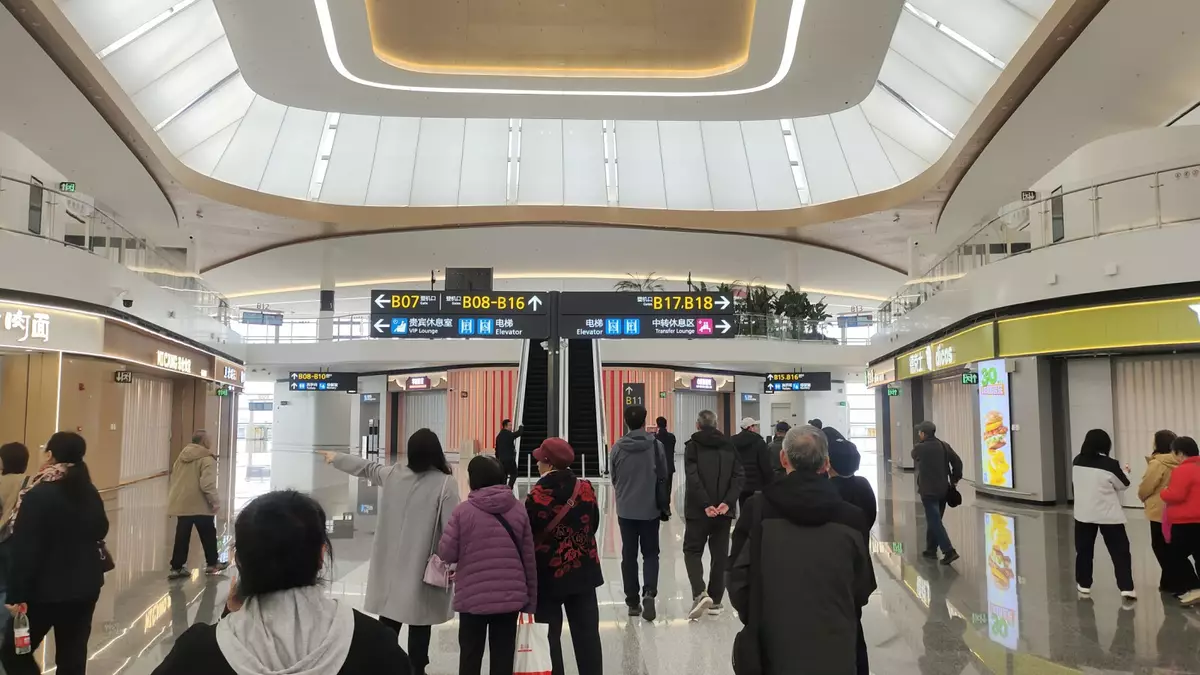
Shengle International Airport has a terminal building with a floor area of 320,000 square metres and two widely spaced parallel runways, 2,000 metres apart, that can operate independently. Its apron provides 130 aircraft stands. The airport is designed to handle 28 million passengers, 320,000 tonnes of cargo and mail, and 244,000 aircraft movements annually. In the departures hall, clearly defined areas for international departures, departures to Hong Kong, Macao and Taiwan, and international check-in islands, together with bilingual Chinese–English signage, help passengers navigate their journeys. In March 2026, the airport's port-of-entry facilities passed the autonomous region's acceptance inspection. With customs, immigration and other inspection facilities fully in place, the airport met the requirements for international operations. It will be a key hub supporting Hohhot's role as a gateway for opening up to the north, drawing together flows of people, goods, information and capital and driving the development of the airport economy.

Inside the terminal at Shengle International Airport.

Inside the terminal at Shengle International Airport.

Connecting Europe and Asia through a Broader Route Network

Ahead of the transfer, Hohhot already operates six regular international passenger routes: to Ulaanbaatar in Mongolia; Seoul, Daegu and Busan in South Korea; Vladivostok in Russia; and Bangkok in Thailand via Chongqing. The Ulaanbaatar service is Inner Mongolia's most frequent direct air link between China and Mongolia. From January to July this year, Baita handled 997 inbound and outbound cross-border flights, up 69.9% year on year, and 69,200 cross-border passengers, up 89.3%, reflecting increasingly active cross-border exchanges and cooperation in culture and tourism.

Once Shengle International Airport opens, the entire existing route network will transfer to the new airport. Inner Mongolia will use the hub's wider reach to steadily expand international routes to Russia and Mongolia, increase flight frequencies to key domestic regions including the Yangtze River Delta, Guangdong–Hong Kong–Macao, and Chengdu–Chongqing, and improve its network of regional feeder services. Air and overland links will complement each other: Hohhot has launched 22 international transport routes, while its China–Europe and China–Central Asia freight train services reach more than 70 stations in over 10 countries across Europe and Asia. An integrated multimodal transport network supporting international connectivity is rapidly taking shape.

Removing Bottlenecks and Extending Regional Reach

Baita International Airport opened in 1958. Its original capacity plan envisaged handling 3 million passengers annually by 2015, but traffic has long exceeded that limit as Hohhot's economy and cultural tourism sector have grown. The new airport will resolve the regional capital's aviation capacity bottleneck, marking a new stage in the development of Inner Mongolia's modern integrated transport network.

The new airport's reach will extend well beyond a single city or locality. It will connect with the air networks of China's key economic regions, Northeast Asia and the Russian Far East, while feeder routes will link the grasslands with border ports of entry. It will also connect with platforms for international trade and cooperation, including pilot free trade zones, China–Europe freight train services and cross-border e-commerce. Wherever its routes reach, cultural and tourism exchanges, trade and industrial cooperation will follow. An aviation hub is taking shape that will support international engagement across Inner Mongolia and Hohhot's opening up to the north.

Winds rise from the Chilechuan grasslands, and sails are raised towards the world. The opening of this new grassland hub will mark both a major advance in the regional capital's aviation capacity and a further step in Inner Mongolia's opening up to the north. From this new starting point, Shengle will connect China's key economic regions with markets in Northeast Asia and across Eurasia, building closer cooperation through its air routes and embarking with the world on a new journey of openness and shared prosperity.

Hashtag: #Hohhot

The issuer is solely responsible for the content of this announcement.

** This press release is distributed by Media OutReach Newswire through automated distribution system, for which the client assumes full responsibility. **
Recommended Articles