COLUMBIA S.C. (AP) — A South Carolina judge on Friday refused to dismiss the original murder indictments against Alex Murdaugh in the killings of his wife and son.
Judge Debra McCaslin's ruling came after a hearing on Nov. 13, when Murdaugh's attorneys argued for nearly an hour that the chief investigator lied to a Colleton County grand jury in 2022 about blood spatter being found on Murdaugh’s T-shirt. Prosecutors say they have plenty of evidence supporting the charges.
The ruling clears the way for the disgraced lawyer's April retrial on the murder charges. The South Carolina Supreme Court threw out his convictions and life sentence in May, ruling a court clerk improperly influenced jurors during his 2023 trial.
The chief investigator in the case, former State Law Enforcement Division agent David Owen, was central to Murdaugh's arguments.
McCaslin wrote in her order that any mistakes by Owen were not intentional and that other evidence was enough to support the indictments. Still, she said she was disappointed that Owen failed to read a report saying there wasn't blood on the T-shirt before making his presentation to the grand jury.
“Law enforcement bears a fundamental duty to thoroughly review and accurately represent the complete evidentiary record,” the judge wrote. “Oversights of this nature undermine public confidence in the integrity of the criminal justice system.”
Any issues about inconsistencies in evidence are matters for the trial and cross examination, McCaslin said.
Prosecutors said Murdaugh, 58, killed his wife, Maggie, and younger son, Paul, on their sprawling property in the South Carolina Lowcountry in 2021. Murdaugh is spending decades in prison for stealing millions of dollars from clients, and has admitted in court that he is a thief, insurance cheat, bad lawyer and longtime opioid addict. But he denies being a killer.
Defense lawyer Jim Griffin said at the Nov. 13 hearing that when prosecutors sought the indictments, Owen told the Colleton County grand jury that blood spatter was found on a T-shirt Murdaugh was wearing the night of the killings. An earlier report from state agents said there were no blood stains, and no such evidence was introduced at trial.
The false claim about the blood spatter was the only thing anyone heard that could link him to the place and time of the killings, Griffin said.
“A phone call doesn’t put him there. The video doesn’t put him there,” Griffin said. “The blood from his murdered son sprang through the air -- it’s raining back on him -- puts him there.”
Owen also told grand jurors that the same ammunition load of buckshot in one chamber and large birdshot in the other used to kill Paul Murdaugh was found loaded in weapons all over the Murdaugh property. This was not the case.
Prosecutors wrote that “a single mistake is not bad faith” and that other evidence supports the charges.
Owen, who abruptly retired in 2024, told grand jurors about the video Paul Murdaugh recorded in which Alex Murdaugh’s voice could be heard at the scene, contradicting his denials. Owen also told them about the family’s mounting debts and how Murdaugh’s schemes to steal from clients and his law firm were close to being discovered.
Prosecutors said Murdaugh killed his wife and son because he thought the sympathy generated by the killings would buy him time to cover up his thefts.
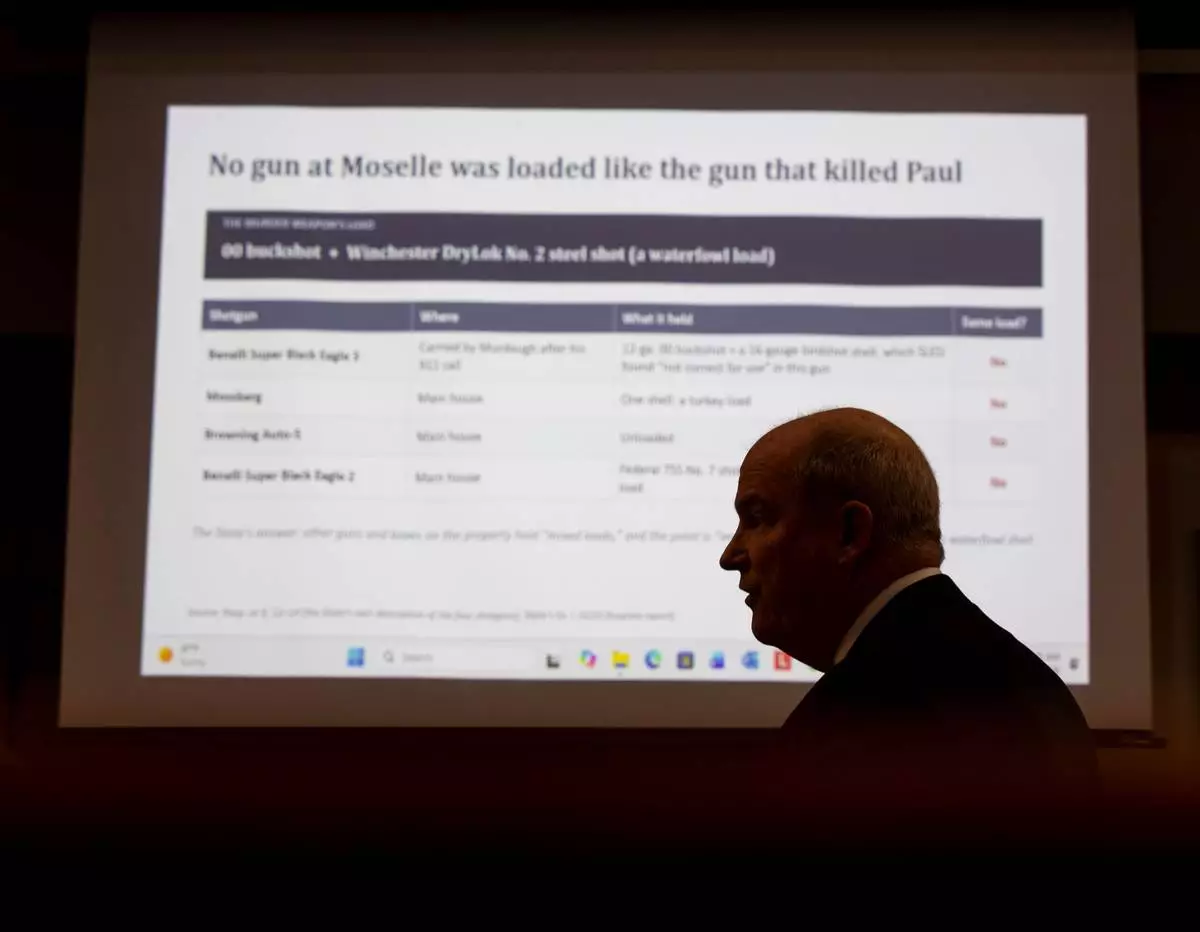
Defense attorney Jim Griffin stands in front of a slide presentation concerning the blood spatters on Alex Murdaugh's shirt during the last pre-trial hearing Friday, Nov. 13, 2026, in Lexington, S.C. (Henry Taylor /The Post And Courier via AP, Pool)
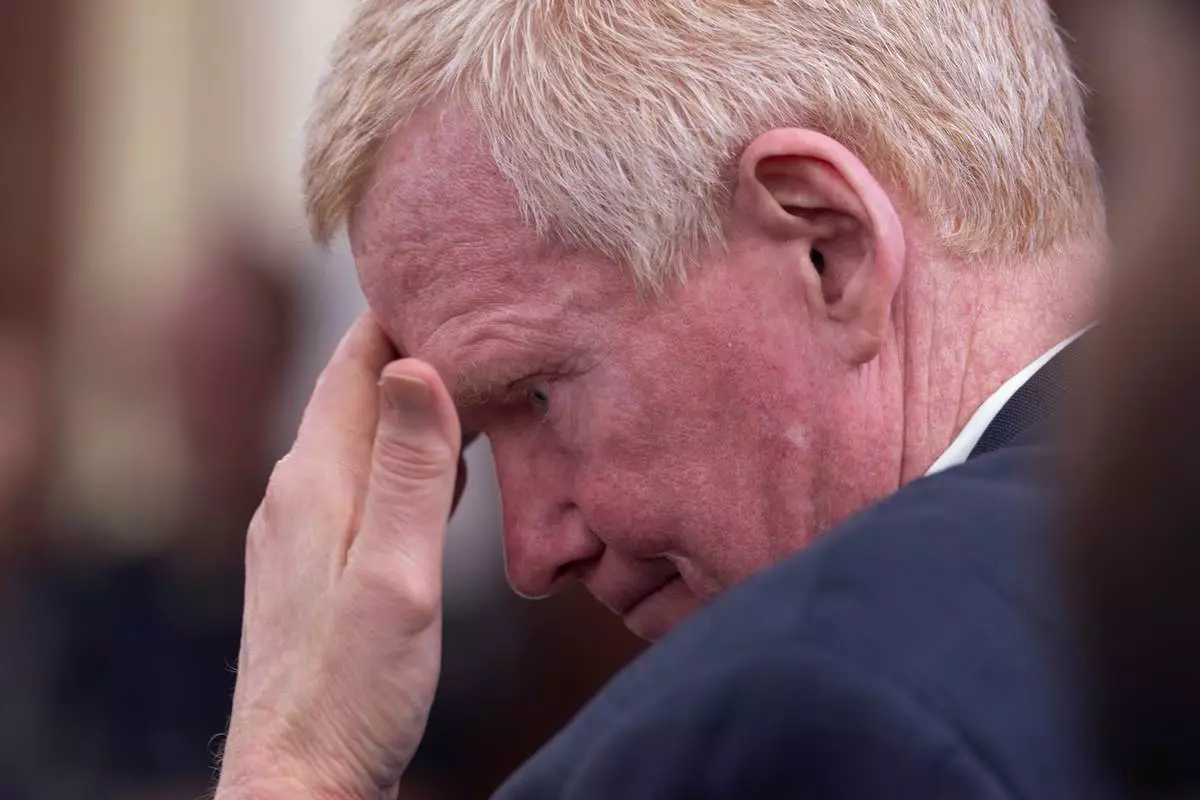
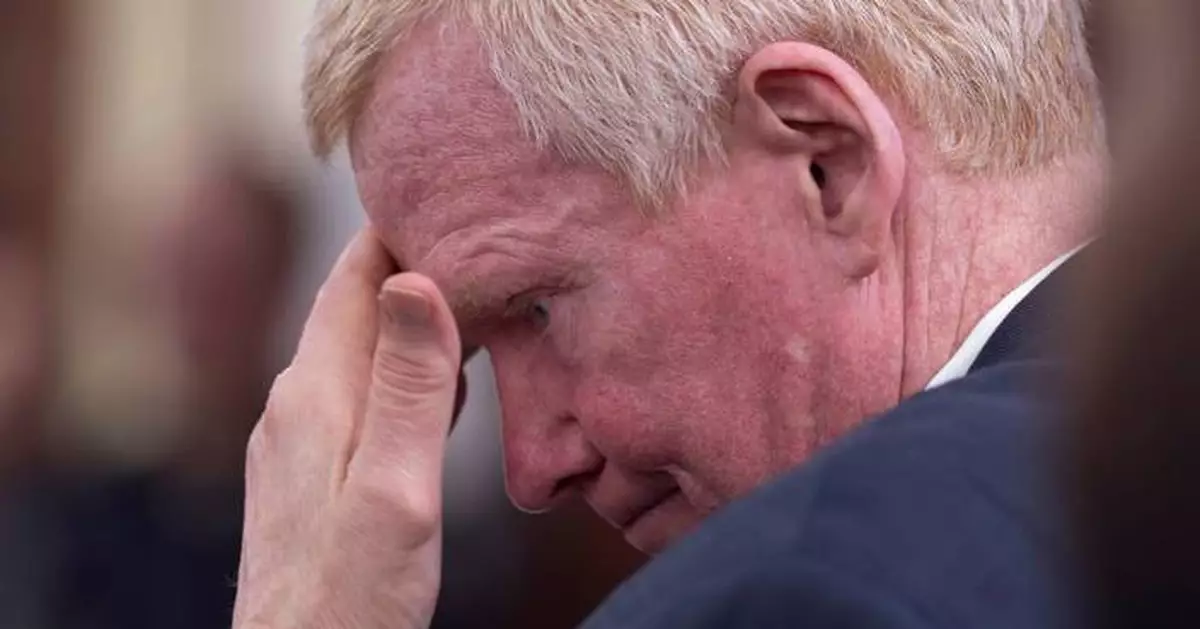
Alex Murdaugh grimaces as his attorney describes his son's blood spatter, during a judicial hearing on Friday, Nov. 13, 2026, in Lexington, S.C. (Tracy Glantz/The State via AP, Pool)
SEATTLE (AP) — The Washington state pulp mill where a chemical tank ruptured in May, killing 11, had an extensive track record of egregious and willful safety violations, including failure to inspect or repair more than a dozen other tanks at the facility, state investigators said Friday.
Nippon Dynawave Packaging Co. faces more than $10 million in state fines, including the largest employer safety fine in state history, and investigators plan to refer their findings to prosecutors for possible criminal charges.
“Without repair or replacement, the tank walls were a ticking clock,” Dan Pitts, state Labor and Industries compliance manager, said during a press conference in Longview to announce the findings. "It was a question of time, and time ran out."
Nippon did not immediately respond to an email seeking comment about the state’s findings.
Nippon plans to restart operations in December. Officials said the company has an obligation to fix any hazards that have been identified, and the state will be closely monitoring to ensure that happens.
Besides the 11 who were killed, 12 were injured on May 26 when the tank holding more than 900,000 gallons (3.4 million liters) of “white liquor,” a highly corrosive chemical used in paper manufacturing, ruptured. The flood of caustic material was powerful enough to blow out building walls and overturn pickup trucks at the site.
“Nippon’s decision to keep G-10 operating when they knew it was not safe contributed to the death of 11 workers," said Labor and Industries Director Joel Sacks. "Because of that, we will be referring this case to prosecutors to consider criminal charges.”
The state Ecology department also announced that it has issued 34 violations that impacted air and water, and is seeking $961,000 in penalties and costs for responding to the emergency.
Most of the environmental violations were due to the impact of the white liquor that spread across the site, officials said. It reached storm drains and a wastewater treatment system, with some discharging into the Columbia River and a nearby ditch, killing fish.
State investigators said Friday the company failed to take appropriate action to address the issue in violation of state law, and similarly failed to inspect or address deficiencies in 13 other tanks at the site.
Officials also said Nippon's emergency response and planning fell short of state requirements. The company had not effectively prepared its staff to respond to an emergency, and there was no employer-led incident command for several hours after the tank failed, Pitts said.
“We believe failures in the response were a contributing factor in serious injuries to four of 12 workers who were hurt that day," Pitts said.
The state investigation mirrored an August report by the U.S. Chemical Safety Board that revealed inspectors hired by the company in 2025 found the tank that ruptured was “not fit for continued service” due to deteriorating thickness in the tank walls.
An AP review of inspections and safety complaints at the plant prior to the tank collapse found that Labor and Industries had investigated more than a dozen safety complaints at the plant since 2018 and issued almost $7,000 in fines for violations. Ecology had issued 54 environmental violation notices against the company since 2016 and fined them $41,500 for eight serious offenses.
More than $2.4 million in workers’ compensation claims have been paid for 169 employees injured on the job since 2015, the agency reported, including for injuries related to exposure to caustic substances.
After the May tank collapse, the state’s Department of Ecology filed a violation notice against the company listing 35 citations.
Nippon Dynawave said in an email Wednesday that they have remained engaged with the government agencies that are investigating the tank collapse. They said the mill has hosted hundreds of visits by regulators and investigators.
“The full deconstruction, forensic examination and technical analysis needed to determine the root cause have not yet been completed,” the company said. “The tank is currently being deconstructed, with great care being taken to log and retain portions of the tank to determine the root cause.”
Among workers killed in the rupture were brothers Tyler and Brad Covington. Their mother, Sheri Lynn King, has filed a wrongful-death lawsuit against Nippon Dynawave, saying her sons were burned and crushed by the white liquor and debris. The lawsuit claims the company failed to maintain and inspect equipment, failed to properly train and supervise employees and failed to implement safety policies and emergency response procedures.
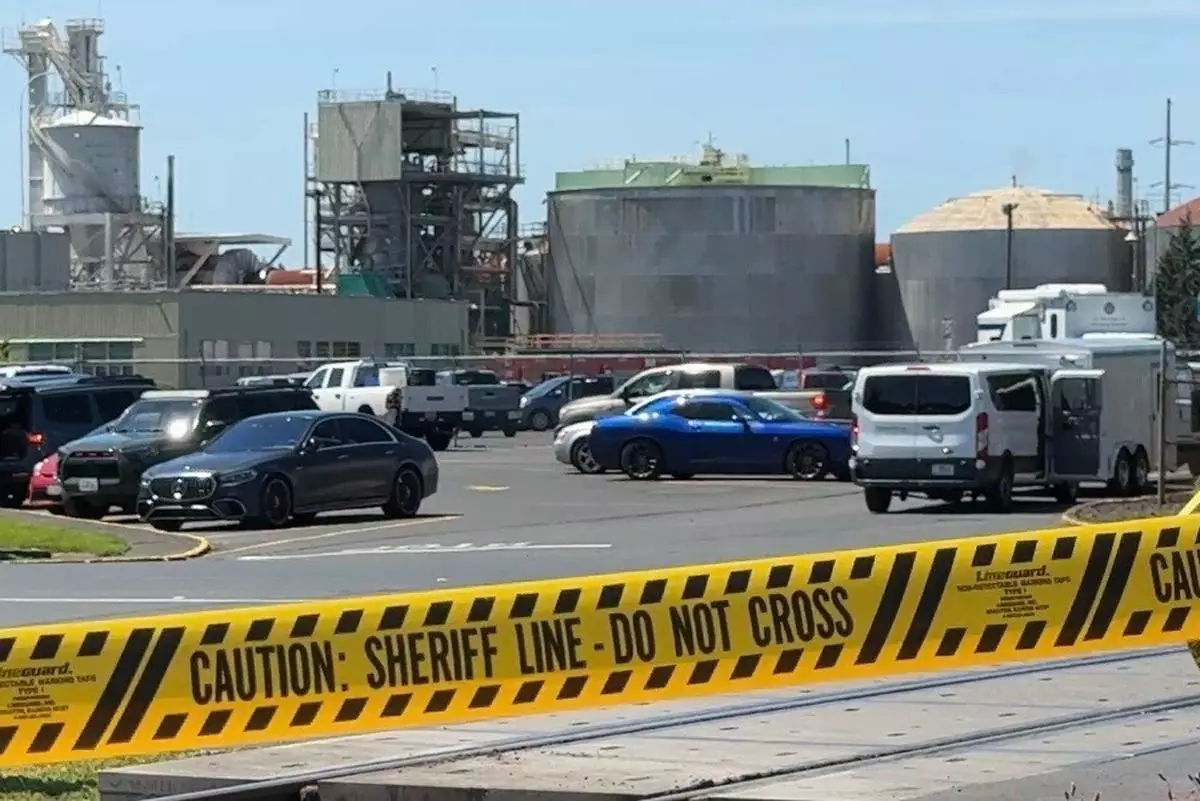
FILE - Yellow police tape is seen on May 27, 2026 outside the Longview, Wash. paper mill where a deadly chemical tank failure occurred. (AP Photo/Claire Rush, File)