NAPLES, Fla. (AP) — A Lim Kim pulled away from a crowded pack in a most spectacular fashion Friday when she made a hole-in-one on the par-3 16th hole and posted an 8-under 64 to build a three-shot lead over defending champion Jeeno Thitikul in the CME Group Tour Championship.
It also helped that Kim picked up birdies on all four of the par 5s at Tiburon Golf Club. She finished with a long two-putt par to reach 15-under 129, the lowest 36-hole score since this tournament moved to Tiburon in 2013.
Click to Gallery
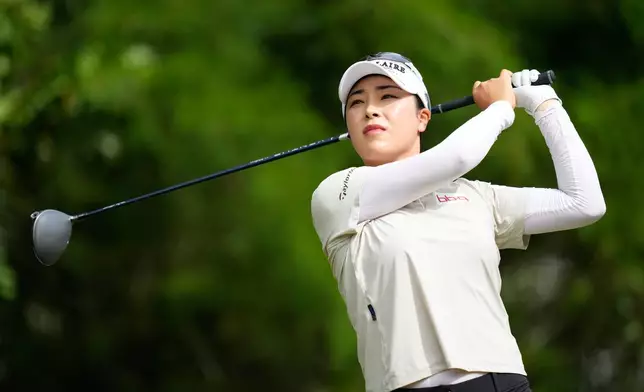
Ina Yoon, of South Korea, hits from the seventh tee during the second round of the LPGA CME Group Tour Championship, Friday, Nov. 20, 2026, in Naples, Florida. (AP Photo/Ashley Landis)

Nelly Korda hits from a out of bounds on the sixth hole during the second round of the LPGA CME Group Tour Championship, Friday, Nov. 20, 2026, in Naples, Florida. (AP Photo/Ashley Landis)
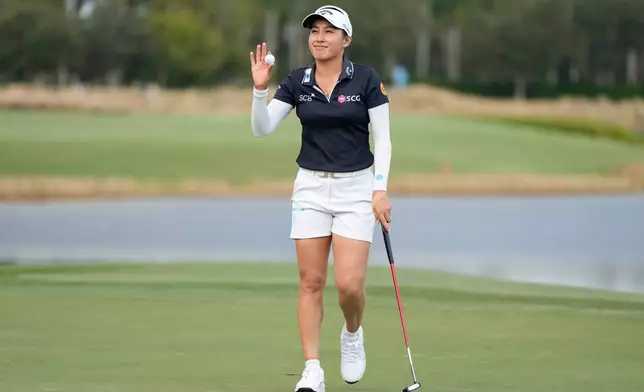
Jeeno Thitikul, of Thailand, finishes her round during the second round of the LPGA CME Group Tour Championship, Friday, Nov. 20, 2026, in Naples, Florida. (AP Photo/Ashley Landis)
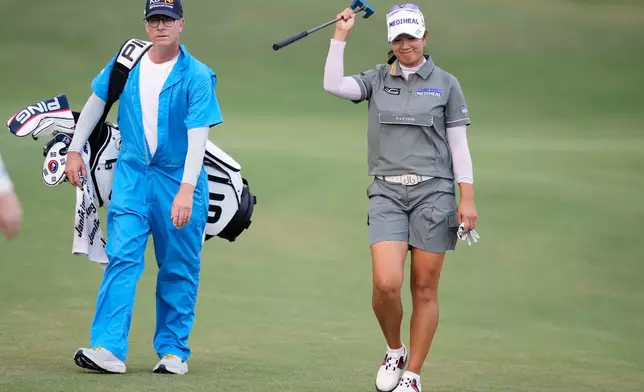
A Lim Kim, of South Korea, reacts to fans as she walks to the 18th green during the second round of the LPGA CME Group Tour Championship, Friday, Nov. 20, 2026, in Naples, Florida. (AP Photo/Ashley Landis)
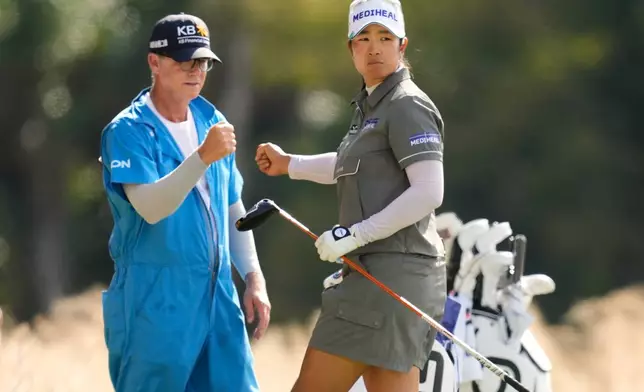
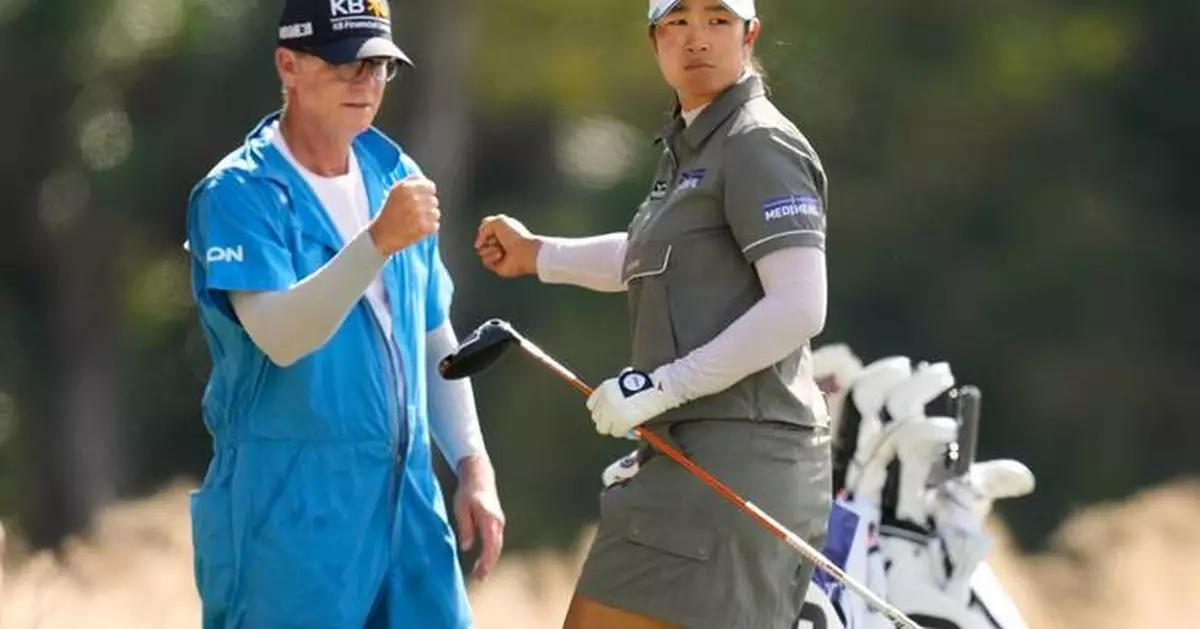
A Lim Kim, of South Korea, celebrates with her caddie after her shot from the fourth tee during the second round of the LPGA CME Group Tour Championship, Friday, Nov. 20, 2026, in Naples, Florida. (AP Photo/Ashley Landis)
Nelly Korda, in her bid to win the season finale to get into the LPGA Hall of Fame, shot a 67 and still wound up losing ground. She started three shots behind and now is six back on a course that has been relatively soft with wide fairways that allow for low scoring.
Korda said she has been battling a two-way miss that she is still trying to figure out.
“It gets frustrating because I feel like I have a thought and then I look at my swing and I’m like, ‘This is all timing and it’s just ...’ Yeah, golf is fun sometimes, right?”
It certainly felt that way to Kim, the 2020 U.S. Women's Open champion, who had a calm hand with the putter and delivered one shot that stole the spotlight on a warm, cloudy day. She hit 7-iron from 168 yards that pitched in front of the pin, took one bounced and disappeared.
She stretched out both arms in a quiet, surprised celebration. Kim followed with a 5-foot birdie on the par-5 17th and is halfway home to $4 million prize, the richest payoff in women's golf.
“I needed 155-yard shot, honestly a little strong hit and I make it,” Kim said of her ace. “A little luck to me, yeah.”
She still has a solid chasing pack behind her.
Thitikul was even par on the front nine and falling behind until she hit her stride late, making five birdies over the last eight holes for a 67 that puts her in the final group with Kim. It was her ninth consecutive round in the 60s at Tiburon.
The 23-year-old Thai has won the CME Group Tour Championship the last two years, she famously finished eagle-birdie last year.
Indeed, the closing stretch at Tiburon is her sweet spot. Thitikul has played Nos. 13-18 at 43-under par for her career — 41 birdies, two eagles, no bogeys and 85% of green in regulation since 2024.
“It might be a positive juju,” she said of her success on this course. "I feel like I love to coming back here. I feel like here, the golf course and me are in sync a little bit somehow. Maybe superstitious things, but I feel comfortable to be here.
“You know, last week of the year, what we got in our hand we have to put it all.”
The first prize is so big for the LPGA that 24 players in the field have yet to reach $4 million in career earnings. Five of those players were bunched together at 11-under 133, four shots behind. That includes Yuri Yoshida, who won the BMW Ladies Championship in South Korea during the recent four-week swing through Asia.
Also three shots behind was Charley Hull, who won her first LPGA title at this tournament 10 years ago, when the first prize was a mere $500,000.
Ina Yoon (65), Yan Liu (66), Jenny Bae (67) and Auston Kim (67) also were three shots behind. Auston Kim was in the lead until a bogey on the par-5 14th and another bogey on the 18th.
“It’s really important to keep your foot on the gas and be aggressive,” she said. “There are always opportunities, whether you don’t have a good start or it’s kind of a quiet start. It’s just staying patient and then letting the putts fall when they can.”
A soft course figures to get even softer. With adverse weather in the forecast, the LPGA is moving up the starting times Saturday and going in threesomes off both sides for the first time this week.
See AP’s full golf coverage here
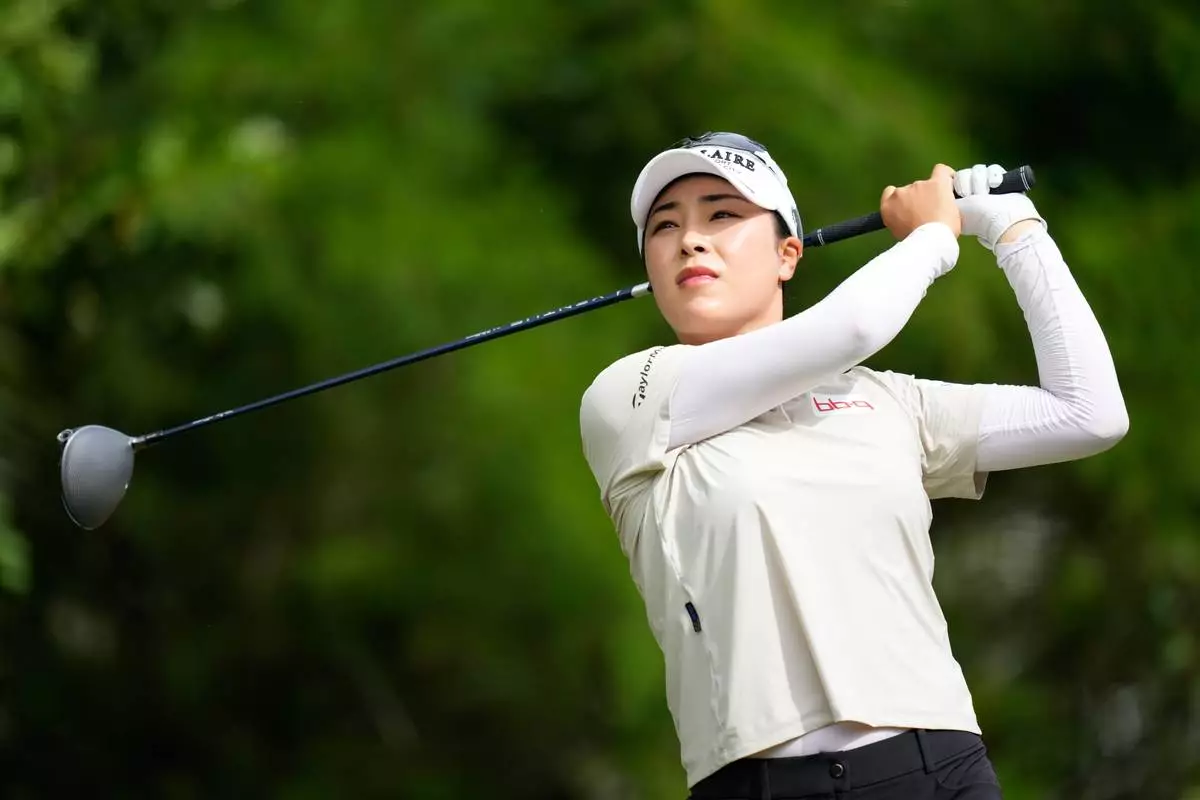
Ina Yoon, of South Korea, hits from the seventh tee during the second round of the LPGA CME Group Tour Championship, Friday, Nov. 20, 2026, in Naples, Florida. (AP Photo/Ashley Landis)
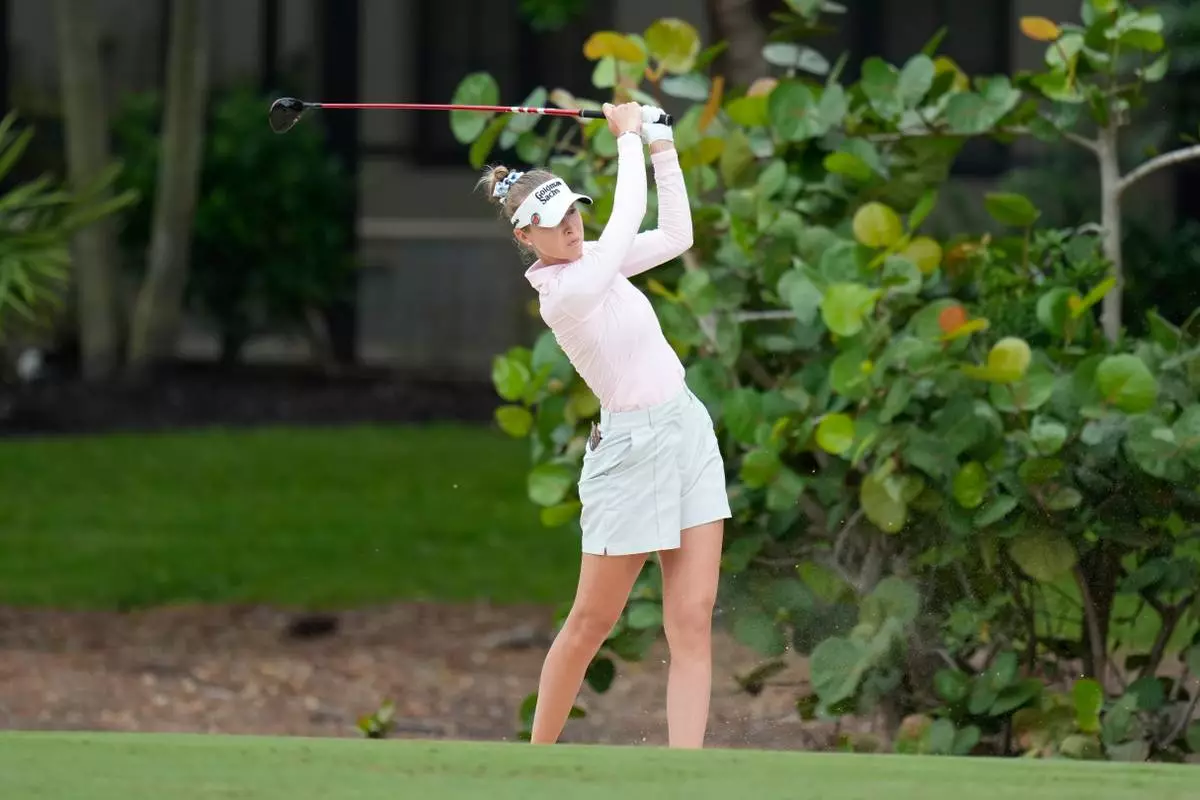
Nelly Korda hits from a out of bounds on the sixth hole during the second round of the LPGA CME Group Tour Championship, Friday, Nov. 20, 2026, in Naples, Florida. (AP Photo/Ashley Landis)
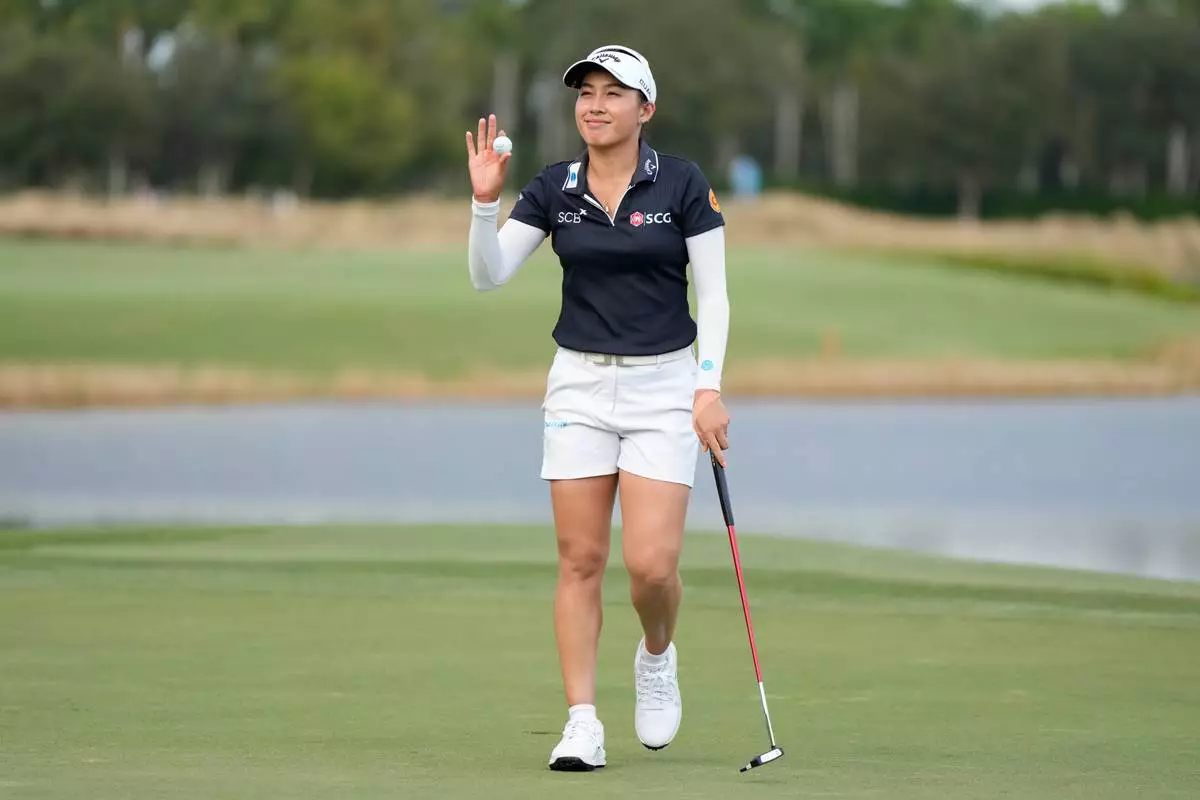
Jeeno Thitikul, of Thailand, finishes her round during the second round of the LPGA CME Group Tour Championship, Friday, Nov. 20, 2026, in Naples, Florida. (AP Photo/Ashley Landis)
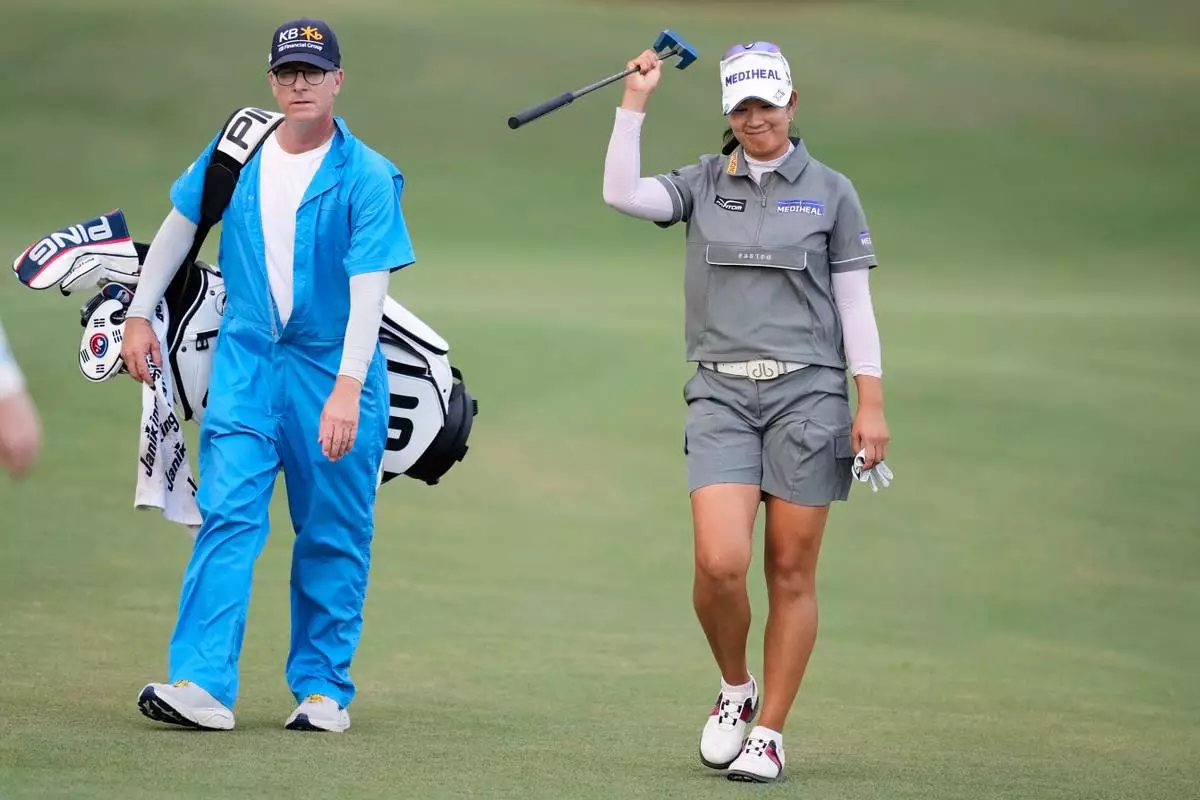
A Lim Kim, of South Korea, reacts to fans as she walks to the 18th green during the second round of the LPGA CME Group Tour Championship, Friday, Nov. 20, 2026, in Naples, Florida. (AP Photo/Ashley Landis)
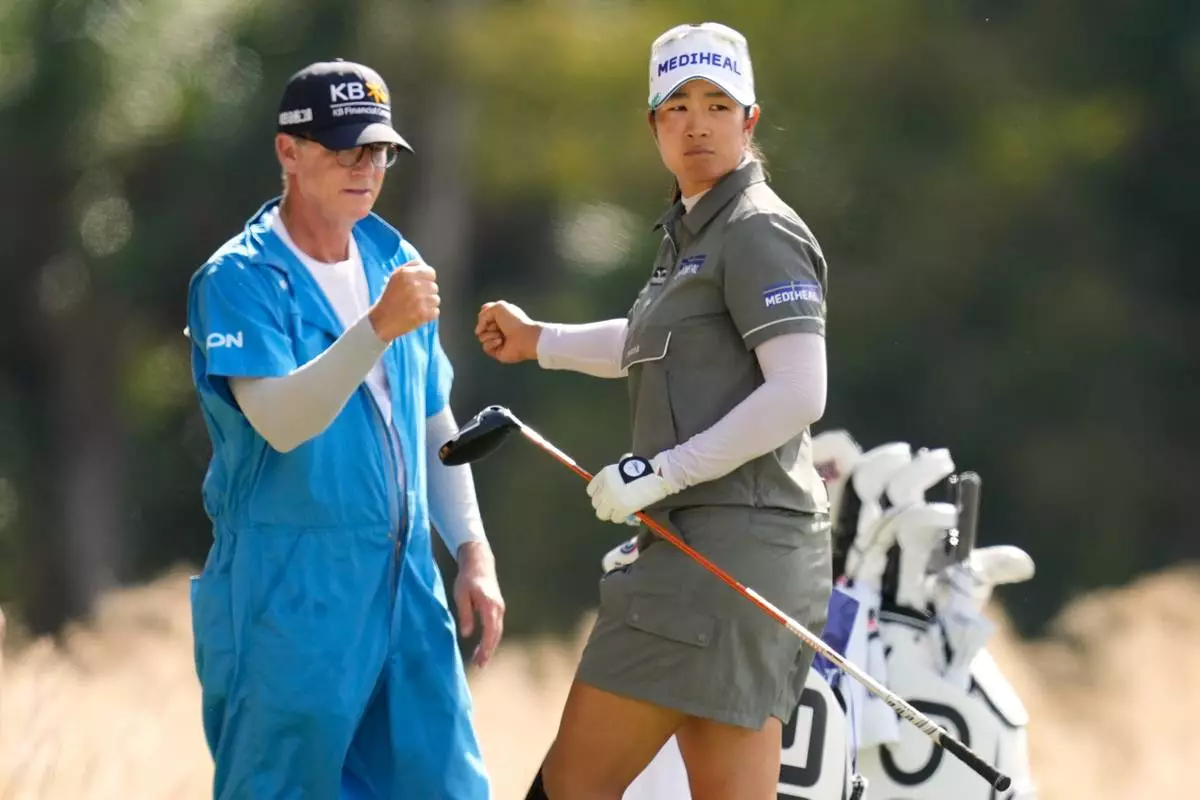
A Lim Kim, of South Korea, celebrates with her caddie after her shot from the fourth tee during the second round of the LPGA CME Group Tour Championship, Friday, Nov. 20, 2026, in Naples, Florida. (AP Photo/Ashley Landis)

JEFFERSON CITY, Mo. (AP) — Agrochemical maker Bayer will pay up to $7.25 billion over two decades to resolve thousands of claims from U.S. cancer patients asserting the company should have warned people that its popular weed killer Roundup could cause lymphoma, according to a settlement approved Friday by a Missouri judge.
The nationwide settlement applies both to Roundup users who already are ill and those who become diagnosed with non-Hodgkin lymphoma in future years. Participants could get an average of between $10,000 and $165,000, depending on how they used the product, how old they were when diagnosed and the severity of their illness.
For Germany-based Bayer, which denies that Roundup causes cancer, the settlement provides some financial certainty against mounting litigation costs that have led it to contemplate pulling the product from U.S. agricultural markets. Bayer already has changed the formula for its Roundup version sold to residential users.
Litigants also faced uncertainty. While the settlement was pending, the U.S. Supreme Court undercut one of the central arguments in the Roundup lawsuits. The high court ruled in June that Bayer cannot be sued in state courts on claims it failed to warn about cancer, because federal regulations don't require a cancer warning label and states are forbidden from imposing additional labeling requirements.
Though some attorneys for cancer patients contend the settlement payouts are too small, others argue the deal is better than getting nothing — which became a heightened likelihood after the Supreme Court ruling.
In a written judgment granting approval, St. Louis Circuit Judge Timothy Boyer said the average individual payouts are “fair and adequate” and the total dollar amount is “among the largest in the history of mass tort personal-injury class action settlements.” The approved settlement includes $600 million for attorneys' fees.
The judge said there was a risk Bayer would have filed for bankruptcy protection if the settlement had been rejected.
Bayer CEO Bill Anderson said in a statement that the court-approved settlement is “a decisive milestone in the company’s strategy to mitigate the risks of both pending and future Roundup litigation."
The decision could be appealed.
Missouri-based Monsanto debuted Roundup weed killer in 1974 with the chemical glyphosate as its active ingredient. The product quickly became one of the most widely used herbicides in agriculture. Roundup is designed to be used with genetically modified seeds that can resist the weed killer’s deadly effect, thus allowing farmers to produce more while conserving the soil by tilling it less.
The product also is commonly applied on lawns and gardens.
Bayer added Roundup to its portfolio when it acquired Monsanto in 2018. With it came a growing number of lawsuits alleging glyphosate causes non-Hodgkin lymphoma. But that remains in dispute. The World Health Organization’s International Agency for Research on Cancer classified the chemical as “probably carcinogenic” in 2015. The U.S. Environmental Protection Agency has determined that it’s not likely to cause cancer in humans when used as directed.
About 200,000 Roundup-related claims have been made against Bayer, many coming from people who used it on residential lawns and gardens. As a result, Bayer has removed glyphosate from its new versions of Roundup sold for residential markets.
The lawsuits have produced mixed results. Only a couple dozen cases have gone to jurors, some siding with Bayer and others with plaintiffs. In one case, a Georgia jury awarded plaintiffs $2.1 billion.
In the first Roundup verdict since the Supreme Court’s precedent-setting ruling, a Missouri jury in October sided with Bayer in a case alleging design defects, negligence and fraud. The verdict “should send a strong signal” that plaintiffs “will face significant challenges” pursuing Roundup-related cancer claims in the future, said Bill Dodero, Bayer’s U.S. general counsel and global litigation leader.
Bayer previously set aside $16 billion to cover legal costs related to Roundup cases. The new settlement, which is in addition to that, is designed to address most of the remaining lawsuits, as well as any additional cases brought in the coming years by people who were exposed to Roundup before the settlement was proposed in February.
“Today’s final approval order delivers guaranteed compensation to Roundup cancer victims who have waited more than a decade for justice," said Christopher A. Seeger, a court-appointed counsel for cancer patients in the case.
The settlement calls for Bayer to make annual payments into a special fund for up to 21 years, totaling as much as $7.25 billion. The amount of money paid out to individuals would vary. Agricultural, industrial or turf workers exposed at length to Roundup could receive an average of $165,000 if they were diagnosed with an aggressive form of the illness while younger than age 60. But anyone diagnosed at age 78 or older would get significantly less, with an average of $10,000.
Some attorneys have said the individual settlement amounts are too small and the terms too restrictive.
“This settlement is the scariest, worst future settlement that’s ever been contemplated,” attorney Gerson Smoger said during a September court hearing on whether the settlement was fair. He said it locked in future claimants for decades with no chance at punitive damages yet “kept the product that they were exposed to on the market, allowing the victims to continue to be exposed.”
The settlement was filed in St. Louis Circuit Court in Missouri, home to Bayer’s North America crop science division and the state where many of the lawsuits have been brought.
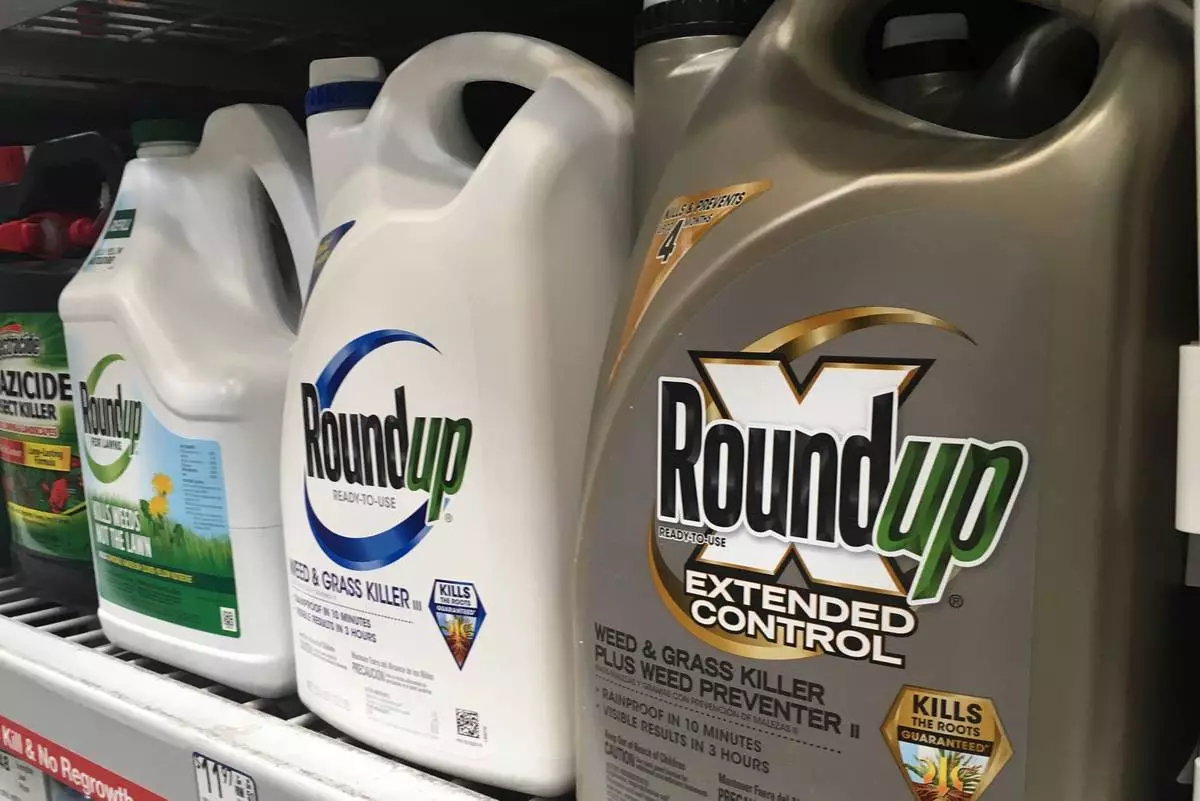
FILE - Containers of Roundup weedkiller are displayed on a store shelf in San Francisco, Feb. 24, 2019. (AP Photo/Haven Daley, File)