Skip to Content Facebook Feature Image

Court approves $7.25 billion settlement with Bayer over claims Roundup weed killer caused cancer

News

Court approves $7.25 billion settlement with Bayer over claims Roundup weed killer caused cancer
News

News

Court approves $7.25 billion settlement with Bayer over claims Roundup weed killer caused cancer

2026-11-21 07:27 Last Updated At:07:30

JEFFERSON CITY, Mo. (AP) — Agrochemical maker Bayer will pay up to $7.25 billion over two decades to resolve thousands of claims from U.S. cancer patients asserting the company should have warned people that its popular weed killer Roundup could cause lymphoma, according to a settlement approved Friday by a Missouri judge.

The nationwide settlement applies both to Roundup users who already are ill and those who become diagnosed with non-Hodgkin lymphoma in future years. Participants could get an average of between $10,000 and $165,000, depending on how they used the product, how old they were when diagnosed and the severity of their illness.

For Germany-based Bayer, which denies that Roundup causes cancer, the settlement provides some financial certainty against mounting litigation costs that have led it to contemplate pulling the product from U.S. agricultural markets. Bayer already has changed the formula for its Roundup version sold to residential users.

Litigants also faced uncertainty. While the settlement was pending, the U.S. Supreme Court undercut one of the central arguments in the Roundup lawsuits. The high court ruled in June that Bayer cannot be sued in state courts on claims it failed to warn about cancer, because federal regulations don't require a cancer warning label and states are forbidden from imposing additional labeling requirements.

Though some attorneys for cancer patients contend the settlement payouts are too small, others argue the deal is better than getting nothing — which became a heightened likelihood after the Supreme Court ruling.

In a written judgment granting approval, St. Louis Circuit Judge Timothy Boyer said the average individual payouts are “fair and adequate” and the total dollar amount is “among the largest in the history of mass tort personal-injury class action settlements.” The approved settlement includes $600 million for attorneys' fees.

The judge said there was a risk Bayer would have filed for bankruptcy protection if the settlement had been rejected.

Bayer CEO Bill Anderson said in a statement that the court-approved settlement is “a decisive milestone in the company’s strategy to mitigate the risks of both pending and future Roundup litigation."

The decision could be appealed.

Missouri-based Monsanto debuted Roundup weed killer in 1974 with the chemical glyphosate as its active ingredient. The product quickly became one of the most widely used herbicides in agriculture. Roundup is designed to be used with genetically modified seeds that can resist the weed killer’s deadly effect, thus allowing farmers to produce more while conserving the soil by tilling it less.

The product also is commonly applied on lawns and gardens.

Bayer added Roundup to its portfolio when it acquired Monsanto in 2018. With it came a growing number of lawsuits alleging glyphosate causes non-Hodgkin lymphoma. But that remains in dispute. The World Health Organization’s International Agency for Research on Cancer classified the chemical as “probably carcinogenic” in 2015. The U.S. Environmental Protection Agency has determined that it’s not likely to cause cancer in humans when used as directed.

About 200,000 Roundup-related claims have been made against Bayer, many coming from people who used it on residential lawns and gardens. As a result, Bayer has removed glyphosate from its new versions of Roundup sold for residential markets.

The lawsuits have produced mixed results. Only a couple dozen cases have gone to jurors, some siding with Bayer and others with plaintiffs. In one case, a Georgia jury awarded plaintiffs $2.1 billion.

In the first Roundup verdict since the Supreme Court’s precedent-setting ruling, a Missouri jury in October sided with Bayer in a case alleging design defects, negligence and fraud. The verdict “should send a strong signal” that plaintiffs “will face significant challenges” pursuing Roundup-related cancer claims in the future, said Bill Dodero, Bayer’s U.S. general counsel and global litigation leader.

Bayer previously set aside $16 billion to cover legal costs related to Roundup cases. The new settlement, which is in addition to that, is designed to address most of the remaining lawsuits, as well as any additional cases brought in the coming years by people who were exposed to Roundup before the settlement was proposed in February.

“Today’s final approval order delivers guaranteed compensation to Roundup cancer victims who have waited more than a decade for justice," said Christopher A. Seeger, a court-appointed counsel for cancer patients in the case.

The settlement calls for Bayer to make annual payments into a special fund for up to 21 years, totaling as much as $7.25 billion. The amount of money paid out to individuals would vary. Agricultural, industrial or turf workers exposed at length to Roundup could receive an average of $165,000 if they were diagnosed with an aggressive form of the illness while younger than age 60. But anyone diagnosed at age 78 or older would get significantly less, with an average of $10,000.

Some attorneys have said the individual settlement amounts are too small and the terms too restrictive.

“This settlement is the scariest, worst future settlement that’s ever been contemplated,” attorney Gerson Smoger said during a September court hearing on whether the settlement was fair. He said it locked in future claimants for decades with no chance at punitive damages yet “kept the product that they were exposed to on the market, allowing the victims to continue to be exposed.”

The settlement was filed in St. Louis Circuit Court in Missouri, home to Bayer’s North America crop science division and the state where many of the lawsuits have been brought.
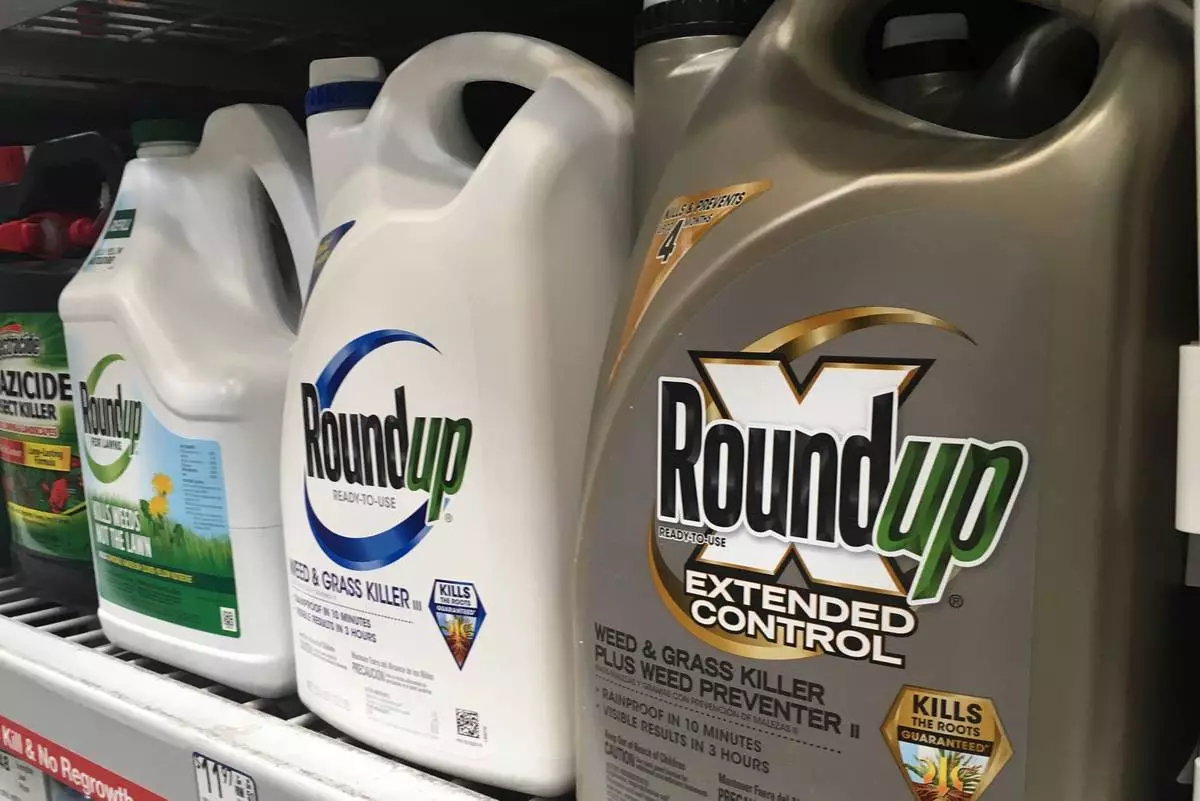
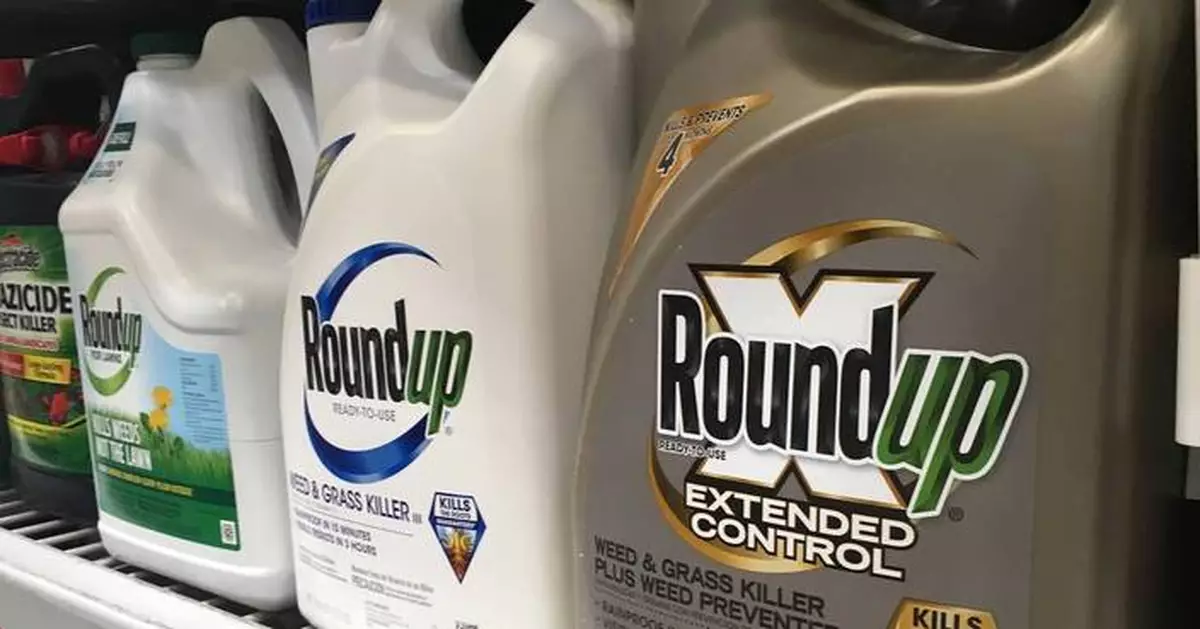
FILE - Containers of Roundup weedkiller are displayed on a store shelf in San Francisco, Feb. 24, 2019. (AP Photo/Haven Daley, File)

FILE - Containers of Roundup weedkiller are displayed on a store shelf in San Francisco, Feb. 24, 2019. (AP Photo/Haven Daley, File)
SEATTLE (AP) — The Washington state pulp mill where a chemical tank ruptured in May, killing 11, had an extensive track record of egregious and willful safety violations, including failure to inspect or repair more than a dozen other tanks at the facility, state investigators said Friday.

Nippon Dynawave Packaging Co. faces more than $10 million in state fines, including the largest employer safety fine in state history, and investigators plan to refer their findings to prosecutors for possible criminal charges.

The state investigation found that Nippon had multiple ultrasonic tests going back to 2025 that showed the tank was not safe to hold chemicals but failed to fix it or take it out of service, Dan Pitts, state Labor and Industries compliance manager, said during a press conference in Longview to announce the findings.

“Without repair or replacement, the tank walls were a ticking clock,” he said. "It was a question of time, and time ran out."

Nippon said in a press release Friday that the company is reviewing the state’s findings but said the characterization of its actions as “egregious and willful” fails to include important facts and context about the company’s actions leading up to the tank failure.

“We will address that issue through the appropriate appeals process,” the statement said. “We believe the responsible course is to allow the full investigative process to proceed and establish a complete and accurate record before conclusions are reached.”

Nippon plans to restart operations in December. State officials said the company has an obligation to fix any hazards that have been identified, and the state will be closely monitoring to ensure that happens.

Besides the 11 who were killed, 12 were injured on May 26 when the tank holding more than 900,000 gallons (3.4 million liters) of “white liquor,” a highly corrosive chemical used in paper manufacturing, ruptured. The flood of caustic material was powerful enough to blow out building walls and overturn pickup trucks at the site.

“Nippon’s decision to keep G-10 operating when they knew it was not safe contributed to the death of 11 workers," said Labor and Industries Director Joel Sacks. "Because of that, we will be referring this case to prosecutors to consider criminal charges.”

The state Ecology department also announced that it has issued 34 violations that impacted air and water, and is seeking $961,000 in penalties and costs for responding to the emergency.

Most of the environmental violations were due to the impact of the white liquor that spread across the site, officials said. It reached storm drains and a wastewater treatment system, with some discharging into the Columbia River and a nearby ditch, killing fish.

State investigators said Friday the company failed to take appropriate action to address the issue in violation of state law, and similarly failed to inspect or address deficiencies in 13 other tanks at the site.

Officials also said Nippon's emergency response and planning fell short of state requirements. The company had not effectively prepared its staff to respond to an emergency, and there was no employer-led incident command for several hours after the tank failed, Pitts said.

“We believe failures in the response were a contributing factor in serious injuries to four of 12 workers who were hurt that day," Pitts said.

Josh Estes, a spokesman for the Association of Western Pulp and Paper Workers union, said it's reviewing the state's findings.

“As a union, we’re deeply troubled and angry that a warning this serious went unaddressed,” he said in an email. “Families deserve answers about how those warnings were handled, and workers deserve to know what’s been corrected and how those fixes were verified.”

The state investigation mirrored an August report by the U.S. Chemical Safety Board that revealed inspectors hired by the company in 2025 found the tank that ruptured was “not fit for continued service” due to deteriorating thickness in the tank walls.

An AP review of inspections and safety complaints at the plant prior to the tank collapse found that Labor and Industries had investigated more than a dozen safety complaints at the plant since 2018 and issued almost $7,000 in fines for violations. Ecology had issued 54 environmental violation notices against the company since 2016 and fined them $41,500 for eight serious offenses.

More than $2.4 million in workers’ compensation claims have been paid for 169 employees injured on the job since 2015, the agency reported, including for injuries related to exposure to caustic substances.

After the May tank collapse, the state’s Department of Ecology filed a violation notice against the company listing 35 citations.

Nippon Dynawave said in an email Wednesday that they have remained engaged with the government agencies that are investigating the tank collapse. They said the mill has hosted hundreds of visits by regulators and investigators.

“The full deconstruction, forensic examination and technical analysis needed to determine the root cause have not yet been completed,” the company said. “The tank is currently being deconstructed, with great care being taken to log and retain portions of the tank to determine the root cause.”

Among workers killed in the rupture were brothers Tyler and Brad Covington. Their mother, Sheri Lynn King, has filed a wrongful-death lawsuit against Nippon Dynawave, saying her sons were burned and crushed by the white liquor and debris. The lawsuit claims the company failed to maintain and inspect equipment, failed to properly train and supervise employees and failed to implement safety policies and emergency response procedures.

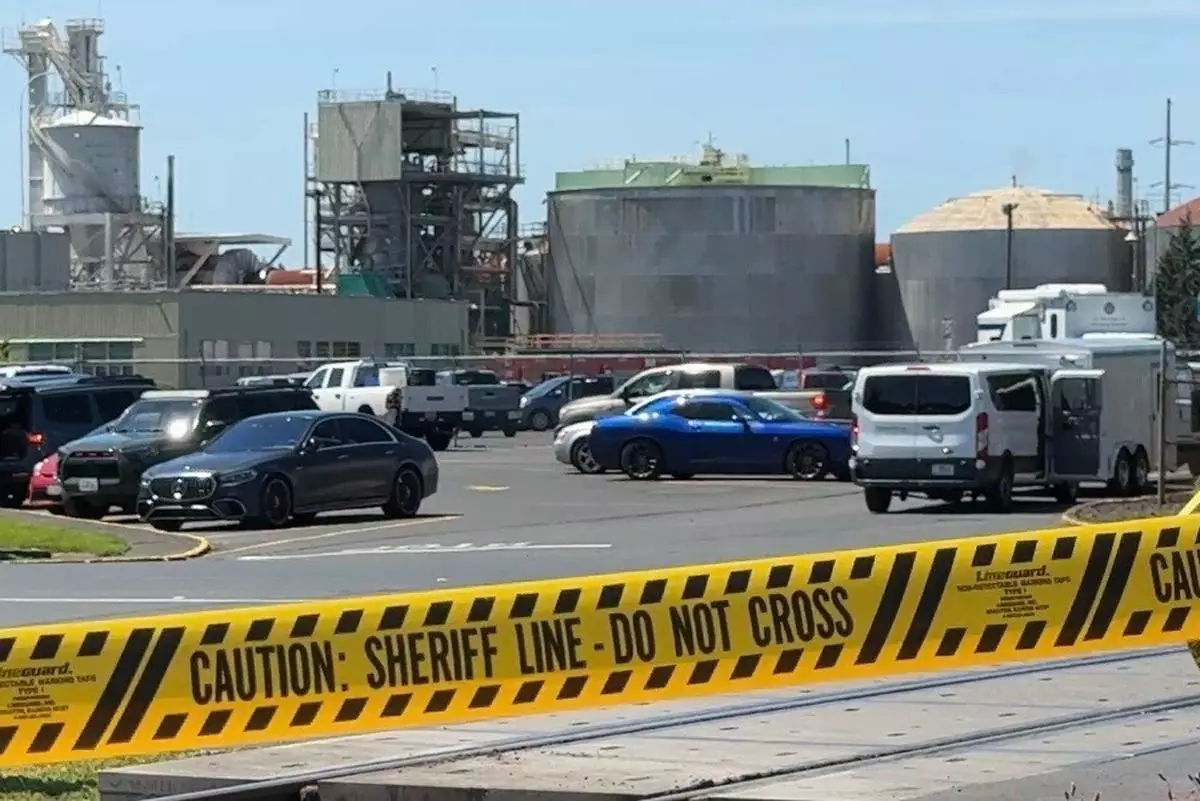
FILE - Yellow police tape is seen on May 27, 2026 outside the Longview, Wash. paper mill where a deadly chemical tank failure occurred. (AP Photo/Claire Rush, File)

FILE - Yellow police tape is seen on May 27, 2026 outside the Longview, Wash. paper mill where a deadly chemical tank failure occurred. (AP Photo/Claire Rush, File)

Recommended Articles