Skip to Content Facebook Feature Image

'The most effective ambassador': Fiona the hippo's death sparks grief and talk about famous animals

ENT

'The most effective ambassador': Fiona the hippo's death sparks grief and talk about famous animals
ENT

ENT

'The most effective ambassador': Fiona the hippo's death sparks grief and talk about famous animals

2026-11-21 06:56 Last Updated At:07:20

Why do we mourn famous animals we don't even know? Maybe it's because the media — and, increasingly, social media — makes us feel like we know them intimately.

Millions of people watched footage of Fiona the hippo at the Cincinnati Zoo wiggle out of her mom and into the world in 2017, struggle to survive as a preemie — and then thrive with the help of dedicated staff into a playful beast weighing more than a ton. When she died Thursday after swallowing a child's hat in an apparent accident, Cincinnati wept. People around the world demanded explanations. Some sought to cast blame.

“I miss her so much already,” said an emotional Zee Azari, an admirer who, like many others visiting the zoo Friday, brought Fiona's favorite food and smell. “I brought a watermelon and some coffee today to remember her, so that she knew how much I loved her.”

People often are surprised by the level of grief they feel when a beloved pet dies, and research has shown that it can be experienced equally intensely whether the deceased is human or not — and even if it's a famous animal they've watched from afar.

That loss can be felt via a virtual experience, too — such as following online as an animal is born, fights to survive and grows to adulthood, like Fiona. Put them together, and they add up to a phenomenon known as disenfranchised grief — the experience of meaningful loss when culture and society do not recognize or support it.

Fiona would not likely have survived without the zoo staff’s care. And her death, according to the zoo, was truly accidental. A child tossed a hat into the air; a ceiling fan blade catapulted it through a foot-wide gap near the ceiling and into Fiona's pen. The hippo swallowed it and could not pass it out of her body, the zoo said.

“It just weighs so heavy when we love these animals, even if we haven’t met them,” posted a woman who identified herself to The Associated Press as Alice, from Wales, on Reddit. “Their individual personalities shine through.”

Alongside the love for innocent animals and the need for conservation, though, complicated questions arise about other institutions that have kept wild animals through history. About exploiting the animals as well as the human need for connection with them. About ethics and myth- and profit-making that can be hard to tell from genuine efforts to raise money for conservation.

And money has been raised. Animals like giant pandas, tigers, polar bears, and elephants act as “mascots” for conservation groups, drawing public donations that often support wider habitat protection.

So while Fiona's death gives parents a chance to talk with children about love and the end of life, it also perhaps provides the opportunity to discuss the ongoing debate over keeping animals in captivity.

“There’s all kinds of narratives at play here: Politics and privilege and visual culture and profit as much as agency on the part of the individual animals themselves. And animals don't have agency, ” said Huw Lewis-Jones, an associated professor of environment and culture at Falmouth University in Cornwall, England. “We want to look at them, we want to think about them. We certainly want to tell stories about them.”

The history of creating animal celebrities goes back centuries. Some of the stories are complicated.

For starters, Fiona has always been connected with Harambe.

The year before Fiona's birth — in 2016 — zoo officials shot to death the beloved endangered gorilla after a small boy fell into his exhibit. Fiona's birth six weeks early, and her unlikely survival, did much to quiet the backlash over the zoo's choices. But for many, her unrelated death this week at the same zoo revived the horror.

Think, too, of Koko, the gorilla fluent in sign language who loved cats, understood death and could rate her own pain on a scale of one to 10. When she died in 2018 at age 46, people around the world mourned her as a bridge between species. But questions also lingered about exploitation and the ethics of making animals perform for public attention.

The original Shamu, the killer whale, died in 1971. But SeaWorld continued to use her name until, under pressure from animal rights groups and environmentalists, it announced in 2016 it was phasing out its killer whale program.

But some animal ambassadors are apparently adorable. Punch, the Japanese macaque orphaned in 2025, marked his first birthday with a flood of well-wishing messages from his fans around the world — even though he now has friends and is no longer holding on to the toy.

Ask anyone in Southern California about P-22 and they'll know: He was the region's most famous mountain lion, named for being the 22nd puma in a National Park Service study. Wildlife cameras tracked his search for a mate over a decade before he was found injured and euthanized in 2023. He inspired a wildlife crossing over a Los Angeles-area highway.

There's no doubt that the connection with celebrity animals can be enduring for humans. In Knautschke the hippo's case, the appeal was also diplomatic.

Knautschke was a famous male hippopotamus at the Berlin Zoo who survived World War II and became a symbol of resilience. He remains popular even now. During a specialized tour of the zoo earlier this year for people who live with dementia, several participants recognized the late hippo’s bronze statue outside the current hippo habitat.

Fiona was the “most effective zoo ambassador I believe there has ever been,” Jenna Wingate, her longtime keeper, wrote on Instagram on Friday.

“She was magic,” Wingate wrote, “wrapped in a hippo.”
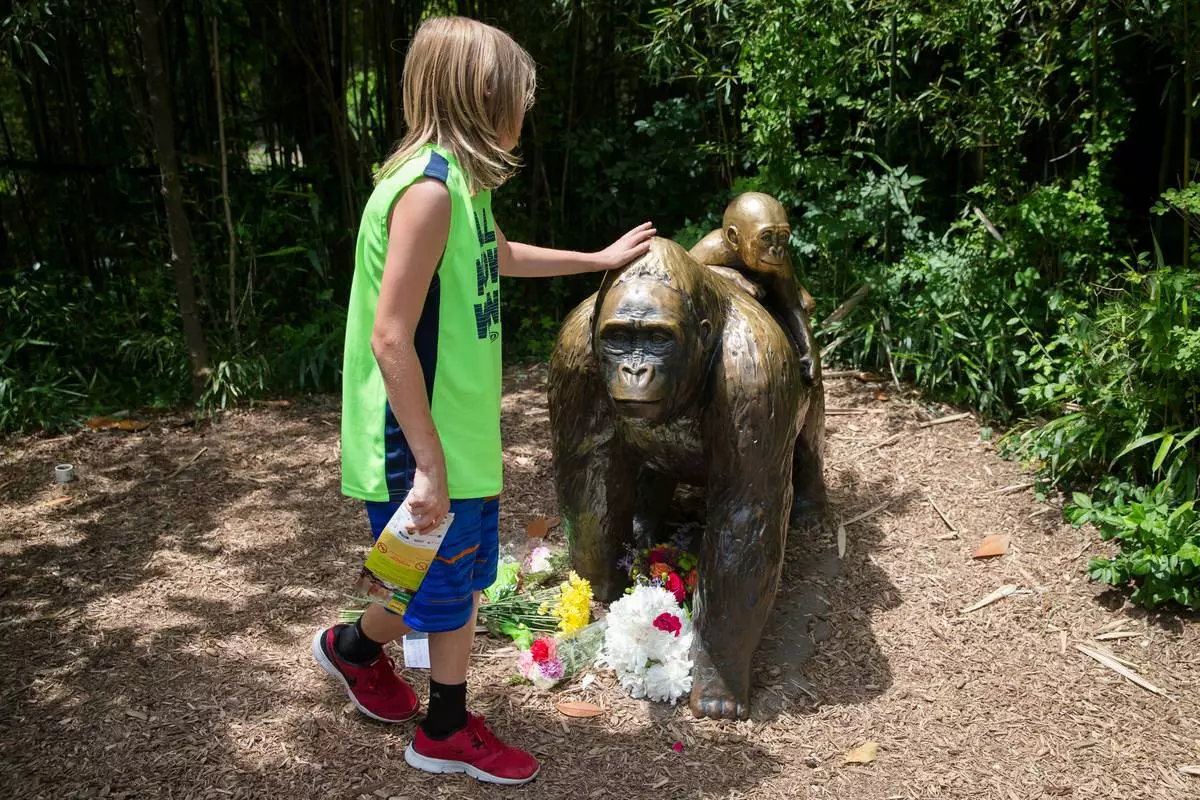
FILE- In this May 29, 2016, file photo, a child touches the head of a gorilla statue where flowers have been placed outside the Gorilla World exhibit at the Cincinnati Zoo & Botanical Garden in Cincinnati. (AP Photo/John Minchillo, File)
FILE- In this May 29, 2016, file photo, a child touches the head of a gorilla statue where flowers have been placed outside the Gorilla World exhibit at the Cincinnati Zoo & Botanical Garden in Cincinnati. (AP Photo/John Minchillo, File)

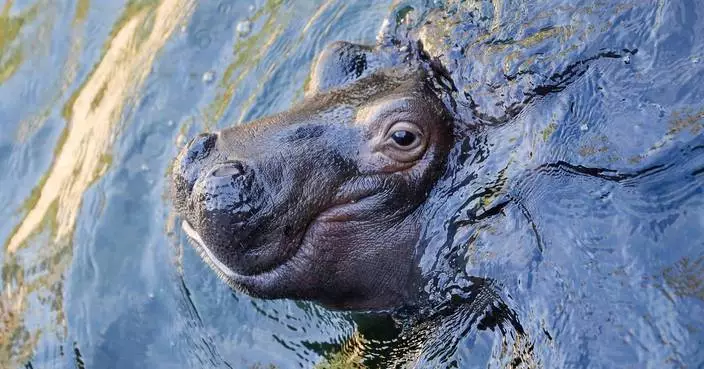
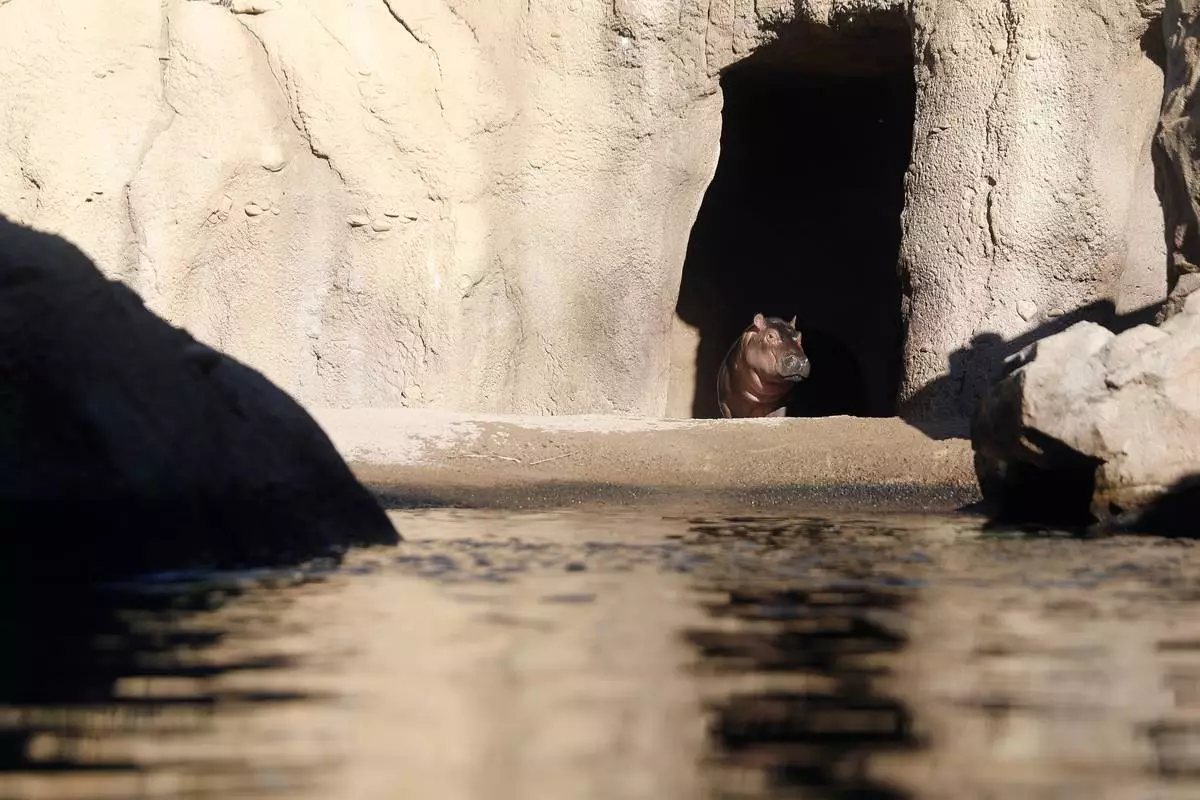
FILE - Fiona, a Nile hippopotamus, appears in her enclosure at the Cincinnati Zoo & Botanical Gardens in Cincinnati, Oct. 26, 2017. (AP Photo/John Minchillo, File)
FILE - Fiona, a Nile hippopotamus, appears in her enclosure at the Cincinnati Zoo & Botanical Gardens in Cincinnati, Oct. 26, 2017. (AP Photo/John Minchillo, File)

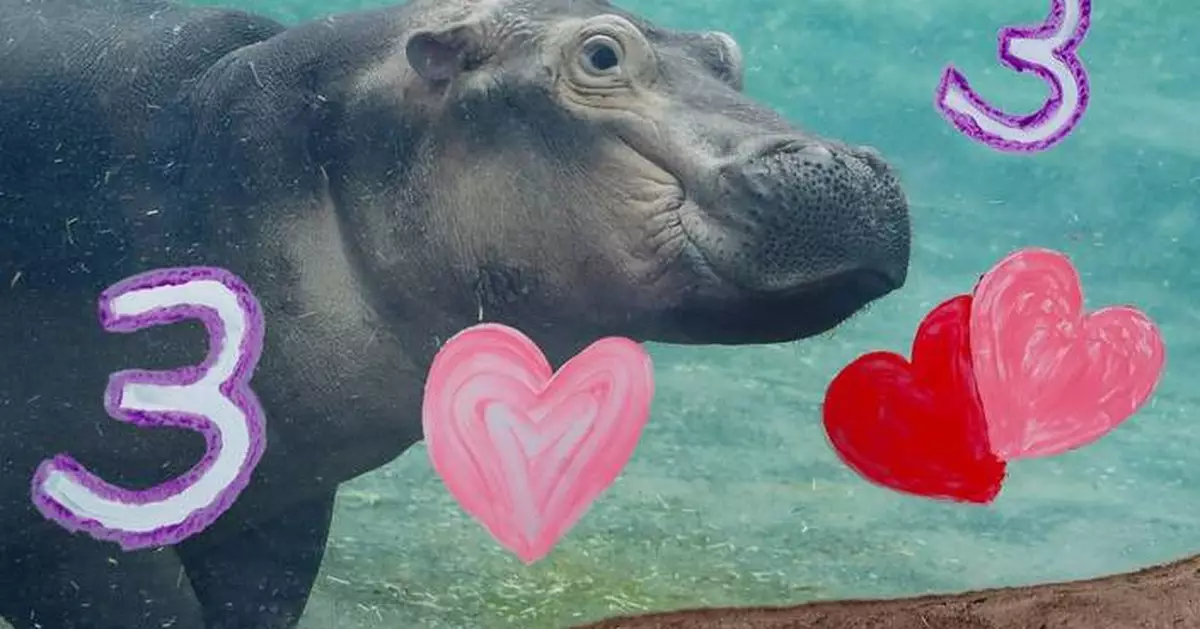
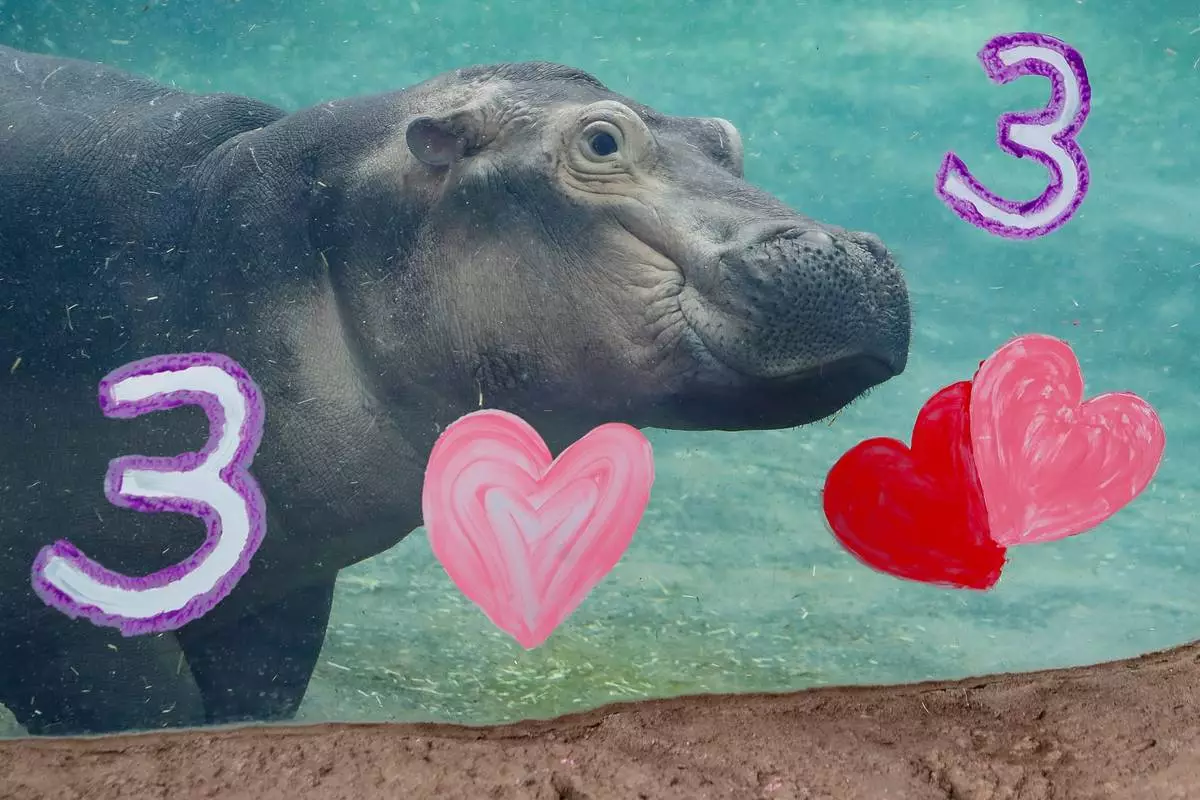
FILE - Fiona, a Nile Hippopotamus, swims after eating her specialty birthday cake to celebrate turning three-years old in her enclosure at the Cincinnati Zoo & Botanical Garden, in Cincinnati, Jan. 23, 2020. (AP Photo/John Minchillo, File)

FILE - Fiona, a Nile Hippopotamus, swims after eating her specialty birthday cake to celebrate turning three-years old in her enclosure at the Cincinnati Zoo & Botanical Garden, in Cincinnati, Jan. 23, 2020. (AP Photo/John Minchillo, File)
SEATTLE (AP) — The Washington state pulp mill where a chemical tank ruptured in May, killing 11, had an extensive track record of egregious and willful safety violations, including failure to inspect or repair more than a dozen other tanks at the facility, state investigators said Friday.

Nippon Dynawave Packaging Co. faces more than $10 million in state fines, including the largest employer safety fine in state history, and investigators plan to refer their findings to prosecutors for possible criminal charges.

The state investigation found that Nippon had multiple ultrasonic tests going back to 2025 that showed the tank was not safe to hold chemicals but failed to fix it or take it out of service, Dan Pitts, state Labor and Industries compliance manager, said during a press conference in Longview to announce the findings.

“Without repair or replacement, the tank walls were a ticking clock,” he said. "It was a question of time, and time ran out."

Nippon said in a press release Friday that the company is reviewing the state’s findings but said the characterization of its actions as “egregious and willful” fails to include important facts and context about the company’s actions leading up to the tank failure.

“We will address that issue through the appropriate appeals process,” the statement said. “We believe the responsible course is to allow the full investigative process to proceed and establish a complete and accurate record before conclusions are reached.”

Nippon plans to restart operations in December. State officials said the company has an obligation to fix any hazards that have been identified, and the state will be closely monitoring to ensure that happens.

Besides the 11 who were killed, 12 were injured on May 26 when the tank holding more than 900,000 gallons (3.4 million liters) of “white liquor,” a highly corrosive chemical used in paper manufacturing, ruptured. The flood of caustic material was powerful enough to blow out building walls and overturn pickup trucks at the site.

“Nippon’s decision to keep G-10 operating when they knew it was not safe contributed to the death of 11 workers," said Labor and Industries Director Joel Sacks. "Because of that, we will be referring this case to prosecutors to consider criminal charges.”

The state Ecology department also announced that it has issued 34 violations that impacted air and water, and is seeking $961,000 in penalties and costs for responding to the emergency.

Most of the environmental violations were due to the impact of the white liquor that spread across the site, officials said. It reached storm drains and a wastewater treatment system, with some discharging into the Columbia River and a nearby ditch, killing fish.

State investigators said Friday the company failed to take appropriate action to address the issue in violation of state law, and similarly failed to inspect or address deficiencies in 13 other tanks at the site.

Officials also said Nippon's emergency response and planning fell short of state requirements. The company had not effectively prepared its staff to respond to an emergency, and there was no employer-led incident command for several hours after the tank failed, Pitts said.

“We believe failures in the response were a contributing factor in serious injuries to four of 12 workers who were hurt that day," Pitts said.

Josh Estes, a spokesman for the Association of Western Pulp and Paper Workers union, said it's reviewing the state's findings.

“As a union, we’re deeply troubled and angry that a warning this serious went unaddressed,” he said in an email. “Families deserve answers about how those warnings were handled, and workers deserve to know what’s been corrected and how those fixes were verified.”

The state investigation mirrored an August report by the U.S. Chemical Safety Board that revealed inspectors hired by the company in 2025 found the tank that ruptured was “not fit for continued service” due to deteriorating thickness in the tank walls.

An AP review of inspections and safety complaints at the plant prior to the tank collapse found that Labor and Industries had investigated more than a dozen safety complaints at the plant since 2018 and issued almost $7,000 in fines for violations. Ecology had issued 54 environmental violation notices against the company since 2016 and fined them $41,500 for eight serious offenses.

More than $2.4 million in workers’ compensation claims have been paid for 169 employees injured on the job since 2015, the agency reported, including for injuries related to exposure to caustic substances.

After the May tank collapse, the state’s Department of Ecology filed a violation notice against the company listing 35 citations.

Nippon Dynawave said in an email Wednesday that they have remained engaged with the government agencies that are investigating the tank collapse. They said the mill has hosted hundreds of visits by regulators and investigators.

“The full deconstruction, forensic examination and technical analysis needed to determine the root cause have not yet been completed,” the company said. “The tank is currently being deconstructed, with great care being taken to log and retain portions of the tank to determine the root cause.”

Among workers killed in the rupture were brothers Tyler and Brad Covington. Their mother, Sheri Lynn King, has filed a wrongful-death lawsuit against Nippon Dynawave, saying her sons were burned and crushed by the white liquor and debris. The lawsuit claims the company failed to maintain and inspect equipment, failed to properly train and supervise employees and failed to implement safety policies and emergency response procedures.

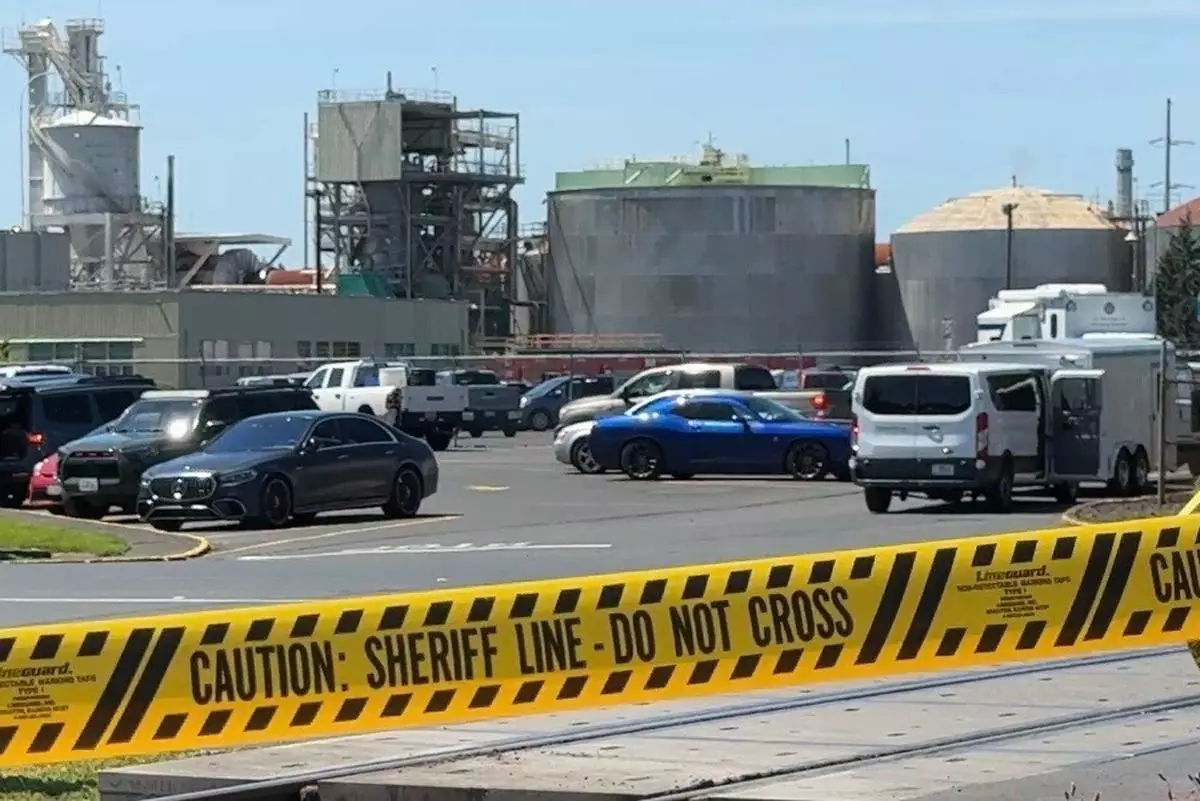
FILE - Yellow police tape is seen on May 27, 2026 outside the Longview, Wash. paper mill where a deadly chemical tank failure occurred. (AP Photo/Claire Rush, File)

FILE - Yellow police tape is seen on May 27, 2026 outside the Longview, Wash. paper mill where a deadly chemical tank failure occurred. (AP Photo/Claire Rush, File)

Recommended Articles