IRVING, Texas (AP) — Stewart Rhodes didn’t just go to prison for Donald Trump. While serving time for his role in the Jan. 6 attack on the U.S. Capitol, the founder of the right-wing militia known as the Oath Keepers got a tattoo of Trump’s defiant face after he survived an assassin’s bullet in Butler, Pennsylvania.
It was further proof of Rhodes' devotion to the Republican president. But that's all over now.
“I am absolutely done with Trump,” said Rhodes, sitting at a rickety yellow table outside a gastropub in Irving, Texas. He considers Trump not just a traitor, but "one of the very worst in our nation's history.”
The repudiation from a former acolyte — one convicted of seditious conspiracy for orchestrating an ill-fated attempt to keep Trump in power six years ago — is another example of how allegiance to the president has faded even among extreme supporters. Back then, Rhodes claimed Trump lost the 2020 White House race to Democrat Joe Biden because of election fraud. This year in Texas, where Democrats had historic victories, he said there's another reason.
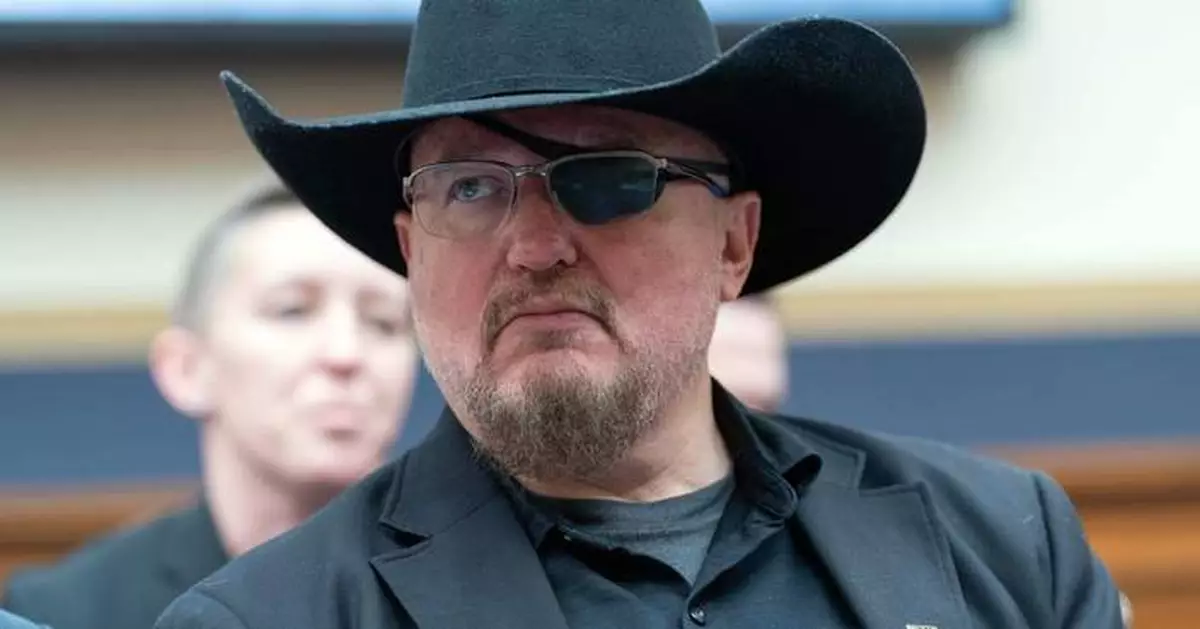
“The lion’s share is because Trump pissed off his own base," Rhodes said, his face shaded by a black cowboy hat. An eye patch covers his left socket, the result of an old gun accident, and a glacial blue iris peers out from the other.
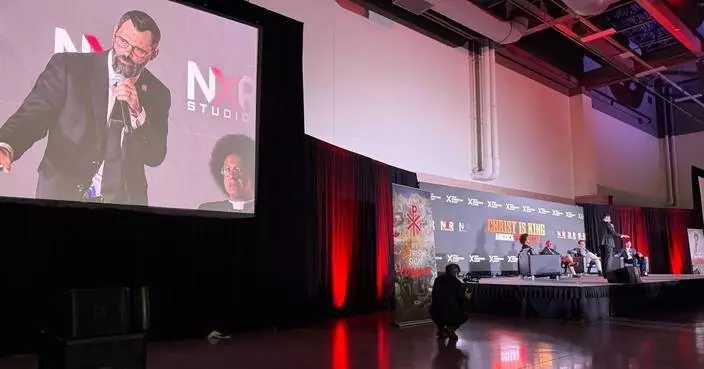
Nearby, people mingled with drinks for his Christian Warriors After-Party, organized during a three-day conference called “Christ is King: America After Trump.” Some people approached to shake hands or sign up for the Oath Keepers or trainings for things like community defense and hurricane relief.
The beginning of Rhodes' break with Trump came when the president gave pardons to hundreds of people who were locked up for their actions on Jan. 6, 2021, but only commuted Rhodes' sentence. “That was the first inkling,” Rhodes said.
Rhodes also said Trump's war with Iran violated Trump's promises to end foreign conflicts. And, Rhodes said, it felt like an affront when Trump dismissed people who urged his administration to release files about the Jeffrey Epstein case, calling them “PAST supporters.” Then Rhodes felt Trump went back on his longtime slogan.
“We elected him to end the corruption in Washington, D.C. ‘Drain the swamp.’ Unfortunately his administration has been one of the most corrupt administrations in U.S. history," Rhodes said. “The pardons are pay-for-play and everything is pay-for-play.”
The White House did not respond to a request for comment. Rhodes is not alone in his about-face on Trump, but there's an ideological through line, said Sam Jackson, an associate professor at the University at Albany with a focus on anti-government extremism.
“They went from seeing Donald Trump as their ally in this fight against the conspiracy, to actually being co-opted by the conspiracy,” Jackson said, and it “points to deeper consistency in that understanding of the world as driven by hidden, evil actors.”
Rhodes, who graduated from Yale Law School and worked for former U.S. Rep. Ron Paul of Texas, founded the Oath Keepers in 2009 with the goal of encouraging members of the military and law enforcement to resist what they view as unconstitutional orders, such as disarming citizens or carrying out warrantless searches.
Rhodes later allied himself with Trump's political movement, and the Oath Keepers supported his attempt to remain in office after losing the 2020 election. Fueled with conspiracies about voter fraud, prosecutors said group members gathered weapons, organized trainings and assembled in Washington, where some helped storm the Capitol on Jan. 6.
Rhodes, who did not enter the building that day, said he was a “political prisoner" who faced “illegality” in his trial. He was sentenced to 18 years, one of the longest sentences of any Jan. 6 case.
“You are smart, you are charismatic and compelling and frankly that’s what makes you dangerous,” U.S. District Judge Amit Mehta said during the hearing. “The moment you are released, whenever that may be, you will be ready to take up arms against your government.”
Rhodes was behind bars as Trump began his political comeback. He said he watched the assassination attempt in Butler on a prison television with other inmates. He saw Trump pump his fist and yell “fight,” and he figured that God’s hand was on the man.
After Trump won the 2024 election, he swiftly pardoned hundreds of people convicted of crimes related to Jan. 6, including those who assaulted police officers. Rhodes received a commutation, which didn’t wipe his record clean.
“He let us out of prison. We were grateful. I didn’t get a pardon though,” he said.
The Justice Department vacated Rhodes' conviction earlier this year, lifting his felon status. Rhodes said he's working to rebuild the Oath Keepers, which previously had tens of thousands of members, according to leaked lists. With his rights restored, Rhodes said his first priority was to get some guns, and he didn't register to vote in time for the election. But he said he wouldn't have cast a ballot anyway.
That's because Rhodes felt that “the Republican Party has taken us for granted," and he didn't want to choose between “a half a dose of poison or a full dose.”
As for his tattoo of Trump, the man he now considers a traitor, Rhodes has plans that he didn't specify.
“I will have this prison tattoo of Trump ‘modified,'” he wrote in a text message, “to reflect that reality. That treason.”
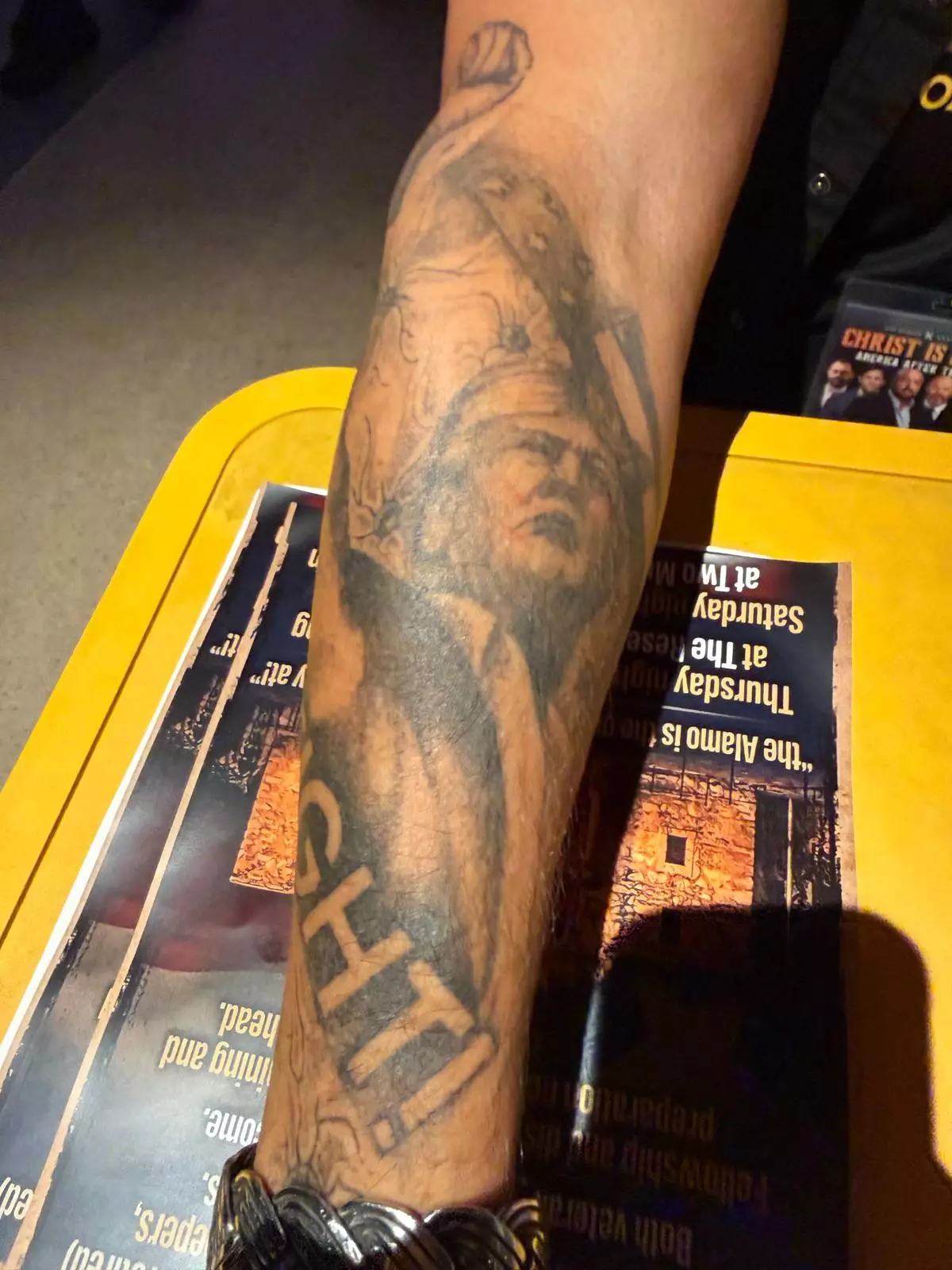
Stewart Rhodes, the founder of the Oath Keepers, shows his tattoo of President Donald Trump, Thursday, Nov. 12, 2026, in Irving, Texas. (AP Photo/Jesse Bedayn) Photo taken with a mobile phone
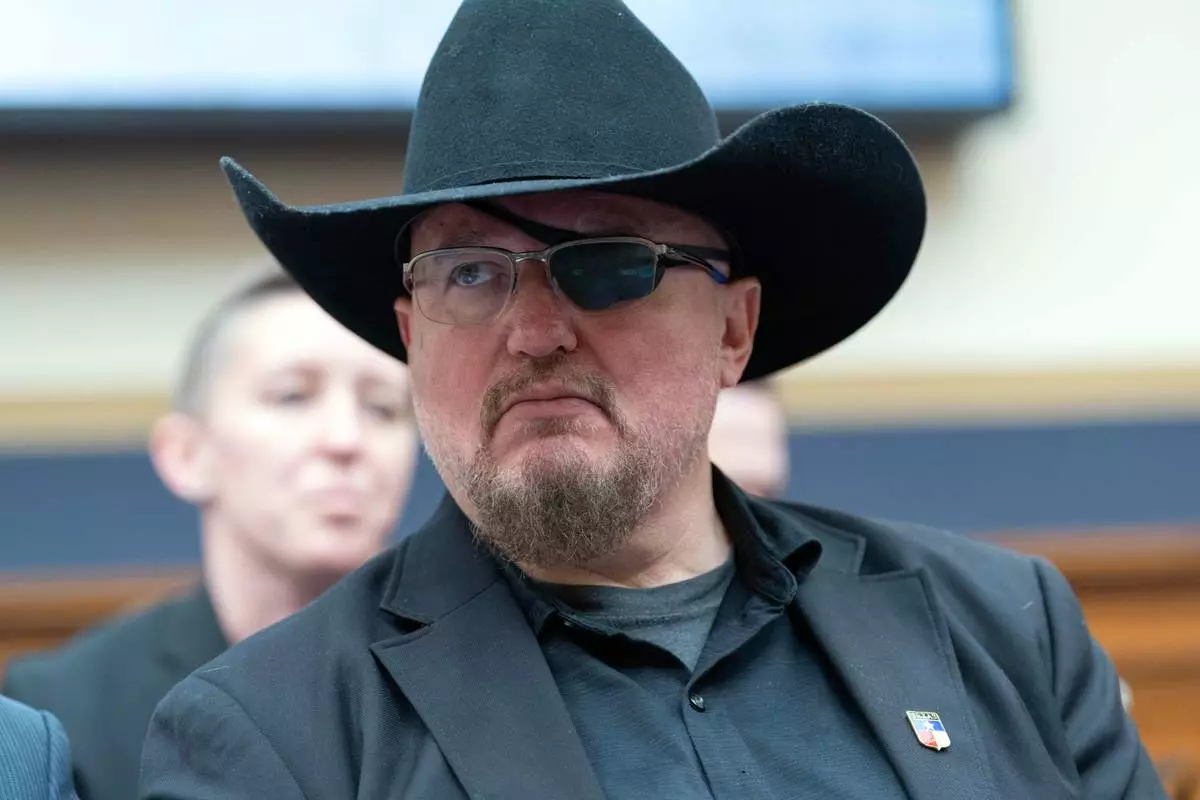
FILE - Oath Keepers founder Stewart Rhodes attends the House Select Subcommittee hearing to investigate the remaining questions surrounding January 6, 2021, on Capitol Hill in Washington, Jan. 14, 2026. (AP Photo/Jose Luis Magana, File)