A smart traffic management system has increased safety and efficiency on a renovated section of a major highway in northeast China's Liaoning Province, as it can ease accident-related traffic jams and make predictions about congestion.
The over-220-kilometer Suizhong-Panjin section of the Beijing-Harbin Expressway connects multiple highways from northeastern Chinese provinces leading toward north China's Beijing-Tianjin-Hebei region.
Last year, it was expanded to 10 lanes, and equipped with an intelligent expressway system, which has helped to ease traffic congestion when collisions occur.
In the past, traffic accidents and congestion were only handled after being reported by drivers or discovered by patrol personnel. Now a network of radar and sensors along the route collects real-time data on road conditions and vehicles, and sends it back to an intelligent command and dispatch center.
As soon as the data platform detects an anomaly, it will analyze the situation -- factoring in real-time traffic flow, weather conditions and ongoing construction work, issue warnings, and enable proactive traffic management at toll stations and along the main line.
The system will also deploy drones to reach incident sites ahead of ground personnel. The UAVs capture and transmit live footage on the scene, and direct vehicles involved in minor accidents to leave quickly.
"In this accident, two trucks scratched two passenger cars. By leveraging big data, our platform provides a supporting plan for handling the situation, diverting traffic on roads to prevent more collisions and major congestion," said Ding Dong, dispatch team leader of the intelligent command and dispatch center for Suizhong-Panjin section of Beijing-Harbin Expressway.
The smart traffic management system is also capable of making predictions.
By adjusting parameters like traffic volume at critical junctures such as highway interchanges in the system, operators can simulate potential future traffic conditions and devise plans to mitigate congestion.
"We have built a data acquisition and sensing system mainly using drones and high-definition cameras. By aggregating this data into a management platform and leveraging an AI-powered 'smart brain' for analysis and decision-making, we have achieved scientific and efficient management of expressway operations, and ensured the safe and smooth flow of traffic," said Su Lianjun, deputy general manager of Liaoning Provincial Transportation Investment Group.
Data shows that in the first 10 months of this year, the Suizhong-Panjin section of the Beijing-Harbin Expressway recorded an average daily traffic volume of 52,000 vehicles, a year-on-year increase of 9.1 percent.
Meanwhile, the duration of traffic congestion fell by 61.4 percent, and the number of accidents decreased by 17.7 percent compared to the same period last year.
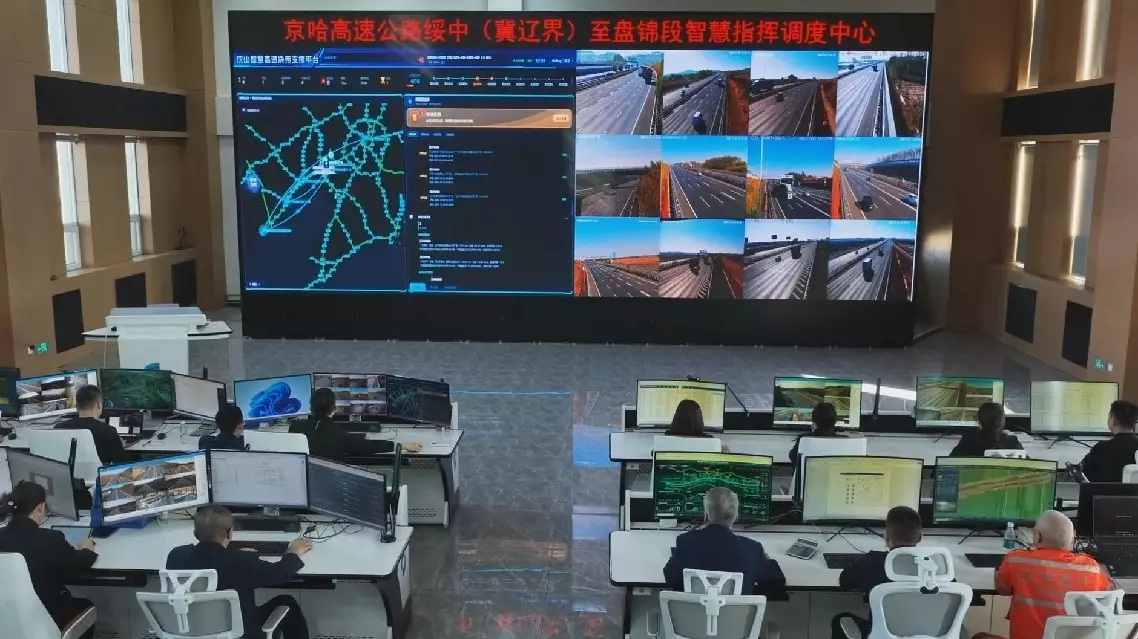
Smart traffic management system increases road safety, efficiency in Liaoning