- As industries invest to integrate artificial intelligence across their operations, access to reliable equipment-level data is becoming the next critical challenge
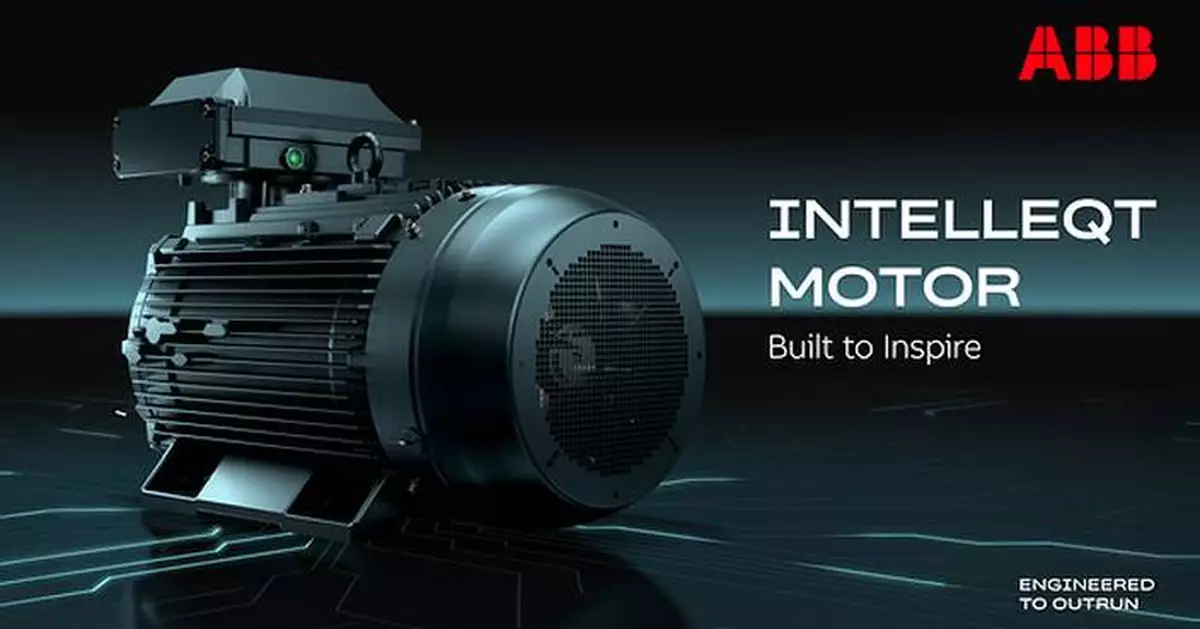
- ABB's new Intelleqt™ motor delivers real-time intelligence from its first rotation, turning widely used industrial equipment into a trusted source of operational data
- Edge computing and early fault detection can reduce unplanned downtime by up to 50 percent, helping prevent failures costing up to $1.5 million per incident
ZURICH, Nov. 24, 2026 /PRNewswire/ -- ABB today launched Intelleqt™, the world's first low-voltage motor with intelligence integrated at the factory, designed to deliver real-time operational insights from its first rotation. Its open architecture enables customers across industries to connect motor data to their existing digital platforms while retaining full ownership of their data. By delivering equipment-level intelligence through a plug-and-play solution, Intelleqt helps companies build the data foundation needed to scale AI-driven operations.
ABB helps scale industrial AI with world's first motor featuring built-in intelligence
Intelleqt arrives as industries increasingly seek to move artificial intelligence from pilot projects into core operations, with data quality and availability remaining among the main barriers to adoption. Industrial AI can deliver measurable value, but scaling its deployment remains challenging.
While 84 percent of manufacturers report benefits from artificial intelligence, only 20 percent of AI use cases have successfully scaled.1 At the same time, the equipment powering critical sectors such as data centers, water infrastructure and food production remains one of the largest untapped sources of operational intelligence.
More than 300 million motor-driven systems operate worldwide, accounting for 60 percent of industrial electricity demand2. Yet most are not connected to the digital technologies used to improve reliability, efficiency and performance. As electrification, automation and industrial AI accelerate, the $18 billion global IEC and NEMA low-voltage motor market is also positioned for further expansion.
"ABB's investment in research and development is always focused on solving real customer challenges," said Stefan Floeck, President of ABB's IEC Low Voltage Motors division. "The shift towards AI-driven operations is accelerating, yet most of the motors powering global industry do not generate data and remain invisible to the intelligence being built around them. ABB Intelleqt™ is a world first that opens a new chapter in motor development, transforming motors from mechanical equipment into sources of real-time intelligence."
By turning motor data into actionable insights, ABB Intelleqt helps customers improve reliability, increase productivity and identify energy saving opportunities of 30 percent or more3. Early fault detection can reduce unplanned downtime by up to 50 percent4, helping industrial operators avoid failures costing up to $1.5 million per incident5. Factory-integrated sensing, edge computing and connectivity give customers access to these insights from day one.
ABB Intelleqt is the latest example of ABB's investment in artificial intelligence and digital technologies, bringing equipment-level intelligence to one of industry's most important and widely used assets while helping customers build the data foundation for the next generation of industrial AI.
Launched today at the SPS trade fair in Germany, ABB Intelleqt™ is now entering a customer co-creation phase, working closely with original equipment manufacturers (OEMs) and end users to develop solutions tailored to their operational needs. A broader rollout is planned for 2027, initially focusing on markets in Europe, Japan, China and India.
ABB drives shared success with customers through innovation and customer-focused research and development. Drawing on more than 140 years of engineering expertise, ABB plans to invest 4.5 to 5.0 percent of Group revenues in R&D to support the development of pioneering technologies such as ABB Intelleqt. In 2025, ABB invested $1.3 billion in R&D. The company has around 7,800 R&D employees across facilities in more than 30 countries on six continents, with approximately half focused on digital and software development. Since 2022, ABB's total R&D investment has increased by around 30 percent.
For more information about Intelleqt™, visit: [link]
ABB is a global technology leader in electrification and automation, enabling a more sustainable and resource-efficient future. By combining engineering expertise with digital capabilities, ABB helps industries operate at high performance while improving efficiency, productivity and sustainability, enabling them to outperform. At ABB, we call this "Engineered to Outrun". With more than 140 years of history, the company has around 110,000 employees worldwide. ABB's shares are listed on the SIX Swiss Exchange (ABBN) and Nasdaq Stockholm (ABB). www.abb.com
1 - Deloitte: AI in Manufacturing 2026
2 - International Energy Agency (IEA): Energy Efficiency 2025 Market Report
3 – International Energy Agency (IEA): Energy Management for Industry (2025)
4 - McKinsey: Prediction at Scale: How Industry Can Get More Value Out of Maintenance
5 - Global median: $124,669 per hour. This estimate assumes one failure of a critical 110 kW motor in a factory, resulting in 12 hours of downtime, including the time required for removal, installation and commissioning.
** This press release is distributed by PR Newswire through automated distribution system, for which the client assumes full responsibility. **
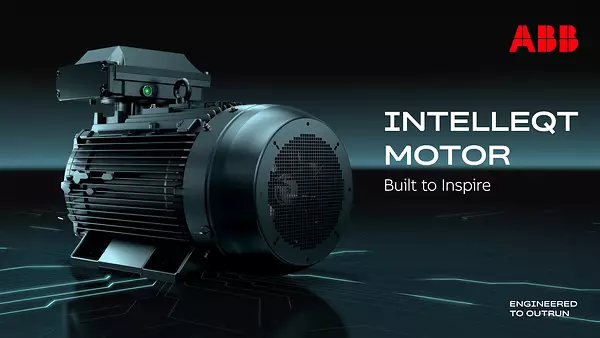
ABB helps scale industrial AI with world's first motor featuring built-in intelligence
- FFR is now an approved robotics supplier to a top-tier California public school district and has joined its procurement platform, which means more than 1,000 schools in the district can now purchase FFR robots and its education productivity solutions directly.
- FFR believes it pioneered K–12 robotics education in the U.S. and has become No. 1 in the industry. The Company's "Four-Core Full-Stack AI" education ecosystem integrates robot devices, curricula, teacher training, and ongoing services to support schools in bringing Physical AI into the classroom.
- Building on its progress in California, FFR plans to accelerate the expansion of its K–12 robotics education model across the U.S., initially focusing on partnerships and sales opportunities in California, New York, Pennsylvania, Florida, and Texas, while exploring expansion across five states.
LOS ANGELES, Nov. 24, 2026 /PRNewswire/ -- FF EAI Robotics Ecosystem Inc. (Nasdaq: FFR), a U.S.-based Embodied AI robotics company, today announced breakthroughs in its K–12 robotics education business, including recent progress with three California public school districts. Two districts have made initial robot purchases, and two have signed strategic education partnership framework MOU and agreement with FFR.
The Company also outlined its plans to expand its K–12 robotics education model across the United States and globally, supported by its "Four-Core Full-Stack AI" education ecosystem and developer platform. FFR became an approved robotics supplier to one California public school district and joined its procurement platform. More than 1,000 schools in the district can now purchase FFR robots and education solutions through that platform. The district's career education center made an initial purchase that included FX Navi and Aegis EDU robots. FFR intends to use what it learns from the center's implementation to inform potential projects at other schools in the district.
A second California public school district signed a strategic education partnership framework MOU agreement with FFR and purchased robots including Master Mini and Aegis EDU. A third public school district in the Los Angeles area signed a separate framework agreement.
Under the two agreements, FFR and the districts plan to explore joint curriculum development, innovation labs, teacher training, and career and technical education pathways. The potential programs would give K–12 and adult learners hands-on experience programming and operating robots, with opportunities to connect that work to further study and career training.
The Company's breakthroughs in K–12 robotics education are supported by four key strengths. First, its "Four-Core Full-Stack AI" education ecosystem brings together robot devices, curricula, teacher training, deployment, and ongoing services in an integrated solution designed to make adoption easier for schools. Second, its range of robot form factors and tiered curricula are designed to address different learning needs, from introductory education and programming to hands-on AI applications and advanced research. Third, its open-source developer platform is intended to empower teachers and students to program robots, develop applications and co-create Skills, allowing learning outcomes to be shared and reused. Fourth, FFR has gained practical experience through summer camps and educational programs, providing a foundation for school district partnerships and potential expansion at scale.
Building on these strengths, FFR believes it pioneered K–12 robotics education in the United States and has become No. 1 in the industry. The Company also believes its developer ecosystem can play an important role in expanding K–12 robotics education and increasing its value to schools, teachers, and students. By bringing together young creators, educators, and developers, FFR aims to encourage the development of learning content, robot skills, and practical applications for different classroom needs.
FFR invites more students, teachers, and developers to join its developer platform and contribute their ideas and expertise. Through its broader ecosystem, the Company aims to connect technology, educational resources, talent, and real-world applications to support the development of the AI and robotics industries.
Building on its progress in California, FFR plans to accelerate the expansion of its K–12 robotics education model across the United States. In the initial phase, the Company is focused on California and is pursuing education partnerships and sales opportunities with school districts in New York, Pennsylvania, Florida, and Texas.
Looking ahead, FFR also plans to begin expanding its K–12 robotics education efforts across five states, working with local partners to explore opportunities that meet the needs of different education systems and communities.
"Bringing Physical AI into K–12 education is about preparing the next generation to understand, create, and work alongside intelligent machines," said YT Jia, CEO of FFR. "Our progress with these California school districts gives us an opportunity to learn from real educational settings and develop a model that we hope can be replicated across the country and, over time, around the world. At FFR, we are working to bring together our robots, developer community, educators, and partners to turn these technological opportunities into practical learning experiences and help cultivate the next generation of AI and robotics talent."
FFR shares closed up 45.71% on November 23, with approximately 18.07 million shares traded.
About FF EAI Robotics Ecosystem Inc.
FF EAI Robotics Ecosystem Inc. (NASDAQ: FFR) is a U.S.-based Embodied AI robotics company focused on the research and development, manufacturing, commercialization and deployment of intelligent robotic technologies, products and industry solutions. FFR is building a "Four-Core Full-Stack" AI ecosystem covering the full lifecycle of robotics, consisting of Physical AI Brain & Developer Platform, Physical AI Devices, Physical AI Industry Productivity Solutions, and Physical AI Data Factory. Guided by the technology and product philosophy of "One Brain, All Robots, Multi-capabilities," FFR aims to empower humanoid, biomimetic, and other robotic form factors through a unified Physical AI Brain, while continuously expanding their multi-task and multi-scenario capabilities. The ecosystem is designed to support the full robotics lifecycle, including R&D, deployment, data collection and training, operations, and commercial applications. FFR also operates RoboShare, a robot-sharing and services platform. To learn more, visit https://www.ff.com.
FORWARD-LOOKING STATEMENTS
This press release contains "forward-looking statements" within the meaning of the safe harbor provisions of the Private Securities Litigation Reform Act of 1995, as amended, and other applicable securities laws. Statements other than historical facts, including statements regarding the standalone full-year 2026 guidance for the acquired robotics business, expected sales and shipments, projected revenue and unit sales under the five-year business plan, expected gross margins, planned partnerships and access to government procurement opportunities, FFR's business strategy, commercialization plans, robotics operations, anticipated benefits of the acquisition, future growth opportunities and development and deployment of robotics technologies, are forward-looking statements. You can often identify forward-looking statements by words such as "may," "might," "will," "shall," "should," "expects," "plans," "anticipates," "could," "intends," "targets," "projects," "contemplates," "believes," "estimates," "predicts," "potential," "goal," "objective," "seeks," "likely," or "continue," or the negative of these terms or other similar expressions; the absence of these words does not mean a statement is not forward-looking.
These statements are based on current expectations, estimates and assumptions and involve risks and uncertainties that could cause actual results to differ materially from those expressed or implied. Such risks include the risk that the standalone guidance and longer-term projections are not achieved; FFR's ability to successfully integrate and operate the acquired business, commercialize its robotics technologies, achieve its business objectives, obtain additional financing and continue as a going concern, maintain compliance with Nasdaq listing requirements, compete effectively, manage its liquidity position and execute its strategic transition.
Additional risks and uncertainties are described in FFR's filings with the U.S. Securities and Exchange Commission, including its Annual Report on Form 10-K, Quarterly Reports on Form 10-Q and subsequent filings available at www.sec.gov.
Forward-looking statements speak only as of the date of this release. Forward-looking statements are based on management's current expectations and assumptions, are not guarantees of future performance and speak only as of the date of this release. Except as required by applicable law, FFR undertakes no obligation to update or revise any forward-looking statements.
** This press release is distributed by PR Newswire through automated distribution system, for which the client assumes full responsibility. **

FF EAI Robotics Ecosystem (FFR) Announces K-12 Robotics Education Partnerships and Sales Across Top Public School Districts, Advancing a Scalable Physical AI Education Ecosystem in the U.S.