CAMPBELL, Calif.--(BUSINESS WIRE)--Nov 24, 2026--
ChargePoint (NYSE: CHPT), a global leader in intelligent electrification and e-mobility, today announced a strategic partnership with Kässbohrer Geländefahrzeug AG, manufacturer of the world-leading PistenBully snow groomers, to support ski resorts across Europe and North America on their path toward electrification.
This press release features multimedia. View the full release here: https://www.businesswire.com/news/home/20261124827003/en/
Under the agreement, Kässbohrer will introduce its customers to ChargePoint's portfolio of charging solutions, software, and services. With these combined capabilities, ski resorts and indoor ski facilities gain an integrated charging ecosystem for snow groomers and their entire electric vehicle fleet.
"Electrification is reaching heavy-duty vehicles that operate under some of the toughest conditions anywhere," said John Saffrett, EVP and Managing Director, Europe at ChargePoint. "Kässbohrer is trusted by ski resorts and fleet operators around the world. Together, we're helping customers electrify entire operations, from snow groomers to public parking, while reducing emissions, improving energy management, and lowering operating costs."
Ski resorts are making electrification a strategic priority to reduce emissions, keep fuel costs under control, and achieve sustainability targets. At the same time, reliable charging infrastructure for visitors with electric vehicles is becoming an integral part of the guest experience.
"With the PistenBully 100 E, emission-free slope grooming has arrived on the mountain. But for it to function reliably and sustainably, the right infrastructure is essential. Only when vehicle and charging solution work together does a powerful machine become a system that operators can rely on day after day and night after night. That is precisely why we are partnering with ChargePoint, together creating the foundation for long-term operational efficiency and sustainability," said Tim Estelmann, Product Manager at Kässbohrer.
Well over half of the snow groomers sold worldwide each year come from Kässbohrer. Together with ChargePoint, which operates one of the world's largest charging platforms, Kässbohrer aims to simplify purchasing decisions and support ski resort and mountain operators with planning, implementation, and management, providing them with a reliable path toward electrification.
The partnership is effective immediately, giving ski resorts direct access to the joint offering.
About Kässbohrer Geländefahrzeug AG
For nearly 60 years, Kässbohrer Geländefahrzeug AG has been developing innovative vehicle solutions with passion and creativity for the most demanding applications, on the mountain and in the valley, on the beach, and in difficult terrain worldwide. As the global market leader in slope grooming and beach cleaning, the company stands for quality, efficiency, and sustainability. Development and manufacturing take place exclusively at the company's headquarters in southern Germany. A high-performance sales, service, and spare parts network ensures fast and reliable customer support in more than 110 countries around the globe and guarantees the high availability of vehicles in daily operation.
About ChargePoint Holdings, Inc.
ChargePoint has established itself as a global leader in intelligent electrification and e-mobility since its inception in 2007, long before EVs became widely available. The company provides comprehensive solutions tailored to the entire EV ecosystem, from the grid to the dashboard of the vehicle. The company serves EV drivers, charging station owners, vehicle manufacturers, and similar types of stakeholders. With a commitment to accessibility and reliability, ChargePoint’s extensive portfolio of software, hardware, and services ensures a seamless charging experience for drivers across North America and Europe. ChargePoint empowers every driver in need of charging access, connecting them to millions of charging ports worldwide. ChargePoint has facilitated the powering of more than 23 billion electric miles, underscoring its dedication to reducing greenhouse gas emissions and electrifying the future of transportation.
For further information, please visit the ChargePoint pressroom or the ChargePoint Investor Relations site. For media inquiries, contact the ChargePoint press office.
ChargePoint and the ChargePoint logo are trademarks of ChargePoint, Inc. in the United States and in jurisdictions throughout the world. All other trademarks, trade names, or service marks used or mentioned herein belong to their respective owners.
CHPT-IR

Sustainable slope preparation: The all-electric Kässbohrer PistenBully 100 E alongside the ChargePoint Express Solo DC fast charging station.
LAPITHOS, Cyprus (AP) — The construction worker in Cyprus spotted human bones jutting out from the muddy trench where he had been preparing to pour concrete for the foundation of a new luxury hotel. His alerts went unheeded and the remains were entombed beneath tons of concrete.
They stayed there, a stone’s throw from the island nation’s northern coastline, for 38 more years — until the hotel's recent demolition presented Cyprus' Committee on Missing Persons with the rare chance to act on the decades-old eyewitness account.
Comprised of a Greek Cypriot, a Turkish Cypriot and a United Nations appointee, the CMP employs a bi-communal forensic team of more than 60 archaeologists, anthropologists and geneticists who have spent two decades unearthing and identifying bodies from the conflict that consumed Cyprus and led to its ethnic division.
There were 2,002 people on an official list of those who disappeared during 1960s clashes after Cyprus gained independence from British colonial rule and when the island’s population split in 1974. The CMP has exhumed and identified 1,085.
Such achievements offered closure to relatives waiting decades for word about their loved ones' fates, and chiseled away at mistrust and enmity between the two communities. And this has helped to provide impetus for a negotiated peace deal, despite numerous failed U.N.-mediated rounds of talks.
But 745 Greek Cypriots and 172 Turkish Cypriots are still missing, according to the CMP — and recovering bodies like the one beneath the L.A. Hotel is increasingly difficult as eyewitnesses die and old memories blur, while high-rises and hotels luring foreign buyers and vacationers are built atop makeshift graves.
“Time is our biggest enemy at the moment because our witnesses are disappearing, families are leaving us, buildings are going up everywhere,” Leonidas Pantelides, the Greek Cypriot member of the CMP's hierarchy, told the Associated Press in an interview at the demolition site. “So it is a struggle against time, but it’s one that we cannot give up on.”
Before the foundation for the L.A. Hotel in Lapithos was laid in 1988, there was little there but citrus orchards and pristine beaches.
It had been the scene of fierce battles between Turkish forces and Greek Cypriot defenders during Turkey’s 1974 invasion, which was triggered by a Greek junta-backed coup that aimed at union with Greece.
As Turkish troops advanced to seize the northern third of the island, hundreds of Greek Cypriots were buried in hastily dug mass graves while tens of thousands more fled. Many Turkish Cypriots also disappeared in the south. The island's ethnic split was entrenched in a 1975 deal to swap populations stuck on either side of a United Nations-controlled buffer zone.
The bright pink L.A. Hotel sought to draw European tourists to the island's north, where Turkish Cypriots declared a separate state recognized only by Turkey. But the business collapsed under the strain of COVID-19 travel restrictions. A new owner tore it down this year to make way for a swankier hotel.
The CMP seized the moment and got the owner's consent to dig at the site for the body spotted almost four decades earlier — a rare reprieve as construction marches ahead on both sides of the buffer zone. Excavation began this month, with hopes that finding at least one body beneath the concrete slab could prompt searches on other developed or condemned property in the north.
“We hope that we will have the chances for more old buildings to be demolished so that we can excavate the whole area, which is a focus area actually for us,” archaeologist Irene Papadopoulos said.
Since unearthing 177 bodies in 2015, the CMP's success rate has dwindled. So far this year they’ve found just eight. What was once an open field where a witness described someone being buried near an olive tree could now be the site of a strip mall or apartment complex. Ground-penetrating radar has brought only mixed results.
Even the slightest clue can help piece together disparate strands of information, according to Pantelides: “A topographical detail that a witness knows may help us to locate a place of interest more specifically, because our biggest problem is accuracy."
For Ali Culluoglu, team leader of the Lapithos dig, the work is deeply personal. His grandfather had been among the missing until his remains were found in 2015 near the town of Paphos, on the island’s southwestern corner. The CMP will keep searching until "the last missing person" is found, he said.
A half-dozen skeletons are laid out atop white tablecloths in the CMP's anthropological laboratory, where Alexandra Mouski painstakingly pieces together tiny fragments of a shattered skull.
Collecting tooth and bone samples for identification through DNA analysis is a laborious process, since most remains have been found comingled in mass graves. Many samples must be taken to properly identify the bones before returning the most complete remains possible to relatives, laboratory coordinator Istenc Engin said.
DNA collected from remains is checked against a genetics database containing samples from relatives of most of the missing on both sides. DNA samples are occasionally taken from deceased relatives, when the missing person had no family members still living, identification coordinator Katerina Papaioannou and colleague Gulbanu Zorba said.
Forensic teams also search for any artifacts that could help identify the bodies — like a ring engraved with a wedding date and the initials of a spouse.
"This is very important for the family members, because this they can remember. They cannot understand the bones, but they can understand the artifacts,” Mouski said.
Among the Cypriots still waiting for results is schoolteacher Panayiotis Efstathiou, who was 10 when his parents and younger brother were caught behind enemy lines after Turkish forces landed. He never saw them again.
His amateur sleuthing turned up details about how his family disappeared — including the name of the now-deceased man who killed them. But his years of gathering testimonies haven't revealed just where they were buried outside their village of Vasileia.
“I believe they must all accelerate their work, because most witnesses have died, others are in very old age; they’re suffering from dementia and I see this daily. I search for them, speak with them. They won't say,” Efstathiou told the AP. “It will be very difficult, unfortunately, to find those who are left. From this side and from the other side.”
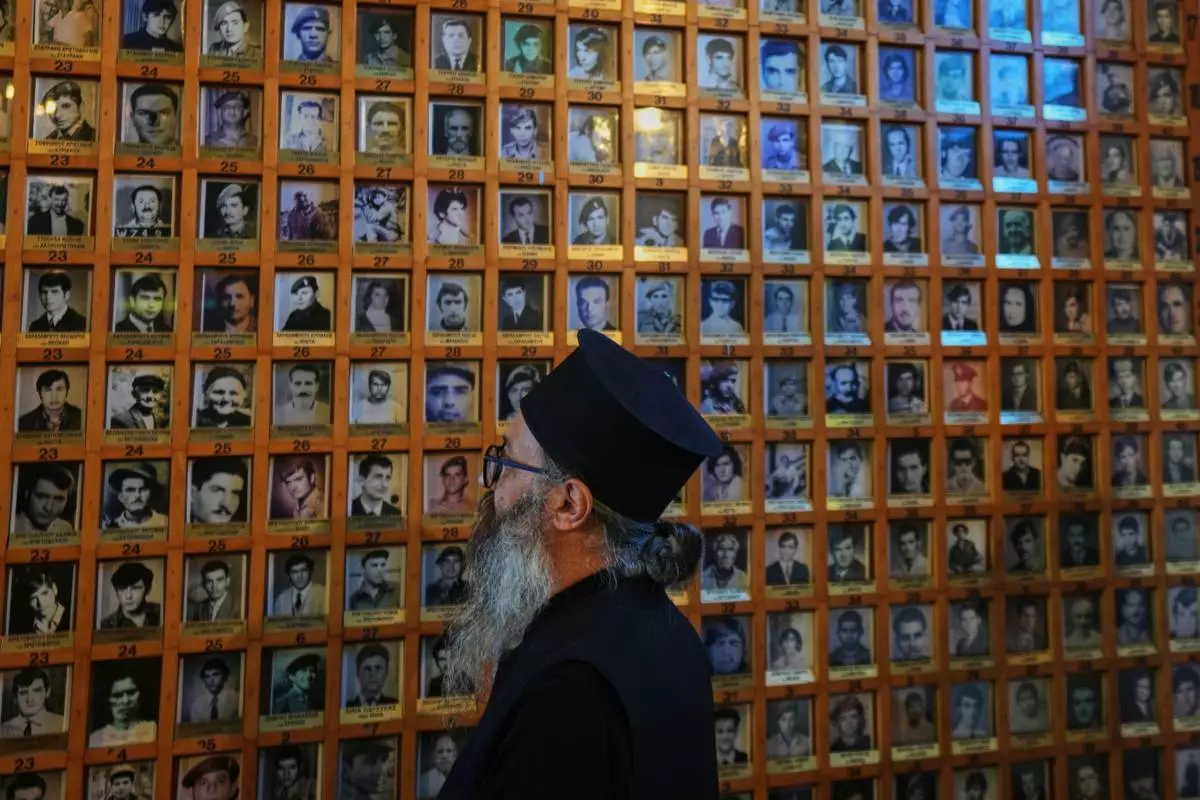
Orthodox priest Athanasios stands in front of the Greek Cypriot missing persons portraits photographs who went missing during the 1960s and 1974 Turkish invasion, at Saint Alexander church in Kornos village, Cyprus, on Nov. 5, 2026. (AP Photo/Petros Karadjias)
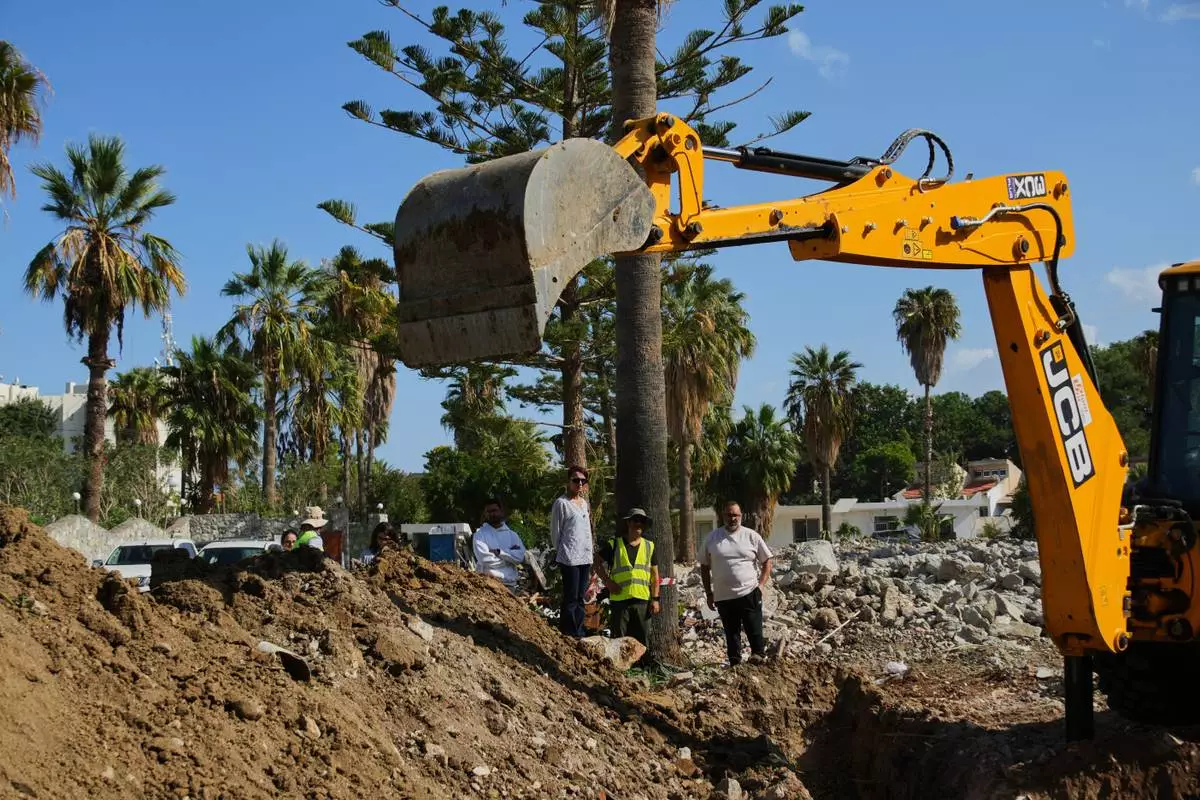
A bulldozer excavates a site in search of the remains of people who went missing during the 1974 Turkish invasion, in the Turkish-occupied area of Lapithos, Cyprus, on Nov. 4, 2026. (AP Photo/Petros Karadjias)
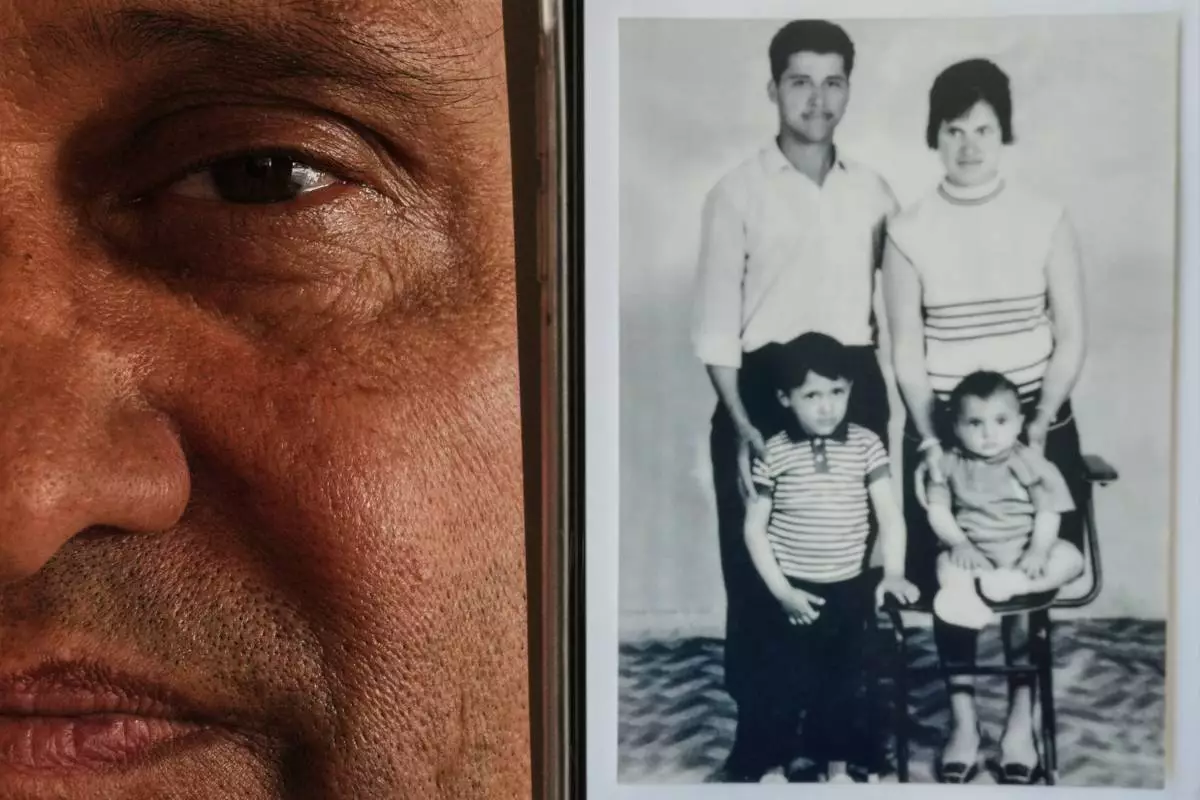
Panayiotis Efstathiou holds a photograph showing himself, left, with his parents and younger brother, who went missing after becoming trapped behind enemy lines during the second phase of the Turkish invasion in August 1974, in Nicosia, Cyprus, Friday, Nov. 20, 2026. (AP Photo/Petros Karadjias)
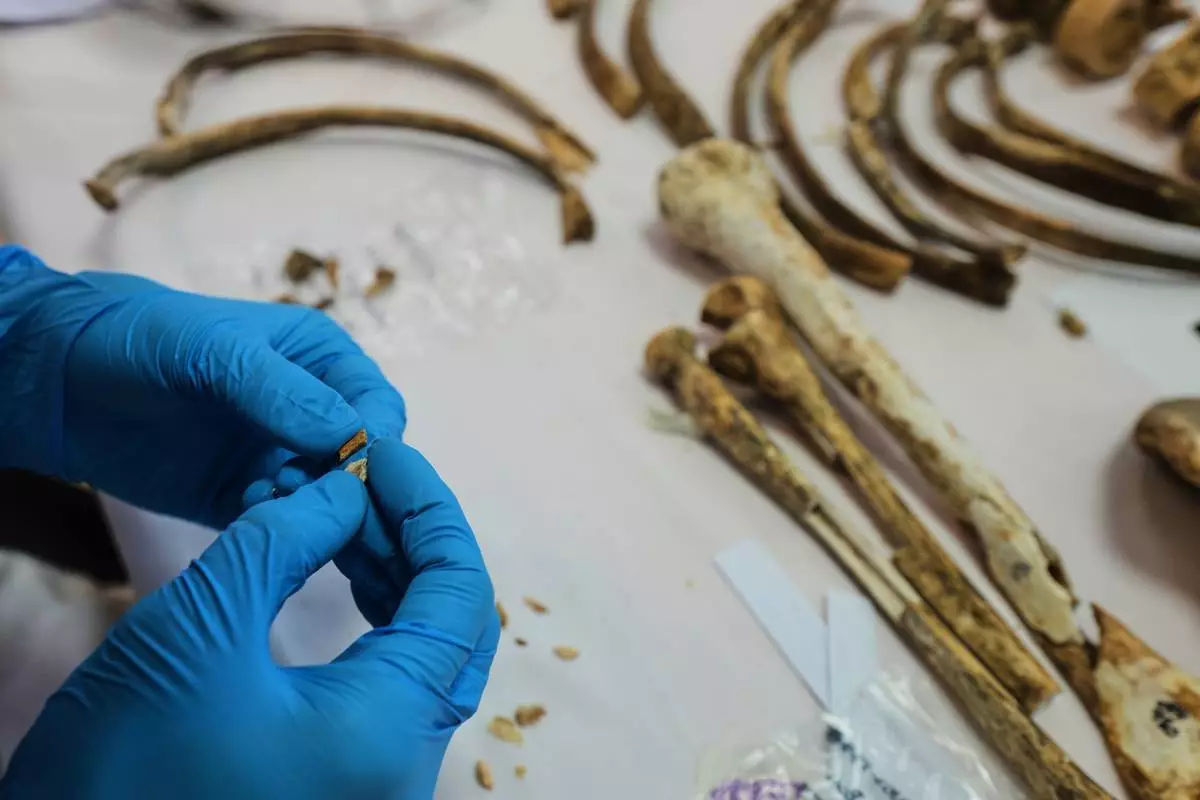
Alexandra Mouski, Laboratory Deputy Coordinator, works on the remains of a missing person who went missing during the 1960s and 1974 Turkish invasion, at Committee's anthropological laboratory on the grounds of the defunct Nicosia airport, Cyprus, on Nov. 12, 2026. (AP Photo/Petros Karadjias)
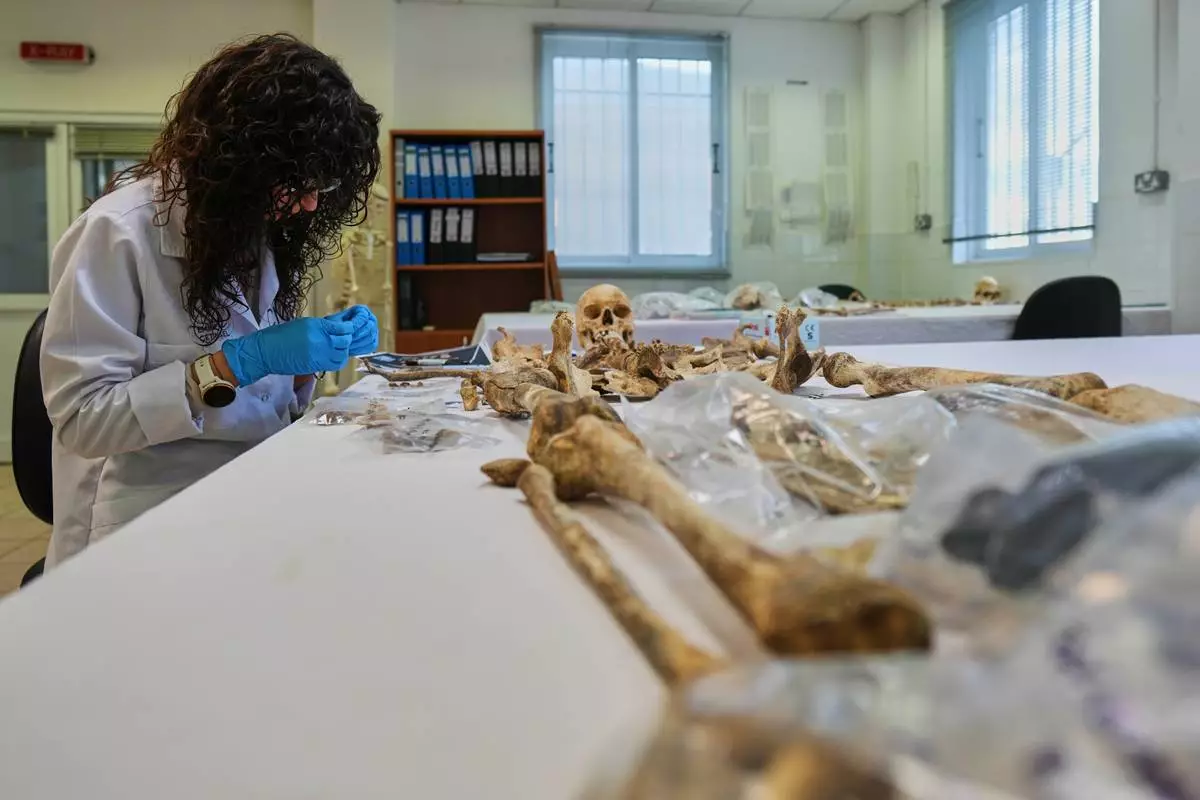
Alexandra Mouski, Laboratory Deputy Coordinator works on the remains of a missing person who went missing during the 1960s and 1974 Turkish invasion, at Committee's anthropological laboratory on the grounds of the defunct Nicosia airport, Cyprus, on Nov. 12, 2026. (AP Photo/Petros Karadjias)