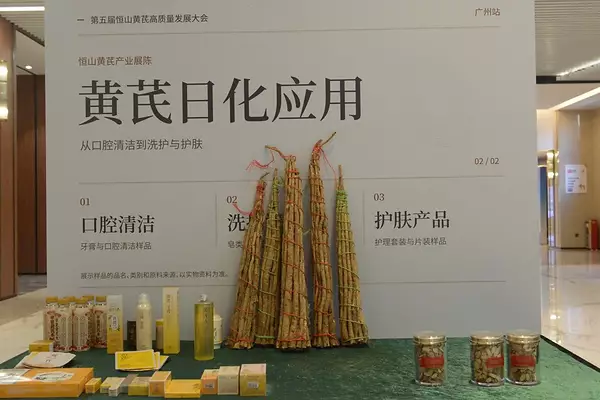
BEIJING, Nov. 24, 2026 /PRNewswire/ -- On November 20, an astragalus-themed conference dedicated to fostering high-quality development of astragalus grown on Hengshan Mountain was held in Guangzhou City, south China.
With two sub-venues set respectively in Shenzhen and the Guangdong-Macao In-Depth Cooperation Zone in Hengqin, participants of the 5th Hengshan Astragalus High-Quality Development Conference held extensive discussions.
Trendy topics included pathways to propel industry development of Hengshan astragalus, related geographical indication protection, production-marketing resources matchmaking and wellness promotion.
Growing on the shaded, high-altitude slopes of Hengshan Mountain in Hunyuan County of Shanxi Province in north China, Hengshan astragalus is famed for their unique appearance and premium quality.
Apart from featuring "loose bark and compact flesh", Hengshan astragalus boasts rich astragaloside content, tripling reportedly the required content of astragaloside for astragalus in the Chinese Pharmacopoeia.
Through seed source protection, brand building, industrial upgrading and technological empowerment in recent years, the astragalus industry of Hunyuan County has burgeoned with output value reaching 1.5 billion yuan annually.
Currently, Shanxi holds around 10 percent of China's total traditional medicinal herb resources, including 66 varieties for health food use and 62 varieties classified as being medicinal and edible.
Via the conference, the Chinese county intended to better explore the cutting-edge market in the Guangdong-Hong Kong-Macao Greater Bay Area and further unlock the economic potential of Hengshan astragalus, a geographical indication (GI) product in China.
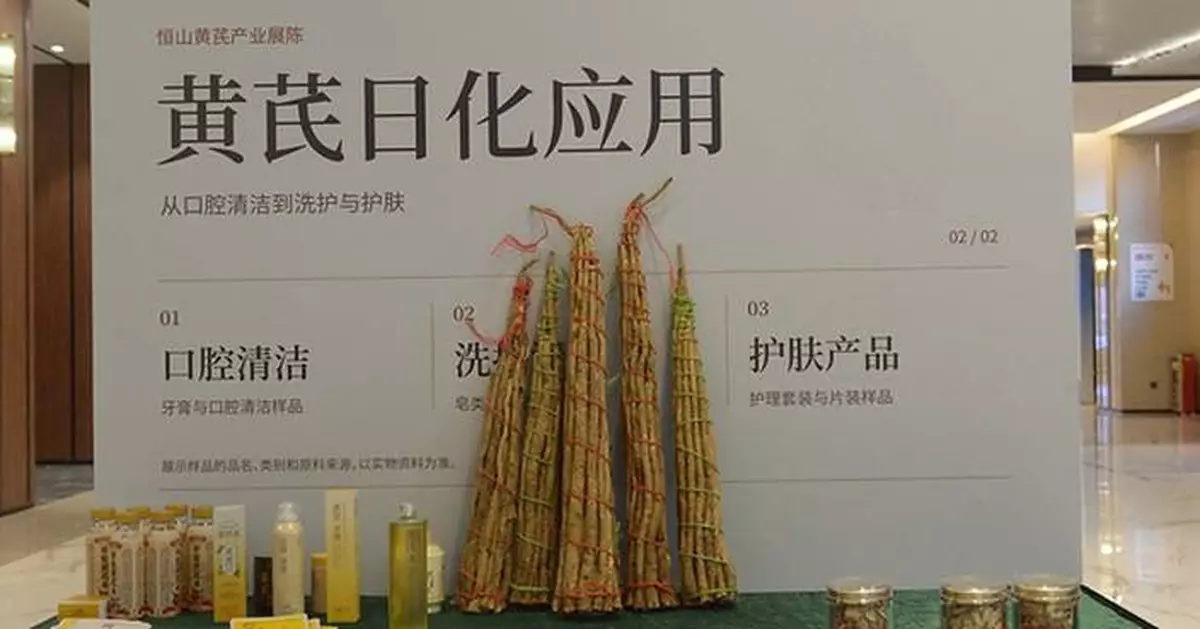
During the conference, Hunyuan County brought not only Hengshan astragali, but also deep-processed products such as astragalus oral dissolvable films, astragalus honey and astragalus liquor to showcase local innovation in astragalus-related wellness and healthcare sectors.
A local agricultural firm signed framework agreements for cooperation with eight purchasers attending the conference and the Hengshan Astragalus Greater Bay Area Operation Center was put into operation to expand its global presence.
Original link: https://en.imsilkroad.com/p/353152.html
** This press release is distributed by PR Newswire through automated distribution system, for which the client assumes full responsibility. **
Xinhua Silk Road: Conference held in Greater Bay Area to promote high-quality development of Hengshan astragalus
At Singapore FinTech Festival, Bybit's Chief Legal & Compliance Officer highlighted the importance of practical use cases, regulatory alignment and operational safeguards.
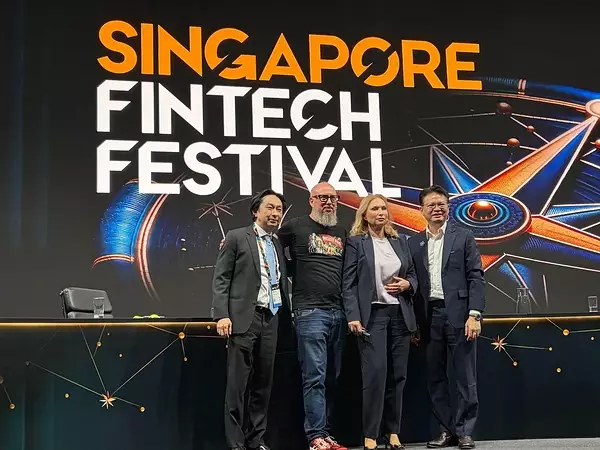
DUBAI, UAE, Nov. 24, 2026 /PRNewswire/ -- Programmable money must address real-world needs, backed by clear regulatory standards and strong operational safeguards, said Peter Loo, Chief Legal & Compliance Officer at Bybit, during a panel discussion at Singapore FinTech Festival on November 19.
Speaking at the SFF Future Matters Stage session, "Building Trusted Hubs for Programmable Money," Peter shared his views on the challenges facing programmable finance, including the need to establish clear user demand, improve coordination across regulatory frameworks and build trust through sound operational practices.
Real-world demand should drive innovation
Peter said the development of programmable money and tokenisation should start with a clear understanding of the problems they aim to solve. Technology alone is not a reason to develop a new financial product. Firms should first establish whether a solution meets a genuine market need, offers practical benefits to users and delivers something that existing financial services cannot.
Regulatory alignment can improve the payment experience
Peter highlighted the complexity of payment transactions, which can involve four to six regulated entities operating under different regulatory frameworks. Each institution may have its own risk appetite, transaction monitoring requirements and fraud prevention measures. These differences can create delays or interruptions, even when the payment process appears straightforward to users.
He called for greater clarity on standards across the payment chain, covering technical requirements, on-chain and off-chain activities, transaction values, monitoring practices and fraud controls. A risk-based approach remains important, but better alignment could help reduce friction while maintaining appropriate safeguards.
He also noted that users may find it difficult to understand why a transaction is restricted when the decision comes from a third-party service provider. Clearer responsibilities among participating institutions would help address this challenge.
Smart contracts offer potential for automated savings products
Peter also discussed how programmability could support savings-related products. Smart contracts, for example, could automate the distribution of yield generated by underlying assets through the issuance of additional token units. This could reduce manual processes and make the distribution of returns more efficient.
Trust comes down to execution
Drawing on his experience as a former regulator, Peter said firms must demonstrate that their actual practices match the policies and commitments they present to regulators and customers.
He highlighted clear responsibilities to customers, sound wallet and treasury management, secure infrastructure and operational resilience as essential requirements. These expectations apply to both digital asset businesses and traditional financial institutions.
Peter also stressed that governments and regulators need to understand the intended use cases of programmable money and assess how regulatory frameworks support the needs and interests of end users.
The discussion highlighted the importance of balancing financial innovation with practical utility, regulatory clarity and sound risk management as programmable money continues to develop.
Disclaimer: Bybit is not licensed by the Monetary Authority of Singapore (MAS) and does not offer its products or services to users in Singapore.
About Bybit
Bybit is The New Financial Platform.
We believe every person should have access to every financial opportunity on earth. That's why we're building the first intelligent platform that connects anyone, anywhere to the world's finance.
Trusted by more than 90 million users worldwide, Bybit brings together investing, trading, payments, and wealth-building in a single secure and intelligent ecosystem. Through the combination of AI-powered technology, deep global liquidity, robust security, and transparent operations, Bybit makes global finance more accessible, efficient, and empowering for everyone.
Built for everyone. Powered by intelligence. Open to the world.
Learn more at Bybit.com.
For more details about Bybit, please visit Bybit Press
For media inquiries, please contact: media@bybit.com
For updates, please follow: Bybit's Communities and Social Media
Discord | Facebook | Instagram | LinkedIn | Reddit | Telegram | TikTok | X | YouTube
** This press release is distributed by PR Newswire through automated distribution system, for which the client assumes full responsibility. **
Bybit's Peter Loo: Trust is Key to the Future of Programmable Money