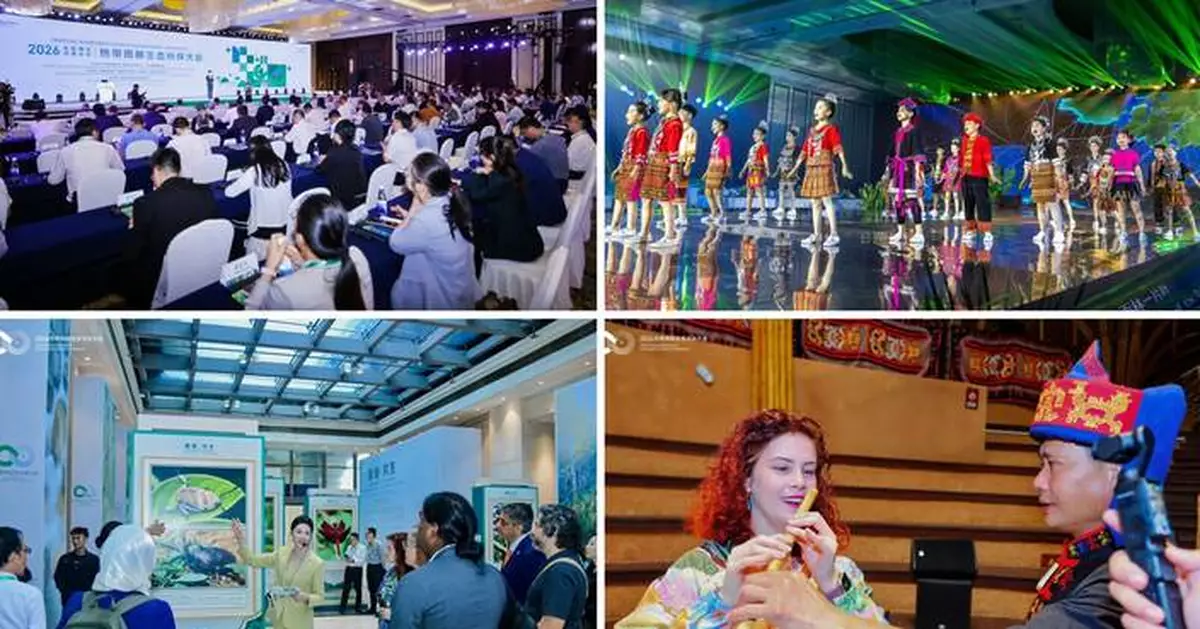
HAIKOU, CHINA - Media OutReach Newswire - 24 November 2026 - On November 22, the 2026 Tropical Rainforest Ecosystem Partners Conference concluded in Hainan, China. The Conference drew over 400 guests from more than 20 countries and regions to Hainan. It has established a transboundary, cross-sectoral platform for ecological dialogue, built consensus and pooled synergy for the conservation and sustainable development of tropical rainforests worldwide, and shared with the world China's practices and propositions for cooperation in advancing harmonious coexistence between humanity and nature.
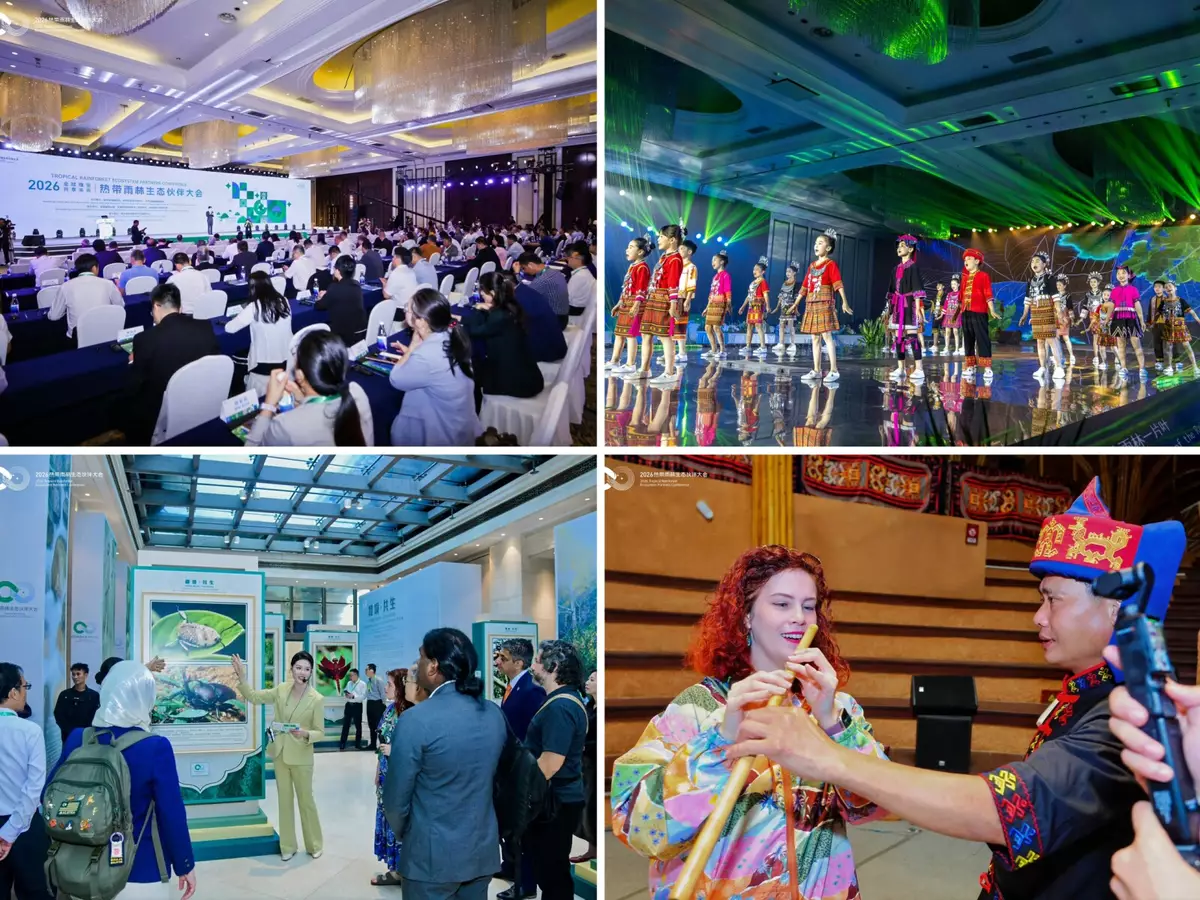
The 2026 Tropical Rainforest Ecosystem Partners Conference
The Conference brought together government representatives from multiple countries, nature conservation practitioners, researchers, industry delegates, as well as representatives from international conservation organizations including the Food and Agriculture Organization of the United Nations (FAO), the United Nations Environment Programme (UNEP), the International Union for Conservation of Nature (IUCN) and the International Council on Monuments and Sites (ICOMOS). Participants held in-depth exchanges on themes including national park governance, biodiversity conservation and the living inheritance of indigenous cultures. Chinese and foreign participants focused on two core topics: the development of forests' integrated values as "water reservoirs, treasuries of wealth, granaries and carbon sinks", and the nomination of the Hainan Tropical Rainforest and Li Cultural Landscape for Mixed World Cultural and Natural Heritage status. Through keynote and parallel forums, they thoroughly examined the multiple functions of tropical rainforests in water conservation, food security, community income generation, carbon sequestration and emission reduction, and explored pathways for the coordinated advancement of ecological conservation, indigenous cultural inheritance and sustainable community development.
The Conference released globally the Chinese‑English bilingual report "A Great Song Resounds in the Rainforest: The 'Hainan Model' of China's Tropical Rainforest Conservation" by Xinhua National High-end Think Tank, systematically sharing the outcomes of the development of Hainan Tropical Rainforest National Park. This 4,269-square-kilometer protected area continues to thrive. The Hainan gibbon population has grown steadily to 44 individuals in seven groups, making it the only gibbon population in the world with an ongoing recovery trend. A total of 91 new species of wild fauna and flora have been discovered within the region, and the vast majority of its primary and natural forests are under effective management and protection. Premium visiting routes for Hainan Tropical Rainforest National Park were launched at the Conference, alongside the sharing of benchmark cases including Hainan gibbon conservation and the development of the World Heritage nomination site.
The Conference integrated ecological experience with cultural exchange. The "A Night in the Rainforest" Hainan Intangible Cultural Heritage Performance vividly showcased distinctive Li nationality culture. The "Gifts of Nature" Ecological Products Market presented living examples of ecological value translation and how ethnic minority communities have achieved green income growth by drawing on ecological resources. The "Hidden Realms · Coexistence" Hainan Tropical Rainforest Photography Exhibition revealed the beauty of biodiversity. Chinese and foreign delegates also conducted field visits to Bawangling and Baicha Village in Dongfang, while overseas media representatives from multiple countries travelled deep into the rainforest for on-site reporting. Youth ecological study tours have engaged more young people in biodiversity conservation.
The Conference may have concluded, yet cooperation endures. All participants recognize that tropical rainforests constitute a common heritage of humankind. Going forward, relevant parties will continue to broaden channels for international ecological exchange, promote mutual learning of conservation practices, deepen cooperation, jointly safeguard this rare global homeland, and advance together towards a green future of enduring coexistence.
The issuer is solely responsible for the content of this announcement.
** This press release is distributed by Media OutReach Newswire through automated distribution system, for which the client assumes full responsibility. **
HONG KONG SAR – Media OutReach Newswire – 24 November 2026 – The "3rd Stem Cell and Innovative Quantum–Molecular Health Symposium & Press Conference," organized by the reNeu Institute of BioTech and co-organized by the Hong Kong Doctors Union, successfully concluded on November 21 at the Regal Hongkong Hotel in Causeway Bay, Hong Kong. The event brought together leading medical scientists, clinical experts, and biotechnology industry leaders from Beijing and Hong Kong to examine the latest regulatory landscape of China's stem cell industry, breakthroughs in clinical translation, and innovative research on the synergistic intervention of Quantum Reboot and regenerative medicine.
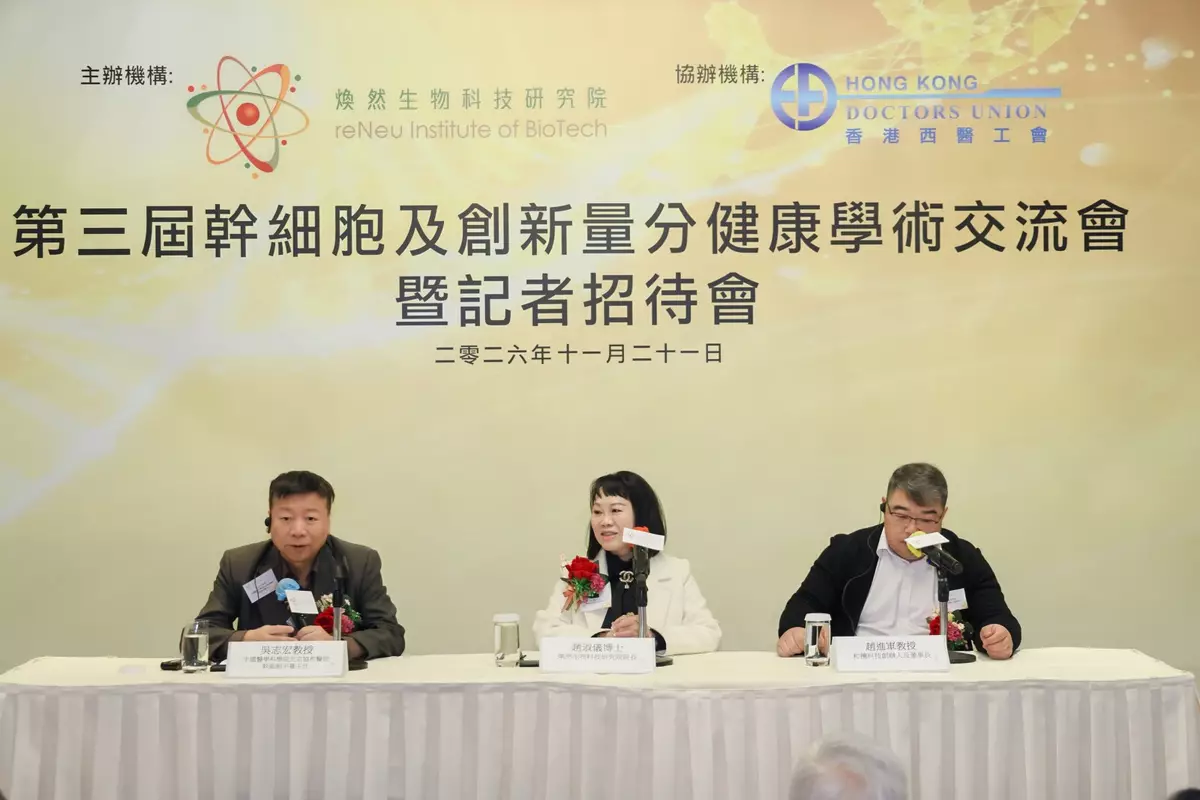
(From Left to Right) Prof. Wu Zhihong, Director, Peking Union Medical College Hospital Stem Cell Platform; Dr. Rita Chiu, Founder and President, reNeu Institute of BioTech; and Prof. Zhao Jinjun, Founder and Chairman, Harmocell Technology Co., Ltd.
At the symposium, Professor Wu Zhihong —Director of the Stem Cell Platform at the Clinical Research Institute of Peking Union Medical College Hospital, Chief Physician of Orthopedics, and Advisor to the reNeu Institute of BioTech—delivered a keynote address titled "Analysis of the Development Status and Regulatory Mechanisms of China's Stem Cell Industry."
Professor Wu noted that with the official implementation in May 2026 of the State Council's Regulations on the Clinical Research and Clinical Translation Application of New Biomedical Technologies (Decree No. 818) and the revised Regulations for the Implementation of the Drug Administration Law of the People's Republic of China (Decree No. 828), China's stem cell sector has established a law-based dual-track regulatory system. This system operates two parallel pathways: the New Medical Technology pathway (IIT filing pathway), led by the National Health Commission (NHC), and the Drug Registration pathway (IND approval pathway), led by the National Medical Products Administration (NMPA). The system further clarifies the scope of application and the regulatory authorities for each pathway, providing a clear institutional framework for compliant industry development.
Industry data shared by Professor Wu showed that as of the end of February 2026, 162 clinical research institutions nationwide had completed filings, with a cumulative total of 185 filed stem cell clinical research projects. The Center for Drug Evaluation (CDE) had accepted a cumulative total of 215 stem cell drug IND applications, including 68 in 2025 alone—a year-on-year increase of 106%. In January 2025, the NMPA granted conditional approval for the launch of China's first stem cell therapy drug, Remestemcel-L Injection, for the treatment of steroid-refractory acute graft-versus-host disease. In addition, China's stem cell industry market size reached RMB 26.64 billion in 2025 and is projected to exceed RMB 40 billion by 2030, with a compound annual growth rate (CAGR) of 12% to 20%. Domestic cell storage penetration currently stands at only around 1% to 3%, leaving considerable room for growth.
Professor Zhao Jinjun — Founder and Chairman of Harmocell Technology Co., Ltd. (Harmocell) and Advisor to the reNeu Institute of BioTech—presented on "Stem Cell-Related R&D and Multi-Dimensional Application Standards," analyzing the translation pathways for stem cells and their derivatives, such as extracellular vesicles (EVs), in both pharmaceutical and non-pharmaceutical fields.
Professor Zhao explained that Harmocell, leveraging the research strengths of the Stem Cell Platform at Peking Union Medical College Hospital (Chinese Academy of Medical Sciences) and the School of Basic Medical Sciences at Shenzhen University, has jointly established the "HarmoCDP" therapeutic product development platform. The company has achieved breakthroughs in core technologies including cell immortalization (iMSCs), SIRTs longevity gene engineering, and non-destructive freeze-drying (NFF).
In the serious medical treatment sector, a clinical study on human umbilical cord mesenchymal stem cells for knee osteoarthritis (KOA) conducted by Peking Union Medical College Hospital has produced interim safety and pain-improvement data, and completed re-filing in September 2026 as a new biomedical technology clinical research project under Decree No. 818. In non-pharmaceutical translation, Harmocell's stem cell extracellular vesicle (EV) product, REYOUTH STEMSENSE Flash-Dissolve Tablets, uses oral mucosal flash-release absorption technology and contains more than 10 billion active EVs per tablet. In June 2026, the product obtained "Non-Drug Product" certification from the Pharmaceutical Administration Bureau of the Macao Special Administrative Region, with approved functions including "promoting cellular regeneration, delaying aging, and enhancing immunity," exploring the extension of cutting-edge cell technology into daily health management.
Another highlight of the symposium was a presentation by Dr. Rita Chiu — President of the reNeu Institute of BioTech and Representative of the Science Popularization and Demonstration Base appointed by the Peking Union Medical College Hospital Stem Cell Platform—on "Quantum–Molecular Health, Anti-Aging, and Root-Cause Research Perspectives on Functional Decline."
Dr. Rita Chiu analyzed the root causes of aging and functional decline from cellular and energy-field perspectives, noting that overload of heavy metals and chemical toxins may obstruct cell membrane ion channels and energy conduction, thereby impairing the repair function of stem cells. To address this, the Institute proposed a globally innovative intervention framework—the "Health Reboot Equation: Q + S = R." The framework begins with a non-invasive Quantum Cleanse (Q), which uses specific-frequency oscillation to support detoxification, clear heavy metals and inflammatory triggers, and activate cellular ATP. This is followed by Stem Cell Repair (S) to promote tissue regeneration and immune balance, ultimately achieving the synergistic goal of Rebuild Health (R).
At the symposium, Dr. Rita Chiu also shared multiple follow-up cases and clinical imaging comparisons, including observational data on patients with multiple cranial neuropathies—such as facial paralysis and damage to the facial, trochlear, and vestibulocochlear nerves—showing reduced heavy metal and chemical toxin burdens and recovery of neurological function after 120 days of Quantum reNeurology® therapy. She also shared the experiences of brain tumor and severe-illness survivors, drawing attention and discussion among attending medical professionals.
The symposium served as a bridge for dialogue between the medical and research communities of Beijing and Hong Kong. Looking ahead, Dr. Rita Chiu, President of the reNeu Institute of BioTech, stated that the Institute will continue to work with the national-level Peking Union Medical College Hospital Stem Cell Platform, Harmocell Technology Co., Ltd., and the Hong Kong Doctors Union, upholding the principles of scientific rigor and regulatory compliance, to advance the adoption of regenerative medicine and innovative health management technologies.
Hashtag: #reNeuInstituteofBioTech
The issuer is solely responsible for the content of this announcement.
** This press release is distributed by Media OutReach Newswire through automated distribution system, for which the client assumes full responsibility. **