Skip to Content Facebook Feature Image

3rd Stem Cell and Innovative Quantum–Molecular Health Symposium & Press Conference Successfully Concludes

Asia Pacific

3rd Stem Cell and Innovative Quantum–Molecular Health Symposium & Press Conference Successfully Concludes
Asia Pacific

Asia Pacific

3rd Stem Cell and Innovative Quantum–Molecular Health Symposium & Press Conference Successfully Concludes

2026-11-24 19:50 Last Updated At:19:52

HONG KONG SAR – Media OutReach Newswire – 24 November 2026 – The "3rd Stem Cell and Innovative Quantum–Molecular Health Symposium & Press Conference," organized by the reNeu Institute of BioTech and co-organized by the Hong Kong Doctors Union, successfully concluded on November 21 at the Regal Hongkong Hotel in Causeway Bay, Hong Kong. The event brought together leading medical scientists, clinical experts, and biotechnology industry leaders from Beijing and Hong Kong to examine the latest regulatory landscape of China's stem cell industry, breakthroughs in clinical translation, and innovative research on the synergistic intervention of Quantum Reboot and regenerative medicine.
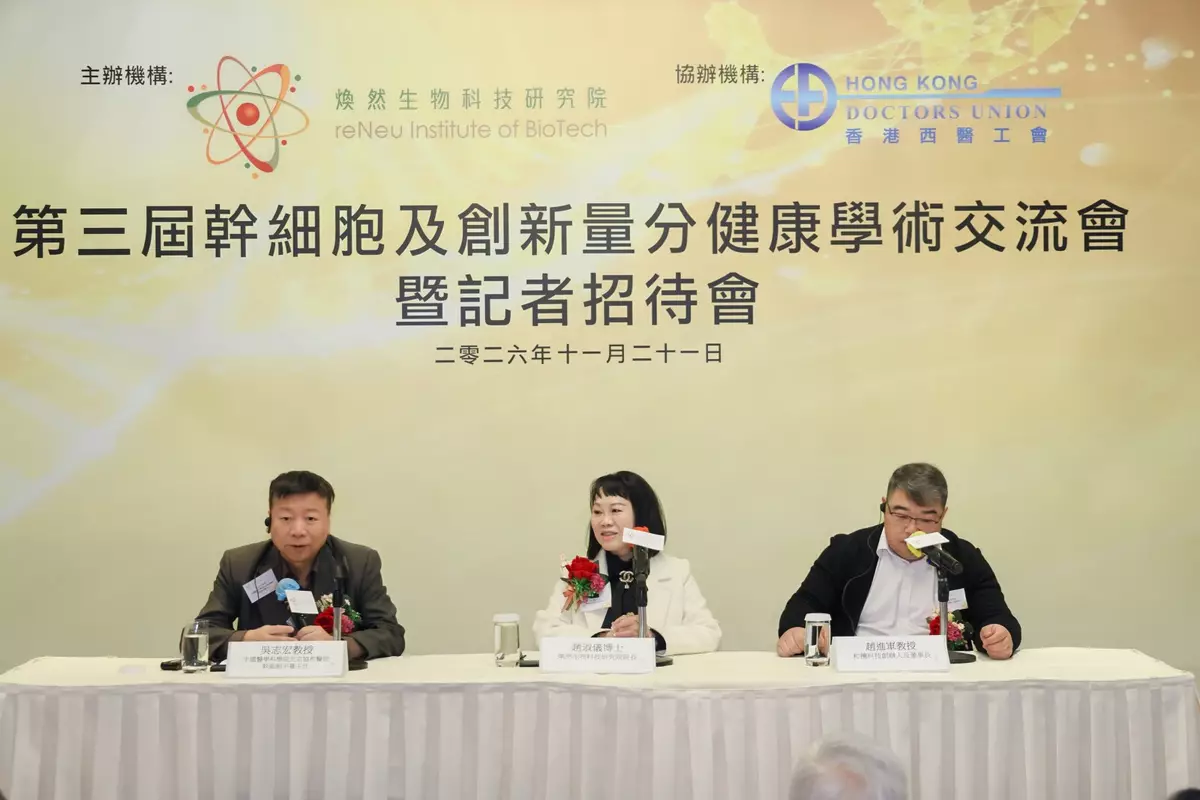
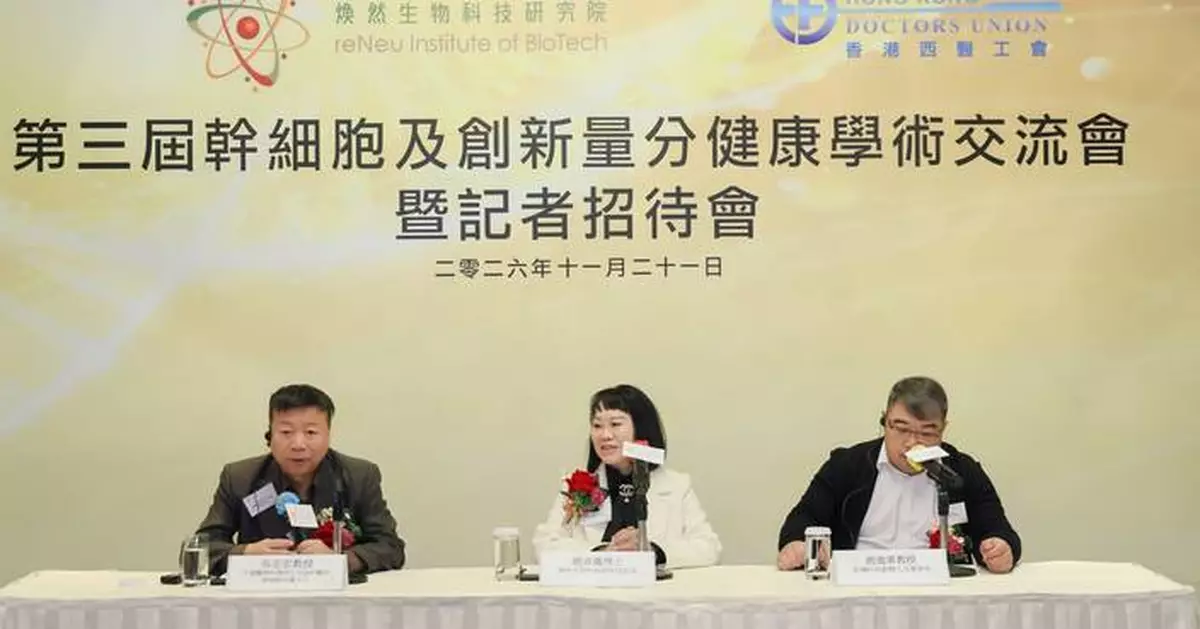
(From Left to Right) Prof. Wu Zhihong, Director, Peking Union Medical College Hospital Stem Cell Platform; Dr. Rita Chiu, Founder and President, reNeu Institute of BioTech; and Prof. Zhao Jinjun, Founder and Chairman, Harmocell Technology Co., Ltd.

(From Left to Right) Prof. Wu Zhihong, Director, Peking Union Medical College Hospital Stem Cell Platform; Dr. Rita Chiu, Founder and President, reNeu Institute of BioTech; and Prof. Zhao Jinjun, Founder and Chairman, Harmocell Technology Co., Ltd.

At the symposium, Professor Wu Zhihong —Director of the Stem Cell Platform at the Clinical Research Institute of Peking Union Medical College Hospital, Chief Physician of Orthopedics, and Advisor to the reNeu Institute of BioTech—delivered a keynote address titled "Analysis of the Development Status and Regulatory Mechanisms of China's Stem Cell Industry."

Professor Wu noted that with the official implementation in May 2026 of the State Council's Regulations on the Clinical Research and Clinical Translation Application of New Biomedical Technologies (Decree No. 818) and the revised Regulations for the Implementation of the Drug Administration Law of the People's Republic of China (Decree No. 828), China's stem cell sector has established a law-based dual-track regulatory system. This system operates two parallel pathways: the New Medical Technology pathway (IIT filing pathway), led by the National Health Commission (NHC), and the Drug Registration pathway (IND approval pathway), led by the National Medical Products Administration (NMPA). The system further clarifies the scope of application and the regulatory authorities for each pathway, providing a clear institutional framework for compliant industry development.

Industry data shared by Professor Wu showed that as of the end of February 2026, 162 clinical research institutions nationwide had completed filings, with a cumulative total of 185 filed stem cell clinical research projects. The Center for Drug Evaluation (CDE) had accepted a cumulative total of 215 stem cell drug IND applications, including 68 in 2025 alone—a year-on-year increase of 106%. In January 2025, the NMPA granted conditional approval for the launch of China's first stem cell therapy drug, Remestemcel-L Injection, for the treatment of steroid-refractory acute graft-versus-host disease. In addition, China's stem cell industry market size reached RMB 26.64 billion in 2025 and is projected to exceed RMB 40 billion by 2030, with a compound annual growth rate (CAGR) of 12% to 20%. Domestic cell storage penetration currently stands at only around 1% to 3%, leaving considerable room for growth.

Professor Zhao Jinjun — Founder and Chairman of Harmocell Technology Co., Ltd. (Harmocell) and Advisor to the reNeu Institute of BioTech—presented on "Stem Cell-Related R&D and Multi-Dimensional Application Standards," analyzing the translation pathways for stem cells and their derivatives, such as extracellular vesicles (EVs), in both pharmaceutical and non-pharmaceutical fields.

Professor Zhao explained that Harmocell, leveraging the research strengths of the Stem Cell Platform at Peking Union Medical College Hospital (Chinese Academy of Medical Sciences) and the School of Basic Medical Sciences at Shenzhen University, has jointly established the "HarmoCDP" therapeutic product development platform. The company has achieved breakthroughs in core technologies including cell immortalization (iMSCs), SIRTs longevity gene engineering, and non-destructive freeze-drying (NFF).

In the serious medical treatment sector, a clinical study on human umbilical cord mesenchymal stem cells for knee osteoarthritis (KOA) conducted by Peking Union Medical College Hospital has produced interim safety and pain-improvement data, and completed re-filing in September 2026 as a new biomedical technology clinical research project under Decree No. 818. In non-pharmaceutical translation, Harmocell's stem cell extracellular vesicle (EV) product, REYOUTH STEMSENSE Flash-Dissolve Tablets, uses oral mucosal flash-release absorption technology and contains more than 10 billion active EVs per tablet. In June 2026, the product obtained "Non-Drug Product" certification from the Pharmaceutical Administration Bureau of the Macao Special Administrative Region, with approved functions including "promoting cellular regeneration, delaying aging, and enhancing immunity," exploring the extension of cutting-edge cell technology into daily health management.

Another highlight of the symposium was a presentation by Dr. Rita Chiu — President of the reNeu Institute of BioTech and Representative of the Science Popularization and Demonstration Base appointed by the Peking Union Medical College Hospital Stem Cell Platform—on "Quantum–Molecular Health, Anti-Aging, and Root-Cause Research Perspectives on Functional Decline."

Dr. Rita Chiu analyzed the root causes of aging and functional decline from cellular and energy-field perspectives, noting that overload of heavy metals and chemical toxins may obstruct cell membrane ion channels and energy conduction, thereby impairing the repair function of stem cells. To address this, the Institute proposed a globally innovative intervention framework—the "Health Reboot Equation: Q + S = R." The framework begins with a non-invasive Quantum Cleanse (Q), which uses specific-frequency oscillation to support detoxification, clear heavy metals and inflammatory triggers, and activate cellular ATP. This is followed by Stem Cell Repair (S) to promote tissue regeneration and immune balance, ultimately achieving the synergistic goal of Rebuild Health (R).

At the symposium, Dr. Rita Chiu also shared multiple follow-up cases and clinical imaging comparisons, including observational data on patients with multiple cranial neuropathies—such as facial paralysis and damage to the facial, trochlear, and vestibulocochlear nerves—showing reduced heavy metal and chemical toxin burdens and recovery of neurological function after 120 days of Quantum reNeurology® therapy. She also shared the experiences of brain tumor and severe-illness survivors, drawing attention and discussion among attending medical professionals.

The symposium served as a bridge for dialogue between the medical and research communities of Beijing and Hong Kong. Looking ahead, Dr. Rita Chiu, President of the reNeu Institute of BioTech, stated that the Institute will continue to work with the national-level Peking Union Medical College Hospital Stem Cell Platform, Harmocell Technology Co., Ltd., and the Hong Kong Doctors Union, upholding the principles of scientific rigor and regulatory compliance, to advance the adoption of regenerative medicine and innovative health management technologies.
Hashtag: #reNeuInstituteofBioTech

The issuer is solely responsible for the content of this announcement.

** This press release is distributed by Media OutReach Newswire through automated distribution system, for which the client assumes full responsibility. **

  • CEO: Capital market ties between Europe and Singapore are an undervalued opportunity
  • EUR 1 billion Tier 2 notes tradable on SGX since 3 November
  • OTP ranked 398th on the Forbes Global 2000, up from 1007th in 2022
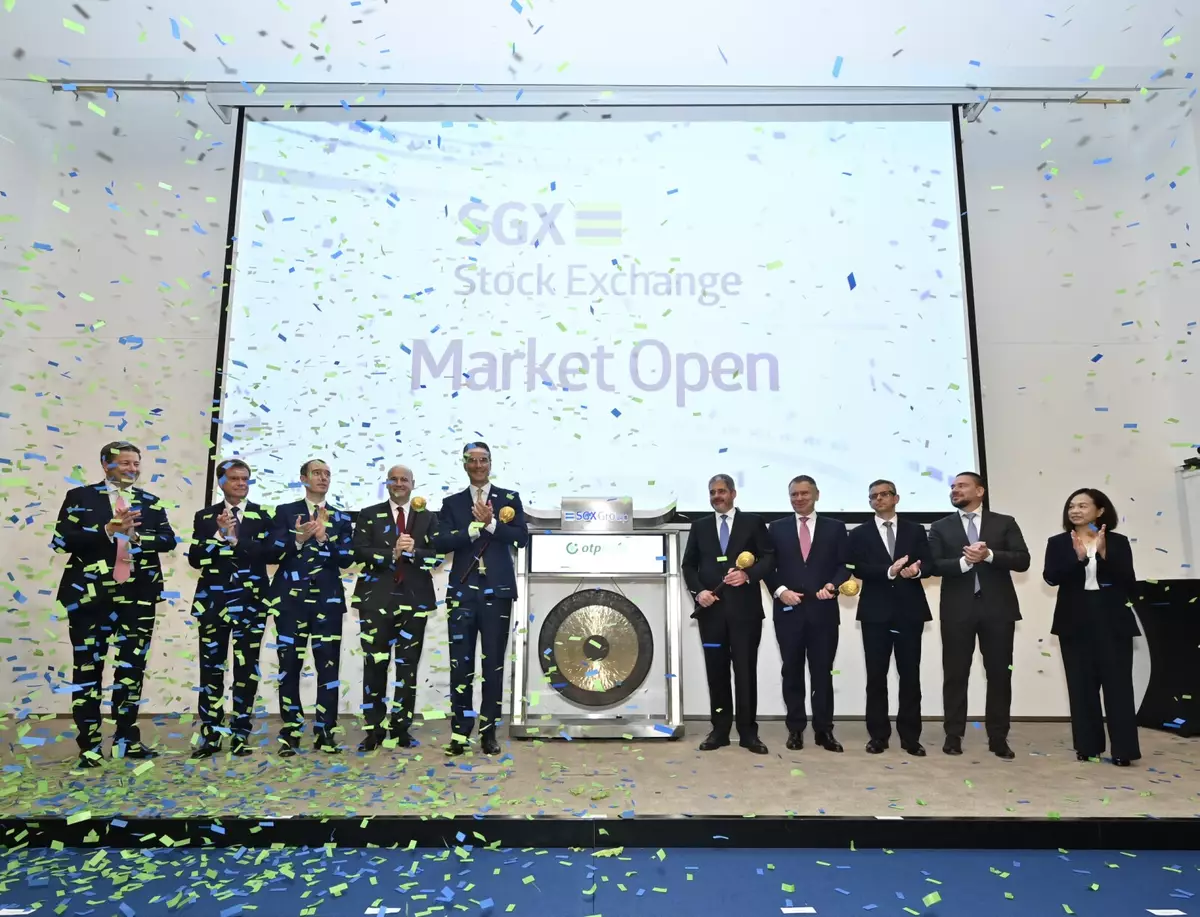
  • Milestone marked by a gong ceremony at the SGX Auditorium, SGX Centre, on 24 November 2026

SINGAPORE - Media OutReach Newswire - 24 November 2026 - OTP Bank Plc. ("OTP Bank" or "OTP"), the No. 1 banking group in Central and Eastern Europe (CEE) by Tier 1 capital, today marked the listing of its EUR 7 billion Euro Medium Term Note (EMTN) programme and its EUR 1 billion Tier 2 notes on the Singapore Exchange ("SGX") with a gong ceremony at the SGX Auditorium, SGX Centre. Péter Csányi, Chief Executive Officer of OTP Group, struck the gong at the 9:00am market open. It was his first appearance at an Asian capital markets event since taking office in May 2025.

Gong Ceremony at SGX

Gong Ceremony at SGX

The EUR 7 billion programme allows OTP to issue debt in multiple tranches, currencies, structures and maturities over time. Its base prospectus was approved by Luxembourg's Commission de Surveillance du Secteur Financier (CSSF) on 27 May 2026, and the programme has been listed on the Hong Kong Stock Exchange since May 2026, together with several bonds issued under it. The Singapore listing gives investors in the region a permanent venue for trading OTP bonds, and gives OTP a standing platform for raising capital from Asian institutional investors.

The programme is already at work. Its inaugural issuance, EUR 1 billion of Tier 2 notes priced on 16 June 2026, have been tradable on SGX since 3 November 2026 and are also listed in Hong Kong and Luxembourg. They are the largest-ever Tier 2 bonds issued by a financial institution in Central and Eastern Europe. The offering drew a peak order book of EUR 4.1 billion, the largest in OTP's history, and was priced at a coupon of 4.625%.

OTP arrives in Singapore with an established presence in Asian capital markets. In 2025, it issued its first public Dim Sum green bond, raising CNH 900 million and becoming the first Hungarian institution to issue a public offshore renminbi green bond. It also issued Dim Sum private placement bonds in 2024 and 2026. The Bank has operated a representative office in Beijing since 2017, became a full member of the Asian Financial Cooperation Association (AFCA) in 2024, and maintains strategic partnerships with the Industrial and Commercial Bank of China (ICBC) and China Construction Bank (CCB). It holds an AAA issuer credit rating on the China national scale from Lianhe Ratings.

Péter Csányi, Chief Executive Officer of OTP Group, said: "Singapore is one of the world's leading international financial centres and a natural meeting point for European issuers and Asian investors. Europe and Singapore are major investors in each other, yet their capital markets are far less connected than their economies. I believe closing that gap is one of the most undervalued opportunities in international finance, for Europe and for Singapore alike. OTP is acting on it: We have brought our EUR 7 billion programme to Singapore, and we intend to be a regular issuer in Asia."

As Asian investors increasingly look to Europe to diversify their portfolios, Central and Eastern Europe offers a distinctive proposition: emerging-market growth rates combined with the low-risk profile of the European Union. Singapore is part of that story as Hungary's largest Southeast Asian investor across state-facilitated investment projects. The region's attractiveness is reinforced by its convergence towards the eurozone. Three of the five countries in which OTP is the market leader sit at the heart of Europe's euro-convergence story: Bulgaria, which adopted the euro on 1 January 2026, Slovenia, a eurozone member since 2007, and Hungary, OTP's flagship market, where the government elected in April 2026 aims to create the conditions for euro adoption around 2030.

OTP combines what rarely comes together in European banking: high growth, strong profitability and an ultraconservative balance sheet built for resilience. OTP Group is one of the largest and fastest-growing banking groups in the region, ranked 398th on the 2026 Forbes Global 2000 list, up from 1007th in 2022. It was the highest-ranked European bank in the Large Banks category of the inaugural Forbes World's Top Performing Banks 2026 ranking, finishing 10th globally among its peers.

It pairs loan growth of 15% in 2025 with a disciplined acquisition record and high profitability, with a 2025 return on equity of 21.6%. Its balance sheet is ultraconservative, with a leverage ratio of 10.8%, roughly 1.5 to 2 times that of comparable European banks, a CET1 ratio of 18.1% (both at end-2025), and strong resilience according to the European Banking Authority's latest stress test, ranking in the top quarter among the European banks assessed. In July 2026, OTP agreed to acquire Luminor Group, one of the leading universal banks in the Baltic region, subject to regulatory approval. The transaction would extend OTP's presence to 14 countries.

Péter Csányi added: "We believe the combination of growth, profitability and stability is what makes OTP an attractive name for fixed-income investors. This is also reflected in our ranking among the world's top 400 companies by Forbes. These achievements are the result of a consistent strategy: prudent growth, diversified funding sources and a strong focus on long-term partnerships. Looking ahead, we see significant opportunities to deepen our engagement with investors and institutions in Singapore and across Asia. We are confident that this listing will serve as a cornerstone for long-term cooperation, mutual growth and shared success."

Hashtag: #OTPBank #Banking #Finance #Investor #BondListing #EMTN #SGX


The issuer is solely responsible for the content of this announcement.

OTP Bank

OTP Group provides universal financial services to around 17.5 million customers across 11 countries in Central and Eastern Europe and Central Asia, with around 41,000 employees and total assets of USD 150 billion. Headquartered in Hungary, OTP Bank has been listed on the Budapest Stock Exchange since 1995 and has a diversified and transparent ownership structure. OTP has ranked No. 1 in Central and Eastern Europe by Tier 1 capital in The Banker's Top 100 CEE Banks for three consecutive years (2023-2025) and placed second in S&P Global Market Intelligence's latest European bank performance ranking. The Group rose to 398th on the Forbes Global 2000 in 2026 (from 1007th in 2022). The Bank holds an AAA issuer credit rating on the China national scale from Lianhe and is rated BBB by S&P.

** This press release is distributed by Media OutReach Newswire through automated distribution system, for which the client assumes full responsibility. **

Recommended Articles