As college football's regular season winds down, the ACC, Pac-12 and Conference USA already have the matchups for their league title games set.
Elsewhere: chaos.
Six teams are still alive in the Big Ten. There's a four-way tie atop the Mid-American Conference. Another league could end up with an eight-way tie for the second spot in its title game. Read on to find out which one.
(All records listed are conference records.)
Standings: Miami (8-0) and Wake Forest (7-1) have clinched spots in the ACC title game.
Betting favorite: Miami.
Standings: UTSA (6-1), Memphis (5-2), East Carolina (5-2), North Texas (5-2), Florida Atlantic (4-3), Tulsa (4-3), UAB (4-3), Tulane (4-3), Army (4-3).
Final week: On Friday, UTSA hosts Tulsa and Memphis hosts Temple. On Saturday, East Carolina hosts FAU, Rice hosts Army, South Florida hosts Tulane and North Texas hosts UAB.
Scenarios:
— UTSA can make the title game with a win. The only way the Roadrunners wouldn't clinch a spot is if they lose and at least two teams from the Memphis-ECU-North Texas trio win. And even then, UTSA would have a chance to advance via a computer metrics tiebreaker.
— Memphis can clinch a spot with a win, provided North Texas loses and FAU or UTSA wins. The only way Memphis doesn't get at least into a metrics tiebreaker is if the Tigers lose and either ECU or North Texas wins.
— North Texas can clinch a spot with a win and losses by both Memphis and ECU. If the Mean Green lose, they'd need Memphis and ECU to lose as well to stay in play for the metrics tiebreaker.
— East Carolina can clinch a spot with a win and losses by both Memphis and North Texas. If the Pirates lose, they’d need Memphis and North Texas to lose as well to stay in play for the metrics tiebreaker.
— The three-loss teams can stay in play for a metrics tiebreaker only if Memphis, ECU and North Texas all lose. If that happens, there could be as many as eight teams tied for second.
— All of the above assumes no teams from this league are in the playoff rankings this week. If anyone is ranked, that could take priority in the tiebreaker process, behind head-to-head but ahead of the computer metrics.
Betting favorite: Memphis.
Standings: Utah (8-0), Texas Tech (7-1), BYU (6-2). Utah has clinched a spot in the Big 12 title game.
Final week: On Thursday, Texas Tech hosts TCU. On Saturday, BYU hosts Cincinnati.
Scenarios: If BYU wins and Texas Tech loses, BYU would make the title game based on the common opponents tiebreaker. Otherwise, Texas Tech goes to the title game.
Betting favorite: Utah.
Standings: UCLA (7-1), Indiana (6-2), Iowa (6-2), Oregon (6-2), Southern California (5-3), Ohio State (5-3).
Final week: On Friday, Iowa hosts Nebraska and Wisconsin hosts Minnesota. On Saturday, Ohio State hosts Michigan, Northwestern hosts Illinois, UCLA hosts USC, Maryland hosts Penn State, Rutgers hosts Michigan State, Indiana hosts Purdue and Oregon hosts Washington. It's possible all those games could matter because in-conference strength of schedule is part of the tiebreaker system.
Scenarios:
— UCLA is in with a win, or with losses by any two of Indiana, Iowa and Oregon. The Bruins can also make it with a loss and wins by Iowa and Oregon — if Indiana loses.
— If UCLA and Oregon lose while Indiana and Iowa win, UCLA still gets in if either Minnesota or Ohio State wins.
— If UCLA and Oregon lose while Indiana and Iowa win, and Minnesota and Ohio State lose, UCLA would need Maryland, Illinois and Michigan State to all win. Then the second spot in the title game (against Indiana) would be decided by a computer rankings tiebreaker between UCLA and Iowa.
— Oregon is in with a win in every scenario except one: If UCLA and Indiana lose and Iowa wins, then the Ducks would be left out even if they beat Washington. (The title game would be UCLA-Iowa.)
— Oregon can advance with a loss if Indiana, Iowa and Wisconsin also lose and UCLA wins.
— Oregon can advance with a loss if Indiana, Iowa and Ohio State lose and Wisconsin and UCLA win. If this same scenario unfolds but with Ohio State winning, then Oregon would need either a win by Michigan State or wins by Rutgers and Penn State to advance.
— Indiana qualifies with a win and losses by at least two of Iowa, Oregon and UCLA. A loss eliminates Indiana.
— If Indiana wins and Oregon and Iowa do as well, the Hoosiers can make the title game if UCLA loses and Minnesota beats Wisconsin.
— Iowa is in with a win if Indiana and either Oregon or UCLA lose. Or if the Hawkeyes and Indiana win but Oregon loses and UCLA wins.
— If Iowa, Indiana and Oregon all win, the Hawkeyes can make it if UCLA loses and Wisconsin wins. Iowa can also qualify via the rankings tiebreaker mentioned above with UCLA — or if UCLA doesn't get the wins it needs from Maryland, Illinois and Michigan State in that scenario.
— USC qualifies with a win and losses by Oregon, Indiana and Iowa. That's the only scenario for the Trojans.
— Ohio State needs even more help. The Buckeyes can make it if eight games go their way: Ohio State, UCLA, Wisconsin, Rutgers and Maryland win, and Oregon, Indiana and Iowa lose.
Betting favorite: Oregon.
Standings: Liberty (7-0) and Jacksonville State (6-1) have clinched spots in the title game. The question is who will have home field.
Final week: On Saturday, Western Kentucky hosts Kennesaw State, Missouri State hosts Liberty and Delaware hosts Jacksonville State.
Scenarios:
— If Jacksonville State wins, Liberty loses and Kennesaw State wins, the title game will be at Jacksonville State. If Liberty wins or Jacksonville State loses, Liberty hosts.
Betting favorite: Liberty.
Standings: Toledo (6-1), Buffalo (6-1), Ohio (6-1), Western Michigan (6-1), Miami, Ohio (5-2).
Final week: On Tuesday, WMU hosts Miami and Eastern Michigan hosts Kent State. On Friday, Ohio hosts Toledo and Akron hosts Buffalo. On Saturday, Ball State hosts Central Michigan and Bowling Green hosts Massachusetts. The race could come down to that last day even though the contenders would be done playing.
Scenarios:
— WMU is in with a win, or with a loss if Toledo wins and Buffalo loses.
— If WMU, Toledo and Buffalo all lose, WMU advances only if EMU, CMU and Bowling Green all win.
— Ohio is in with a win unless WMU and Buffalo both win.
— Toledo is in with a win if WMU or Buffalo loses. If all three of those teams win, Toledo advances if Ball State also wins, or if EMU, CMU and UMass all win.
— Toledo can get in with a loss if WMU and Buffalo lose and both EMU and Ball State win.
— Buffalo is eliminated with a loss. It advances with a win if Toledo or WMU loses. If all three of those teams win, Buffalo advances if Kent State and CMU win, or if EMU, CMU and Bowling Green all win.
— Miami needs to win and have Toledo and Buffalo lose to have any chance. If that happens, the RedHawks advance with a Kent State win, or if EMU, CMU and UMass all win.
Betting favorite: WMU.
Standings: New Mexico (6-1), North Dakota State (6-2), Wyoming (6-2), Air Force (5-2), UNLV (5-2).
Final week: On Friday, New Mexico hosts Air Force. On Saturday, UNLV hosts Nevada. NDSU and Wyoming have completed their conference schedules.
Scenarios:
(these assume no Mountain West teams are in the playoff rankings this week)
— If UNLV loses, the title game is New Mexico vs. NDSU.
— If UNLV and New Mexico win, New Mexico advances to the title game and the second slot is decided by computer rankings.
— If UNLV wins and New Mexico loses, there would be a five-way tie for first decided by computer rankings.
Betting favorite: New Mexico.
Standings: San Diego State (5-2) will play at Boise State (6-1) in the Pac-12 title game.
Betting favorite: Boise State.
Standings: Georgia (8-1), Alabama (6-2), Tennessee (6-2), Texas (6-2). Georgia has clinched a spot in the SEC title game.
Final week: On Friday, Mississippi hosts Mississippi State and Texas A&M hosts Texas. On Saturday, Arkansas hosts LSU, Missouri hosts Oklahoma, Vanderbilt hosts Tennessee and Alabama hosts Auburn.
Scenarios:
— Texas is in with a win in all scenarios except one: If Texas, Alabama, Tennessee, LSU and Mississippi State all win, then Alabama qualifies.
— Alabama can also qualify with a win and losses by Texas and Tennessee. If the Crimson Tide lose, they can make it only if Texas and Tennessee lose and Oklahoma wins.
— Tennessee qualifies with a win and a loss by Texas. If the Volunteers lose, they can make it only if Texas and Alabama lose and Missouri wins.
Betting favorite: Georgia.
Standings: Georgia Southern (6-1) and James Madison (5-2) are atop the East Division. Louisiana Tech has already won the West.
Final week: On Saturday, Georgia Southern hosts Louisiana Tech and James Madison hosts Coastal Carolina.
Scenarios:
— If Georgia Southern wins, the title game is Louisiana Tech at Georgia Southern.
— If Louisiana Tech and James Madison win, the title game is James Madison at Louisiana Tech.
— If Louisiana Tech and Coastal Carolina win, the title game is Georgia Southern at Louisiana Tech.
Betting favorite: Louisiana Tech.
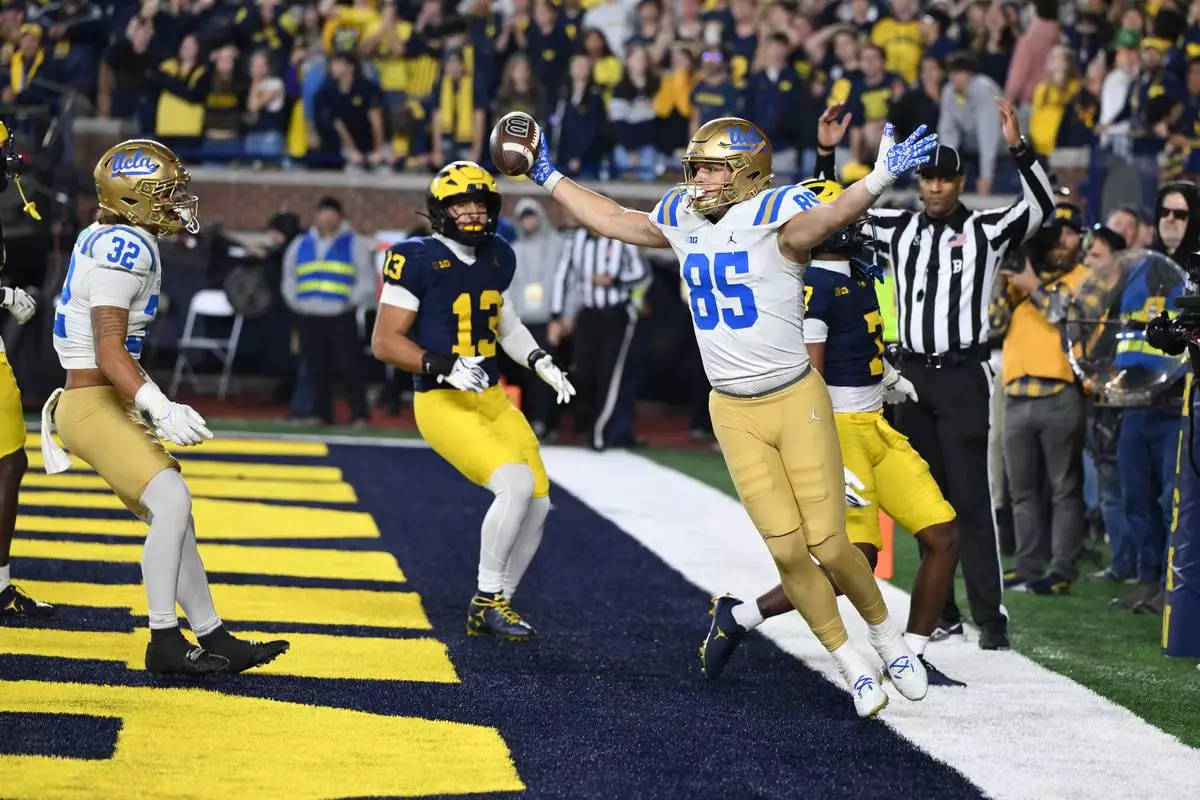
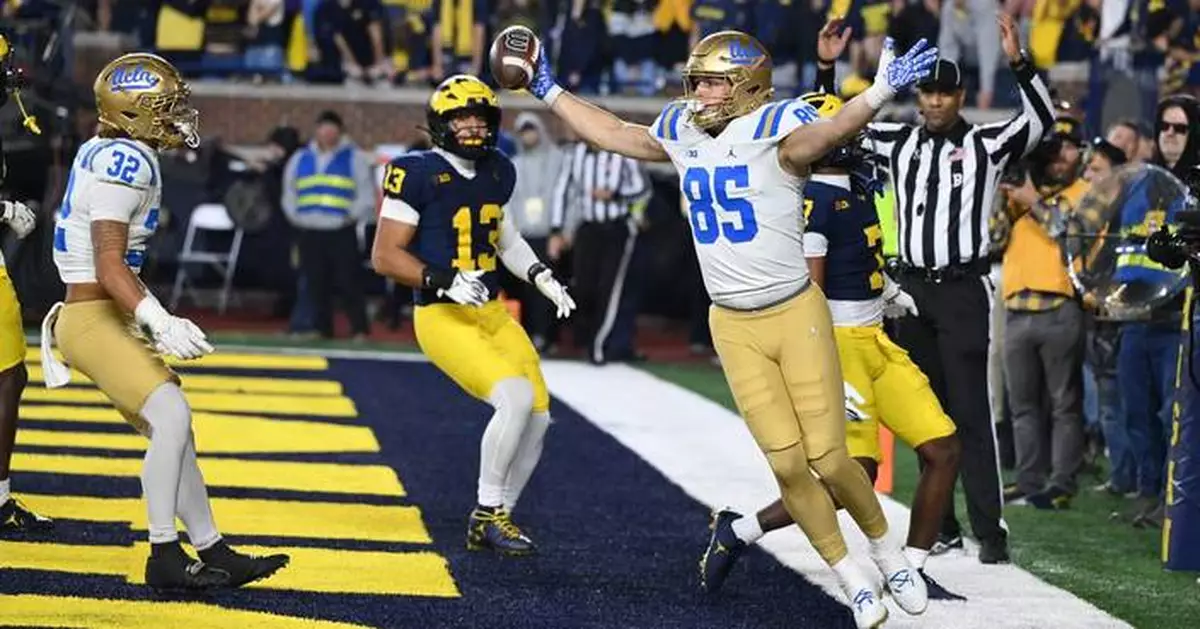
UCLA tight end Brayden Loftin (85) celebrates in the end zone after catching a touchdown pass against Michigan in the second half of an NCAA college football game in Ann Arbor, Mich., Saturday, Nov. 21, 2026. (AP Photo/Lon Horwedel)
VATICAN CITY (AP) — Pope Francis saw the “gates of hell” when he realized the depths of the clergy sexual abuse scandal and experienced mystical visions of the devil throughout his ministry, according to excerpts of his personal diary published Tuesday by the Vatican.
“The Private Diary of Pope Francis” also reveals the Argentine pope suffered a profound spiritual crisis in 2021-22, connected to his own temptations to exercise power omnipotently. He overcame the crisis by entrusting himself entirely to God’s mercy.
The book, released globally in several languages, offers a deeply personal view of Francis' mind and heart, revealing his innermost fears, insecurities, dreams and temptations. It shows him as incredibly hard on himself, lamenting his own sense of worthlessness and shame, and his utter trust in God to lead him, even from the depths of despair.
The book was curated by a close aide, Cardinal Víctor Manuel Fernández, the Argentine theologian who heads the Vatican’s doctrine office and writes that Francis wanted the papers published. Fernández is listed as the author, as his comments contextualize Francis’ diary entries.
Written in a leather-bound calendar used as a notebook, it starts in 1992, when Jorge Mario Bergoglio was auxiliary bishop of Buenos Aires. It continues through his time as cardinal in the Argentine capital and finally pope. The last entry is Aug. 18, 2024.
The most moving sections are Francis’ revelations of his own spiritual torments and what he described as encounters with the devil — visceral, tangible and seemingly terrifying visions. Two occurred in Buenos Aires, and the third after his disastrous 2018 trip to Chile.
“A few days after returning to Rome, I was in a meeting. I saw him and heard his voice, triumphant possessing everything. ‘Now I’ve gotten everything I wanted,’” Francis quoted the devil as saying in a Jan. 24, 2021, entry. “Just as I can’t forget his eyes from the previous two, in this case, I can’t forget the powerful raspiness of his voice.”
During the 2018 Chile trip, Francis created an uproar by discrediting victims of Chile's most notorious abuser. After journalists, including from The Associated Press, challenged him during the in-flight news conference returning home, Francis commissioned an investigation and realized the victims were right, that he was wrong and had been misled by the Chilean hierarchy.
“Devastated because of the situation in Chile and the dialogue with the journalists on the airplane,” Francis would write later. “I became aware of how serious the problem was. … It was hard for me to admit what happened in Chile; I didn’t think it was so serious.”
Francis wrote on June 7, 2018, that in the Chile scandal, he “saw the entrance to hell. Pagan seduction in full force.”
As he dealt with the fallout in the next two months, he wrote: “What shame and evil this has brought on the church!” and “Once more the gates of hell. … May holiness and conversion abound in the midst of so many scandals.”
But Francis’ spiritual crisis wouldn’t come until 2021.
The book dates the onset of the crisis to Jan. 24, 2021. The day before, Francis canceled several public appearances due to what the Vatican said was a bout of sciatica.
Fernández reveals, however, that Francis was suffering from “insupportable” pain from an intestinal problem that in July 2021 landed Francis in the hospital for 10 days for surgery to remove 33 centimeters (13 inches) of his colon.
In January 2021, amid the COVID-19 pandemic, the Vatican was in utter upheaval over a massive financial investigation authorized by Francis.
In September 2020, he had fired a onetime close collaborator, Cardinal Angelo Becciu, convinced Becciu had embezzled money from the Holy See. The scandal — and Francis’ belief that a web of corruption had engulfed the Vatican’s secretariat of state — led to an unprecedented Vatican investigation and years of legal proceedings through which Francis sought to show his willingness to crack down on financial misconduct.
The trial resulted in some convictions, including against Becciu, but much of prosecutors' theory of a vast conspiracy of corruption was thrown out. The appeals process is ongoing, with Francis' own role in the investigation a key question for the defense.
There is no mention of the trial in Fernández’s text, though he hints at it by revealing Francis’ later musings that the 2021-22 spiritual crisis was “mixed with governance issues, pressure regarding decisions to make, and aridity and desolation.”
Fernández writes that the crisis was primarily related to Francis’ exercise of power, the temptation to omnipotence and belief that he was above the world. It’s a vice Francis admitted to publicly in 2013, in his first interview as pope, when he acknowledged a tendency to wield power in an “authoritarian” way.
It is significant that Francis was tormented by something his critics often faulted him for: an authoritarian, go-it-alone governing style in an absolute monarch and supreme leader of the world’s 1.4 billion Catholics.
For Francis, the temptation to omnipotence was the devil tempting him to “reductive curiosity,” or believing he alone could solve everyone’s problems, and essentially thinking of himself as God.
By Dec. 30, 2022, Francis had apparently overcome the crisis, by entrusting himself to God. Fernández writes that Francis realized that what began on Jan. 24, 2021, “was a powerful invitation from the Lord to become aware of an accumulation of interior darkness that he had to overcome so he could be free.”
Fernández notes that the final two major teaching documents of Francis’ life, a 2023 text on confidence in God’s merciful love, and a 2024 encyclical on Christ’s human and divine love, are deeply spiritual texts borne out of the crisis. They differ in tone and content from the texts often associated with his pontificate.
While the book reveals some of Francis' innermost thoughts, Fernández says Francis wrote his most confidential thoughts in an indecipherable code, which is not reproduced, presumably to prevent anyone from trying to decipher it.
The reader is also left wondering what Fernández left out of his selection of diary entries, and what more context he could have provided as one of Francis' most trusted advisers.
Fernández writes that the diary includes hardly any information about church matters, and is truly a spiritual repository. He said he omitted entries affecting third parties, though he does include some of Francis' personal musings, including about then-Cardinal Robert Prevost, now Pope Leo XIV: “A great pastor, a generous missionary and an irreproachable man.”
Francis had shown Fernández the diary and told him, “From this, you will all see,” essentially entrusting the writings to him after his death on April 21, 2025. Fernández said Francis wanted them known because he thought they would help others.
Fernández said he mentioned the writings to Leo after his election, and feared they would end up in a Vatican warehouse with Francis' other personal items that were sealed upon his death.
“I added that I wished to study these materials — to make them known and interpret the exact meaning of their contents,” Fernández wrote. “The Holy Father showed interest and, a few days later, sent me the cardboard box with those texts, so I could care for them and do the work I hoped to do with them.”
The posthumous publication of a pope's innermost spiritual musings is not unusual.
Pope John XXIII’s autobiography, “Journal of a Soul,” was published in 1960. St. John Paul II had wanted his personal notes burned after his death, but his secretary defied his wishes and had the writings published in 2014.
Associated Press religion coverage receives support through AP’s collaboration with The Conversation US, with funding from Lilly Endowment Inc. The AP is solely responsible for this content.
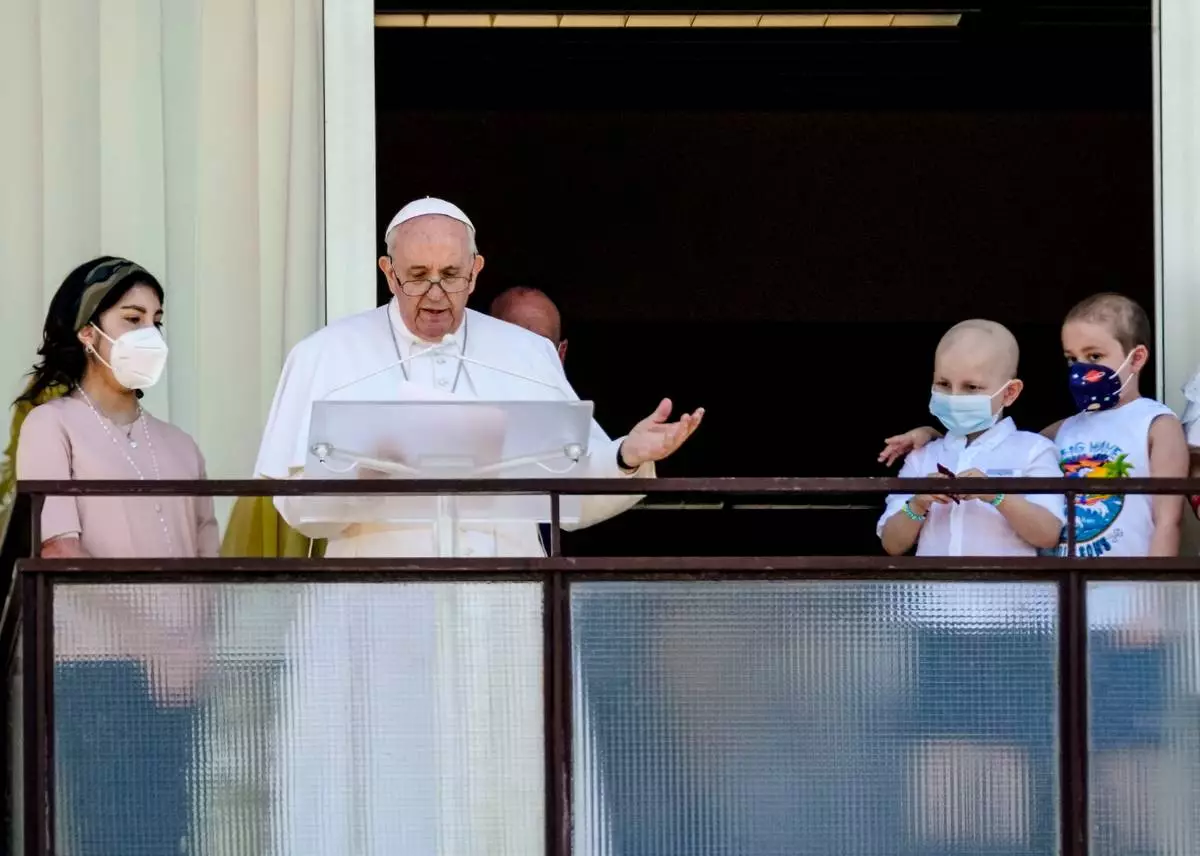
FILE - Pope Francis appears with young oncologic patients on a balcony of the Agostino Gemelli Polyclinic in Rome, Sunday, July 11, 2021, where he is recovering from intestinal surgery. (AP Photo/Alessandra Tarantino, File)
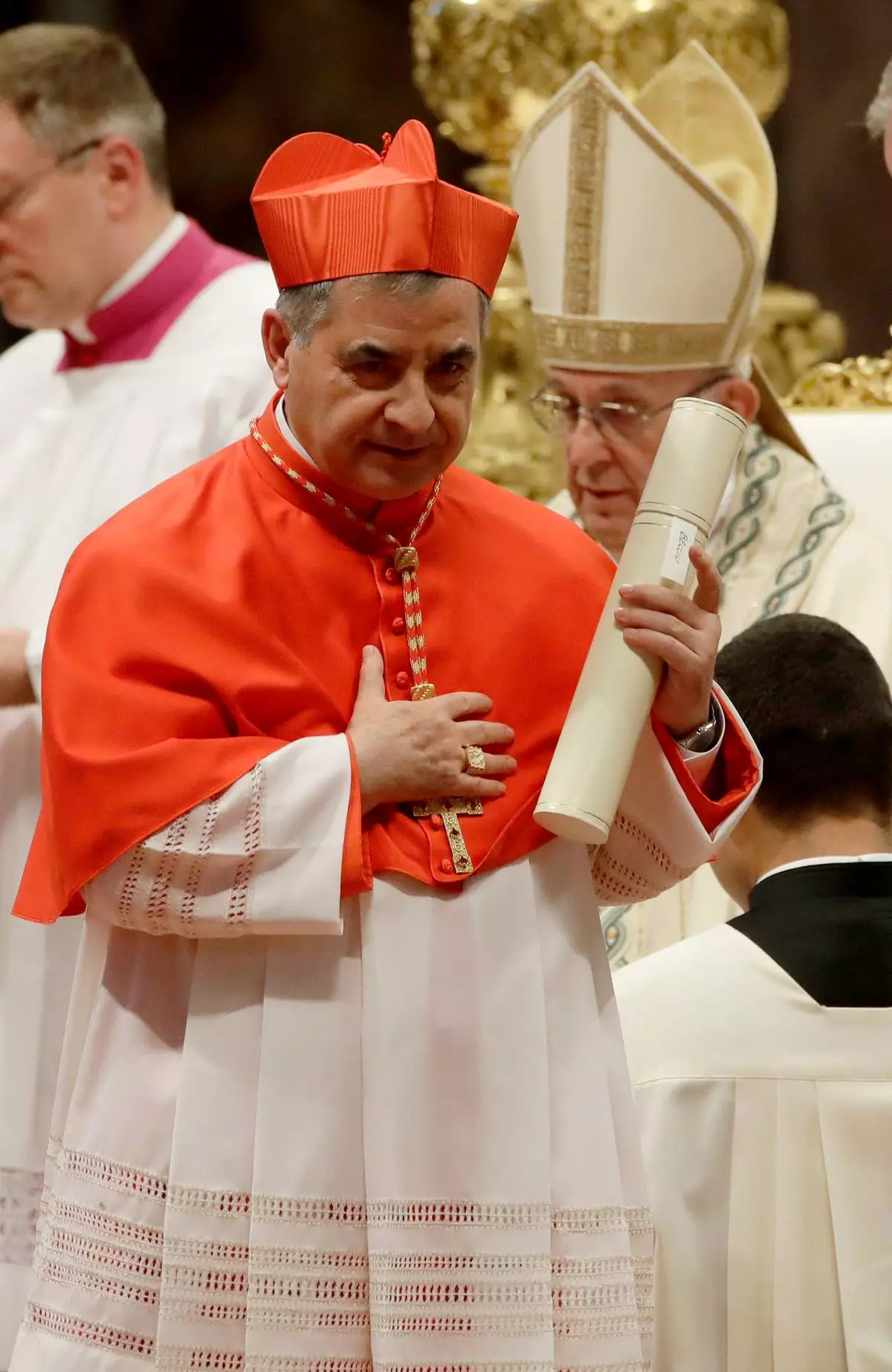
FILE - Newly elevated Cardinal Giovanni Angelo Becciu leaves after receiving the red three-cornered biretta hat from Pope Francis, right, during a consistory in St. Peter's Basilica at the Vatican, Thursday, June 28, 2018. (AP Photo/Alessandra Tarantino, File)
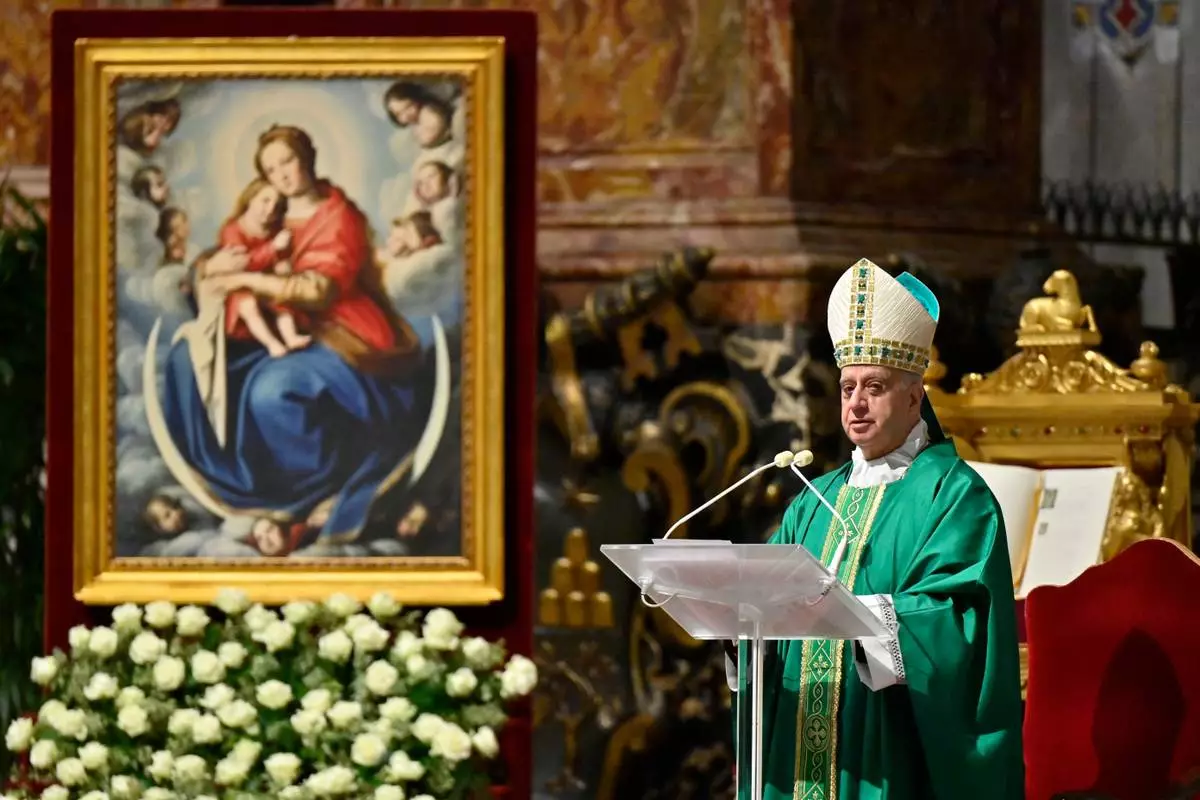
FILE - Italian Archbishop Rino Fisichella celebrates Mass in St. Peter's Basilica at the Vatican, Sunday, Jan. 24, 2021, in place of Pope Francis, who canceled his participation because of a recurrence of sciatica. (Alberto Pizzoli/Pool via AP, File)
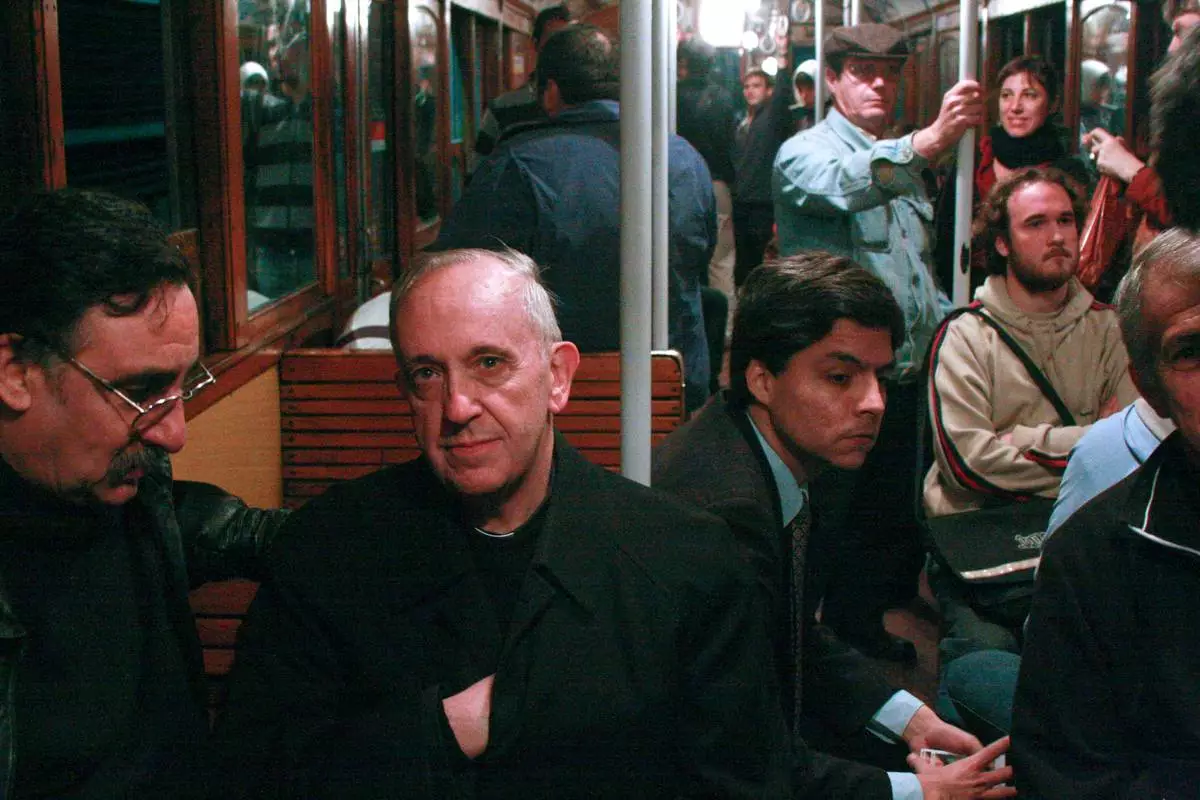
FILE - Cardinal Jorge Mario Bergoglio, second left, who later became Pope Francis, rides the subway in Buenos Aires, Argentina, in this 2008 file photo. (AP Photo/Pablo Leguizamon, File)
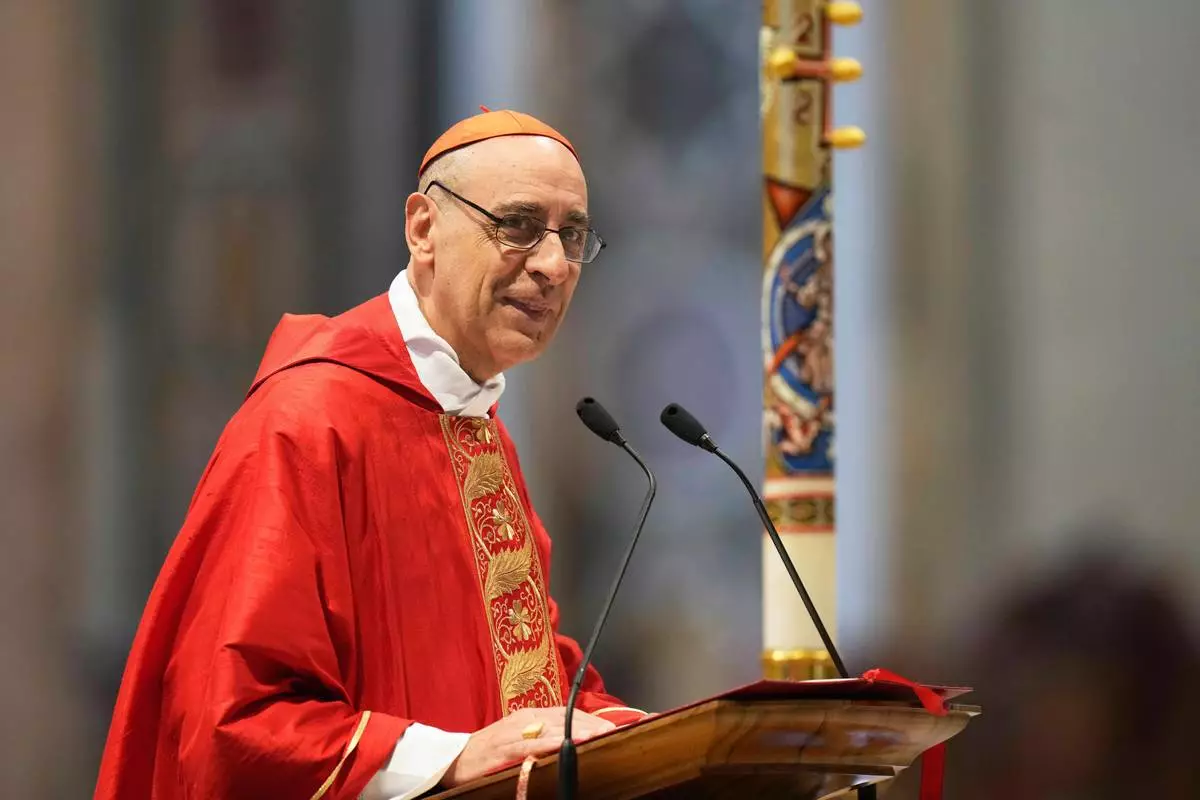
FILE - Cardinal Victor Manuel Fernandez delivers his speech during a mass on the sixth of nine days of mourning for late Pope Francis, in St. Peter's Basilica at the Vatican, May 1, 2025. (AP Photo/Gregorio Borgia, File)
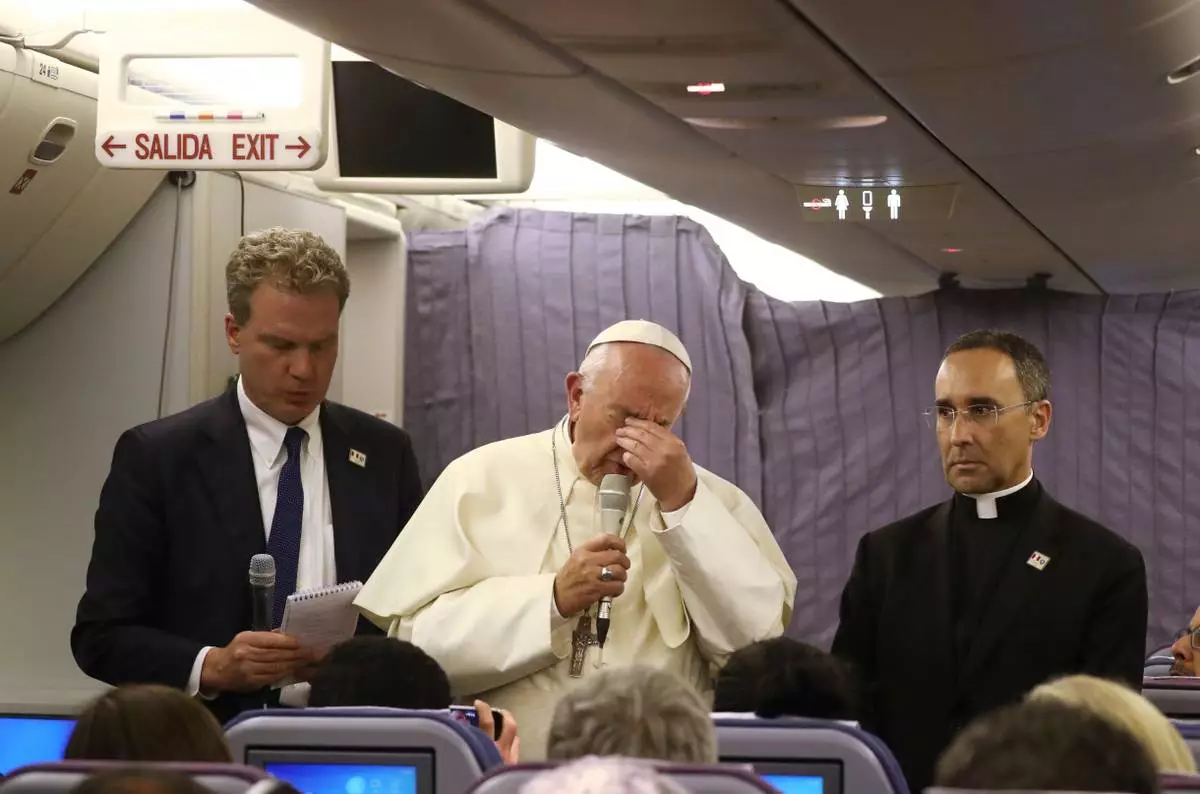
FILE - Pope Francis, flanked by the Rev. Mauricio Rueda Beltz, right, and the pope's spokesperson, Greg Burke, left, rubs his eyes as he arrives to talk with journalists during his flight from Lima, Peru, to Rome, Jan. 21, 2018. (AP Photo/Alessandra Tarantino, File)
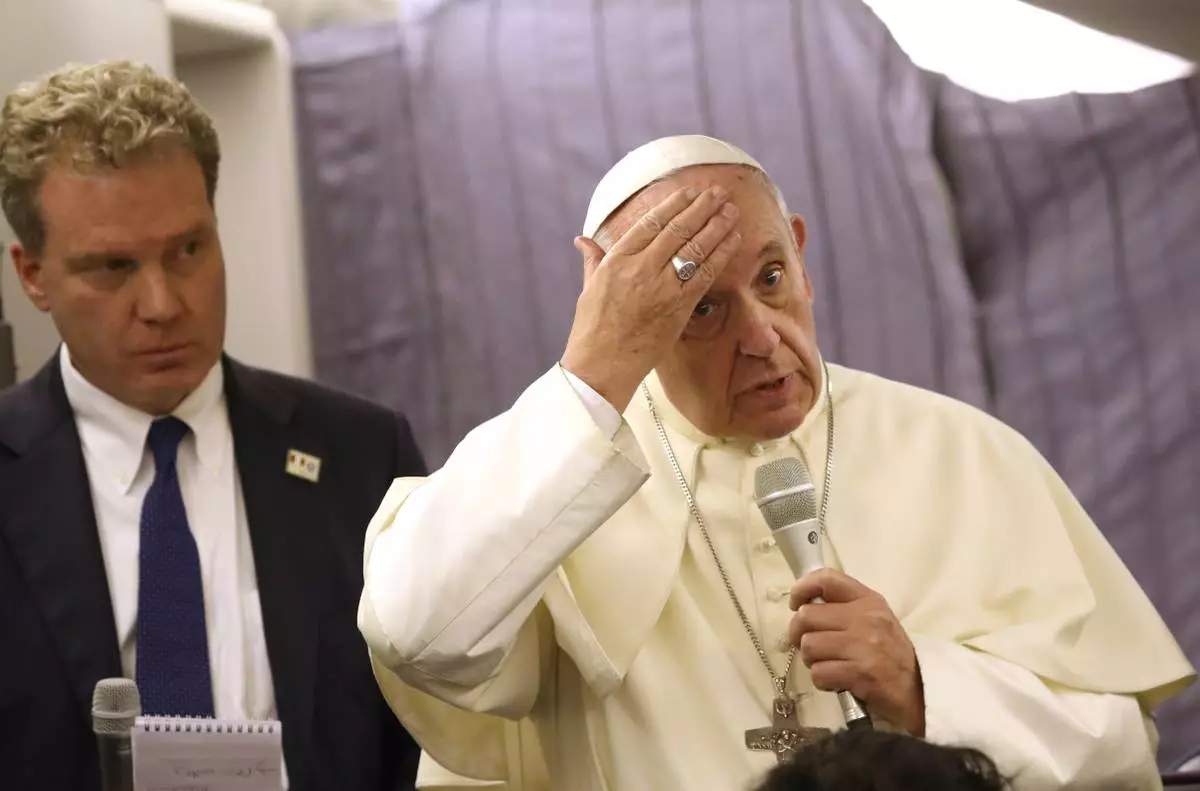
FILE - Pope Francis, flanked by his spokesperson, Greg Burke, touches his forehead as he speaks with journalists during his flight from Lima, Peru, to Rome on Sunday, Jan. 21, 2018. (AP Photo/Alessandra Tarantino, File)