
Spanish police recently dismantled a major neo-Nazi extremist cell, arresting 14 suspected members and seizing more than 20 firearms alongside large quantities of ammunition and prohibited bladed weapons.
Known as Núcleo Nacional ("National Core"), the group began as a fringe presence at street-level far-right demonstrations. Yet within just over three years, it rapidly constructed a nationwide network—recruiting minors, stockpiling weapons and ammunition, forming counter-surveillance units, and establishing cross-border pipelines for paramilitary training and extremist networking—all while allegedly plotting a domestic armed uprising.
The case offers a sobering snapshot of several converging trends across Europe today: the online amplification of extremist ideologies, the cross-border transfer of violent tactics, and the accelerating radicalisation of young people—risks that warrant serious scrutiny.
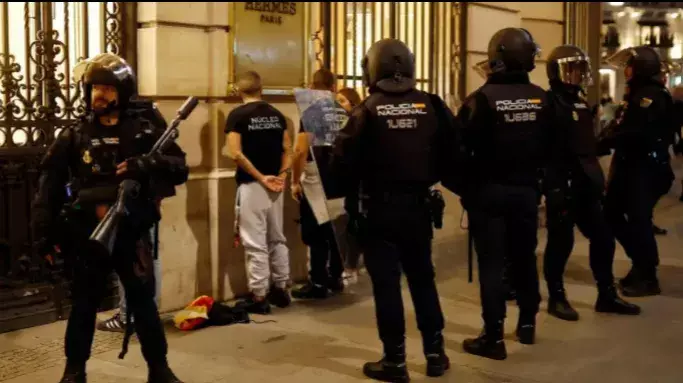
Police arrest suspected members of the neo-Nazi group "Núcleo Nacional" during a recent raid. (File photo)
From Street Protests to an Armed Network
Núcleo Nacional traces its origins to a far-right demonstration in Madrid in November 2023. Its ringleader, Iván Rico, seized the opportunity to rally hardline protesters and establish the group, subsequently absorbing members from other domestic neo-Nazi outfits to build an organisational footprint spanning Madrid, Barcelona, Valencia, and beyond.
Openly promoting Nazism, antisemitism, and anti-immigrant hostility, the group relied heavily on online propaganda to recruit young followers—some as young as 14.
Rico claimed the organisation boasted roughly 1,600 members and had set up a 260-strong counter-reconnaissance unit specifically designed to detect and thwart police infiltration. However, police investigators estimate its actual core membership at around 60, suggesting the group's real-world mobilisation capacity fell short of its boastful propaganda.
More concerning, however, was its international reach. Investigators found that the group had established cross-border links with far-right elements connected to Ukraine's Azov Brigade, even dispatching members to Ukraine for paramilitary training—a move police believe was intended as preparation for future armed operations inside Spain.
In parallel, Núcleo Nacional registered a formal political entity named the "November National Party" (Partido Nacional de Noviembre), seeking to use a veneer of political legitimacy to gain a foothold in mainstream institutions.
Why Is Extremist Ideology Spreading Faster?
While the exact operational details and viability of Núcleo Nacional's alleged insurrection plot remain subject to ongoing judicial proceedings—and the suspects have yet to be convicted—the broader structural forces fuelling Europe's drift toward militant extremism demand urgent attention.
Social Fractures Provide Fertile Ground
The online resonance of extremist rhetoric is rooted in deepening socio-economic strains across Europe.
Sluggish economic growth and persistent inflation in recent years, compounded by contentious debates over immigration, have left traditional mainstream parties struggling to deliver effective solutions, fuelling widespread public frustration.
As young people confront mounting anxieties over education and employment, accumulating feelings of insecurity and disenfranchisement create an opening for extremist actors. By reducing complex structural and governance challenges into simplistic "scapegoat narratives," these groups stoke public anger and manipulate vulnerable youth.
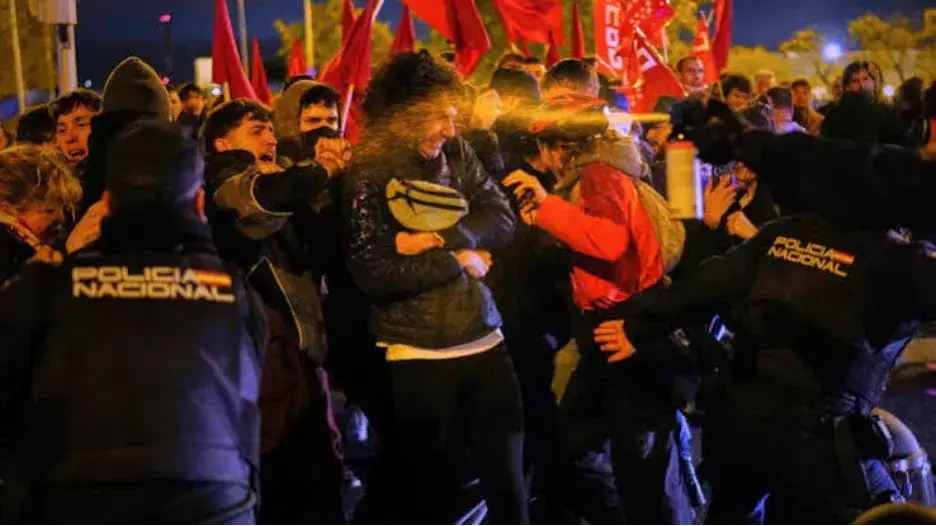
A nationwide general strike takes place in Spain on November 11 amid mounting economic and social pressures. (File photo)
Digital Platforms Amplify Reach and Recruitment
The decentralised, rapid, and anonymous nature of the internet has transformed how extremist groups spread propaganda and recruit, acting as a primary catalyst for youth radicalisation.
Whereas traditional street-level extremist gangs were constrained by geography and limited outreach, short-video platforms, social media networks, and encrypted or anonymous online forums have become today's primary ideological battlegrounds.
Through bite-sized, emotionally charged video clips, extremist networks distill radical doctrines into easily digestible slogans and amplify grievance and hatred—making them particularly effective at influencing impressionable teenagers. Moreover, online recruitment eliminates the need for in-person contact, lowering barriers to entry, evading scrutiny, and enabling low-cost, large-scale expansion across borders.
Public Security Under Growing Strain
The emergence of armed, decentralised, and increasingly youthful extremist cells poses a direct challenge to European social stability and public safety.
Escalating Risk of Violence
Núcleo Nacional crossed a dangerous threshold—shifting from extremist speech to militant mobilisation, with the potential for harm multiplying dramatically.
Unlike older fringe groups that largely confined themselves to street rallies, inflammatory rhetoric, and minor disturbances, Núcleo Nacional demonstrated an explicit intent toward organised violence: stockpiling firearms, ammunition, and bladed weapons while arranging paramilitary training to prepare for domestic armed unrest and targeted subversion. Even if its limited numbers prevented it from overthrowing state institutions, lone-wolf attacks or targeted sabotage could still inflict severe harm on public order and civilian lives.
Alienation and Radicalisation of Youth
By deliberately targeting teenagers, groups like Núcleo Nacional risk entrenching a long-term cycle of youth radicalisation in Europe. Adolescents around the age of 14 are still forming their worldviews and values, leaving them acutely vulnerable to manipulative online rhetoric and militant ultranationalism. Once drawn into extremist ecosystems, prolonged exposure to hatred, xenophobia, and violence not only derails their education and personal development, but also grooms a new generation of radicalised actors posing lasting threats to society.
Cross-Border Spillover of Systemic Risk
Núcleo Nacional's cross-border movement of personnel and tactical knowledge illustrates how a localised extremist threat can rapidly evolve into a transnational security challenge. By maintaining active ties with far-right outfits in Germany, France, Croatia, and elsewhere, the group facilitated the rapid circulation of operational playbooks, propaganda tropes, tactical training, and covert tradecraft across European borders—weaving a broader continental network that reinforces the wider wave of radicalisation.
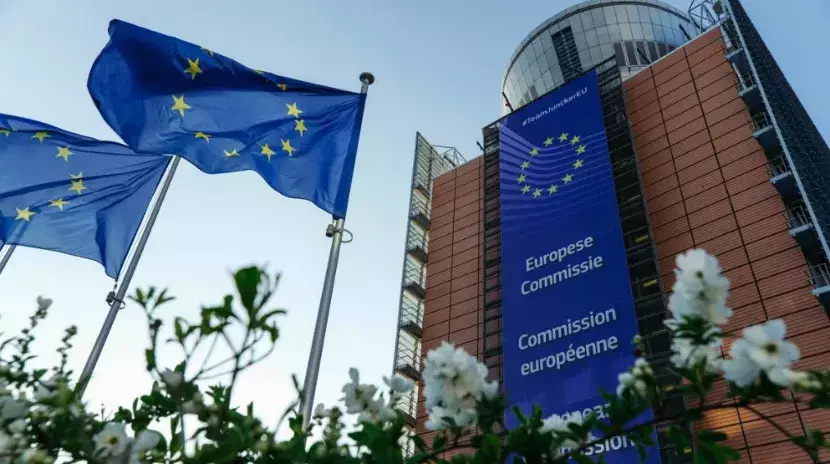
The European Commission headquarters building in Brussels. (File photo)
The unmasking of Spain's Núcleo Nacional serves as a stark wake-up call for Europe and the international community alike. As extremist movements master the mechanics of online virality, forge cross-border resource pipelines, and acquire paramilitary training, a dangerous new hybrid threat is taking shape.
Jiu Wan Li: The High Ground
** 博客文章文責自負,不代表本公司立場 **