In just two short days, courts in Hong Kong and Macao delivered consecutive rulings, passing sentences on both a Hong Kong destabilizer and a Macao agitator.
On November 5, the Court of First Instance of the High Court of Hong Kong sentenced Joshua Wong to 10 years in prison for "conspiracy to collude with foreign or external forces to endanger national security." On November 6, the Court of First Instance of the Macao Special Administrative Region issued its verdict in the criminal national security case involving Au Kam San, sentencing him to 12 years and 6 months in prison.
Click to Gallery

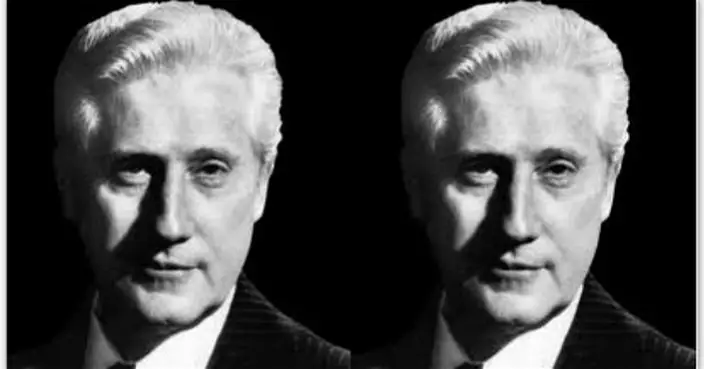
Joshua Wong and Au Kam San

Joshua Wong

Au Kam San
The successive severe sentences handed down by the courts in Hong Kong and Macao jointly send a clear and unequivocal signal: acts endangering national security will be sternly punished, and attempts at external interference are doomed to fail. No matter how lawbreakers disguise their collusion, or how external forces meddle and incite, anyone who crosses the red line of national security will inevitably pay a heavy price.
Joshua Wong and Au Kam San
Rulings in Two Cases Serve as a Powerful Deterrent
The conclusion of these national security cases marks a powerful concrete demonstration of Hong Kong and Macao refining their legal systems for national security and strictly enforcing the law. The facts in both cases are clear, the evidence conclusive, and the verdicts fully grounded in law and justice.
Strict Penalty in Hong Kong: Heavier Sentence for Recidivism
On November 5, the Court of First Instance of the High Court of Hong Kong delivered its verdict, finding Joshua Wong guilty of "conspiracy to collude with foreign or external forces to endanger national security" and sentencing him to 10 years' imprisonment.
Joshua Wong is the former secretary-general of the anti-China, Hong Kong-disrupting organization "Demosisto" and a core ringleader of the illegal "Occupy Central" movement and the 2019 extradition bill disturbances. He has long engaged in activities disrupting Hong Kong, using so-called "democracy" and "freedom" as a pretext to extensively collude with anti-China forces overseas to split the nation, subvert state power, and undermine public order in Hong Kong.
Joshua Wong
This is not Wong's first conviction for national security offenses. As early as November 2024, he was sentenced to 4 years and 8 months in prison for "conspiracy to subvert state power." In June 2025, the National Security Department of the Hong Kong Police Force re-arrested him in prison and opened an investigation into his "conspiracy to collude with foreign or external forces to endanger national security." Wong pleaded guilty in court on September 2 this year. (See also related article: "Post-90s 'Hong Kong Independence' Ringleader Brought to Justice Again!")
Receiving two convictions within two years, Wong's case stands as a landmark example of anti-China, Hong Kong-disrupting elements being held accountable under the law.
Notably, the Hong Kong court's reasons for sentence classified Wong's offense under the "grave offense" category. The court highlighted that at the time of the offense, Hong Kong was suffering severe impacts from social unrest and riots, facing acute risks to national security and the rule of law, and that the actions of Wong and his co-defendants made the situation significantly worse.
First Case in Macao: Combined Punishment for Multiple Crimes
On November 6, the Court of First Instance of the Macao SAR publicly announced its verdict in the national security case involving Au Kam San, finding him guilty on multiple counts, including "subversion of state power," "establishing ties with organizations, groups, or individuals outside the Macao SAR to commit acts endangering national security," and "breach of official confidentiality." Taking into account all offenses, he was sentenced to a total of 12 years and 6 months in prison.
This also marks the first national security case concluded since Macao revised its Law on Safeguarding National Security, signaling that Macao's national security framework has fully transitioned from statutory text into judicial practice.
Au Kam San was a former member of the Legislative Assembly of Macao. For years, operating under the banner of "supervising the government" and "striving for democracy," he held legitimate political status and access to closed-door meetings. Rather than upholding his public duties and safeguarding the SAR's security, he turned his public position in the legislature into a conduit for internal collusion with external forces.
The court established that Au had long colluded with multiple foreign anti-China organizations, supplying them with extensive false and inflammatory material. Even after Macao's revised Law on Safeguarding National Security took effect in 2023, Au showed no restraint, continuing to conspire with external forces, incite foreign countries to take hostile measures against China, and attempt to interfere with the election of Macao's sixth Chief Executive.
During his tenure as a legislator, he also leaked confidential information obtained from closed-door meetings to external forces. These acts severely compromised national security and the interests of the Macao SAR.
Au Kam San
The Sword of Law Hangs High: Red Lines Must Not Be Tested
The judgments in these two cases not only penalize offenders in accordance with the law, but also send a unmistakable signal to society in Hong Kong and Macao as well as external forces: the bottom line of national security is inviolable, the judicial authority of the SARs is unchallengeable, and no external interference or pressure can derail China's determination to safeguard its national security under the rule of law.
The Long Arm of the Law: Offenses Will Be Punished
Figures like Joshua Wong and Au Kam San are, in essence, traitors backed by foreign powers who sold out national interests. Their tactics followed a clear pattern: wrapping themselves in local public office or social stature, secretly conspiring with foreign anti-China camps, receiving external resources and directives, and persistently committing acts that endanger national security.
They vainly sought to hijack the SARs' development for personal gain, challenge central authority through disruptive means, and subvert the governance order of the SARs. Ultimately, they met total defeat before the law.
These two cases fully demonstrate that anyone who betrays the country or destabilizes Hong Kong and Macao will face full legal accountability—ruin and imprisonment are their inevitable fate.
External Interference Is Doomed to Fail
The shadow of external manipulation looms behind both cases. Wong actively solicited foreign sanctions, while Au secretly transmitted classified information overseas; both functioned as proxies cultivated by external forces.
For a long time, certain foreign forces have sought to use Hong Kong and Macao as leverage to contain China's development, exerting pressure by backing proxies and manipulating public opinion in an attempt to meddle in China's internal affairs.
However, the judiciaries of Hong Kong and Macao remain independent and steadfast under the rule of law. Rooted firmly in facts and legal principles, and unswayed by external pressure, the courts completed these trials independently and in accordance with the law, thoroughly dismantling foreign attempts at intervention.
Justice will always prevail, and peace and stability remain the unstoppable trend of history.
The conclusion of these two national security cases in Hong Kong and Macao within two days marks a vital milestone in advancing the legal framework for national security in both SARs. Safeguarded by the rule of law and anchored by the strong guarantee of "One Country, Two Systems," Hong Kong and Macao will surely maintain long-term stability, move forward with confidence, and revitalize their future.
Jiu Wan Li: The High Ground
** 博客文章文責自負,不代表本公司立場 **