Skip to Content Facebook Feature Image

Harmonizing Five Flavours in One Pot: The Chinese Dining Philosophy Captivating the West

Blog

Harmonizing Five Flavours in One Pot: The Chinese Dining Philosophy Captivating the West
Blog

Blog

Harmonizing Five Flavours in One Pot: The Chinese Dining Philosophy Captivating the West

2026-11-08 10:45

An ancient Chinese proverb declares: "Food is the primary necessity of the people." The weight of this saying extends far beyond mere flavor. Food security forms the bedrock of national security, while dining table order serves as a microcosm of social stability. A society that can nourish 1.4 billion people according to seasonal cycles—warming them with hot meals and gathering them around shared tables—rests upon the long-term, seamless alignment of agriculture, logistics, public health, and social governance. This is the most grounded, everyday manifestation of China’s holistic national security framework.

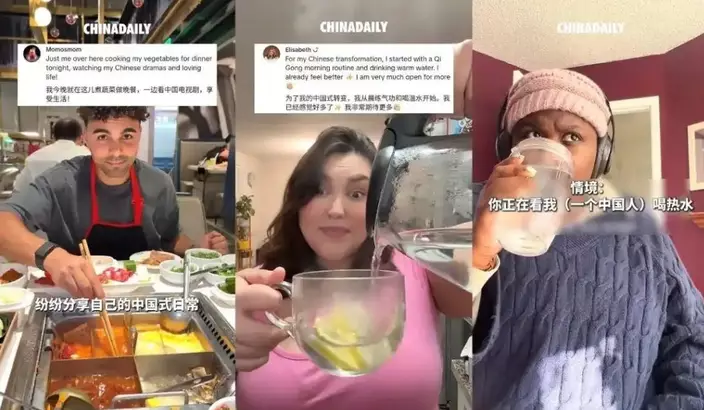
Recently, this deeply rooted dietary philosophy has quietly emerged as a viral global trend among Gen Z and young adults worldwide. On international social platforms, users are replacing morning cold smoothies with warm congee and nourishing soups, candidly sharing that "now, whenever I think of breakfast, I just want warm congee." Others post daily check-ins showcasing Chinese wellness routines—brewing apple-red date-goji tea, taking warm foot baths before bedtime, and practicing Baduanjin Qigong—eagerly announcing that they have "entered a very Chinese era of life." Xinhua News Agency reported that related topics have accumulated hundreds of millions of views.

More Images
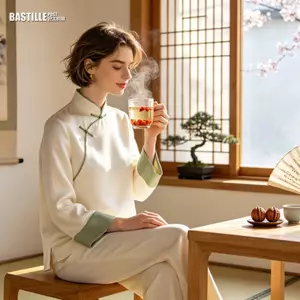
International social media users document their journeys of learning to "live like the Chinese." (Source: China Daily photo)
International social media users document their journeys of learning to "live like the Chinese." (Source: China Daily photo)

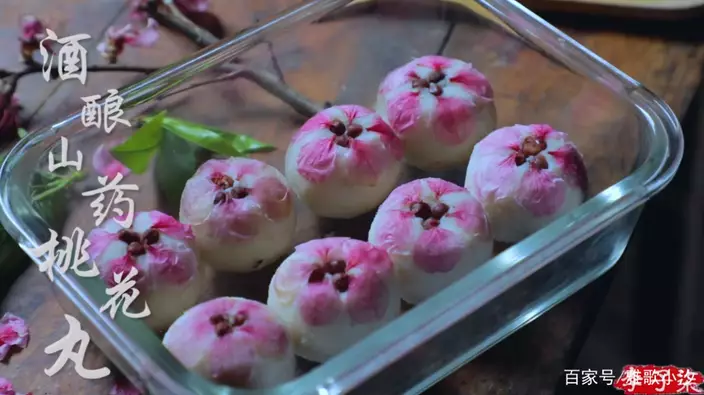
Li Ziqi incorporates edible flowers into seasonal recipes, translating natural cycles into aesthetic table presentations. (Source: Li Ziqi's Weibo photo)
Li Ziqi incorporates edible flowers into seasonal recipes, translating natural cycles into aesthetic table presentations. (Source: Li Ziqi's Weibo photo)

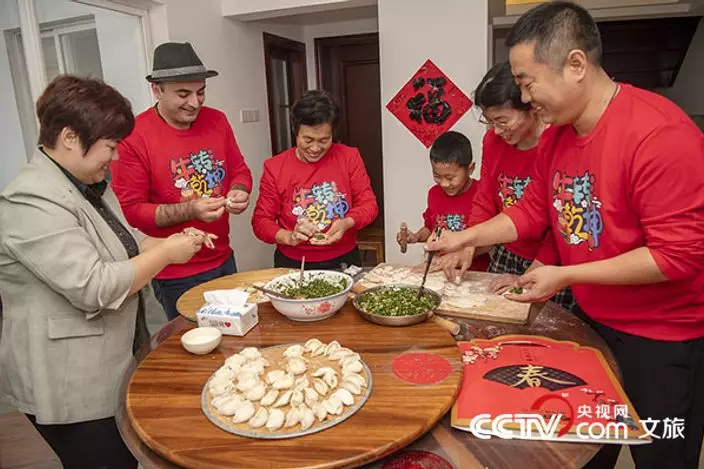
Learning to wrap dumplings serves as an entry point for international youth to experience Chinese family traditions and communal food culture. (Source: CCTV.com photo)
Learning to wrap dumplings serves as an entry point for international youth to experience Chinese family traditions and communal food culture. (Source: CCTV.com photo)

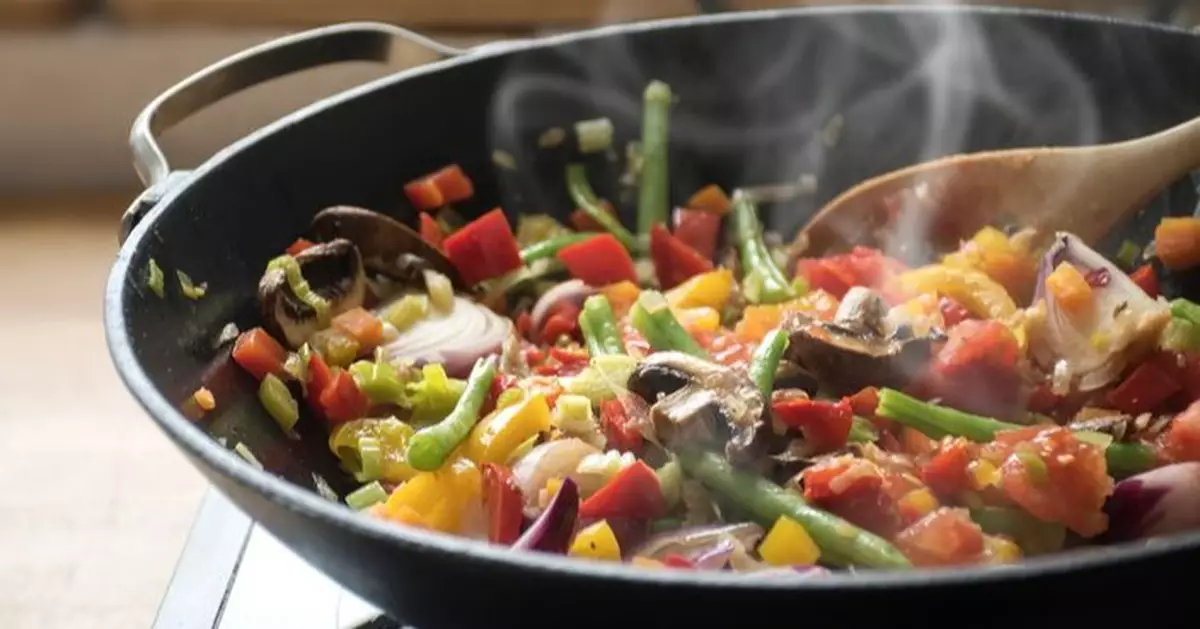
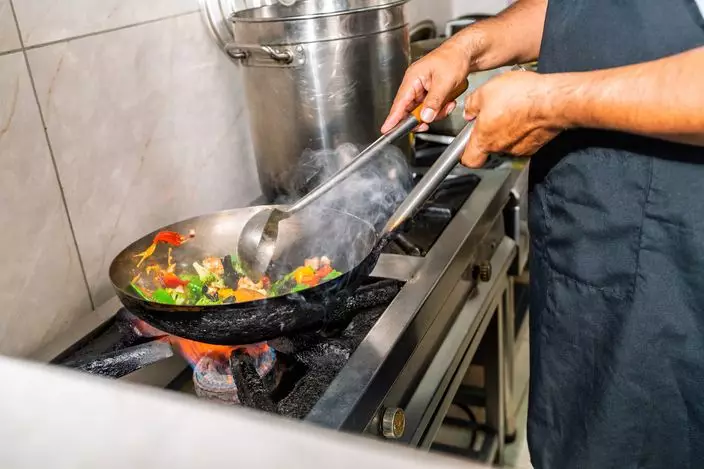
Chinese culinary art relies on heat control and flavor balance, allowing diverse ingredients to showcase their unique attributes while melding into a unified dish. (Source: Well-Media photo)
Chinese culinary art relies on heat control and flavor balance, allowing diverse ingredients to showcase their unique attributes while melding into a unified dish. (Source: Well-Media photo)

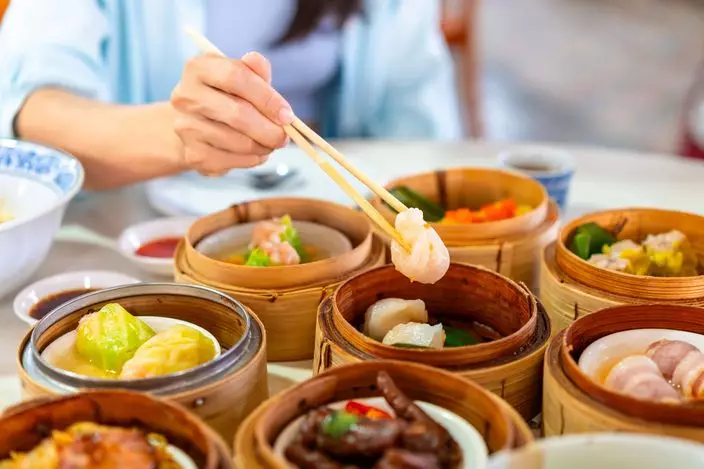
Gathering over tea and dim sum ("Yum Cha") represents the quintessential shared-dining tradition familiar to Hong Kong residents. (Source: Getty Images photo)

Gathering over tea and dim sum ("Yum Cha") represents the quintessential shared-dining tradition familiar to Hong Kong residents. (Source: Getty Images photo)

International social media users document their journeys of learning to "live like the Chinese." (Source: China Daily photo)

International social media users document their journeys of learning to "live like the Chinese." (Source: China Daily photo)

This marks the most appetizing chapter of the "Chinamaxxing" movement: global audiences are falling in love not merely with the taste of Chinese food, but with the comprehensive worldview embedded behind every dish.

Food as a Worldview: Warming Yang, Dispelling Cold, and Eating in Season

This lifestyle framework possesses a clear philosophical lineage. A commentary in People's Daily noted that the widespread habit of drinking warm water stems from Traditional Chinese Medicine (TCM) principles centered on "Warming Yang and Dispelling Cold" (nourishing internal vitality and expelling chill). The rich spectrum of Chinese culinary culture embodies the fundamental human pursuit of harmony through food.

Long before the current trend, content creator Li Ziqi introduced "eating in season and adapting to nature" to a global audience. Her YouTube playlists—focusing on seasonal eating and dietary moderation—feature peach blossom wine in March, loquat pastries in May, and autumn-cured meats preserved for winter. By 2019, her channel had amassed 7.46 million subscribers, with single videos reaching 40 million views; today, her subscriber base stands at 33.7 million, outperforming numerous mainstream international media outlets. As one international viewer commented: "What she shows us is a dimension of China we never understood before."

Li Ziqi incorporates edible flowers into seasonal recipes, translating natural cycles into aesthetic table presentations. (Source: Li Ziqi's Weibo photo)

Li Ziqi incorporates edible flowers into seasonal recipes, translating natural cycles into aesthetic table presentations. (Source: Li Ziqi's Weibo photo)

Physical wellbeing provides the ultimate proof. Fröhler, a young Austrian convert to the lifestyle, shared her realization: "A proper meal must feature warm, cooked food. Hot food is rooted in TCM principles—it prioritizes internal balance and long-term wellness over quick symptomatic fixes. It’s a remarkably wise philosophy." Today, she prioritizes shared meals, chooses sugar-free options, and practices diligent sun protection. Similarly, Gwen, an American expat living in Guangzhou, found her daily life transformed from palate to lifestyle: her kitchen runs entirely on wok cooking, and habits like drinking warm water during her period—conceptually alien in the US—have seamlessly become second nature. A research team led by Professor Xiao Jun at Wuhan University analyzed over 2,000 original videos under these trending topics, concluding that the sustained momentum of this craze lies in global youth's enthusiastic embrace of Chinese holistic wellness.

Shared Meals: Human Connection Across the Dining Table

Deeper than personal wellness is the cultural tradition of communal dining. An analysis in Beijing Daily observed that fast-paced urban living and isolation represent shared challenges for global youth today. The Chinese way of life—emphasizing family bonds, shared meals, and balanced moderation—provides an emotional anchor. Communal dining fosters social belonging, while warm meals deliver a sense of safety and comfort.

In response, international creators are sharing videos of themselves wrapping dumplings and mastering Chinese recipes, while posting their progress on Chinese social platforms. Ghimire, a young woman from Nepal, introduced these Chinese habits to her family back home: "These methods are simple, yet deeply nourishing." Gathering around a table and greeting guests with tea—table customs long taken for granted in China—are becoming the aspirational lifestyle for young people around the world.

Learning to wrap dumplings serves as an entry point for international youth to experience Chinese family traditions and communal food culture. (Source: CCTV.com photo)

Learning to wrap dumplings serves as an entry point for international youth to experience Chinese family traditions and communal food culture. (Source: CCTV.com photo)

Harmonizing Five Flavors: "Harmony in Diversity" Within a Single Pot

At the heart of Chinese culinary theory lies the principle of harmonization. The philosopher Laozi wrote in the Tao Te Ching: "Governing a great nation is like cooking a small fish"—requiring precise heat control, measured seasoning, and patient balance. The wisdom of "Harmonizing Five Flavours" dictates that distinct ingredients and seasonings coexist in a single pot, preserving their individual characteristics while combining to create a harmonious new whole.

Mapped onto society, this philosophy of "Harmony in Diversity" (He Er Bu Tong) mirrors how diverse social groups and cultures coexist inclusively while forming a cohesive unity. Preserving the continuity and authenticity of this culinary heritage is itself an essential component of cultural security—food remains the strongest tether of cultural identity, and the significance of a slow-simmered soup extends far beyond taste. From diplomatic principles to personal relationships, China's ethos of "Harmony in Diversity" offers Western youth a fresh perspective on human connection.

Chinese culinary art relies on heat control and flavor balance, allowing diverse ingredients to showcase their unique attributes while melding into a unified dish. (Source: Well-Media photo)

Chinese culinary art relies on heat control and flavor balance, allowing diverse ingredients to showcase their unique attributes while melding into a unified dish. (Source: Well-Media photo)

The path through which the world comes to understand China is evolving: moving beyond superficial gazes at the Great Wall or giant pandas, and instead traveling through the palate directly into the heart of a civilization. Brand Finance’s Global Soft Power Index 2026 ranked China second worldwide with 73.5 points—making it the only nation in the top ten with an increasing score, while its international reputation ranking surpassed that of the US for the first time. Global audiences increasingly perceive China as a nation capable of offering warm, authentic experiences and deep cultural resonance.

Gathering over tea and dim sum ("Yum Cha") represents the quintessential shared-dining tradition familiar to Hong Kong residents. (Source: Getty Images photo)

Gathering over tea and dim sum ("Yum Cha") represents the quintessential shared-dining tradition familiar to Hong Kong residents. (Source: Getty Images photo)

For Hong Kong readers, this global phenomenon carries a comforting familiarity: Grandma's slow-simmered Cantonese soup, weekend Yum Cha at local dim sum halls, and the affectionate reminder to "drink more warm water." Having grown up immersed in this culinary wisdom, many may not have realized that these daily habits represent the very lifestyle global youth are eagerly seeking to adopt.

The most powerful cultural connection requires no translation: it requires only a shared table, good company, and a steaming pot of soup.


Chinamaxxing

** 博客文章文責自負,不代表本公司立場 **
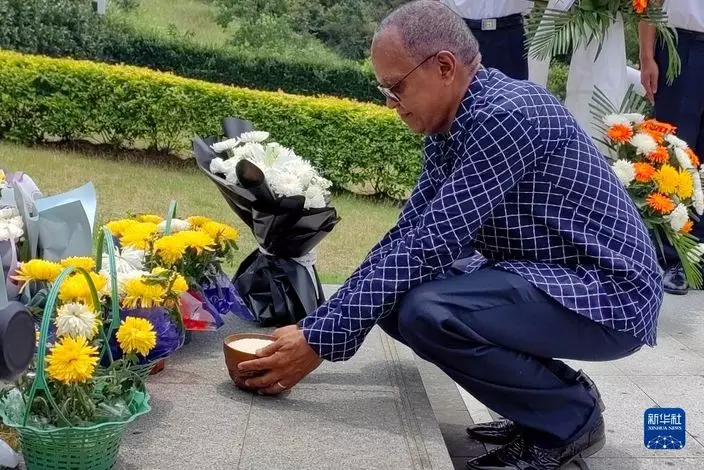
Before the tomb of Yuan Longping, the renowned "Father of Hybrid Rice," sat Rakotoson Philibert, former Secretary-General of Madagascar's Ministry of Agriculture, fulfilling a promise spanning three years. In June 2023, he traveled thousands of miles to Tangren Wanshou Garden in Changsha, Hunan, bearing a bowl of hybrid rice harvested on African soil. In October 2026, he returned to pay his respects once more, gazing quietly at the headstone: "Respected Teacher Yuan Longping, we have come late."

Rakotoson Philibert, former Secretary-General of Madagascar's Ministry of Agriculture, pays his respects at the tomb of Yuan Longping in Changsha. (Source: Xinhua photo)

Rakotoson Philibert, former Secretary-General of Madagascar's Ministry of Agriculture, pays his respects at the tomb of Yuan Longping in Changsha. (Source: Xinhua photo)

This moment represents a touching chapter in half a century of "seed diplomacy": a high-yield rice strain cultivated by a Chinese scientist now grows across more than 70 nations, feeding tens of millions of people globally.

The "Dream of Shade Under Rice Plants" and 700 Million Tons

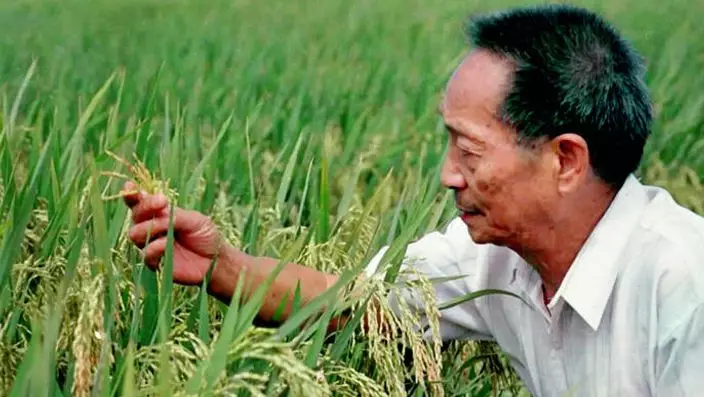
Throughout his life, Yuan Longping held two abiding dreams: the "dream of resting under the shade of giant rice plants" and the "dream of hybrid rice covering the globe." On the wall of his research center in Africa, his personal inscription remains proudly displayed: "Develop hybrid rice to benefit the world's people." His mission began decades ago with a personal oath forged after witnessing the devastation of famine: "We must solve the problem of hunger."

Yuan Longping's lifelong vision centered on his "dream of resting under the shade of giant rice plants" and global food security. (Source: Wen Wei Po photo)

Yuan Longping's lifelong vision centered on his "dream of resting under the shade of giant rice plants" and global food security. (Source: Wen Wei Po photo)

Fifty years later, national agricultural data tells the story: China has cultivated hybrid rice across a cumulative 9 billion mu (600 million hectares), with annual domestic planting exceeding 17 million hectares. This technological breakthrough yields an extra 2.5 million metric tons of rice annually, feeding an additional 80 million people each year. In 2025, China's total grain production reached 714.8 million metric tons (1.429 trillion jin), maintaining national annual output safely above 700 million tons. Per capita grain availability reached 500 kilograms—well above the international safety benchmark of 400 kilograms—ensuring that China’s food supply remains firmly under indigenous control.

The Rice Ear Engraved on a Banknote

The ultimate testament to the legacy of this seed is printed on national currency. On August 23, 2017, Saholi, Director of Plant Protection at Madagascar’s Ministry of Agriculture, flew to Changsha to present Yuan Longping with a fresh bundle of hybrid rice depicted on the country's largest-denomination currency note: the 20,000 Ariary bill. In 2022, Madagascar’s Ambassador to China formally presented a complete set of these banknotes to the Longping Rice Museum in Changsha.

The front and back of Madagascar's 20,000 Ariary banknote, featuring a mature cluster of hybrid rice ears on the reverse. (Source: CCTV News photo)

The front and back of Madagascar's 20,000 Ariary banknote, featuring a mature cluster of hybrid rice ears on the reverse. (Source: CCTV News photo)

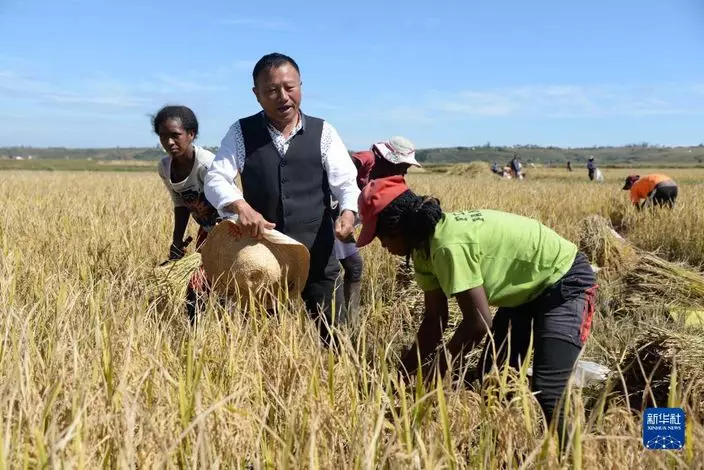
Behind this currency bill lies a quiet agricultural transformation. Since 2007, Chinese agronomists have worked alongside local farmers in the island nation. Island-wide hybrid rice yields reached an average of 7 metric tons per hectare—more than double the output of local varieties—with peak yields touching 12 tons. Today, Madagascar stands as Africa’s largest producer of hybrid rice, with local communities dubbing the seeds "Tsarabe" (Malagasy for "the very best"). Juliette, a local farmer, saw her crop yields triple in her first harvest; within a few years, she constructed a two-story home, purchased a television, and acquired a walking tractor. Meanwhile, Hu Yuefang, a Chinese agricultural expert who spent 15 years aiding local farming in Africa, filled over a dozen notebooks with Malagasy vocabulary transcribed using Chinese characters.

Chinese hybrid rice expert Hu Yuefang (second from left) collaborating with local farmers in an experimental field in Africa. (Source: Xinhua photo)

Chinese hybrid rice expert Hu Yuefang (second from left) collaborating with local farmers in an experimental field in Africa. (Source: Xinhua photo)

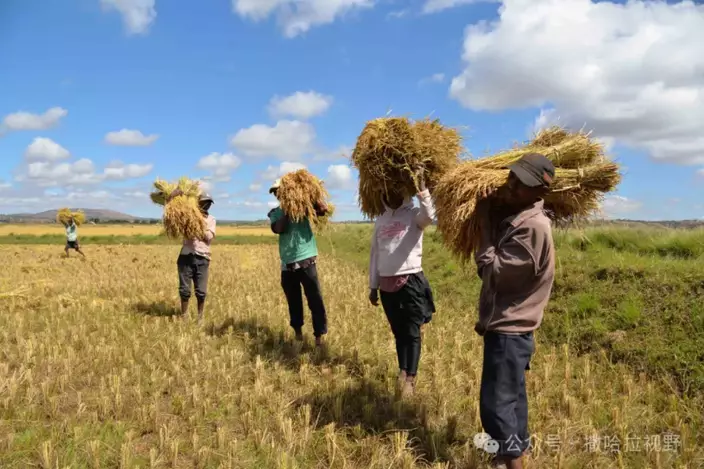
Malagasy farmers carrying freshly harvested ears of hybrid rice through the fields. (Source: International Poverty Reduction Center in China photo)

Malagasy farmers carrying freshly harvested ears of hybrid rice through the fields. (Source: International Poverty Reduction Center in China photo)

From Manila to Sindh Province

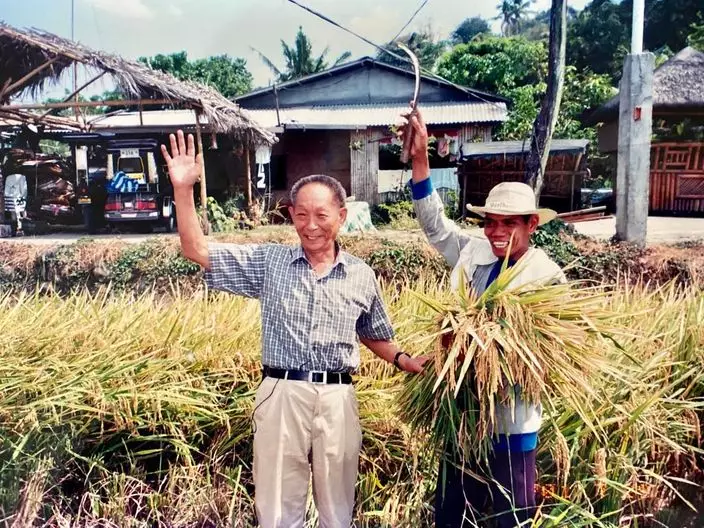
The global footprint of this seed continues to expand. In the Philippines—a nation Yuan Longping visited more than 30 times—farmer Delima trial-planted hybrid rice in 1999, watching yields jump from 8 tons to 11 tons per hectare. Today, hybrid rice covers over one million hectares in the Philippines (nearly a quarter of its total rice acreage), reaching peak yields of 15 tons per hectare—triple that of traditional varieties.

Yuan Longping evaluating hybrid rice field conditions during an exchange in the Philippines. (Source: Xinhua photo)

Yuan Longping evaluating hybrid rice field conditions during an exchange in the Philippines. (Source: Xinhua photo)

In Pakistan, Yuan Longping once offered candid advice to an overeager partner, insisting that variety field trials and certification "require at least five years." This grounded, scientific approach won over local agriculturalists. On Abbas's farm in Sindh Province, rice yields rose from 500 kilograms to 900 kilograms per mu. By 2022, Pakistan's hybrid rice acreage exceeded 12 million mu (800,000 hectares), elevating the country to the world's fourth-largest rice exporter. Similarly, Musa, a young Gambian farmer who managed his family farm for seven years, achieved yields two to three times the local average. In 2025, he traveled to Changsha to lay rice he cultivated with his own hands at Yuan Longping’s tomb.

A Table Shared by All Humanity

Global data underscores this immense impact: approximately 8 million hectares of hybrid rice are cultivated worldwide outside China each year. Yielding an average increase of two metric tons per hectare, this adds 16 million tons of grain annually—enough to feed an additional 40 to 50 million people. To date, China has trained over 14,000 hybrid rice technical specialists across more than 80 developing nations.

This represents perhaps the most profound chapter of the "Chinamaxxing" narrative: driven not by viral media figures, but by the quiet 50-year journey of a single seed. An ancient Chinese proverb notes: "With food in hand, there is peace of mind." For China, food security is the foundational pillar of national security, and national security is the essential prerequisite for development. Only by keeping its food supply secure can modernization find firm footing and international openness proceed with confidence.

For the world, this seed proves a fundamental truth: genuine national power is measured not only by aircraft carriers and advanced microchips, but by the capacity to bring abundant harvests to the most vulnerable soils. Yuan Longping has passed, but the global dinner table he helped secure continues to be filled, season after season.

Recommended Articles