
Before the tomb of Yuan Longping, the renowned "Father of Hybrid Rice," sat Rakotoson Philibert, former Secretary-General of Madagascar's Ministry of Agriculture, fulfilling a promise spanning three years. In June 2023, he traveled thousands of miles to Tangren Wanshou Garden in Changsha, Hunan, bearing a bowl of hybrid rice harvested on African soil. In October 2026, he returned to pay his respects once more, gazing quietly at the headstone: "Respected Teacher Yuan Longping, we have come late."
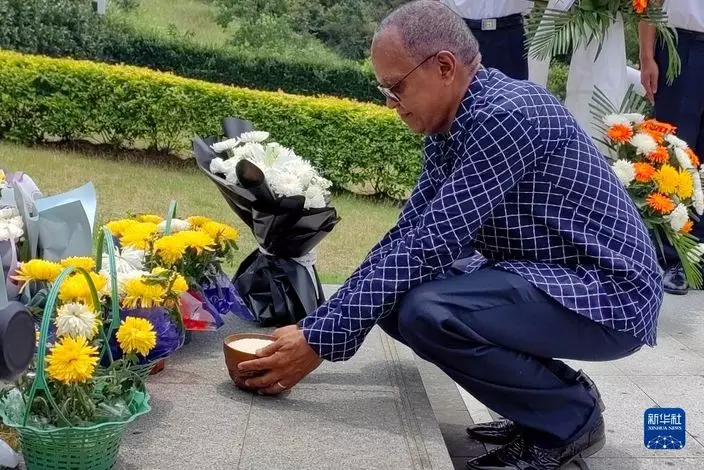
Rakotoson Philibert, former Secretary-General of Madagascar's Ministry of Agriculture, pays his respects at the tomb of Yuan Longping in Changsha. (Source: Xinhua photo)
This moment represents a touching chapter in half a century of "seed diplomacy": a high-yield rice strain cultivated by a Chinese scientist now grows across more than 70 nations, feeding tens of millions of people globally.
Click to Gallery
Rakotoson Philibert, former Secretary-General of Madagascar's Ministry of Agriculture, pays his respects at the tomb of Yuan Longping in Changsha. (Source: Xinhua photo)
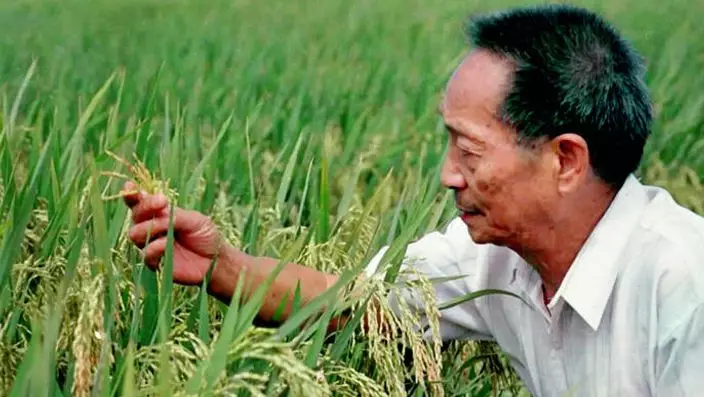
Yuan Longping's lifelong vision centered on his "dream of resting under the shade of giant rice plants" and global food security. (Source: Wen Wei Po photo)
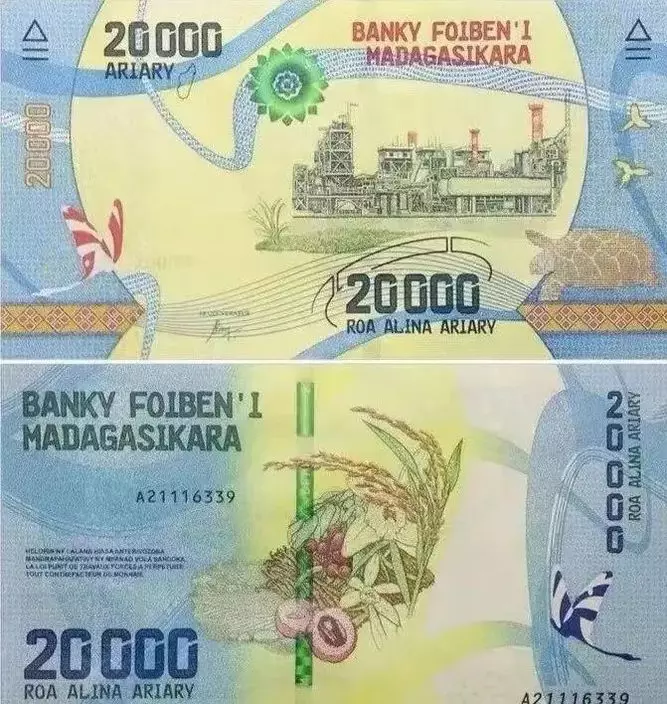
The front and back of Madagascar's 20,000 Ariary banknote, featuring a mature cluster of hybrid rice ears on the reverse. (Source: CCTV News photo)
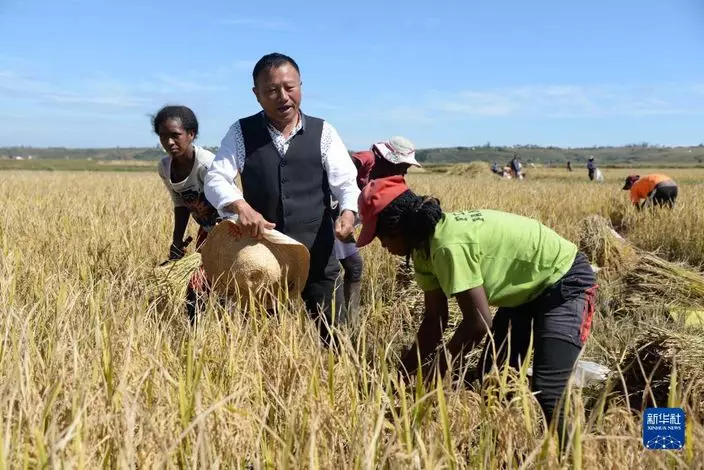
Chinese hybrid rice expert Hu Yuefang (second from left) collaborating with local farmers in an experimental field in Africa. (Source: Xinhua photo)
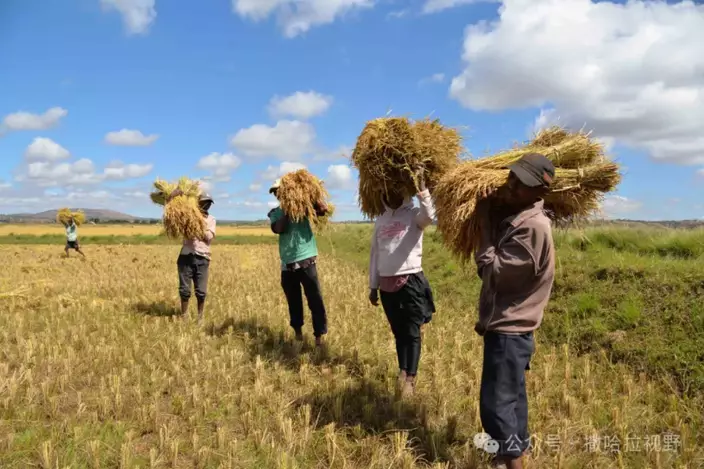
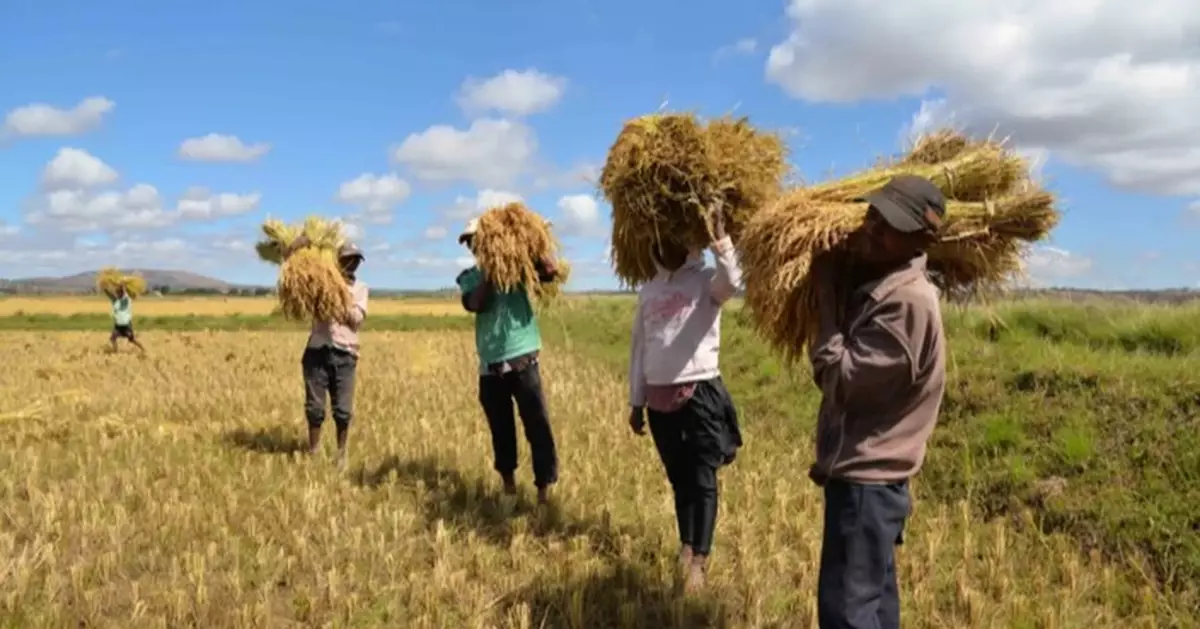
Malagasy farmers carrying freshly harvested ears of hybrid rice through the fields. (Source: International Poverty Reduction Center in China photo)
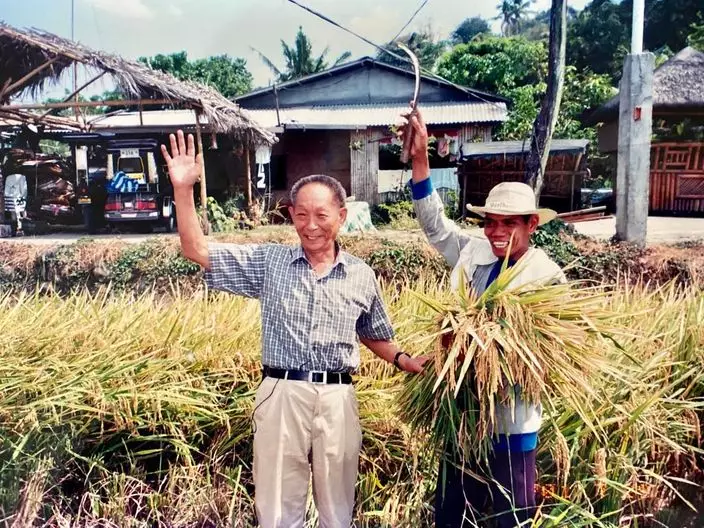
Yuan Longping evaluating hybrid rice field conditions during an exchange in the Philippines. (Source: Xinhua photo)
The "Dream of Shade Under Rice Plants" and 700 Million Tons
Throughout his life, Yuan Longping held two abiding dreams: the "dream of resting under the shade of giant rice plants" and the "dream of hybrid rice covering the globe." On the wall of his research center in Africa, his personal inscription remains proudly displayed: "Develop hybrid rice to benefit the world's people." His mission began decades ago with a personal oath forged after witnessing the devastation of famine: "We must solve the problem of hunger."
Yuan Longping's lifelong vision centered on his "dream of resting under the shade of giant rice plants" and global food security. (Source: Wen Wei Po photo)
Fifty years later, national agricultural data tells the story: China has cultivated hybrid rice across a cumulative 9 billion mu (600 million hectares), with annual domestic planting exceeding 17 million hectares. This technological breakthrough yields an extra 2.5 million metric tons of rice annually, feeding an additional 80 million people each year. In 2025, China's total grain production reached 714.8 million metric tons (1.429 trillion jin), maintaining national annual output safely above 700 million tons. Per capita grain availability reached 500 kilograms—well above the international safety benchmark of 400 kilograms—ensuring that China’s food supply remains firmly under indigenous control.
The Rice Ear Engraved on a Banknote
The ultimate testament to the legacy of this seed is printed on national currency. On August 23, 2017, Saholi, Director of Plant Protection at Madagascar’s Ministry of Agriculture, flew to Changsha to present Yuan Longping with a fresh bundle of hybrid rice depicted on the country's largest-denomination currency note: the 20,000 Ariary bill. In 2022, Madagascar’s Ambassador to China formally presented a complete set of these banknotes to the Longping Rice Museum in Changsha.
The front and back of Madagascar's 20,000 Ariary banknote, featuring a mature cluster of hybrid rice ears on the reverse. (Source: CCTV News photo)
Behind this currency bill lies a quiet agricultural transformation. Since 2007, Chinese agronomists have worked alongside local farmers in the island nation. Island-wide hybrid rice yields reached an average of 7 metric tons per hectare—more than double the output of local varieties—with peak yields touching 12 tons. Today, Madagascar stands as Africa’s largest producer of hybrid rice, with local communities dubbing the seeds "Tsarabe" (Malagasy for "the very best"). Juliette, a local farmer, saw her crop yields triple in her first harvest; within a few years, she constructed a two-story home, purchased a television, and acquired a walking tractor. Meanwhile, Hu Yuefang, a Chinese agricultural expert who spent 15 years aiding local farming in Africa, filled over a dozen notebooks with Malagasy vocabulary transcribed using Chinese characters.
Chinese hybrid rice expert Hu Yuefang (second from left) collaborating with local farmers in an experimental field in Africa. (Source: Xinhua photo)
Malagasy farmers carrying freshly harvested ears of hybrid rice through the fields. (Source: International Poverty Reduction Center in China photo)
From Manila to Sindh Province
The global footprint of this seed continues to expand. In the Philippines—a nation Yuan Longping visited more than 30 times—farmer Delima trial-planted hybrid rice in 1999, watching yields jump from 8 tons to 11 tons per hectare. Today, hybrid rice covers over one million hectares in the Philippines (nearly a quarter of its total rice acreage), reaching peak yields of 15 tons per hectare—triple that of traditional varieties.
Yuan Longping evaluating hybrid rice field conditions during an exchange in the Philippines. (Source: Xinhua photo)
In Pakistan, Yuan Longping once offered candid advice to an overeager partner, insisting that variety field trials and certification "require at least five years." This grounded, scientific approach won over local agriculturalists. On Abbas's farm in Sindh Province, rice yields rose from 500 kilograms to 900 kilograms per mu. By 2022, Pakistan's hybrid rice acreage exceeded 12 million mu (800,000 hectares), elevating the country to the world's fourth-largest rice exporter. Similarly, Musa, a young Gambian farmer who managed his family farm for seven years, achieved yields two to three times the local average. In 2025, he traveled to Changsha to lay rice he cultivated with his own hands at Yuan Longping’s tomb.
A Table Shared by All Humanity
Global data underscores this immense impact: approximately 8 million hectares of hybrid rice are cultivated worldwide outside China each year. Yielding an average increase of two metric tons per hectare, this adds 16 million tons of grain annually—enough to feed an additional 40 to 50 million people. To date, China has trained over 14,000 hybrid rice technical specialists across more than 80 developing nations.
This represents perhaps the most profound chapter of the "Chinamaxxing" narrative: driven not by viral media figures, but by the quiet 50-year journey of a single seed. An ancient Chinese proverb notes: "With food in hand, there is peace of mind." For China, food security is the foundational pillar of national security, and national security is the essential prerequisite for development. Only by keeping its food supply secure can modernization find firm footing and international openness proceed with confidence.
For the world, this seed proves a fundamental truth: genuine national power is measured not only by aircraft carriers and advanced microchips, but by the capacity to bring abundant harvests to the most vulnerable soils. Yuan Longping has passed, but the global dinner table he helped secure continues to be filled, season after season.
Chinamaxxing
** 博客文章文責自負,不代表本公司立場 **