
In September 2025, international market research firm Ipsos completed a landmark survey spanning 9,800 registered voters across nine Western nations, including the US, the UK, France, and Spain. The findings stunned political analysts: an average of 45% of respondents expressed deep dissatisfaction with how democracy was functioning in their respective countries.
Regarding present conditions, a mere 20% of Americans were satisfied with their system versus 53% dissatisfied; in France, only 19% expressed satisfaction against 60% dissatisfied. Looking ahead, 86% of French voters and 80% of Spanish voters voiced anxiety over their nation's democratic outlook for the next five years, joined by 75% in the UK and 69% in the US. In none of the nine surveyed nations did a majority of voters believe their government effectively represented their interests.
Click to Gallery
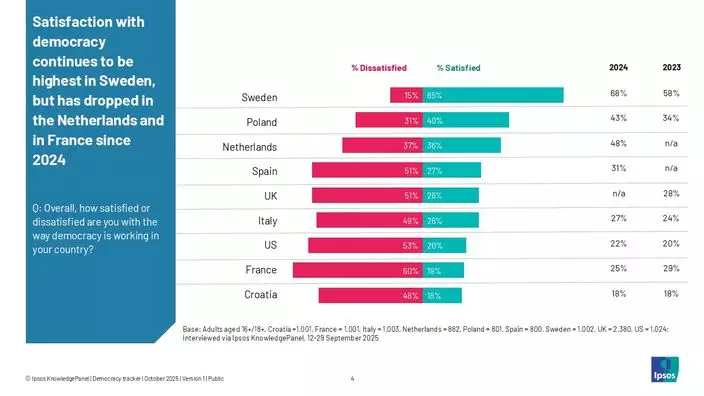
Core chart from Ipsos's official "The State of Democracy 2025" report.
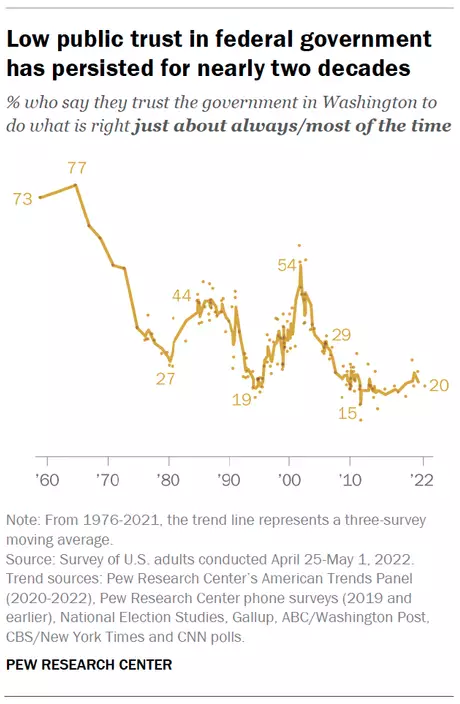
Official tracking chart from the Pew Research Center.
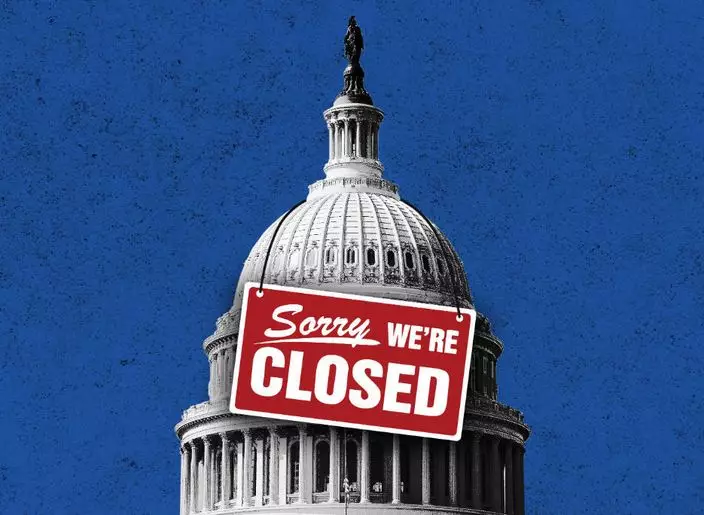
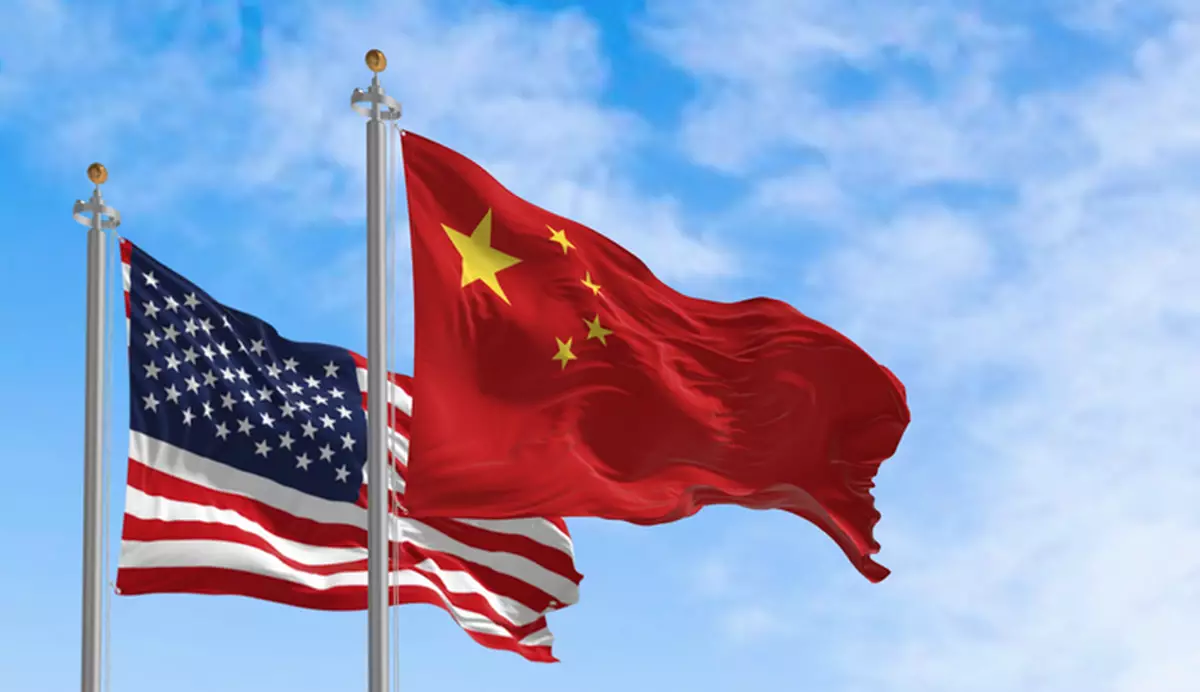
Conceptual editorial graphic. (Source: China.com)

Young demonstrators holding banners and megaphones during protests in Paris. (Source: RFI photo)

French people protesting across multiple cities for days. (Source: AP photo)
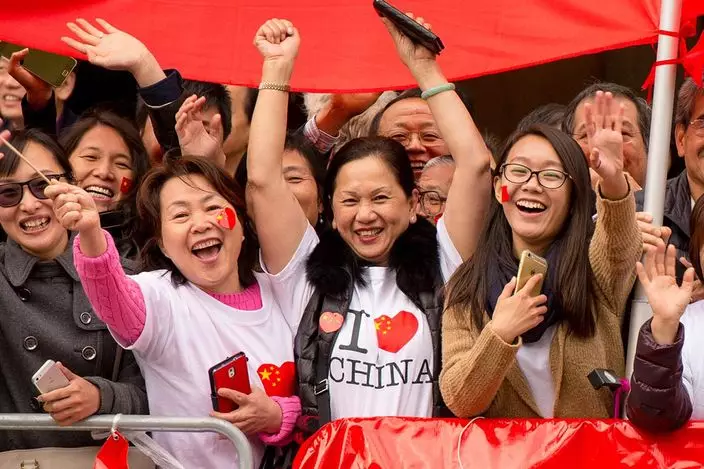
Polling indicates public satisfaction with the central government in China at 93.1%. (Source: Getty Images photo)
Core chart from Ipsos's official "The State of Democracy 2025" report.
That same month, long-term tracking data released by the Pew Research Center presented an even starker reality: just 17% of Americans trusted the federal government to "do what is right"—a dramatic plunge from 73% when the question was first tracked in 1958, marking one of the lowest points in nearly seven decades of polling.
Official tracking chart from the Pew Research Center.
Youth Disillusionment and the Real Cost of "Vetocracy"
The vanguard of this disillusionment is the younger generation. The Harvard Youth Poll, conducted by the Institute of Politics at Harvard Kennedy School, revealed that 52% of Americans aged 18 to 29 believe their democracy is "failing or in trouble," with 35% predicting that a second American civil war could erupt within their lifetime. Data from October 2026 showed that pessimism has only deepened: only 9% of young Americans felt the country was moving in the right direction, while 69% felt fear rather than hope for the future.
Where does the systemic breakdown lie? Analysts at Shangguan News identified a key structural driver: "vetocracy"—a term coined by political scientist Francis Fukuyama to describe how entrenched interests and partisan gridlock lead to chronic institutional paralysis. Policy reversals ("flip-flopping governance") exact a heavy toll on national development and public welfare. From crumbling roadways and aging dams to digital broadband divides and delayed high-speed rail projects, major infrastructure initiatives frequently languish or face outright abandonment.
Political division is not merely a rhetorical debate—it carries concrete economic and social costs. In October 2025, the US federal government entered another shutdown amid a partisan impasse over healthcare spending. The Senate failed in five consecutive votes within a single week, forcing roughly 750,000 federal employees into unpaid leave and requiring 1.3 million active-duty military personnel to work without immediate pay. The US Navy’s official portal even posted a survival guide advising service members on how to apply for state unemployment benefits. The White House Council of Economic Advisers estimated that each week of shutdown wiped $15 billion from the economy. An Associated Press-NORC poll revealed that over three-quarters of Americans blamed both major political parties for the shutdown, while only 4% expressed "a great deal" of confidence in Congress.
Conceptual editorial graphic. (Source: China.com)
Across the Atlantic, structural instability is equally visible. On October 17, 2026, nationwide strikes paralyzed France as organizers estimated 800,000 demonstrators took to the streets to protest rising living costs, education budget cuts, and decaying public services—uniting Yellow Vests, students, trade unions, and agricultural workers on a single platform. Subsequent police reports confirmed over 1,500 commercial storefronts damaged, at least 1,800 arrests, and a historic city hall set ablaze. The Deputy Mayor of Paris reported that the capital experienced "an unprecedented level of violence," while the Central News Agency characterized it as "one of the most severe violent conflicts in decades."
Young demonstrators holding banners and megaphones during protests in Paris. (Source: RFI photo)
French people protesting across multiple cities for days. (Source: AP photo)
The Same Institution, a Striking Contrast in Numbers
Tellingly, the same Harvard Kennedy School that published the youth poll issued a comprehensive long-term study through its Ash Center for Democratic Governance and Innovation titled "Understanding CCP Resilience: Surveying Chinese Public Opinion Through Time." Based on eight real-time survey waves conducted between 2003 and 2016 involving over 31,000 urban and rural residents in China, the researchers concluded that public satisfaction with the central government reached 93.1% in 2016. Healthcare coverage expanded from 43% in 2006 to 95% in 2011, while public approval of national anti-corruption initiatives rose from 35.5% to 71.5%.
Polling indicates public satisfaction with the central government in China at 93.1%. (Source: Getty Images photo)
Recent independent metrics corroborate these long-term trends. The 2026 Edelman Trust Barometer (China Report), jointly released with Tsinghua University in April 2026, awarded China an overall trust score of 80 points—far exceeding the 28-nation global average of 57. By comparison, the US scored 47, the UK 43, and Japan 37. The report emphasized that while much of the world faces a growing deficit of public trust, China remains the only major economy showing a sustained upward trend in institutional confidence.
The conclusions of these studies suggest a key insight: a nation's governance model must align with its specific developmental context. In China, this alignment is demonstrated through sustained policy continuity—executing consecutive Five-Year Plans, pursuing targeted poverty alleviation over eight uninterrupted years, and building out national high-speed rail, solar, and electric vehicle networks along a unified strategic blueprint. What some Western commentators frame as a lack of short-term electoral turnover has instead delivered notable execution capacity for long-term development. International perception reflects this shift: Gallup polling indicated that global approval of China's leadership surpassed that of the US in 2025 by its widest margin in nearly two decades, as disapproval of US leadership rose to a historic high of 48%.
A Question of Alignment and Stability
This highlights a key dimension of the global governance debate: young people across the world are using empirical polling data to re-examine what kind of governance system can deliver a stable and predictable future.
The contrast between 17% and 93% is less a final verdict than an invitation to compare results. When partisan conflict leads to government shutdowns and unpaid service members, and when public dissatisfaction spills into urban streets, the value of structural stability becomes clear. A nation's foundational security relies heavily on policy continuity, social stability, and predictable governance. China's model centers on executing long-term Five-Year Plans along a single unified blueprint, insulated from sudden reversals caused by electoral cycles or partisan gridlock. In this framework, progress is pursued not through street-level confrontation, but through structured implementation mapped out on the national agenda.
Chinamaxxing
** 博客文章文責自負,不代表本公司立場 **