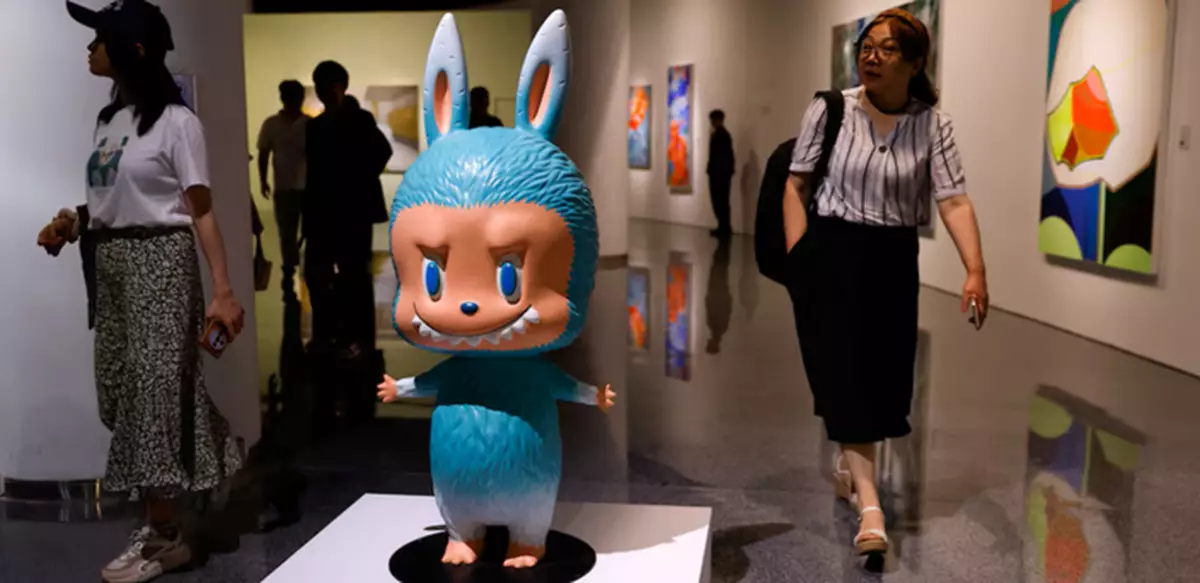

On June 10, 2025, at the Yongle Spring Auction in Beijing, a 131-centimeter mint-green first-generation Labubu was hammered down for RMB 1.08 million, ultimately realizing RMB 1.242 million ($171,000) including buyer's premium—cataloged by the auction house as "the sole piece in existence." At the same sale, a 160-centimeter brown Labubu fetched a hammer price of RMB 820,000. All 48 lots in the dedicated session sold out, generating a total hammer turnover of RMB 3.7254 million.
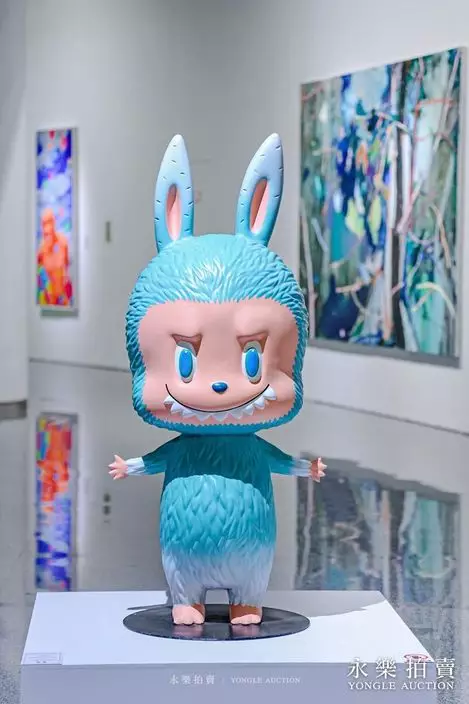
The world's sole mint-green LABUBU makes its debut at the Yongle 2025 Spring Auction in Beijing. (Source: Yongle Auctions official photo)
Yet the iconic character’s creative roots lie in Hong Kong: Labubu was created by Hong Kong artist Kasing Lung as a Nordic forest sprite. Earlier at Sotheby’s Hong Kong, a set of three sculptures titled The Three Wise Men LABUBU Series had already commanded HK$203,200 ($26,000). How did an "ugly-cute" monster drive adults worldwide into a queueing frenzy? The answer lies in the latest chapter of "Chinamaxxing": Chinese IP is capturing global markets not by being cheap, but by leveraging absolute scarcity.
Click to Gallery
The world's sole mint-green LABUBU makes its debut at the Yongle 2025 Spring Auction in Beijing. (Source: Yongle Auctions official photo)
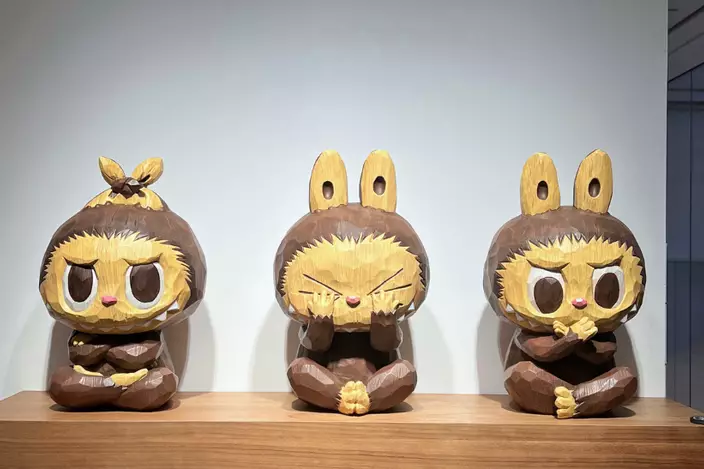
A trio of Labubu figures auctioned at Sotheby's Hong Kong for HK$203,200. (Source: ZTYLEZ photo)
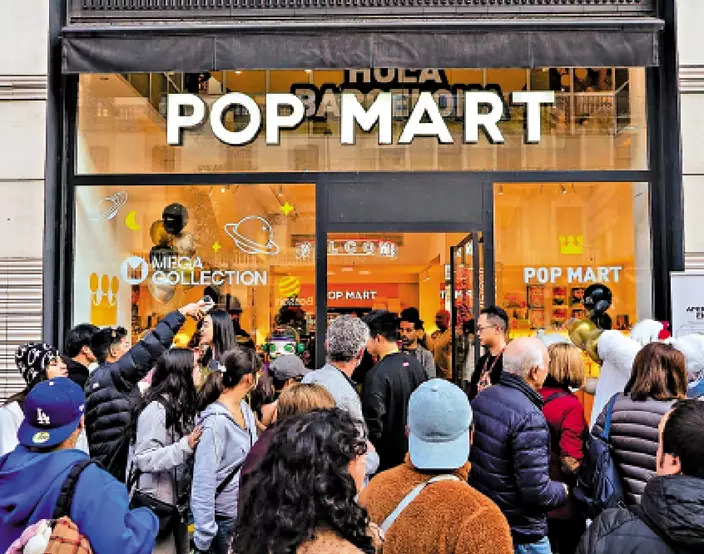
Labubu goes viral across Europe, drawing massive crowds outside a POP MART flagship store in Barcelona, Spain. (Source: Ta Kung Wen Hui Net photo)
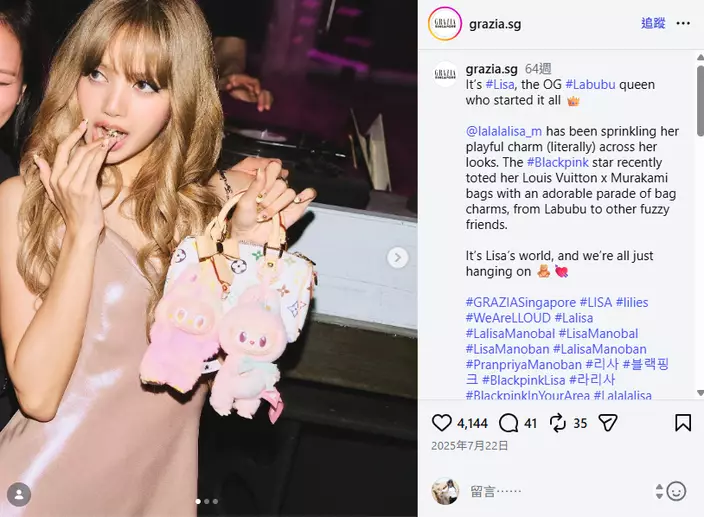
Blackpink's Lisa spotted posing with her beloved Labubu plush. (Source: Instagram screenshot)
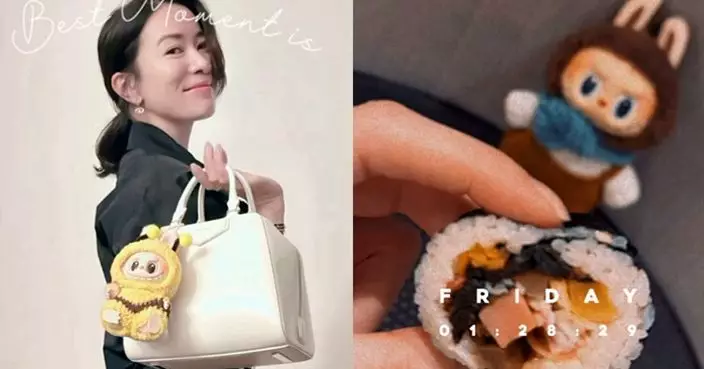
Actress Charmaine Sheh embraces the viral trend with her own Labubu charm. (Source: Instagram screenshot)
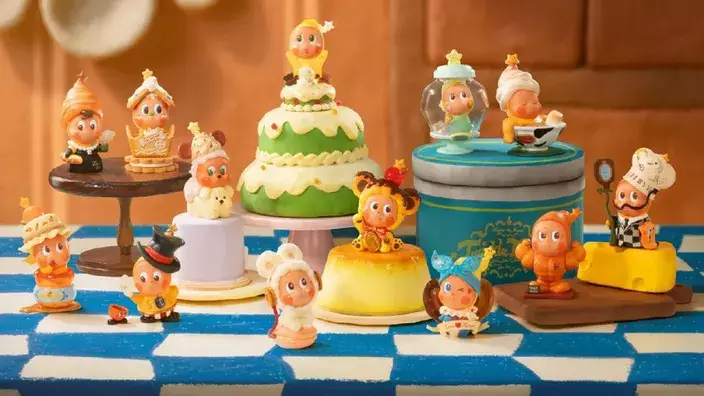
POP MART's breakout "Twinkle Twinkle: Delicious Moments" blind-box series.
A trio of Labubu figures auctioned at Sotheby's Hong Kong for HK$203,200. (Source: ZTYLEZ photo)
Scarcity Economics: From $14 Blind Boxes to a $170,000 Auction Lot
Labubu’s commercial playbook hinges on calculated unpredictability. Its blind-box format turns every purchase into a game of chance: odds for securing the elusive "chase variants" (secret editions) are extremely low, sending secondary-market prices soaring tenfold or more. A UK store was forced to temporarily suspend retail operations following chaotic crowds, while a rare chase variant commanded up to 2,300 yuan ($320) on the secondary market—a 20-fold markup. Meanwhile, a single TikTok Shop livestream in the Americas generated over $1.5 million in gross merchandise value (GMV).
Labubu goes viral across Europe, drawing massive crowds outside a POP MART flagship store in Barcelona, Spain. (Source: Ta Kung Wen Hui Net photo)
The pivotal tipping point arrived in April 2024: Lisa, the Thai member of K-pop megagroup Blackpink, posted photos featuring Labubu on Instagram. Soon, icons like Madonna, David Beckham and his daughter, and actress Charmaine Sheh were seen displaying the plush toy. Designed as a "bag charm," the plush figure transitioned from a desktop display into a wearable flex and social currency. TikTok topics surrounding Labubu surpassed one billion views, prompting Thai tourism authorities to officially award Labubu the title of "Amazing Thailand Experience Officer."
Blackpink's Lisa spotted posing with her beloved Labubu plush. (Source: Instagram screenshot)
Actress Charmaine Sheh embraces the viral trend with her own Labubu charm. (Source: Instagram screenshot)
The financial returns have been unprecedented. For the full year 2025, POP MART reported annual revenue of RMB 37.12 billion—a massive 184.7% year-on-year surge—with adjusted net profit skyrocketing 284.5% to RMB 13.08 billion. Labubu as a standalone IP contributed RMB 14.16 billion, up 365.7% year-on-year. Overseas revenue reached RMB 16.27 billion (a 291.9% surge), accounting for 43.8% of total revenue, with sales in the Americas exploding by 748.4%. Founder Wang Ning revealed in a People's Daily interview that following September 2025, global sales of Labubu were approaching nearly 10 million units per month.
Beyond the Frenzy: Labubu's Canonization and China's Next-Gen Art Toys
Crossing the threshold of fine art auction houses marks the first step in Labubu’s institutional canonization—when a designer toy trades at Yongle or Sotheby’s under fine-art protocols, it evolves from a fast-moving consumer novelty into an investment-grade collectible.
Yet the flip side of canonization is the relentless churn of consumer trends. In the first half of 2026, POP MART recorded an 11.1% year-on-year dip in overseas revenue—its first contraction since expanding internationally. Labubu’s revenue shrank 7.5% year-on-year, its overall share moderating to 26%. Wang Ning characterized 2026 as a "year of operational adjustment," acknowledging that "overnight queues, chaotic store rushes, and chronic stockouts are not sustainable norms," while conceding that the company would likely miss its 20% growth target.
Yet successor IPs are already stepping into the spotlight. Twinkle Twinkle has emerged as the next viral phenomenon following Labubu, triggering fresh buying frenzies across domestic and global markets. Its "Delicious Moments" blind-box series sold out online instantly upon release, with hundreds of thousands of users adding items to their carts simultaneously. Launched only in 2024, this breakout IP generated RMB 8.79 billion in full-year revenue for 2025. Secondary-market premiums for its secret editions surged up to 16 times original retail price, setting a POP MART record for the fastest new IP to break RMB 100 million in gross sales.
POP MART's breakout "Twinkle Twinkle: Delicious Moments" blind-box series.
In the first half of the year, POP MART saw six distinct IPs each cross the RMB 1 billion revenue milestone, as global registered loyalty members passed 100 million. The company has explicitly shifted focus toward "building timeless, classic IPs." The broader industry is expanding rapidly as well: rival designer toy brands such as 52TOYS, TOP TOY, Heyone, and Sunny are making strides toward public listings, transforming the sector from a single-dominant player into a multi-polar competitive landscape. Labubu hasn't lost its charm; it has simply shared the spotlight—a hallmark of a maturing art-toy market where no single character reigns supreme forever.
The Lightest Vessel for Soft Power
An abstract character with no underlying animation, no feature film, and no narrative origin story—conquering global pop culture purely through design intuition and emotional resonance. Where "Made in China" once exported functional affordability, "Created in China" now exports emotional connection. A small plush monster with nine pointy teeth and a mischievous grin has inspired sprawling queues from London to Los Angeles, while keeping foot traffic flowing constantly into POP MART boutiques in Hong Kong.
Conceived by a Hong Kong artist, listed on the Hong Kong Stock Exchange, and adored by fans across the globe, Labubu’s journey is a masterclass in leveraging scarcity and emotional attachment. It demonstrates that the lightest vessel for soft power often leaves the deepest, most enduring imprint on human hearts.
Chinamaxxing
** 博客文章文責自負,不代表本公司立場 **