/wp-content/uploads/blogger/2026/08/WhatsApp-Image-2026-08-13-at-12.21.36.jpg.webp)
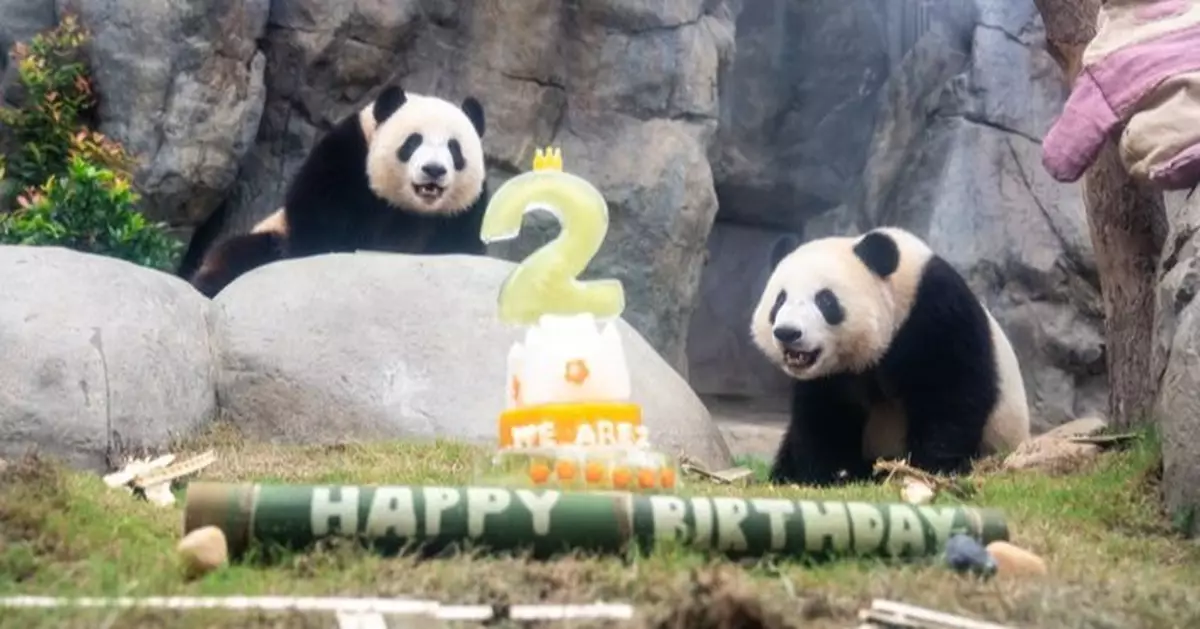
In the summer of 2026, Ocean Park Hong Kong hosted a grand joint birthday celebration for six giant pandas. Crowds swarmed a towering, five-meter-tall "Panda Longevity Peach Mountain" photo installation, while visitors gathered in the exhibition gallery to watch touching video retrospectives chronicling the first two years of the park’s homegrown twin cubs, "Jia Jia" and "De De."
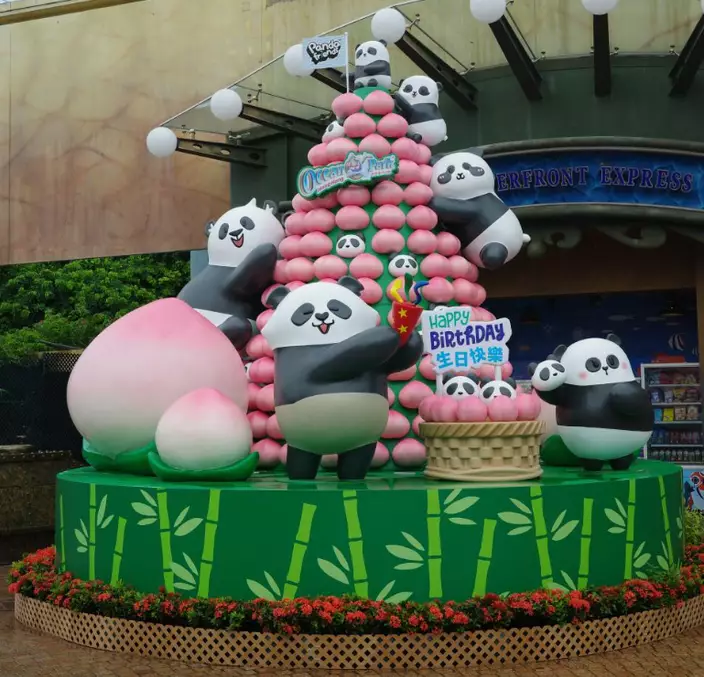
The five-meter-tall Giant Panda Peach Mountain features tiers of pink longevity peaches surrounded by six giant pandas. (Source: U Blog photo)
"Watching clips of Jia Jia and De De grow from tiny newborns into playful toddlers is so moving," said Ms. Li, a local panda enthusiast capturing the moment. "It feels like watching your own children grow up."
Click to Gallery
The five-meter-tall Giant Panda Peach Mountain features tiers of pink longevity peaches surrounded by six giant pandas. (Source: U Blog photo)
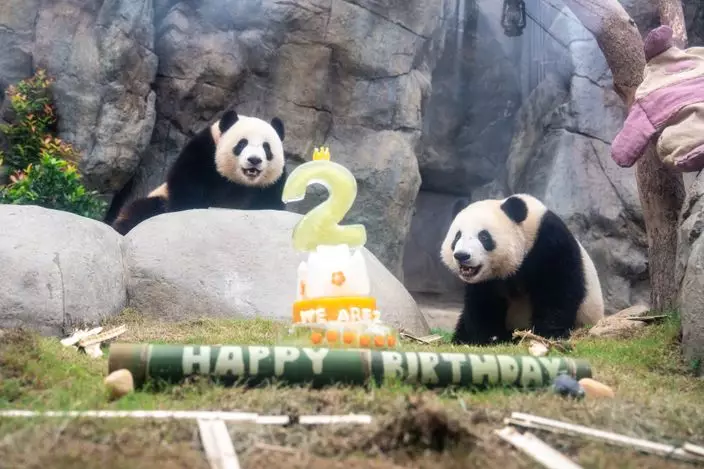
Hong Kong's first homegrown giant panda twins, Jia Jia and De De, celebrate their second birthday. (Source: Dotdotnews photo)
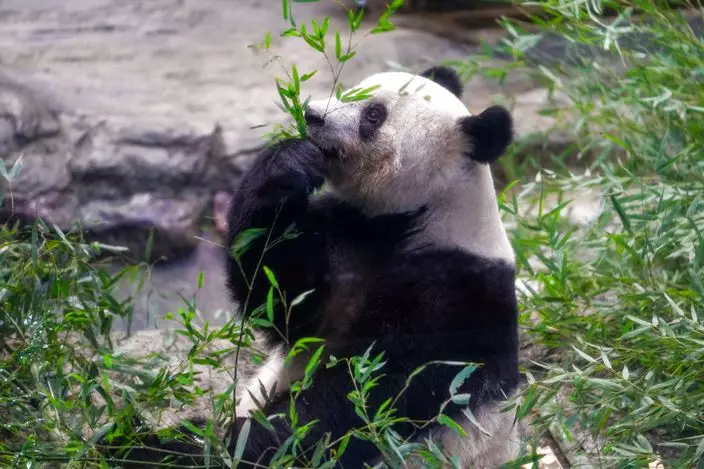
Japan-based giant panda Xiang Xiang. (Source: Xinhua photo)
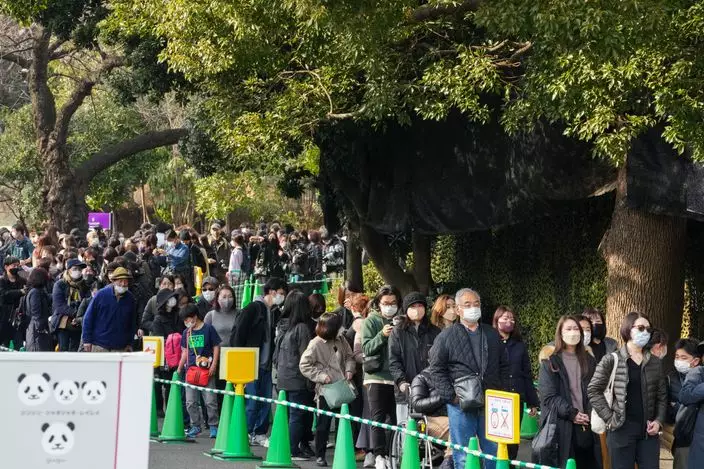
Visitors line up at Tokyo's Ueno Zoo to bid farewell to Xiang Xiang. (Source: Xinhua photo)
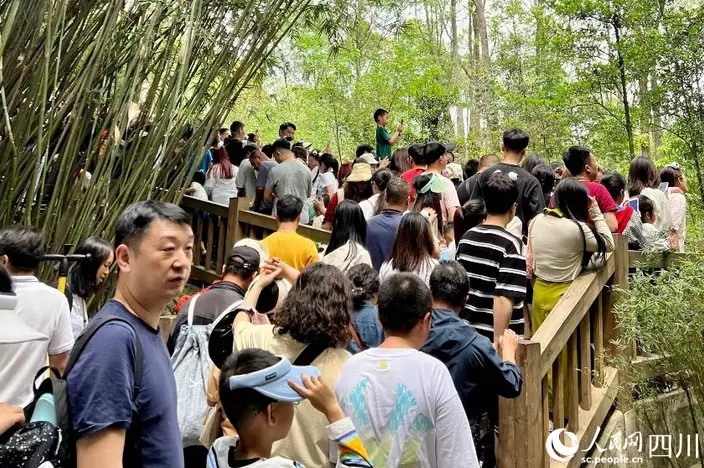
Crowds of visitors gather at the Chengdu Research Base of Giant Panda Breeding. (Source: People's Daily Online Sichuan photo)

The exterior livery of the "Panda Express · Shifang" train, featuring a giant panda decal wearing a conductor's hat. (Source: People's Daily Online Sichuan photo)
Hong Kong's first homegrown giant panda twins, Jia Jia and De De, celebrate their second birthday. (Source: Dotdotnews photo)
Born on August 15, 2024, the male-and-female twin cubs have been digital superstars since birth. On April 22 of this year, they made their official debut on CCTV's global iPanda channel, generating over 12 million views across domestic and international platforms. Notably, iPanda signed a strategic memorandum of understanding with the Hong Kong Tourism Board in 2025 to co-produce a themed livestream series with Ocean Park, garnering 2.475 million single-day views across platforms. In the masterclass of "Panda Economics," Hong Kong's two-year-old twins have handed in a stellar report card.
The Global Lease of the "Four-Legged Money Magnet"
How lucrative is the panda business? Understanding the model requires looking at the rules: since 1982, China ceased gifting giant pandas outright, transitioning to 10-to-15-year scientific conservation research loans. Any cubs born during the lease term remain the property of China, while host institutions pay annual loan fees, insurance, and significant care costs. Yet global zoos eagerly line up for the opportunity due to astonishing returns: Xiang Xiang, a Japan-based panda at Tokyo's Ueno Zoo, generated over 60 billion yen (approx. RMB 2.8 billion) in economic value during her six-year stay.
Japan-based giant panda Xiang Xiang. (Source: Xinhua photo)
Visitors line up at Tokyo's Ueno Zoo to bid farewell to Xiang Xiang. (Source: Xinhua photo)
In South Korea, merchandise sales linked to the beloved panda Fu Bao surged to 2.7 million items, a 60% year-on-year increase. Australia’s Adelaide Zoo saw annual attendance jump from 349,000 to 595,000 in its first year hosting pandas, while France’s Beauval Zoo saw annual visitors soar from 600,000 to 1.6 million. It is little wonder the media dubbed pandas "four-legged money magnets" and "living lucky cats."
The Homecoming Wave: A Two-Way Emotional Return
In the spring of 2023, overseas pandas set off a high-profile "homecoming wave": Japan's Xiang Xiang, Yong Ming, Ying Bang, and Tao Bang; America's Ya Ya; and the UK's Tian Tian and Yang Guang returned to China in succession. This was not a retreat driven by prohibitive care costs, but the natural fulfillment of loan agreements. Ya Ya, who resided in the US for 20 years, returned nearly a decade beyond the average lifespan of a wild panda—her return home capturing global headlines.
Even more significant is the reverse flow of fan engagement: international admirers are traveling to China specifically to visit their favorite pandas. At the Chengdu Research Base of Giant Panda Breeding, the proportion of international tourists has risen steadily. CCTV's iPanda platform has amassed over 57.4 million global followers, broadcasting over 2 million livestream hours and accumulating nearly 70 billion content views. Chengdu even launched a "Panda Sleep Whisperer" recruitment campaign on TikTok, generating over 10 million views worldwide—proving that even when pandas return home, global audiences remain captivated.
Crowds of visitors gather at the Chengdu Research Base of Giant Panda Breeding. (Source: People's Daily Online Sichuan photo)
The Chengdu Blueprint: Panda Fever Accelerates
The domestic engine of panda economics continues to gain momentum. Xinhua reported that as of November 13, 2025, the Chengdu Research Base of Giant Panda Breeding had hosted 487,100 foreign visitors that year alone—a 70.67% year-on-year surge, in an article titled "Global Tourists Flock to Chengdu for Pandas." According to the Chengdu Inbound Tourism White Paper published in May 2026, Chengdu's inbound tourist arrivals grew by 48.9% year-on-year in 2025, with the Panda Base ranking as the top attraction for international visitors, accounting for 64.9% of total visits. Travelers aged 15 to 44 comprised roughly 65% of the total, with Gen Z attendance jumping 63% year-on-year.
The cultural and creative metrics are equally impressive: in 2024, the base welcomed over 12.2 million total visitors, generating more than RMB 210 million in panda merchandise sales. Analysis from Qunar's Big Data Research Institute revealed that a single RMB 50 admission ticket generates an average of RMB 1,450 in regional spending across transportation, lodging, and dining. Viral panda star Huahua boasts immense retail pull, once driving a 906% surge in online merchandise sales. The broader industrial ecosystem continues to expand: Chengdu introduced a specialized "Panda Express" tourist train that completed 200 trips carrying nearly 100,000 passengers, while the city of Ya'an generated RMB 2.836 billion in tourism revenue from panda IP in 2024, boosting local heritage artisans' incomes by over RMB 20 million.
The exterior livery of the "Panda Express · Shifang" train, featuring a giant panda decal wearing a conductor's hat. (Source: People's Daily Online Sichuan photo)
Pandas: The Softest Dimension of Soft Power
This is indisputably the most charming chapter of the "Chinamaxxing" narrative. Giant pandas remain perhaps the only Chinese IP that transcends geopolitical divides, generates zero controversy, and commands universal affection worldwide—Japanese fans wept for Xiang Xiang, South Korean families embraced Fu Bao as one of their own, and Hong Kong residents watch Jia Jia and De De grow with maternal pride.
From the diplomatic gift of pandas sent by Empress Wu Zetian to Japan, to today's economic powerhouse in Chengdu where a RMB 50 ticket unlocks 29 times its value in local commerce, this iconic black-and-white mascot has achieved a brilliant synthesis of identities: it is a national treasure and a commercial powerhouse, a diplomatic bridge and a viral engagement key. With six resident giant pandas and the exclusive narrative of its homegrown twins, Hong Kong holds a front-row seat to this evolving phenomenon. The next time you walk past the five-meter-tall Longevity Peach Mountain at Ocean Park, take a moment to reflect: you are witnessing the gentle, heartwarming face of a multi-billion-dollar economic force.
Chinamaxxing
** 博客文章文責自負,不代表本公司立場 **