/wp-content/uploads/blogger/2026/08/WhatsApp-Image-2026-08-13-at-12.21.36.jpg.webp)
The lights of the Nagoya Asian Games had barely dimmed when two numbers emerged for sports fans to digest: the Chinese diving team pushed its all-time Asian Games gold tally to a monumental 100—maintaining an unbroken sweep across 14 consecutive editions since 1974. Meanwhile, the Chinese table tennis team ceded the men’s team gold, fracturing years of unchallenged dominance. One represented a full stop on absolute rule; the other, a hairline crack in a legendary empire. Together, these two storylines assemble the hard-edged reality of "Chinamaxxing": the world's premier athletes now treat beating China as the ultimate defining benchmark of their careers.
Under the 100th Gold: A Duel Pushed to the Final Dive
Click to Gallery
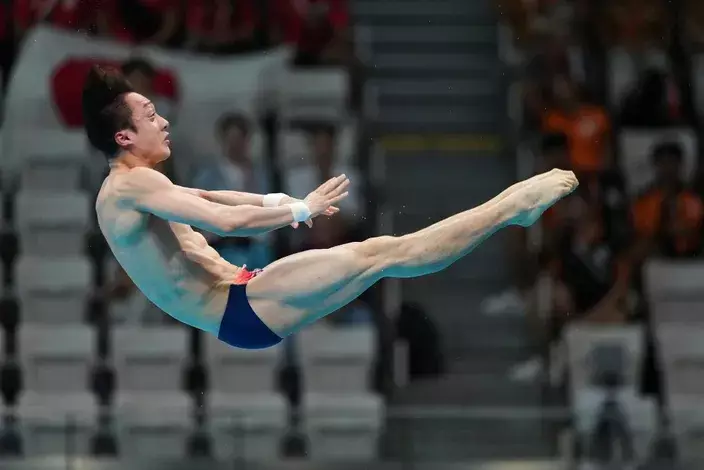
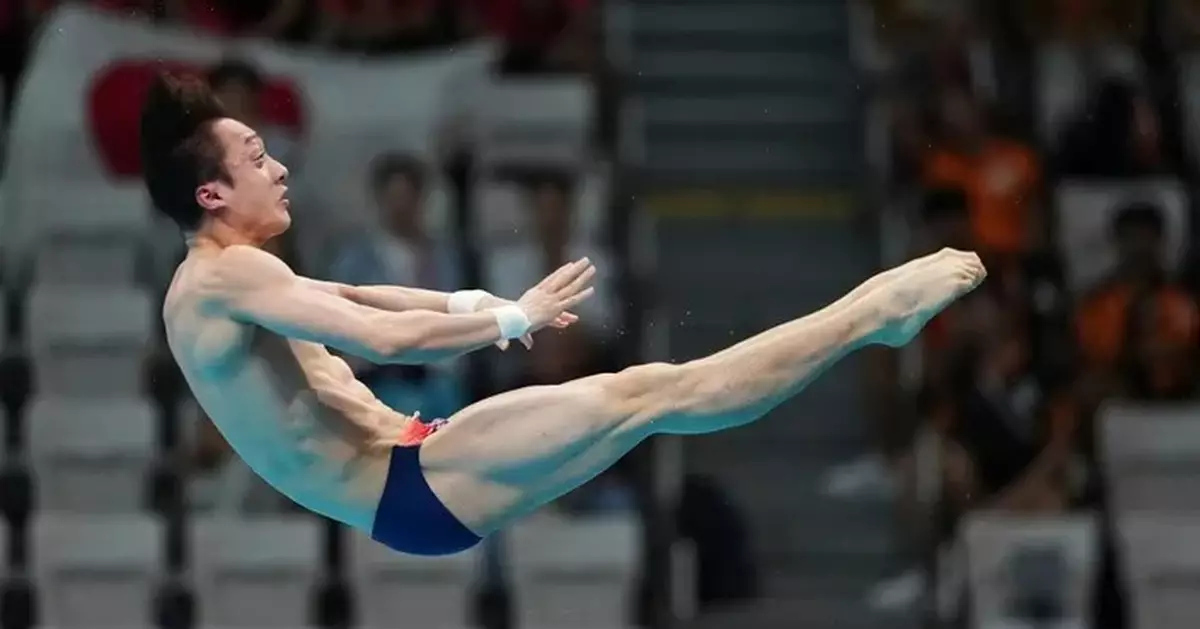
Lian Junjie celebrates his victory in the Asian Games men's 10m platform final. (Source: Tencent)
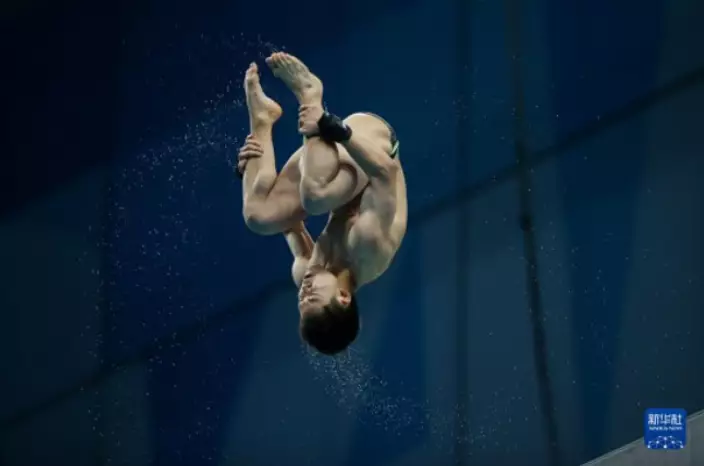
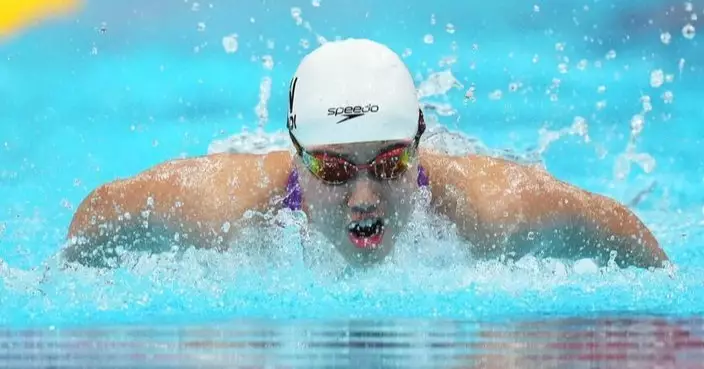
Japanese diver Rikuto Tamai in action during the final. (Source: Xinhua)

Chen Yuxi clinches gold in the women's 10m platform. (Source: Chinese National Team Official Poster)
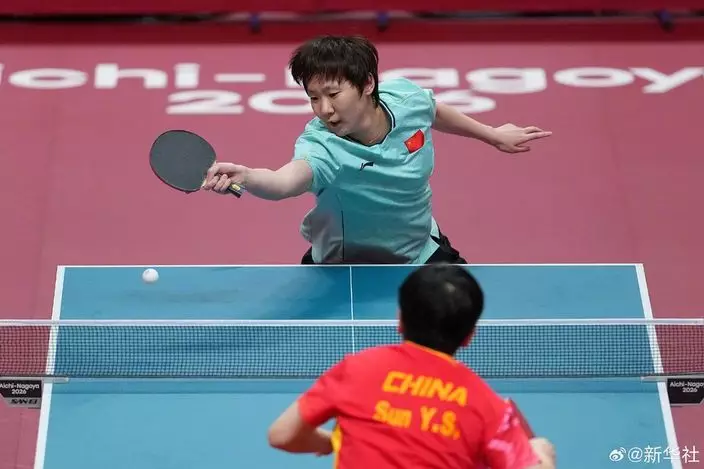
Wang Manyu (in green) defeats teammate Sun Yingsha to win the Asian Games women's singles table tennis gold. (Source: Xinhua)
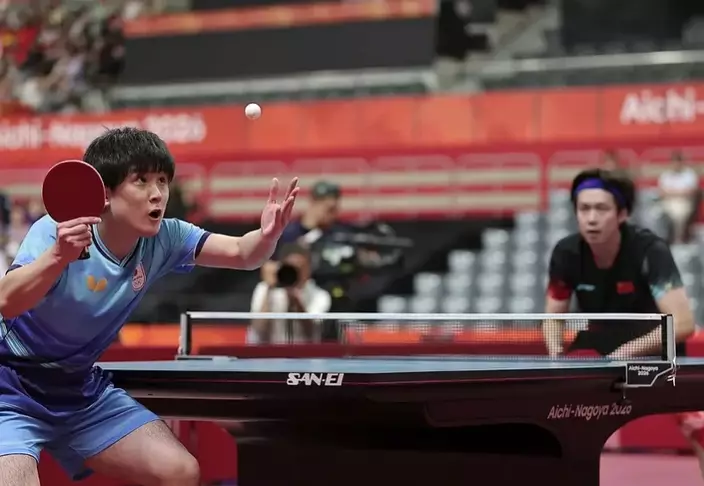
Japan's Tomokazu Harimoto (left) defeats China's Wang Chuqin 3-0 on September 24. (Source: Xinhua)
On September 30, Lian Junjie captured gold in the men's 10m platform final with 501.25 points, completing China's clean sweep of all 10 diving events at these Games and securing the nation’s 100th Asian Games diving gold in history. Fifty-two years, 14 editions, 100 golds—this is not merely statistical dominance, but institutional supremacy.
Lian Junjie celebrates his victory in the Asian Games men's 10m platform final. (Source: Tencent)
Yet, this milestone was hard-won. Japan’s Rikuto Tamai—the Paris Olympic silver medalist—stayed hot on his heels with a score of 497.20. It was only after Lian executed his final dive that the winning margin settled at a razor-thin 4.05 points. It marked the Chinese diving team's narrowest victory of the Games and a vivid testament to how rapidly Asian men's diving is closing the gap: three years ago at the Hangzhou Asian Games, China won the same event by over 20 points; now, that cushion has shrunk to just four. Rivals have long treated this Asian Games final as their ultimate showdown—a reality that is, in itself, the highest tribute to the Chinese standard.
Japanese diver Rikuto Tamai in action during the final. (Source: Xinhua)
The women's 10m platform remained uncontested turf for China. On Chen Yuxi's fourth dive—a 207C—four out of seven judges awarded perfect 10s, earning her 97.35 points on a single dive and a total of 432.65. Finishing over 47 points ahead of the silver medalist, she secured China's 14th consecutive Asian Games title in the event. Silver medalist Lu Wei’s journey reads like an internal chronicle of Chinese sports: after winning World Championship gold in 2019, she faded from international rosters while navigating the physical hurdles of adolescent development and the meteoric rise of prodigies like Quan Hongchan. She resurfaced with two silvers at the 2025 National Games before completing her redemption arc in Nagoya with one gold and one silver. What makes Chinese diving formidable is not a single prodigy, but the inexhaustible pipeline of elite talent standing behind her.
Chen Yuxi clinches gold in the women's 10m platform. (Source: Chinese National Team Official Poster)
Table Tennis: Between Cracks and Counterattacks
The narrative on the table tennis court proved far more complex. In the men's team final, China suffered a rare defeat against Japan, surrendering the team title. Yet the national squad launched an immediate counteroffensive, sweeping the remaining six gold medals and locking up both gold and silver in women's singles, men's singles, and mixed doubles. In the men's singles final, 21-year-old Lin Shidong swept teammate Wang Chuqin 4-0, finishing the Games with three golds and one silver as the top performer. In the women's singles final, Wang Manyu and Sun Yingsha battled through a thrilling six-game thriller; tied at 13-13 in the sixth game, Wang held her nerve to seal the title at 15-13.
Wang Manyu (in green) defeats teammate Sun Yingsha to win the Asian Games women's singles table tennis gold. (Source: Xinhua)
The bittersweet realities of a generational shift were evident among the veterans. Playing through injury and leaving with three silvers, Wang Chuqin reflected post-match: "I feel this might be my final Asian Games." Sun Yingsha similarly acknowledged her physical and mental fatigue: "Nagoya might be my last Asian Games. Five years is a very long time."
The Ultimate "Chinamaxxer" Sits Across the Net
When discussing "Chinamaxxing," the most striking case at the Nagoya Games was Tomokazu Harimoto, the driving force behind Japan's men's team triumph. The player who defeated Wang Chuqin 3-0 in the team final was born in Chengdu in 2003 to parents who were both former Chinese table tennis players. His family naturalized as Japanese citizens in 2014, adopting the surname Harimoto. Harimoto and his younger sister, Miwa Harimoto, embody a fascinating paradox: to defeat China, the most effective blueprint remains adopting Chinese-style training and mastering Chinese techniques from childhood. Japan's men's team gold served as the ultimate nod to China's table tennis ecosystem—using China's own playbook to score a decisive blow.
Japan's Tomokazu Harimoto (left) defeats China's Wang Chuqin 3-0 on September 24. (Source: Xinhua)
The Benchmark as the Ultimate Power
Reflecting on the 100th gold, Lian Junjie noted: "For this hundredth gold, I must thank the team and the relentless fighting spirit of our predecessors—they passed this sense of mission down to us."
His words articulate the full scope of Chinamaxxing: on one end lies the training, talent selection, and legacy system China built over five decades; on the other lies a global field of competitors using China as their ultimate reference point. When rivals define their entire careers by "beating China" and view Chinese techniques as essential skills to master, the influence of Chinese sports has transcended medal tallies. One hundred golds is the milestone; setting the global benchmark is the essence. And once a benchmark becomes universally accepted, that is true "maxxing."
Chinamaxxing
** 博客文章文責自負,不代表本公司立場 **