
In November 2026, the APEC Economic Leaders' Meeting arrived in Shenzhen for the very first time. Ahead of the summit, the hashtag #ShenzhenTravel went viral across international social media platforms, showcasing drones delivering milk tea, autonomous robot shops, palm-scan payments, and flying cars. Foreign netizens marvelled one after another that "Chinese people are living in the future." This marks the latest evolution of "Chinamaxxing"—expanding from an admiration for Chinese manufacturing to an appreciation of the Chinese way of life, and even China's broader development model.
Musk's Young Son: "China Is a Paradise for Toys"
Click to Gallery
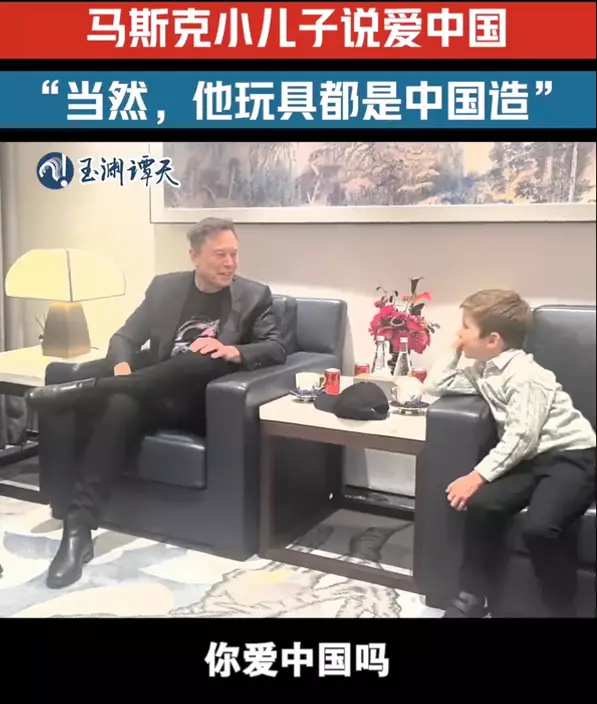
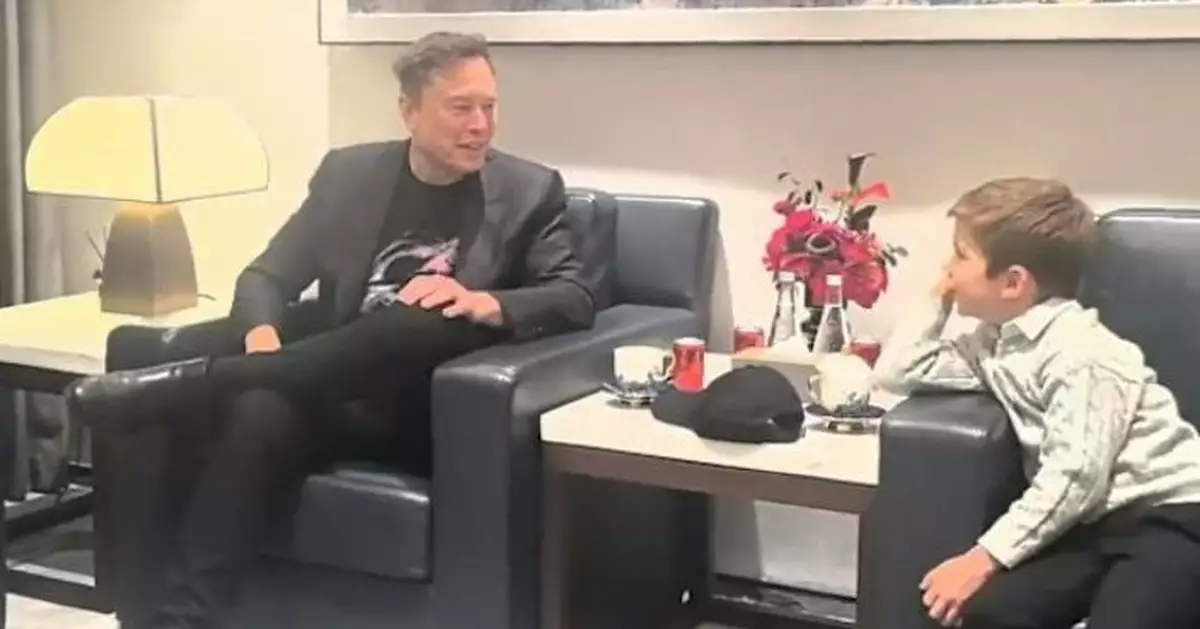
Elon Musk visits Shenzhen with his young son, remarking that the boy considers China "a toy paradise." (Screenshot/Yuyuantantian)
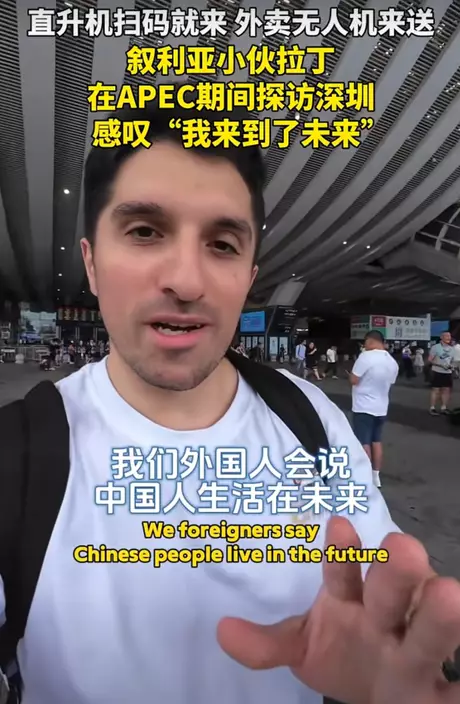
A Syrian vlogger marvels that people in Shenzhen are "living in the future." (Photo/Tencent)
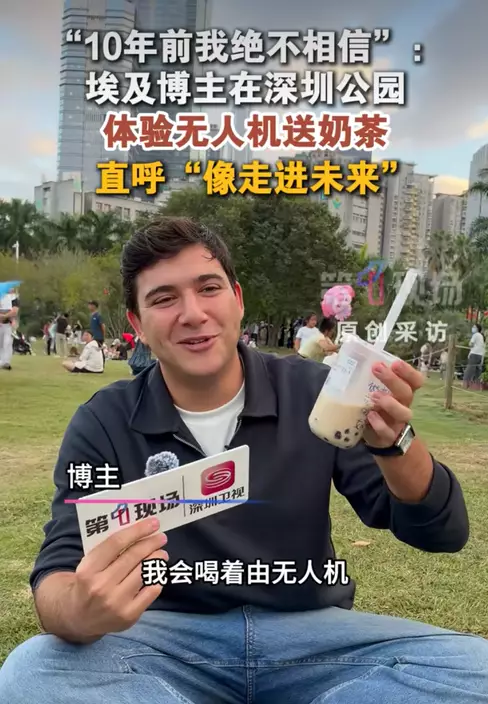
An Egyptian vlogger remarks that visiting Shenzhen feels like stepping into the future. (Photo/Tencent)
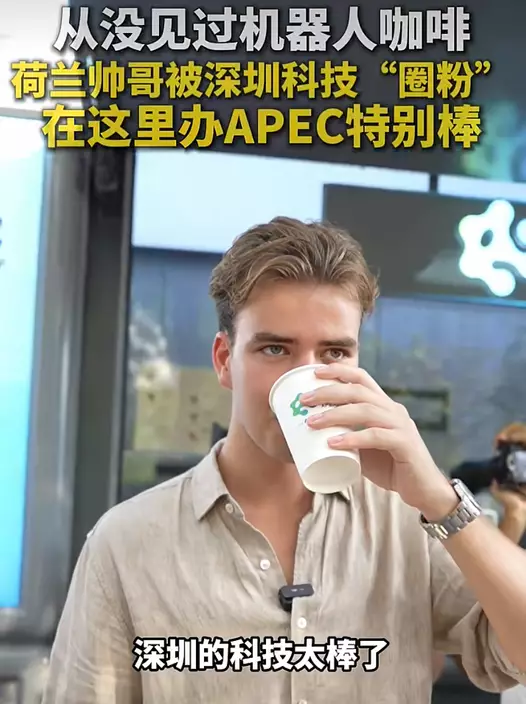
A young Dutch visitor praises Shenzhen's cutting-edge technology. (Photo/Tencent)
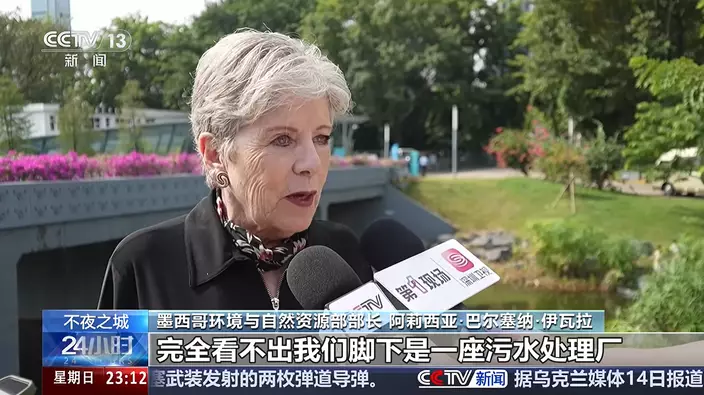
Mexican Secretary of Environment and Natural Resources Alicia Bárcena commends Shenzhen's water environment governance. (Screenshot/CCTV News)
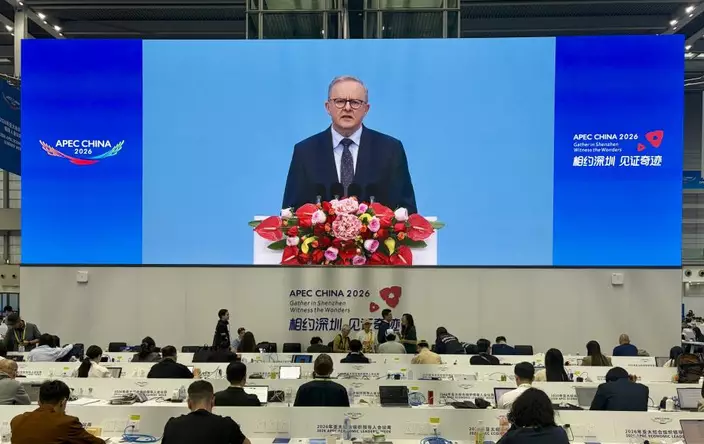
Australian Prime Minister Anthony Albanese addresses the APEC CEO Summit. (Photo/The Paper)
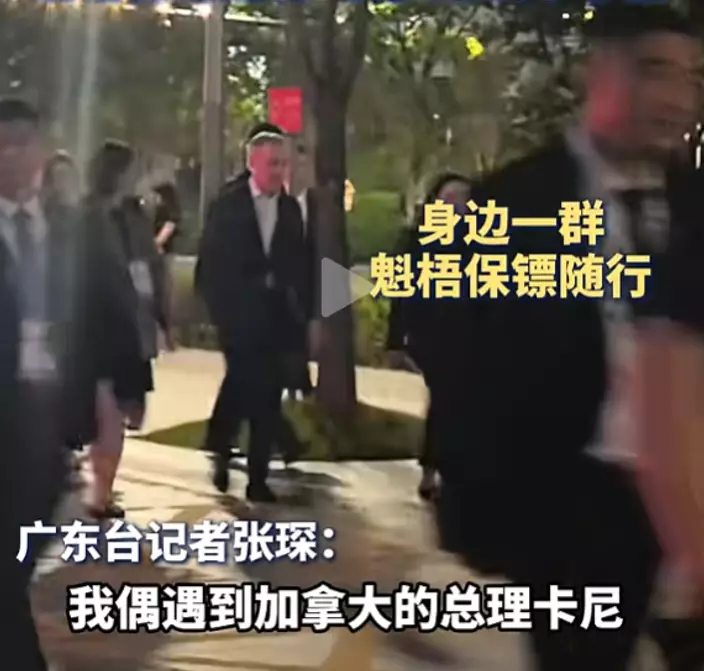
Canadian Prime Minister Mark Carney and his team are spotted on a casual walk through Shenzhen's Futian central district. (Screenshot/Phoenix New Media)
The itineraries of global tech titans added another vivid footnote to the trend. On November 19, Ren Hongbin, chairman of the China Council for the Promotion of International Trade (CCPIT), met with Tesla CEO Elon Musk during Musk's first publicly reported visit to Shenzhen. During the meeting, Musk turned to his young son sitting beside him and asked, "Do you love China?" The boy immediately replied, "YES." Musk laughed and explained, "He thinks China is a paradise for toys—all his toys are made here, so he looks forward to coming to China every time."
Elon Musk visits Shenzhen with his young son, remarking that the boy considers China "a toy paradise." (Screenshot/Yuyuantantian)
This "toy paradise" anecdote is no coincidence—goods made in China have long been a fixture in households worldwide. During his visit, Musk also praised China's high-speed rail network and affirmed that Tesla will continue expanding its production capacity in the country. In fact, his young son is already something of a "China fan": in May this year, when accompanying his father on US President Donald Trump's visit to China, the boy appeared at the Great Hall of the People wearing a neo-Chinese-style jacket. In his own everyday way, the next generation of an American tech mogul is experiencing Chinamaxxing firsthand.
"Chinese People Are Living in the Future"
The Shenzhen adventures of Syrian vlogger "Xiaohuo" captured this sentiment vividly. Scanning a QR code on a Shenzhen street to hail a helicopter "air taxi" and working out in an outdoor smart gym, he felt as though he had stumbled into a sci-fi world, exclaiming: "As foreigners, we often say that Chinese people are living in the future." A Russian journalist put it even more bluntly: "In Shenzhen, who still uses cash?"
A Syrian vlogger marvels that people in Shenzhen are "living in the future." (Photo/Tencent)
Visiting international reporters were equally impressed. Some took a ride in an autonomous robotaxi near Tencent's headquarters, navigating several blocks in 24 minutes and declaring that "China is already living in 2050," while a Jamaican journalist fell instantly for Shenzhen-made Insta360 cameras. A Silicon Valley investor took to social media to list his impressions of the city: seamless metro and rail connectivity, clean and quiet streets, crisp air quality, scenic parks, effortless digital payments, and warm, welcoming locals. "Shenzhen is a remarkable city," he wrote, "and the way everything is built and organised is truly extraordinary." Meanwhile, an Egyptian vlogger visiting Lianhuashan Park watched a drone deliver milk tea straight to his hands, remarking: "Ten years ago I would never have believed this—it feels like stepping straight into the future, with full-on sci-fi vibes!"
An Egyptian vlogger remarks that visiting Shenzhen feels like stepping into the future. (Photo/Tencent)
A young Dutch visitor praises Shenzhen's cutting-edge technology. (Photo/Tencent)
After strolling through Shenzhen's bustling streets, Spanish political scholar Amelia posted that she wished Spain could enjoy Shenzhen's dynamism and prosperity. Her post struck an immediate chord online, sparking a viral trend around the phrase: "I hope my country can have a Shenzhen of its own." From toys and drones to the mechanics of an entire metropolis, the meaning of Chinamaxxing continues to broaden.
Replicating More Than Just a Skyline
As "I hope my country can have a Shenzhen of its own" gained traction online, observers began recognising that what international visitors hope to emulate goes beyond skyscrapers and gadgets—it is Shenzhen's urban governance. Following field visits along the Dasha River, Talent Park, and the Honghu Water Purification Plant, Mexican Secretary of Environment and Natural Resources Alicia Bárcena praised Shenzhen as a benchmark for river restoration and ecological recovery: "We have three very long rivers back home; applying these Chinese solutions could solve water challenges for millions of people."
Mexican Secretary of Environment and Natural Resources Alicia Bárcena commends Shenzhen's water environment governance. (Screenshot/CCTV News)
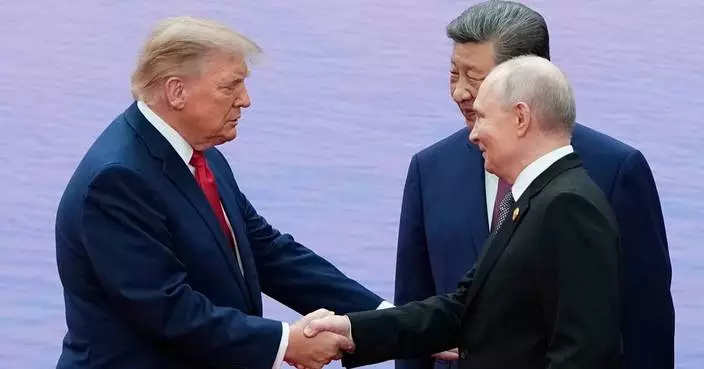
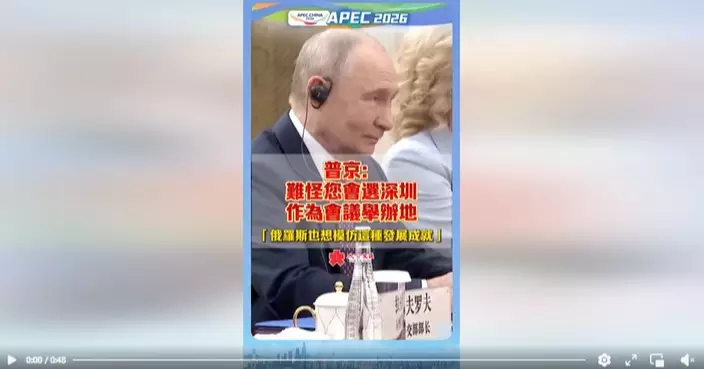
Similar admiration was echoed by world leaders attending the summit. Russian President Vladimir Putin noted that "Russia would also like to emulate such development achievements." Speaking at the APEC CEO Summit, Chilean President José Antonio Kast remarked that Shenzhen's rise proves "progress is not a miracle, but a matter of determination." Australian Prime Minister Anthony Albanese recalled how unrecognisable today's Shenzhen is compared to his first visit in 1998, calling it an "extraordinary success story."
Australian Prime Minister Anthony Albanese addresses the APEC CEO Summit. (Photo/The Paper)
On the day she arrived in Shenzhen, Mexican President Claudia Sheinbaum visited a local Mexican restaurant to dine with expatriates, while Canadian Prime Minister Mark Carney was spotted by residents enjoying a casual stroll through the city centre. At the APEC Finance Night, US-China Business Council President Sean Stein summed up the city's inclusive spirit: "The moment you cross the border, you're a Shenzhener; once you arrive, you're a Shenzhener. So I realised—I am a Shenzhener."
Canadian Prime Minister Mark Carney and his team are spotted on a casual walk through Shenzhen's Futian central district. (Screenshot/Phoenix New Media)
From Buzzword to Global Consensus
From consumer drones to river basin restoration, and from everyday convenience to a holistic development model, Shenzhen is increasingly viewed as a replicable blueprint for modern urban growth. Underlying this widely studied Chinese path is the "holistic approach to national security"—coordinating development and security, safeguarding openness through lasting stability, and reinforcing security through high-quality openness, in response to shared global aspirations for universal security, common prosperity, and an open, inclusive future.
Chinamaxxing
** 博客文章文責自負,不代表本公司立場 **