Skip to Content Facebook Feature Image

While the West Debates "De-risking," China's Construction Corps Builds Through the Desert

Blog

While the West Debates "De-risking," China's Construction Corps Builds Through the Desert
Blog

Blog

While the West Debates "De-risking," China's Construction Corps Builds Through the Desert

2026-10-08 10:40

If "Chinamaxxing" represents a vibrant cultural trend embraced by young people worldwide, then the global expansion of Chinese construction engineering is its most silent, hard-edged counterpart. It rarely goes viral on social media, yet its presence is unmistakable: pouring concrete for bridge piers in the Sahara, raising skyscrapers along the Red Sea, and maintaining national stadiums in Atlantic island nations. While Western capitals debate "de-risking," Chinese infrastructure giants have broken ground simultaneously in nearly one hundred countries and regions.

An "Engineering Feat" in the Sahara: A Marathon Without Spectators

More Images
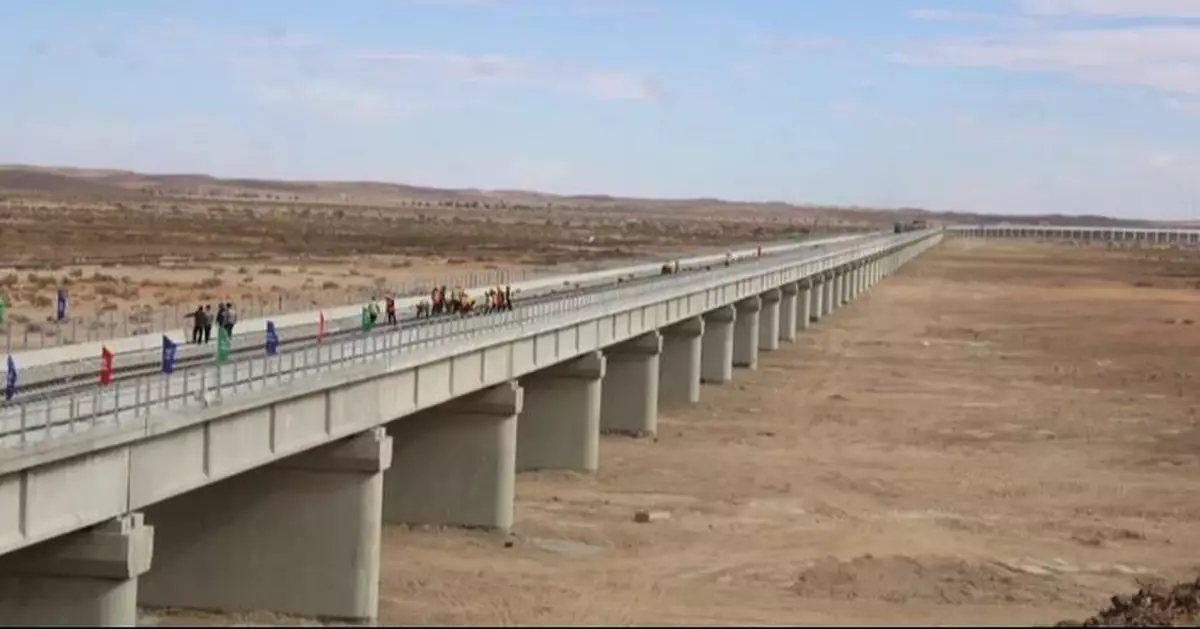
Panoramic view of the PK330 bridge spanning across the Sahara Desert. (Source: Xinhua)
Panoramic view of the PK330 bridge spanning across the Sahara Desert. (Source: Xinhua)

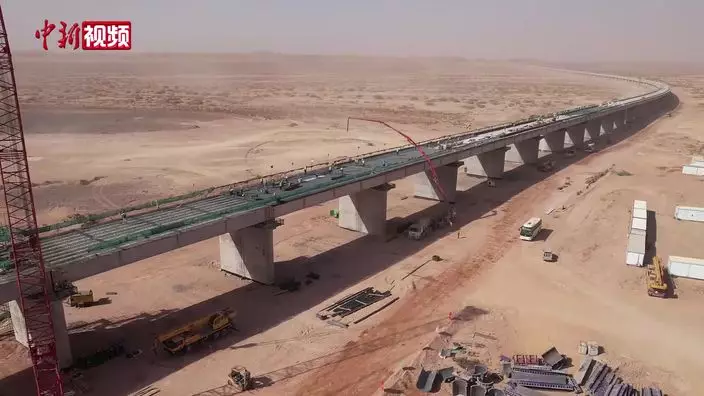
The bridge snakes through the desert landscape, lined with tower cranes and heavy equipment. (Source: China News Video screenshot)
The bridge snakes through the desert landscape, lined with tower cranes and heavy equipment. (Source: China News Video screenshot)

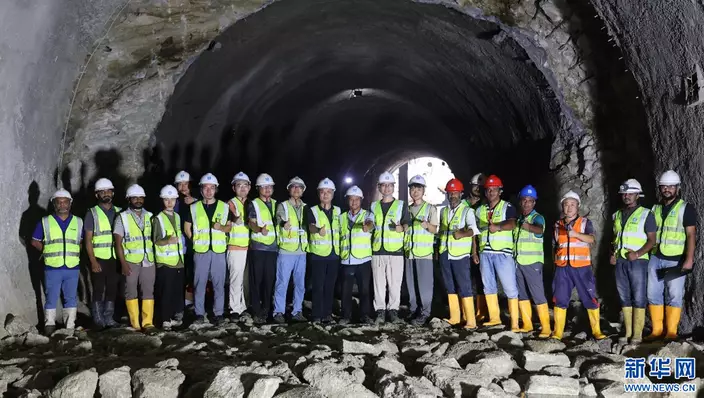
The Elahera Canal diversion tunnel project in Sri Lanka achieves breakthrough. (Source: Xinhua)
The Elahera Canal diversion tunnel project in Sri Lanka achieves breakthrough. (Source: Xinhua)

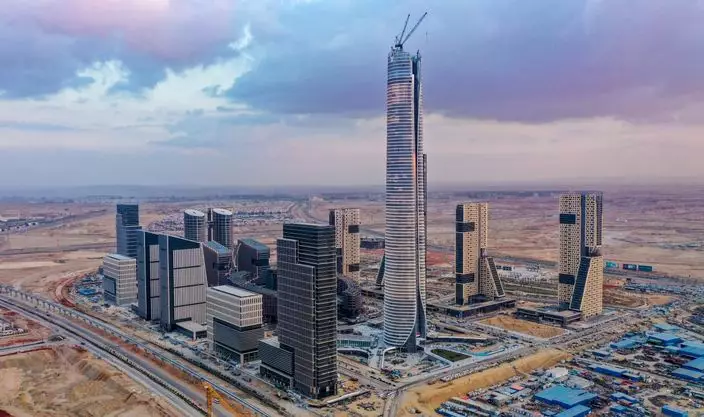
The Iconic Tower and the CBD complex rise dramatically from the desert landscape. (Source: People's Daily)
The Iconic Tower and the CBD complex rise dramatically from the desert landscape. (Source: People's Daily)

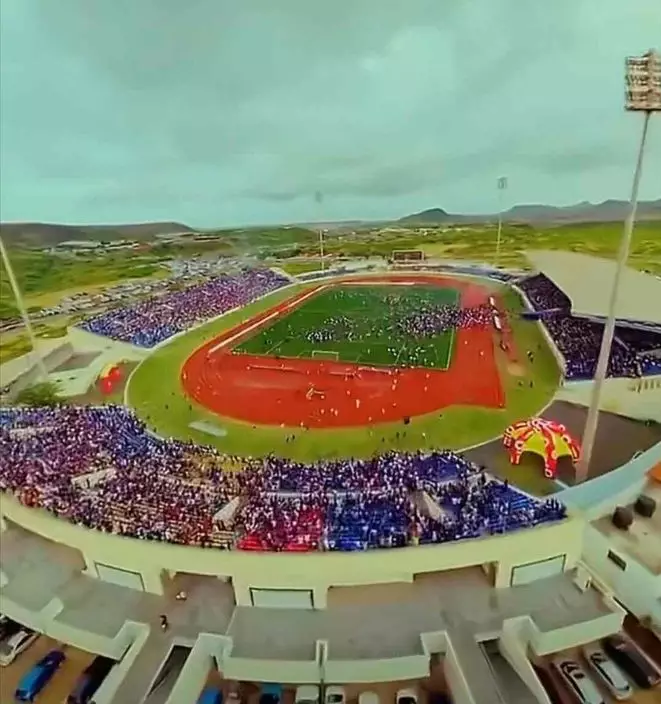
Panoramic view of the Cape Verde National Stadium. (Source: CIDCA official website)

Panoramic view of the Cape Verde National Stadium. (Source: CIDCA official website)

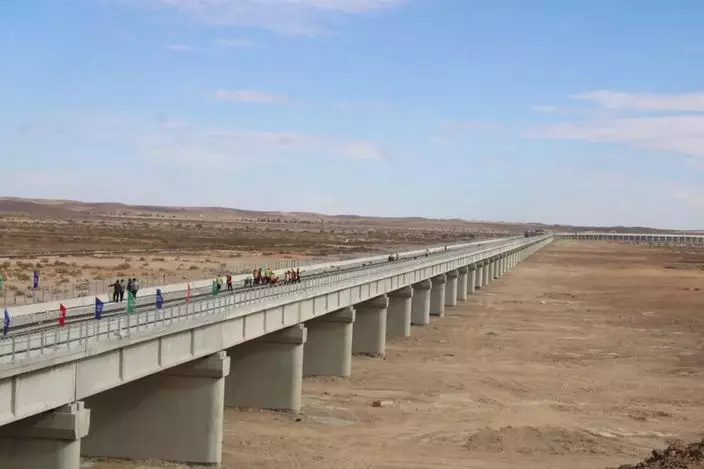
In December 2025, word emerged from Algiers: the PK330 bridge, constructed by China Railway Construction Corporation (CRCC), successfully completed track laying deep within the Sahara Desert. Spanning 6 kilometers in Tindouf Province, it stands as Africa's longest heavy-haul railway bridge. Local media outlet Algeria 360 hailed it as an "unprecedented engineering feat."

Panoramic view of the PK330 bridge spanning across the Sahara Desert. (Source: Xinhua)

Panoramic view of the PK330 bridge spanning across the Sahara Desert. (Source: Xinhua)

The engineering challenges were daunting. The site terrain consisted primarily of loose sand and gravel interlayers subject to extreme heat and relentless sandstorms. Daytime pouring was impossible—scorching temperatures caused concrete to fail quality standards immediately upon application. In response, the project team shifted operations entirely to cooler nighttime hours, utilizing industrial chillers and ice-mixed batching. At peak capacity, seven drilling rigs operated simultaneously, setting a single-day record of 21 pile foundations and precasting 1,170 T-girders in five months. Beyond laying track, this 575-kilometer mining line created over 7,000 local jobs and trained 1,000 skilled technicians—effectively exporting China's comprehensive heavy-haul railway standards to the region.

The bridge snakes through the desert landscape, lined with tower cranes and heavy equipment. (Source: China News Video screenshot)

The bridge snakes through the desert landscape, lined with tower cranes and heavy equipment. (Source: China News Video screenshot)

Financial metrics reinforce this global expansion: in 2025, China State Construction Engineering Corporation (CSCEC) secured RMB 255 billion in new overseas contracts, representing a 15.2% year-on-year increase. Overseas construction contracts reached RMB 225.7 billion (up 6.9%), while overseas operating revenue surged 19.4% to RMB 141.7 billion—far outpacing the 1.4% growth rate of its domestic construction business.

From "Building Structures" to "Exporting Standards"

Soaring contract values tell only part of the story; the fundamental shift lies in moving from exporting labor to co-establishing industry standards. As Yang Shujuan, EY Greater China Government & Infrastructure Market Leader, observed: "As the 'China solution' deepens its global footprint, the industry is accelerating its transformation from simply exporting engineering services to co-establishing technical standards."

This paradigm shift is evident in Algeria. To accommodate mixed transit, the engineering team developed custom railway sleepers certified to allow heavy freight trains and passenger trains traveling at 160 km/h to operate safely on the same track—seamlessly integrating Chinese standards with Algerian and European railway systems. Rather than merely supplying labor and machinery, Chinese contractors are embedding technical frameworks into local soil. Similarly, in Sri Lanka, the Elahera Canal diversion tunnel project optimized blasting protocols and noise-reduction systems to secure a 24-hour construction permit, paving the way to irrigate over 70,000 hectares of farmland upon completion.

The Elahera Canal diversion tunnel project in Sri Lanka achieves breakthrough. (Source: Xinhua)

The Elahera Canal diversion tunnel project in Sri Lanka achieves breakthrough. (Source: Xinhua)

One Crew, Two Languages Beneath the Cairo Skyline

East of Cairo, a 385.8-meter Iconic Tower is undergoing final inspections. Built by CSCEC, it forms the centerpiece of Egypt's New Administrative Capital Central Business District (CBD)—a landmark development featuring 20 towers, including 10 office buildings, 5 residential complexes, and 4 luxury hotels.

The Iconic Tower and the CBD complex rise dramatically from the desert landscape. (Source: People's Daily)

The Iconic Tower and the CBD complex rise dramatically from the desert landscape. (Source: People's Daily)

Hu Yingdong, a foreman overseeing interior fit-outs, manages a mixed team of Chinese and Egyptian workers: "Our Chinese crew shares technical expertise and quality benchmarks with local workers, boosting efficiency while building brotherly bonds." Ahmed Banna, an Egyptian project director, noted that the development brought "transformative changes" through skill transfers and innovative methodologies. The introduction of Chinese chute-and-pipe concrete pumping technology allowed high-altitude concrete delivery with enhanced safety, while onsite wastewater purification and rooftop solar panels established sustainable building practices that remain long after construction ends.

Seventeen Years Guarding a National Stadium

Huashan International, a subsidiary of Shaanxi Construction Engineering Group, began its overseas operations in 1978 with the Cameroon Conference Center. Over four decades, it has completed hundreds of international projects and earned multiple overseas Luban Prizes (China's premier construction award). Yan Yongjun, Deputy General Manager, characterizes this journey as an evolution "from 'borrowing a boat to go to sea' to 'building the ship that leads the fleet.'"

The Cape Verde National Stadium exemplifies this long-term commitment. Built by Chinese crews starting in 2009 and handed over in 2013, the stadium has benefited from continuous, onsite Chinese technical maintenance ever since. When Cape Verde's national football team qualified for the World Cup stage for the first time in 2026, the venue—affectionately dubbed the "Chinese Stadium" by locals—stood as a cornerstone of their athletic journey.

Panoramic view of the Cape Verde National Stadium. (Source: CIDCA official website)

Panoramic view of the Cape Verde National Stadium. (Source: CIDCA official website)

The Silent Power of "Chinamaxxing"

From Saharan railway lines to the Cairo skyline and the coastal breeze of Cape Verde’s national stadium, China's engineering footprint relies not on slogans, but on technical rigor under extreme conditions, the patience to integrate standards locally, and decades of operational stewardship. This represents the quietest dimension of "Chinamaxxing": it is not about encouraging others to imitate a lifestyle, but about Chinese construction capabilities becoming the default benchmark for global infrastructure.


Chinamaxxing

** 博客文章文責自負,不代表本公司立場 **
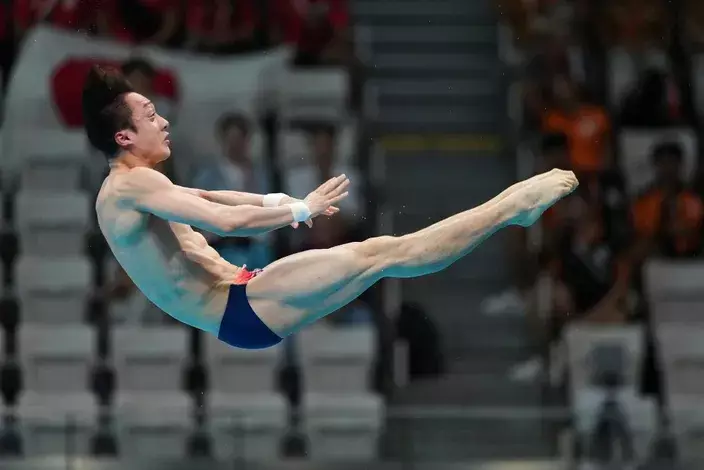
The lights of the Nagoya Asian Games had barely dimmed when two numbers emerged for sports fans to digest: the Chinese diving team pushed its all-time Asian Games gold tally to a monumental 100—maintaining an unbroken sweep across 14 consecutive editions since 1974. Meanwhile, the Chinese table tennis team ceded the men’s team gold, fracturing years of unchallenged dominance. One represented a full stop on absolute rule; the other, a hairline crack in a legendary empire. Together, these two storylines assemble the hard-edged reality of "Chinamaxxing": the world's premier athletes now treat beating China as the ultimate defining benchmark of their careers.

Under the 100th Gold: A Duel Pushed to the Final Dive

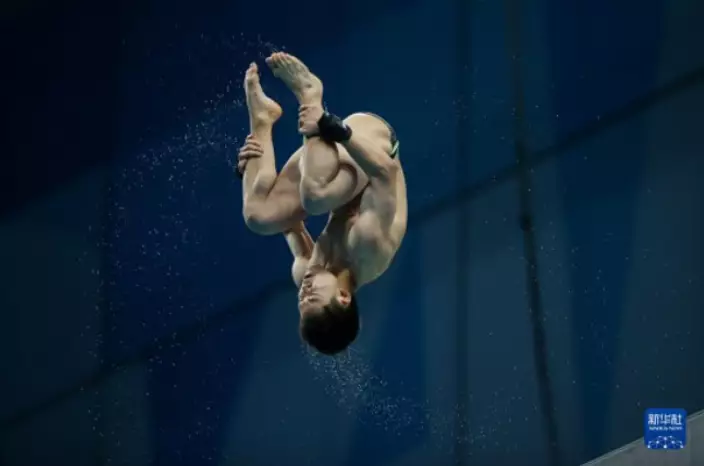
On September 30, Lian Junjie captured gold in the men's 10m platform final with 501.25 points, completing China's clean sweep of all 10 diving events at these Games and securing the nation’s 100th Asian Games diving gold in history. Fifty-two years, 14 editions, 100 golds—this is not merely statistical dominance, but institutional supremacy.

Lian Junjie celebrates his victory in the Asian Games men's 10m platform final. (Source: Tencent)

Lian Junjie celebrates his victory in the Asian Games men's 10m platform final. (Source: Tencent)

Yet, this milestone was hard-won. Japan’s Rikuto Tamai—the Paris Olympic silver medalist—stayed hot on his heels with a score of 497.20. It was only after Lian executed his final dive that the winning margin settled at a razor-thin 4.05 points. It marked the Chinese diving team's narrowest victory of the Games and a vivid testament to how rapidly Asian men's diving is closing the gap: three years ago at the Hangzhou Asian Games, China won the same event by over 20 points; now, that cushion has shrunk to just four. Rivals have long treated this Asian Games final as their ultimate showdown—a reality that is, in itself, the highest tribute to the Chinese standard.

Japanese diver Rikuto Tamai in action during the final. (Source: Xinhua)

Japanese diver Rikuto Tamai in action during the final. (Source: Xinhua)

The women's 10m platform remained uncontested turf for China. On Chen Yuxi's fourth dive—a 207C—four out of seven judges awarded perfect 10s, earning her 97.35 points on a single dive and a total of 432.65. Finishing over 47 points ahead of the silver medalist, she secured China's 14th consecutive Asian Games title in the event. Silver medalist Lu Wei’s journey reads like an internal chronicle of Chinese sports: after winning World Championship gold in 2019, she faded from international rosters while navigating the physical hurdles of adolescent development and the meteoric rise of prodigies like Quan Hongchan. She resurfaced with two silvers at the 2025 National Games before completing her redemption arc in Nagoya with one gold and one silver. What makes Chinese diving formidable is not a single prodigy, but the inexhaustible pipeline of elite talent standing behind her.

Chen Yuxi clinches gold in the women's 10m platform. (Source: Chinese National Team Official Poster)

Chen Yuxi clinches gold in the women's 10m platform. (Source: Chinese National Team Official Poster)

Table Tennis: Between Cracks and Counterattacks

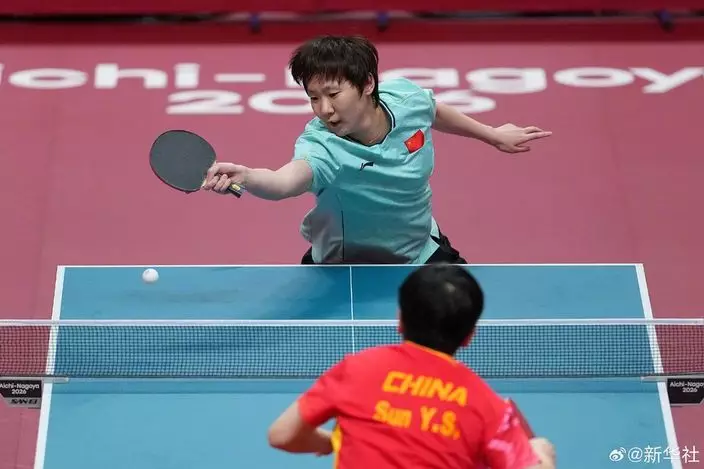
The narrative on the table tennis court proved far more complex. In the men's team final, China suffered a rare defeat against Japan, surrendering the team title. Yet the national squad launched an immediate counteroffensive, sweeping the remaining six gold medals and locking up both gold and silver in women's singles, men's singles, and mixed doubles. In the men's singles final, 21-year-old Lin Shidong swept teammate Wang Chuqin 4-0, finishing the Games with three golds and one silver as the top performer. In the women's singles final, Wang Manyu and Sun Yingsha battled through a thrilling six-game thriller; tied at 13-13 in the sixth game, Wang held her nerve to seal the title at 15-13.

Wang Manyu (in green) defeats teammate Sun Yingsha to win the Asian Games women's singles table tennis gold. (Source: Xinhua)

Wang Manyu (in green) defeats teammate Sun Yingsha to win the Asian Games women's singles table tennis gold. (Source: Xinhua)

The bittersweet realities of a generational shift were evident among the veterans. Playing through injury and leaving with three silvers, Wang Chuqin reflected post-match: "I feel this might be my final Asian Games." Sun Yingsha similarly acknowledged her physical and mental fatigue: "Nagoya might be my last Asian Games. Five years is a very long time."

The Ultimate "Chinamaxxer" Sits Across the Net

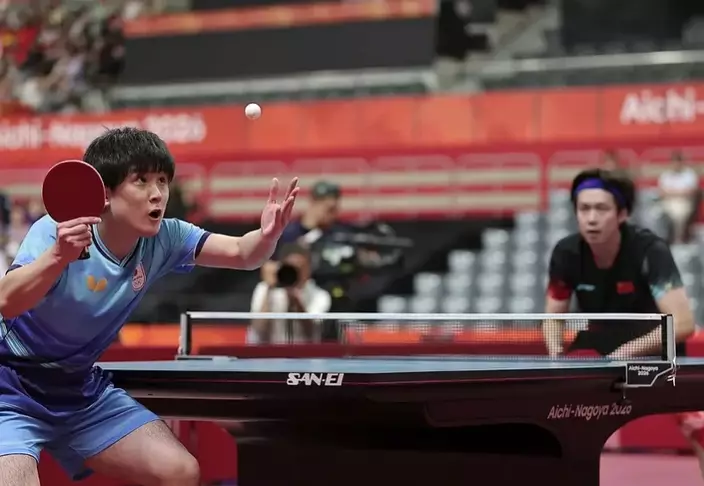
When discussing "Chinamaxxing," the most striking case at the Nagoya Games was Tomokazu Harimoto, the driving force behind Japan's men's team triumph. The player who defeated Wang Chuqin 3-0 in the team final was born in Chengdu in 2003 to parents who were both former Chinese table tennis players. His family naturalized as Japanese citizens in 2014, adopting the surname Harimoto. Harimoto and his younger sister, Miwa Harimoto, embody a fascinating paradox: to defeat China, the most effective blueprint remains adopting Chinese-style training and mastering Chinese techniques from childhood. Japan's men's team gold served as the ultimate nod to China's table tennis ecosystem—using China's own playbook to score a decisive blow.

Japan's Tomokazu Harimoto (left) defeats China's Wang Chuqin 3-0 on September 24. (Source: Xinhua)

Japan's Tomokazu Harimoto (left) defeats China's Wang Chuqin 3-0 on September 24. (Source: Xinhua)

The Benchmark as the Ultimate Power

Reflecting on the 100th gold, Lian Junjie noted: "For this hundredth gold, I must thank the team and the relentless fighting spirit of our predecessors—they passed this sense of mission down to us."

His words articulate the full scope of Chinamaxxing: on one end lies the training, talent selection, and legacy system China built over five decades; on the other lies a global field of competitors using China as their ultimate reference point. When rivals define their entire careers by "beating China" and view Chinese techniques as essential skills to master, the influence of Chinese sports has transcended medal tallies. One hundred golds is the milestone; setting the global benchmark is the essence. And once a benchmark becomes universally accepted, that is true "maxxing."

Recommended Articles