/wp-content/uploads/blogger/2026/08/WhatsApp-Image-2026-08-13-at-12.21.36.jpg.webp)
Arabella Kushner, granddaughter of U.S. President Donald Trump, has once again become the focus of Sino-U.S. diplomatic occasions. According to CCTV News, on the evening of September 24 (local time), President Xi Jinping and his wife Peng Liyuan attended a welcoming banquet hosted by President Trump and First Lady Melania. The 15-year-old Arabella was also in attendance, seated in the front row of the White House alongside her mother, Trump’s eldest daughter Ivanka.
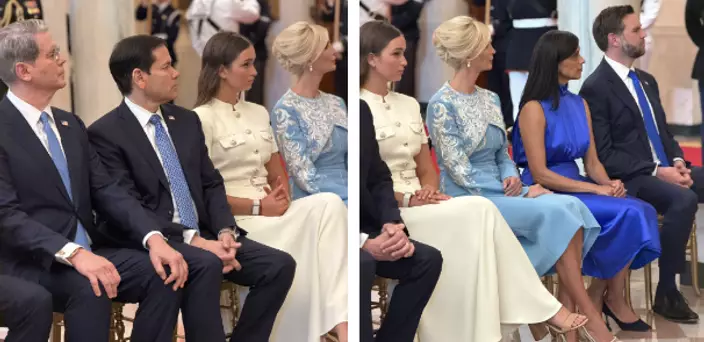
The Trump granddaughter who once recited Tang poetry has grown up. She was likely the only American in the front row who didn't need a translator. (Image: Sina.com)
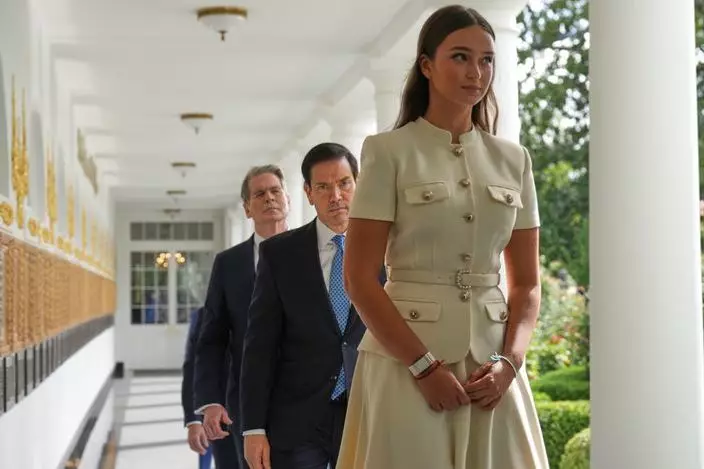
President Xi Jinping and his wife Peng Liyuan attending a military parade hosted by Trump, with the 15-year-old Arabella also present.
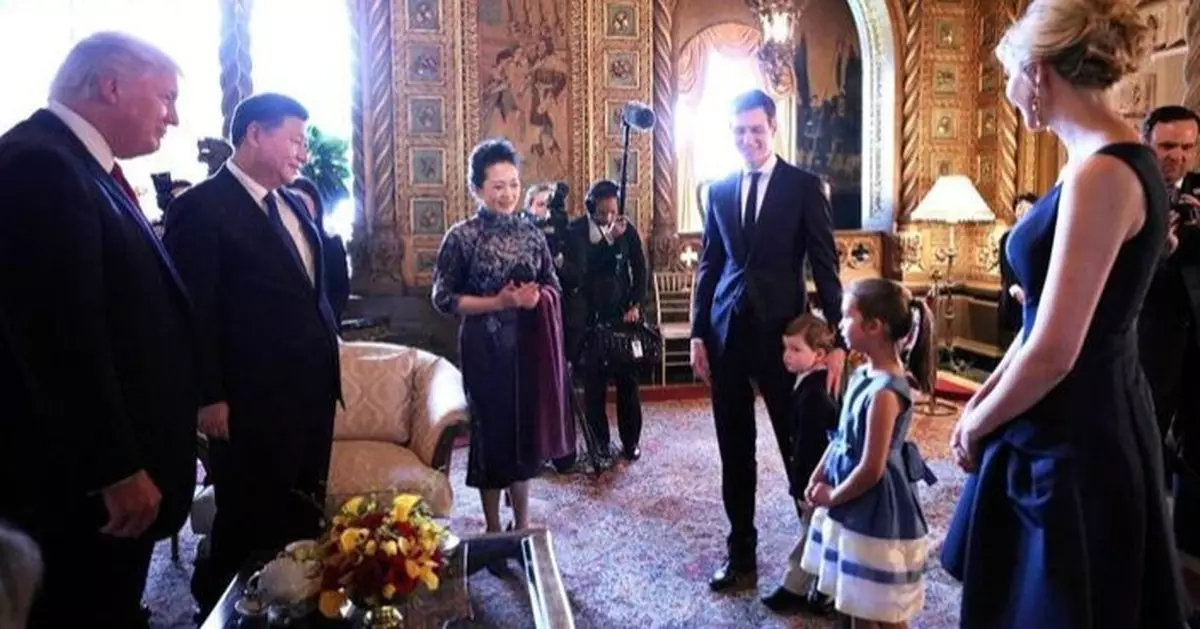
This scene brings back memories of the 2017 "Xi-Trump Summit," during which Arabella and her younger brother Joseph sang the Chinese folk song Jasmine Flower and recited the Three-Character Classic as well as Tang poetry for Xi Jinping. Video clips of Arabella reciting Tang poetry went viral on the internet, sparking widespread curiosity: How could the granddaughter of an American president speak such fluent Mandarin? The answer lies not in an elite private school, but in Ivanka’s home—their nanny from China, XiXi (transliteration).
Click to Gallery
The Trump granddaughter who once recited Tang poetry has grown up. She was likely the only American in the front row who didn't need a translator. (Image: Sina.com)
President Xi Jinping and his wife Peng Liyuan attending a military parade hosted by Trump, with the 15-year-old Arabella also present.
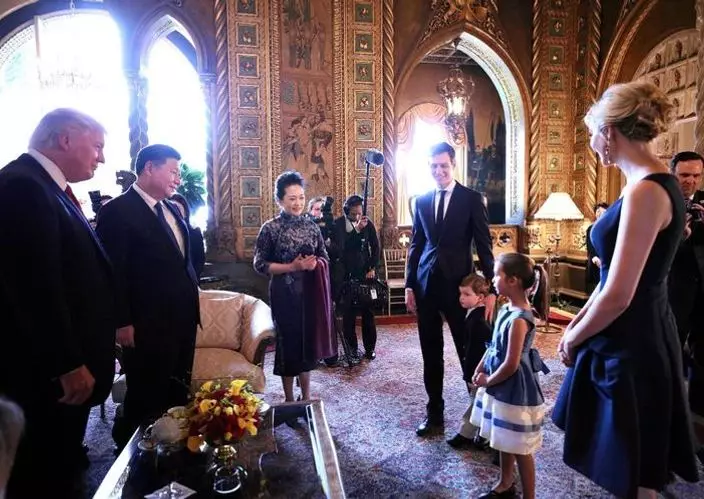
A decade ago, as a little girl, Arabella sang in Chinese and even recited ancient poetry, the Three-Character Classic, and Jasmine Flower.
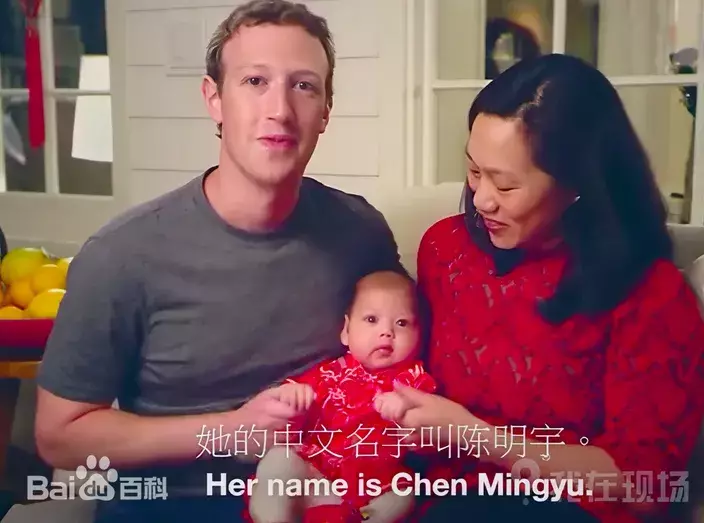
Mark Zuckerberg named his eldest daughter "Chen Mingyu." (Image: Baidu Baike)
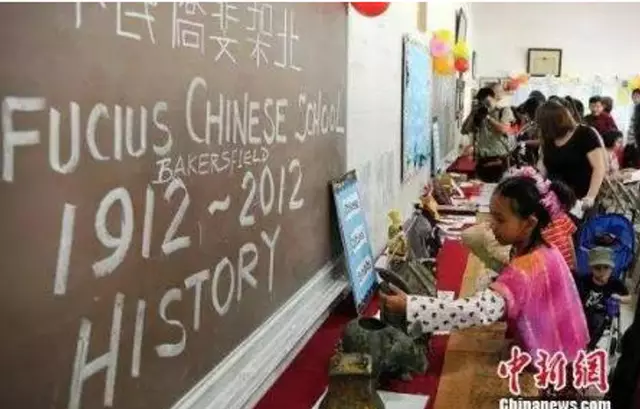
A Chinese immersion school in California, USA. (Image: China News Service)
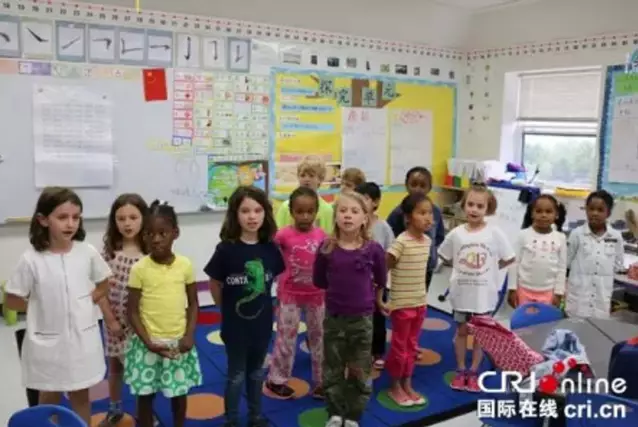
Students in Washington singing the Three-Character Classic in class. (Image: CRI Online)
A decade ago, as a little girl, Arabella sang in Chinese and even recited ancient poetry, the Three-Character Classic, and Jasmine Flower.
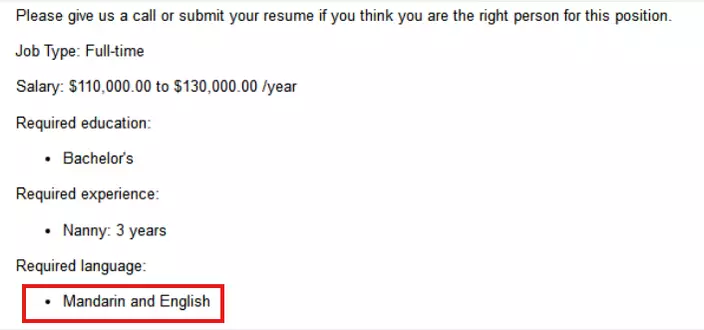
This is not an isolated case. Looking across the roster of the American wealthy elite, one realizes a quiet phenomenon of "Chinamaxxing" has long been underway: Meta founder Mark Zuckerberg gave his eldest daughter the Chinese name "Chen Mingyu" and offered an annual salary of $110,000 to $130,000 to hire a Mandarin-speaking nanny; Amazon founder Jeff Bezos’s children take Chinese lessons; even Prince George of the UK is learning the language. In New York, the annual salary of a truly top-tier "elite nanny" can reach $180,000, and one of the core prerequisites for being considered "elite" is the ability to speak fluent Mandarin.
Mark Zuckerberg named his eldest daughter "Chen Mingyu." (Image: Baidu Baike)
Zuckerberg’s job posting required the nanny to speak Chinese. (Image: Sina News)
Nannies Are More Than Nannies: They Are "Linguistic Assets"
In the context of elite American households, Mandarin-speaking nannies have long surpassed the traditional scope of childcare. When Arabella was just 18 months old, Ivanka enrolled her in a language school in New York’s Upper East Side, where she was taught by Jing Yongtai, a Chinese master’s student studying in the U.S. Her younger brother Joseph began learning from the same teacher before turning one. Meanwhile, XiXi, the family's Chinese nanny, created an "immersive" Mandarin environment for Arabella in their daily home life. Systematic schooling combined with home immersion forms the true underlying logic behind Arabella's level of Mandarin proficiency.
This dual "school plus nanny" model is being replicated by an increasing number of affluent American families. Rush, from the New York placement agency Lifestyle Resources, noted that demand for Chinese-speaking nannies in the U.S. has grown rapidly since 2006. Employers' motivation is straightforward: "so their children can learn Chinese." These families are not Chinese-American; rather, they are American families doing business with China, or simply wealthy parents who want their children to be "more competitive in the future." An American parent who hired a Mandarin nanny put it bluntly: teaching their son Chinese is because it "brings long-term economic benefits." This statement is perhaps closer to the truth than any romanticized cultural explanation.
From Nannies to Au Pairs: A Class-Divided Linguistic Arms Race
If hiring a Mandarin nanny is a "privilege" for the ultra-wealthy, middle and upper-middle-class families are seeking "budget-friendly alternatives." Author and actress Mia Riverton Alpert—a Chinese-American of mixed heritage—hired two Chinese au pairs over four years through a U.S. government program specifically to teach her two children Mandarin.
On the other hand, the public education system is also riding this wave. There are already 230 Chinese immersion schools across the United States, serving students of diverse ethnicities including Mexican, Russian, Korean, Japanese, and Vietnamese backgrounds. A public elementary school in Washington with an acceptance rate of just 3% offers bilingual instruction, teaching 3- to 4-year-old classes entirely in Chinese and switching to alternating days of Chinese and English starting in 5th grade. To secure a spot, many parents camp out in tents overnight before registration opens. This is a clearly stratified linguistic arms race: the ultra-rich hire nannies, the upper-middle class use au pairs, and the general public camps outside Chinese immersion schools.
A Chinese immersion school in California, USA. (Image: China News Service)
Students in Washington singing the Three-Character Classic in class. (Image: CRI Online)
The Reason for Learning Chinese Was Never Just "Interest"
It would be overly naive to attribute all of this simply to the "charm of Chinese culture." The rationale offered by American parents points almost without exception in one direction: China’s economic influence.
California physician Sonya Miller, whose children attend a Chinese immersion school, explained her logic directly: "Think about how many people there are in China, how much debt the U.S. owes to China, and China’s growing economic strength." Riverton Alpert was even more direct: "Despite trade wars, China’s economic influence won't diminish in the short term. American parents all want their children to ride the tailwinds of China's development."
Seth Norman Greenberg from Pavilion, a high-end domestic agency in New York, has witnessed the evolution of this trend: "Ten years ago, those hiring Chinese nannies were mostly business people who noticed China’s rapid economic growth. Over the past decade, the trend of hiring Chinese nannies has only risen." He added: "I can say with certainty that in the 57-year history of our firm, the demand in American society for Chinese nannies and tutors has never reached the level it is at today."
Insights for Hong Kong: When "Chinamaxxing" Becomes a Global Phenomenon
For Hong Kong people, this wave of Chinamaxxing is hardly unfamiliar. Learning Mandarin, moving north for career development, and sending children to international schools to learn Chinese—Hong Kong people have, in many ways, long been the pioneers of "Chinamaxxing." However, the strategy employed by elite American families reveals a colder reality: Mandarin is no longer merely a hobby or an extra language option; it is viewed as "human capital investment" with quantifiable returns.
When Trump’s granddaughter stood beside Xi Jinping once again at the White House welcoming banquet, it was more than just a diplomatic gesture. It was a signal: in the calculations of America's upper echelon, Chinese has jumped from a third or fourth option among foreign languages to the first or second. And XiXi, the nanny quietly teaching Arabella Chinese in Ivanka's home, is herself a metaphor—in the class reproduction of a globalized world, the transmission of linguistic capital is often more discreet—and more decisive—than that of financial capital.
Hong Kong parents often say, "Don't lose at the starting line." But when American billionaires have already moved their starting lines to the dinner tables of Chinese nannies, the rules of the race may have already been rewritten.
Chinamaxxing
** 博客文章文責自負,不代表本公司立場 **