The star-shaped roundabout surrounding the Arc de Triomphe in Paris is widely considered one of Europe's most intimidating driving challenges: twelve major avenues converge into a continuous flow of traffic navigating lanes with no painted markers. Yet a reporter from Bloomberg recently rode in a Chery JAECOO 7 equipped with Momenta’s autonomous driving software, letting the vehicle navigate the chaos unassisted. The observation was unequivocal: "It threaded smoothly through the chaotic traffic, drove around the roundabout, chose an exit, and drove off, with zero human intervention throughout."
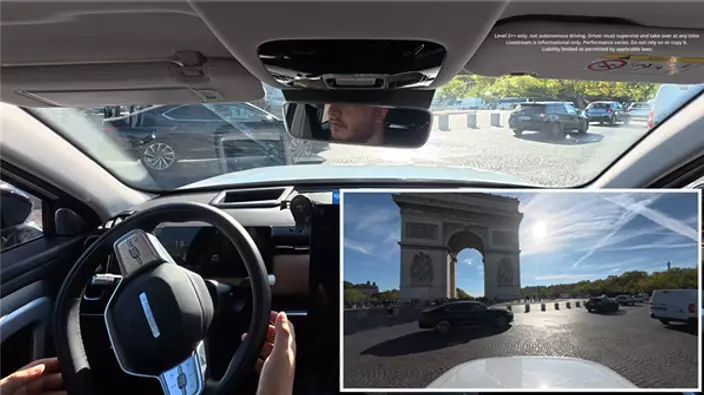
Chery JAECOO and Momenta complete a zero-intervention autonomous driving test through Paris's complex Arc de Triomphe roundabout. (Source: Phoenix Tech photo)
During the same European road trials, Xpeng’s navigation-assisted driving system earned praise as a model driver—maintaining speed limits, easing off the accelerator at amber lights, and yielding to faster vehicles in tunnels. This is no mere laboratory prototype. That same month, the JAECOO 7 topped the UK's overall model sales charts, while in France, monthly registrations reached 2,589 units in September, bringing its market share to 1.6%.
Click to Gallery
Chery JAECOO and Momenta complete a zero-intervention autonomous driving test through Paris's complex Arc de Triomphe roundabout. (Source: Phoenix Tech photo)
The JAECOO × Momenta team celebrates the completion of the Arc de Triomphe smart-driving challenge. (Source: Phoenix Tech photo)
Wall Street Journal technology columnist Joanna Stern takes a Xiaomi SU7 Max for a drive in New Jersey. (Source: WSJ Chinese photo)
A BYD Dolphin Mini operating on the streets of Mexico City. (Source: Social media photo)
GWM TANK SUV entering the Australian market. (Source: GWM TANK official photo)
A BYD showroom facility in Australia. (Source: SMZDM photo)

The JAECOO × Momenta team celebrates the completion of the Arc de Triomphe smart-driving challenge. (Source: Phoenix Tech photo)
Chinese autonomous driving technology is asserting itself in European driving environments long considered challenging even for veteran local motorists.
Behind the Wheel: How Test Drives Win Over Skeptics
Product quality is best evaluated on the open road. After test-driving a Xiaomi SU7 Max in New Jersey for two weeks, a tech columnist for The Wall Street Journal penned a widely shared piece: "Whenever I get back into my Ford, I can't help thinking of you—your long range, your modular interior, your absurdly large central screen. Please come back to America... for me."
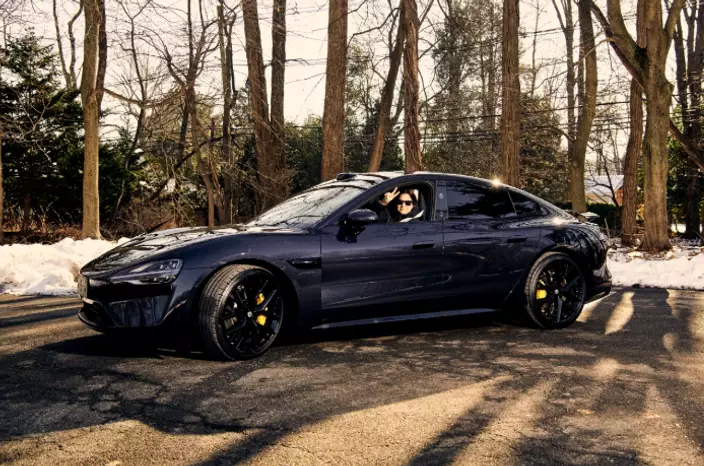
Wall Street Journal technology columnist Joanna Stern takes a Xiaomi SU7 Max for a drive in New Jersey. (Source: WSJ Chinese photo)
Meanwhile, a reporter for The Washington Post traveled to Mexico—where Chinese vehicles are widely available—to examine consumer adoption. The entry-level BYD Dolphin Mini, priced at $21,400, costs roughly $9 to fully charge at home, compared to $30 in gasoline for an equivalent distance. The Zeekr 7X, priced at $45,300, was noted for offering "quality and hardware that match or exceed cars costing twice as much." At a Mexico City charging station, 34-year-old physician Arnold Cruz reflected on replacing his Volkswagen with a BYD: "I will never drive a gas car again... I had doubts too. But honestly, it has been great."

A BYD Dolphin Mini operating on the streets of Mexico City. (Source: Social media photo)
In under five years, Chinese brand share in Mexico’s new car market rose from under 1% to 15%, representing approximately 90% of the local electric vehicle segment.
The Australian Market: Rapid Adoption of Tech-Centric Vehicles
Australian automotive outlet Man of Many framed the trend directly, examining why Australian consumers are increasingly turning to Chinese brands. After three years of reviewing Chinese vehicles, the outlet's chief reviewer highlighted a key differentiator: Chinese automakers approach vehicles as updateable consumer technology products. After providing feedback regarding the lane-keeping system on a GWM TANK SUV, the reviewer received an over-the-air software fix and an invitation to re-test the system within two weeks.

GWM TANK SUV entering the Australian market. (Source: GWM TANK official photo)
Market data reflects this momentum. In 2025, sales of Chinese-manufactured vehicles in Australia reached 252,000 units—a 31% year-on-year increase—bringing market share to 20.4% and positioning China as Australia's second-largest source of new vehicles. Brands like GWM, BYD, and MG secured positions among the top ten best-selling brands. By June 2026, monthly market share surpassed 25%, with electrified models representing 51.4% of sales—marking the first time alternative energy vehicles crossed the halfway threshold and reshaping long-standing market dynamics.
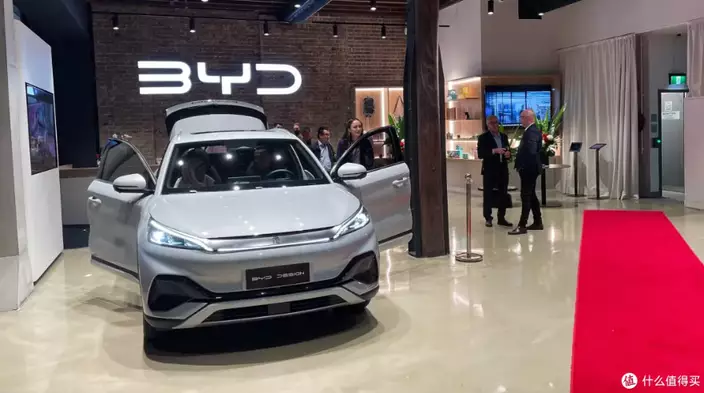
A BYD showroom facility in Australia. (Source: SMZDM photo)
Global Market Indicators
Broader international metrics highlight a consistent trend: in January and February 2026, sales of Chinese-brand electric vehicles in Europe grew 94% year-on-year, pushing market share from 4.2% to 8%. By April 2026, Chinese brands accounted for over 15% of Europe's EV market—a record high—up from just 2% of the EU pure electric market between 2021 and 2025.
On German roads, BYD registrations recorded significant year-on-year growth; in Thailand, Chinese brands account for 86% of the pure electric market; and in São Paulo, Brazil, the BYD Dolphin topped sales charts as Chinese brands captured 77.6% of the pure electric segment. In the first quarter of 2026, China's total vehicle exports reached 2.226 million units (up 56.7% year-on-year), including 954,000 New Energy Vehicles (NEVs)—a 1.2-fold surge.
At the Paris Motor Show, roughly 20 Chinese brands exhibited their latest models, up from nine two years prior. Conversely, the US market remains largely insulated behind 100% tariffs and proposed bans on connected vehicle technology citing national security considerations. As The Washington Post observed, Mexico has effectively become "a showroom for electric cars you cannot buy in the US."
The growing global presence of Chinese EVs stems from intense domestic market competition, rapid iterative engineering, and competitive value propositions. From navigating complex European roundabouts to delivering frequent software updates across global markets, consumer adoption reflects direct product evaluation. While trade barriers and tariff structures aim to shelter domestic industries, market demand across Latin America, Australia, and Europe continues to respond to competitive product engineering—demonstrating that automotive technology adoption is ultimately driven by performance, usability, and consumer choice on the open road.
Chinamaxxing
** 博客文章文責自負,不代表本公司立場 **
An ancient Chinese proverb declares: "Food is the primary necessity of the people." The weight of this saying extends far beyond mere flavor. Food security forms the bedrock of national security, while dining table order serves as a microcosm of social stability. A society that can nourish 1.4 billion people according to seasonal cycles—warming them with hot meals and gathering them around shared tables—rests upon the long-term, seamless alignment of agriculture, logistics, public health, and social governance. This is the most grounded, everyday manifestation of China’s holistic national security framework.
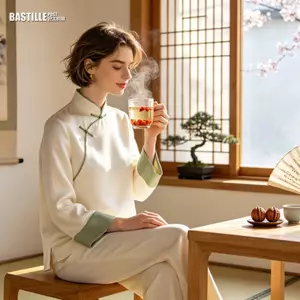
Recently, this deeply rooted dietary philosophy has quietly emerged as a viral global trend among Gen Z and young adults worldwide. On international social platforms, users are replacing morning cold smoothies with warm congee and nourishing soups, candidly sharing that "now, whenever I think of breakfast, I just want warm congee." Others post daily check-ins showcasing Chinese wellness routines—brewing apple-red date-goji tea, taking warm foot baths before bedtime, and practicing Baduanjin Qigong—eagerly announcing that they have "entered a very Chinese era of life." Xinhua News Agency reported that related topics have accumulated hundreds of millions of views.
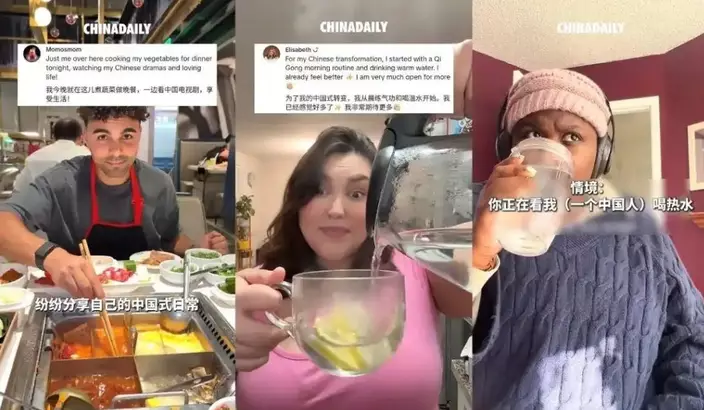
International social media users document their journeys of learning to "live like the Chinese." (Source: China Daily photo)
This marks the most appetizing chapter of the "Chinamaxxing" movement: global audiences are falling in love not merely with the taste of Chinese food, but with the comprehensive worldview embedded behind every dish.
Food as a Worldview: Warming Yang, Dispelling Cold, and Eating in Season
This lifestyle framework possesses a clear philosophical lineage. A commentary in People's Daily noted that the widespread habit of drinking warm water stems from Traditional Chinese Medicine (TCM) principles centered on "Warming Yang and Dispelling Cold" (nourishing internal vitality and expelling chill). The rich spectrum of Chinese culinary culture embodies the fundamental human pursuit of harmony through food.
Long before the current trend, content creator Li Ziqi introduced "eating in season and adapting to nature" to a global audience. Her YouTube playlists—focusing on seasonal eating and dietary moderation—feature peach blossom wine in March, loquat pastries in May, and autumn-cured meats preserved for winter. By 2019, her channel had amassed 7.46 million subscribers, with single videos reaching 40 million views; today, her subscriber base stands at 33.7 million, outperforming numerous mainstream international media outlets. As one international viewer commented: "What she shows us is a dimension of China we never understood before."
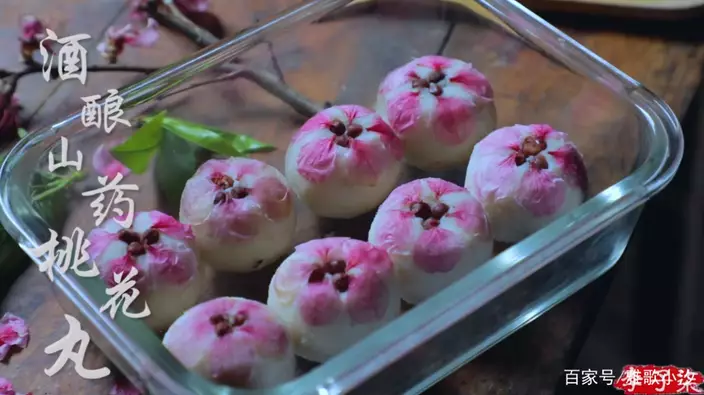
Li Ziqi incorporates edible flowers into seasonal recipes, translating natural cycles into aesthetic table presentations. (Source: Li Ziqi's Weibo photo)
Physical wellbeing provides the ultimate proof. Fröhler, a young Austrian convert to the lifestyle, shared her realization: "A proper meal must feature warm, cooked food. Hot food is rooted in TCM principles—it prioritizes internal balance and long-term wellness over quick symptomatic fixes. It’s a remarkably wise philosophy." Today, she prioritizes shared meals, chooses sugar-free options, and practices diligent sun protection. Similarly, Gwen, an American expat living in Guangzhou, found her daily life transformed from palate to lifestyle: her kitchen runs entirely on wok cooking, and habits like drinking warm water during her period—conceptually alien in the US—have seamlessly become second nature. A research team led by Professor Xiao Jun at Wuhan University analyzed over 2,000 original videos under these trending topics, concluding that the sustained momentum of this craze lies in global youth's enthusiastic embrace of Chinese holistic wellness.
Shared Meals: Human Connection Across the Dining Table
Deeper than personal wellness is the cultural tradition of communal dining. An analysis in Beijing Daily observed that fast-paced urban living and isolation represent shared challenges for global youth today. The Chinese way of life—emphasizing family bonds, shared meals, and balanced moderation—provides an emotional anchor. Communal dining fosters social belonging, while warm meals deliver a sense of safety and comfort.
In response, international creators are sharing videos of themselves wrapping dumplings and mastering Chinese recipes, while posting their progress on Chinese social platforms. Ghimire, a young woman from Nepal, introduced these Chinese habits to her family back home: "These methods are simple, yet deeply nourishing." Gathering around a table and greeting guests with tea—table customs long taken for granted in China—are becoming the aspirational lifestyle for young people around the world.
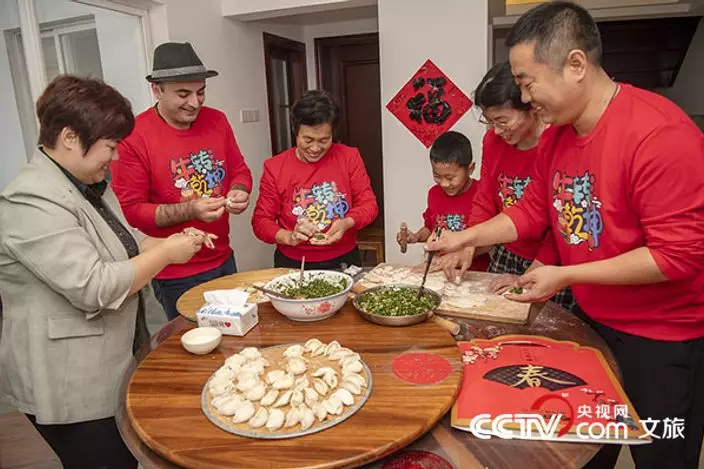
Learning to wrap dumplings serves as an entry point for international youth to experience Chinese family traditions and communal food culture. (Source: CCTV.com photo)
Harmonizing Five Flavors: "Harmony in Diversity" Within a Single Pot
At the heart of Chinese culinary theory lies the principle of harmonization. The philosopher Laozi wrote in the Tao Te Ching: "Governing a great nation is like cooking a small fish"—requiring precise heat control, measured seasoning, and patient balance. The wisdom of "Harmonizing Five Flavours" dictates that distinct ingredients and seasonings coexist in a single pot, preserving their individual characteristics while combining to create a harmonious new whole.
Mapped onto society, this philosophy of "Harmony in Diversity" (He Er Bu Tong) mirrors how diverse social groups and cultures coexist inclusively while forming a cohesive unity. Preserving the continuity and authenticity of this culinary heritage is itself an essential component of cultural security—food remains the strongest tether of cultural identity, and the significance of a slow-simmered soup extends far beyond taste. From diplomatic principles to personal relationships, China's ethos of "Harmony in Diversity" offers Western youth a fresh perspective on human connection.
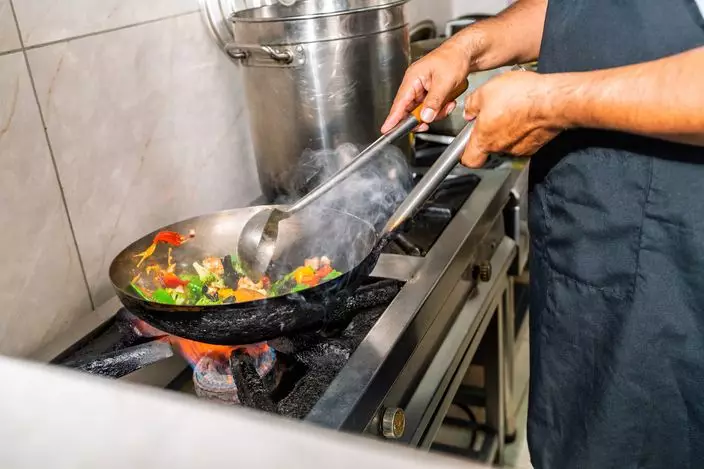
Chinese culinary art relies on heat control and flavor balance, allowing diverse ingredients to showcase their unique attributes while melding into a unified dish. (Source: Well-Media photo)
The path through which the world comes to understand China is evolving: moving beyond superficial gazes at the Great Wall or giant pandas, and instead traveling through the palate directly into the heart of a civilization. Brand Finance’s Global Soft Power Index 2026 ranked China second worldwide with 73.5 points—making it the only nation in the top ten with an increasing score, while its international reputation ranking surpassed that of the US for the first time. Global audiences increasingly perceive China as a nation capable of offering warm, authentic experiences and deep cultural resonance.
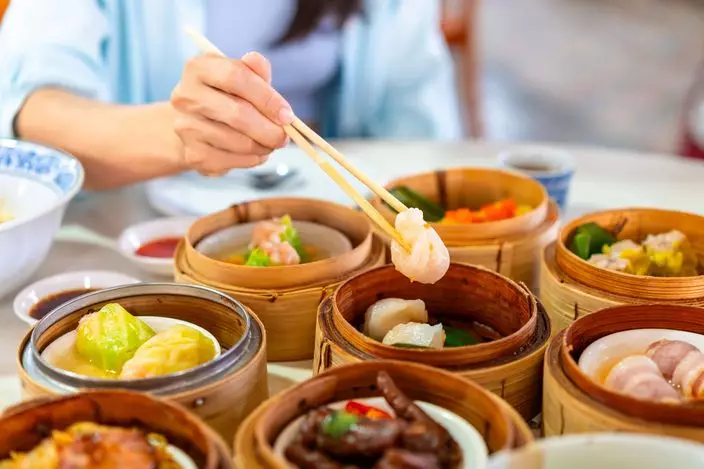
Gathering over tea and dim sum ("Yum Cha") represents the quintessential shared-dining tradition familiar to Hong Kong residents. (Source: Getty Images photo)
For Hong Kong readers, this global phenomenon carries a comforting familiarity: Grandma's slow-simmered Cantonese soup, weekend Yum Cha at local dim sum halls, and the affectionate reminder to "drink more warm water." Having grown up immersed in this culinary wisdom, many may not have realized that these daily habits represent the very lifestyle global youth are eagerly seeking to adopt.
The most powerful cultural connection requires no translation: it requires only a shared table, good company, and a steaming pot of soup.