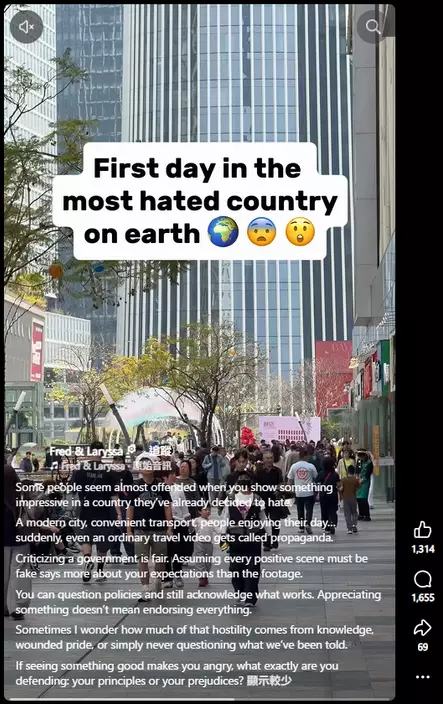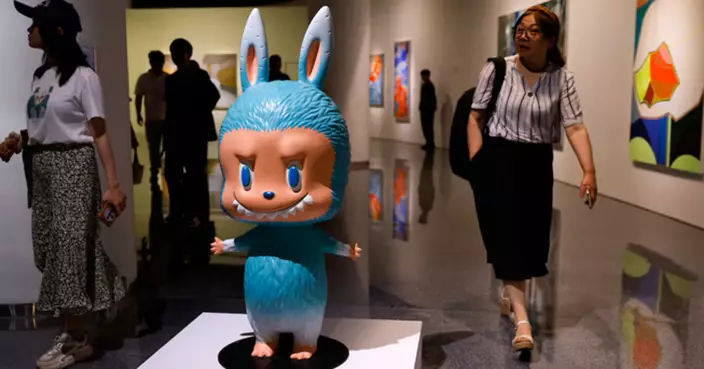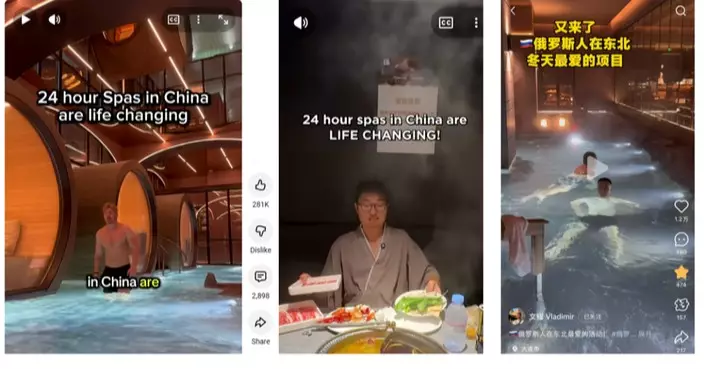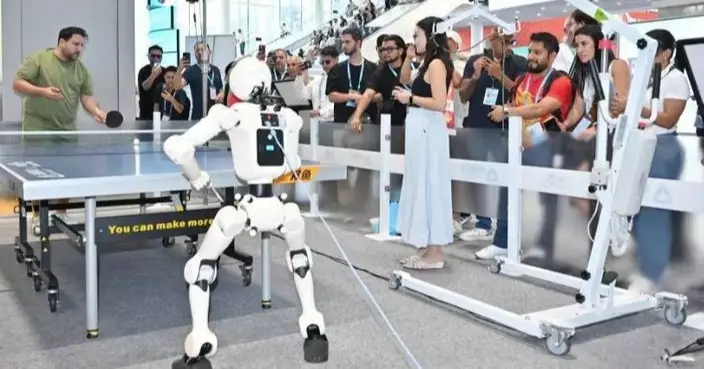

In the imagination of many Westerners, China remains trapped in outdated stereotypes of gray industrial sites, smog-filled skies, and endless construction. Yet when global influencers and travel vloggers point their cameras at modern Chinese megacities, the reality captured on screen presents the absolute opposite—futuristic, clean, vibrant, and strikingly surreal.
At the center of this cultural pivot sits Chongqing. Western media historically tagged it simply as the "Mountain City" or "Fog Capital." But as Gen Z travelers stand on the Liziba viewing platform watching a high-speed monorail train slice directly through a 19-story residential apartment building, the vocabulary popping into their minds is not geographical—it is "8D Cyberpunk." Here, "Chinamaxxing" reveals its most direct lesson: the China you imagined and the China on the camera feed are two entirely different worlds.
Click to Gallery
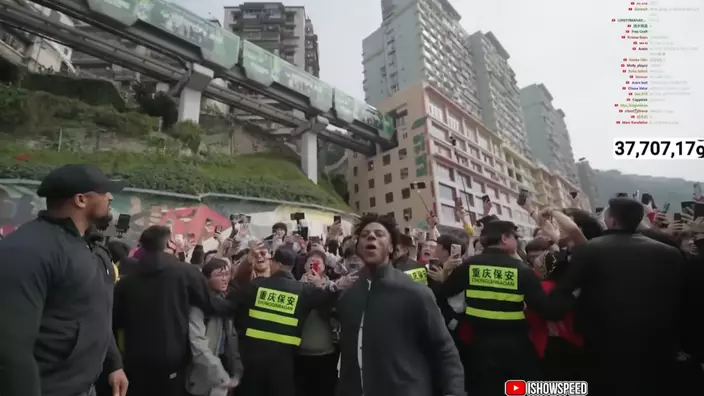
Screenshot of IShowSpeed marveling at the monorail passing through an apartment building at the Liziba viewing platform. (Source: YouTube screenshot)
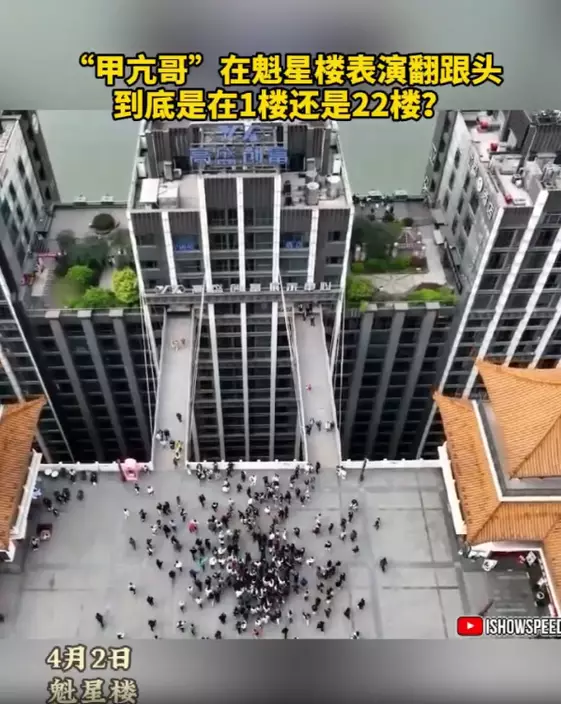
The disorienting architecture of Kuixing Building, where a ground-level plaza sits atop a 22-story structure. (Source: Chongqing Daily photo)
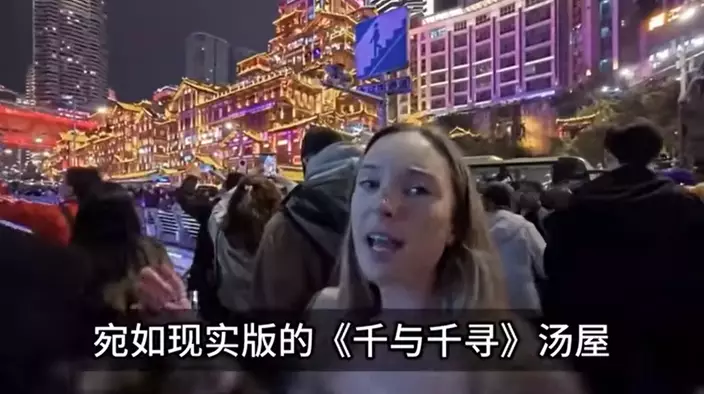
A foreign couple exploring Chongqing's 8D cityscape during a night tour of Hongyadong. (Source: YouTube screenshot)
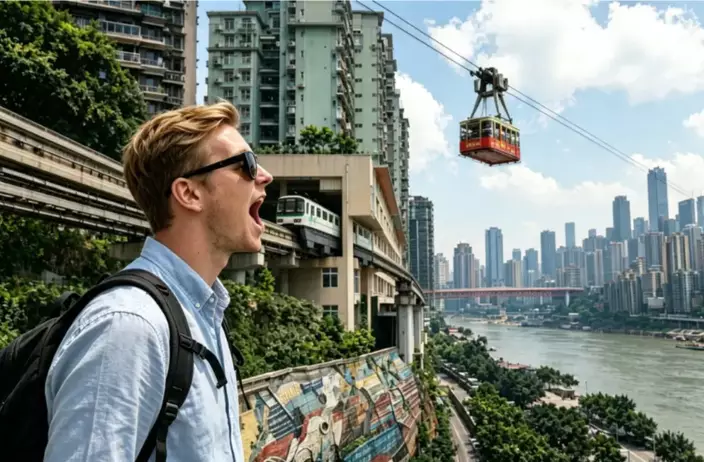
Promotional graphic for the popular 8D Magic Chongqing Day Tour. (Source: KKday photo)
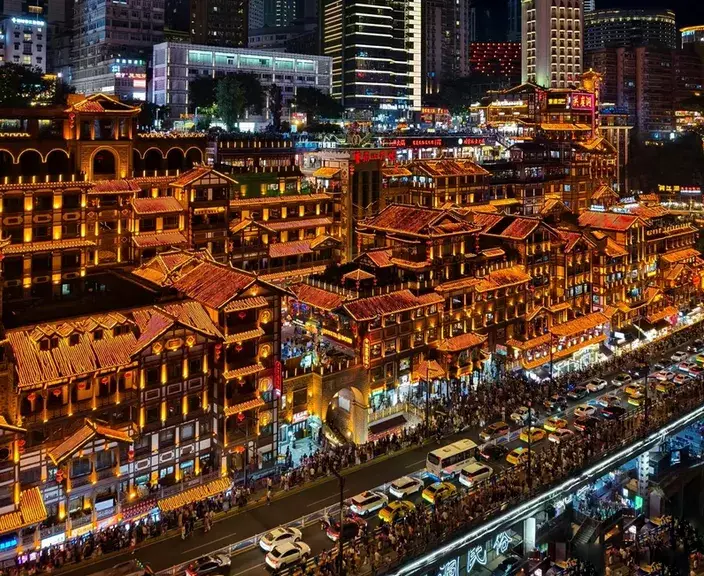
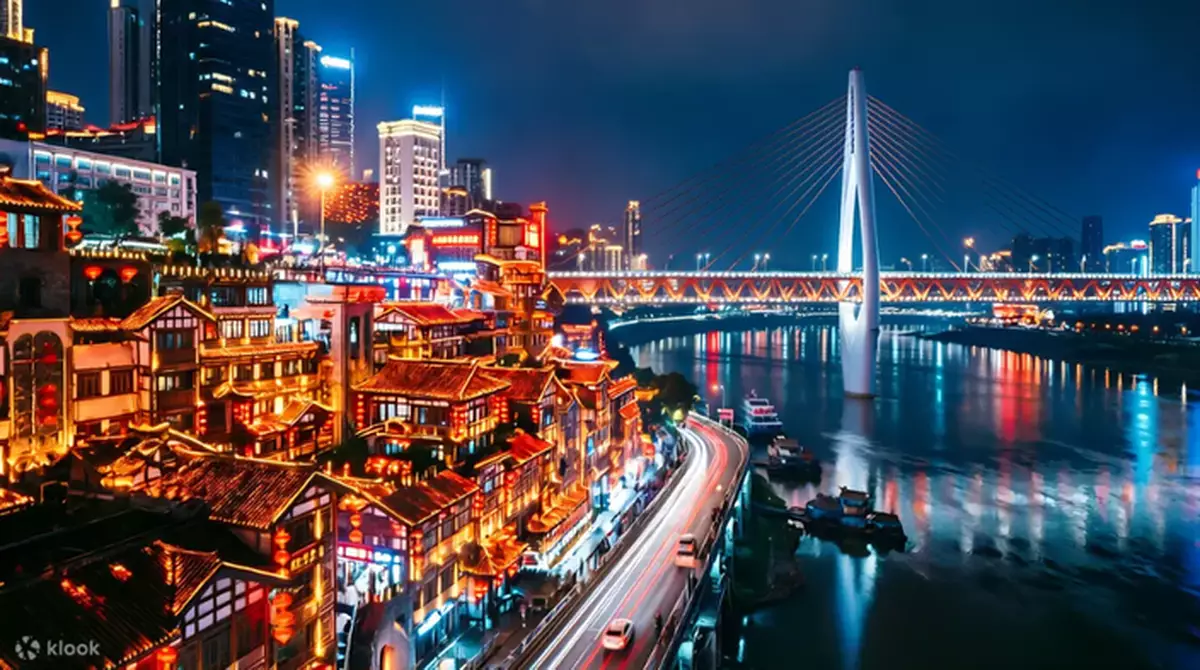
Chongqing's dazzling night skyline attracting international travelers. (Source: CITS photo)
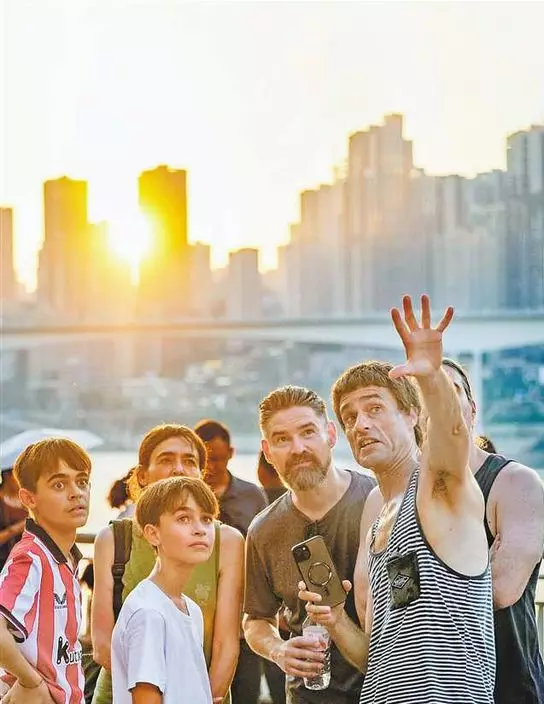
International visitors exploring cultural heritage sites along Jialing River Binjiang Road. (Source: Vision Chongqing photo)
Screenshot of IShowSpeed marveling at the monorail passing through an apartment building at the Liziba viewing platform. (Source: YouTube screenshot)
The disorienting architecture of Kuixing Building, where a ground-level plaza sits atop a 22-story structure. (Source: Chongqing Daily photo)
Where the "Oh My God" Comes From
On April 2, 2025, American streaming superstar IShowSpeed (affectionately nicknamed "Hyperthyroid Bro" by Chinese netizens) launched a marathon six-and-a-half-hour livestream in Chongqing. Standing at the Liziba viewing platform, he blurted out in open shock: "Oh my God! The train went inside the building!" Moments later, while navigating the Kuixing Building plaza, he gasped: "Wait, aren't we on the first floor? How is this the 22nd floor?!" People's Daily captured another candid reflection: "I've never been to a country with a place like this. Chongqing is beautiful."
A foreign couple exploring Chongqing's 8D cityscape during a night tour of Hongyadong. (Source: YouTube screenshot)
IShowSpeed's reaction is far from unique. Scrolling through TikTok and Xiaohongshu travel vlogs over the past two years reveals identical gasps across iconic spots: Hongyadong’s glowing stilt houses at night (dubbed "the real-life Spirited Away"), the disorienting multi-tiered streetscapes of 8D Chongqing, and the Yangtze River Cableway gliding quietly through the night skyline.
Promotional graphic for the popular 8D Magic Chongqing Day Tour. (Source: KKday photo)
IShowSpeed’s itinerary—covering Jiefangbei Pedestrian Street, Kuixing Building, Liziba Station, and the 112-meter-long Crown Escalator—has since been replicated by thousands of international creators, serving as the definitive blueprint for a "Chinamaxxing 8D Tour."
From "Viral Photo-Ops" to "Authentic Daily Life"
The most compelling dimension of Chongqing's viral boom is how it transitions from superficial "photo-ops" to deep lifestyle integration. In the first half of 2026, passenger throughput at Chongqing Jiangbei International Airport reached 1.48 million, a 39.5% year-on-year surge that led all top ten Chinese airports. Foreign arrivals exceeded 610,000, jumping 86% year-on-year. Data from travel platform Qunar showed inbound flight bookings to Chongqing grew 30%, ranking first among popular destination cities.
International visitors are no longer just hiking the mountain trails and leaving. On July 21, Thai tourist Amelia stood at Danzishi Old Street along the South Bank, telling reporters: "It's unreal—Chongqing's night view is easily among the best in the world. I saw it on TikTok and booked a direct flight straight here."
Chongqing's dazzling night skyline attracting international travelers. (Source: CITS photo)
Her experience illustrates the full pipeline: viral discovery on social media followed by spontaneous travel. Amelia spent three days exploring Ciqikou Ancient Town, riding the Yangtze River Cableway, dining on spicy hotpot, and visiting the UNESCO World Heritage Dazu Rock Carvings.
Mr. Zhang, a long-time resident of Yuzhong District, has noticed a shift on the ground: "In past years, you’d occasionally spot a few foreign tourists. But recently, especially this summer, they're arriving in crowds. Walking around Liziba, you’ll run into five or six international groups in an hour." More importantly, he noticed a change in mindset: "They used to just snap photos of novelties; now they want to explore the local neighborhoods and experience how we actually live." From shouting "Oh my God" at observation decks to ducking into side-alley eateries for a bowl of spicy xiaomian noodles, Chongqing's 8D magic is evolving from a tourist backdrop into an authentic, lived experience.
International visitors exploring cultural heritage sites along Jialing River Binjiang Road. (Source: Vision Chongqing photo)
8D Is Not an Adjective—It Is Daily Life
The phrase "8D Magic" originated as a humorous meme among Chinese netizens complaining that local geography "crashed GPS navigation." Yet when young international travelers stand on the 22nd floor of Kuixing Building only to discover a bustling city street beneath their feet, they grasp the real-world scale of the concept. Under livestream clips, comments abound: "China is severely misunderstood—I don't know why people ignored it for so long," and "I feel like I've been misled by mainstream headlines for years. I need to visit China myself."
The essence of "Chinamaxxing" resides in these navigation-defying moments—just when you think you understand China, Chongqing sends a monorail gliding out of an apartment complex to prove otherwise. Yet behind this architectural surrealism lies a well-ordered operational reality: monorails run punctually to the second, streets remain brightly lit and safe at 2:00 AM, and international visitors stream live on their phones without concern.
Safety, efficiency, and social baseline stability are the city's true underlying code. A nation capable of keeping an 8D urban labyrinth running with seamless order demonstrates a level of governance capacity that serves as the most reassuring scenery of all.
Chinamaxxing
** 博客文章文責自負,不代表本公司立場 **