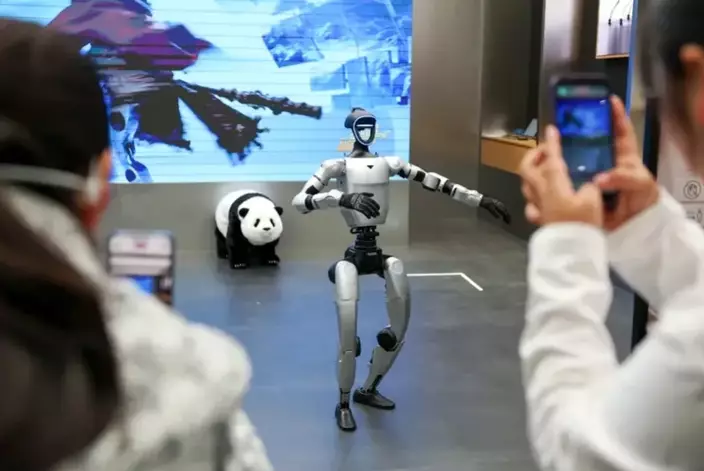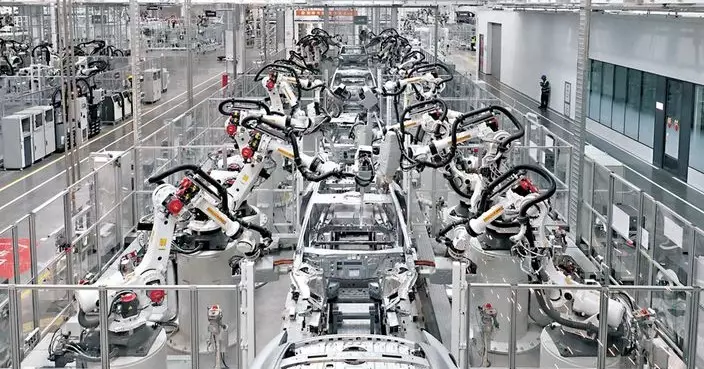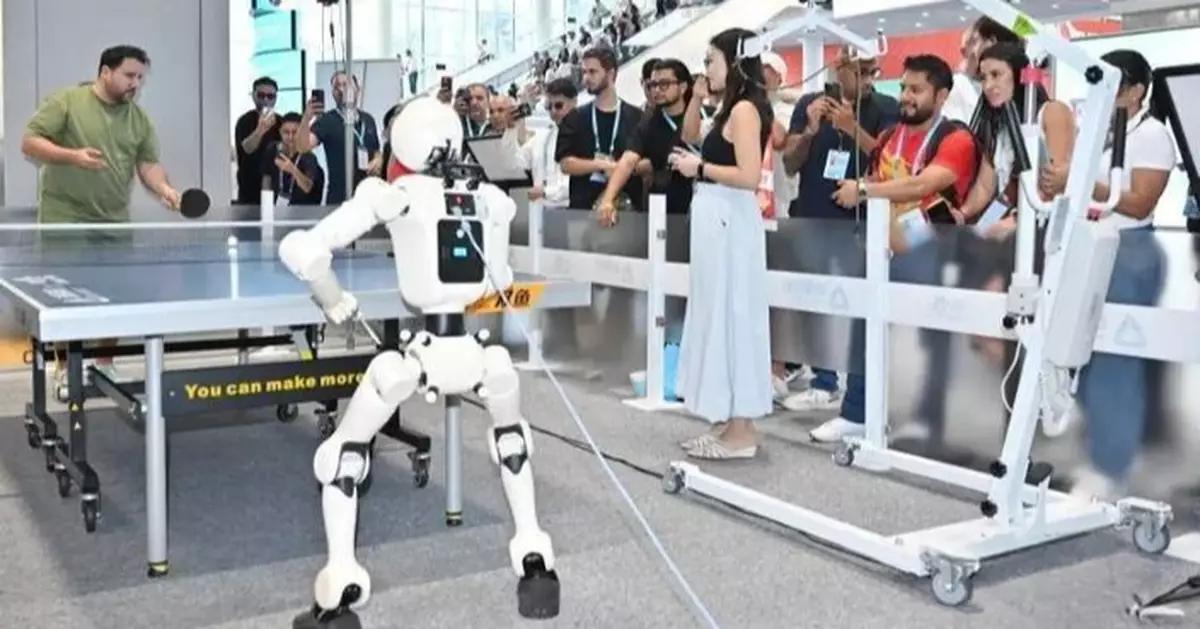

At the inaugural Canton Fair in 1957, oil-paper umbrellas and handcrafted lacquerware were the prized hot-sellers. By the 140th edition in 2026, humanoid robots play table tennis with buyers, AI smart glasses translate languages in real time while snapping photos, and solar-paneled sun hats charge devices while streaming music. Over seventy years, the Canton Fair’s exhibition space has expanded from 9,600 square meters to 1.55 million square meters, while buyer attendance surged from 1,200 to over 300,000—solidifying its standing as China’s longest-running, largest, and most lucrative international trade expo.
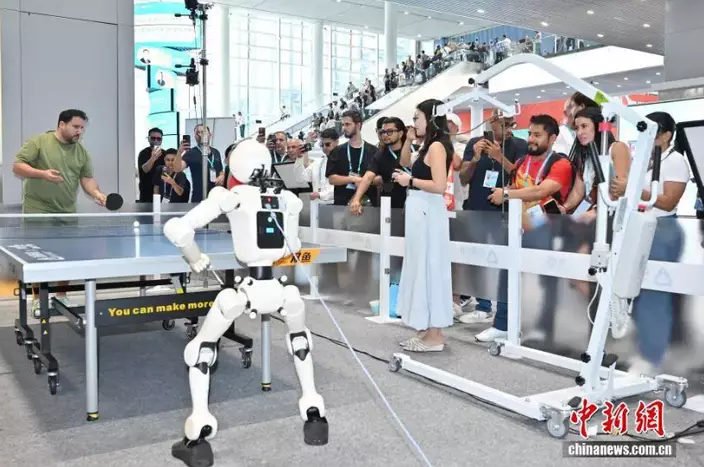
A humanoid robot rallies in table tennis with an international buyer as crowds of overseas attendees gather behind the barrier to film. (Source: China News Service photo)
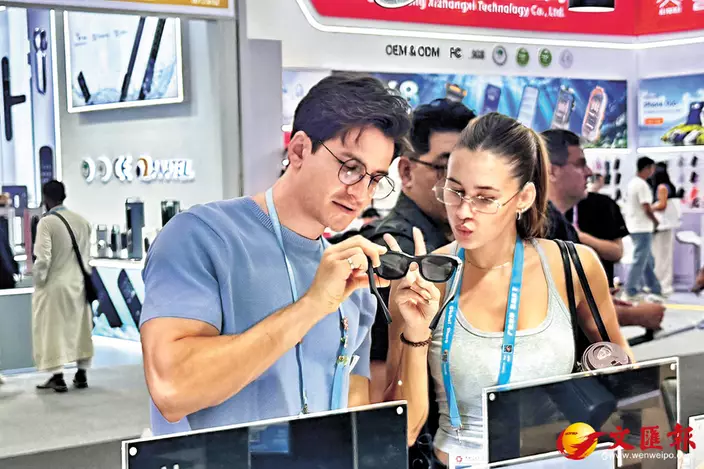
Overseas buyers learn about smart wearable products. (Source: Wen Wei Po photo)
By the close of Phase 1 (October 15–19, focused on Advanced Manufacturing), 189,000 overseas buyers from 214 countries and regions had attended in person—a 13.3% year-on-year surge that set an all-time record. If one were to rewind global merchants' "shopping carts" back seven decades, what emerges is the definitive story of "Chinamaxxing"—the evolution of China's manufacturing sector from basic production to high-end intelligent innovation.
Click to Gallery
A humanoid robot rallies in table tennis with an international buyer as crowds of overseas attendees gather behind the barrier to film. (Source: China News Service photo)
Overseas buyers learn about smart wearable products. (Source: Wen Wei Po photo)
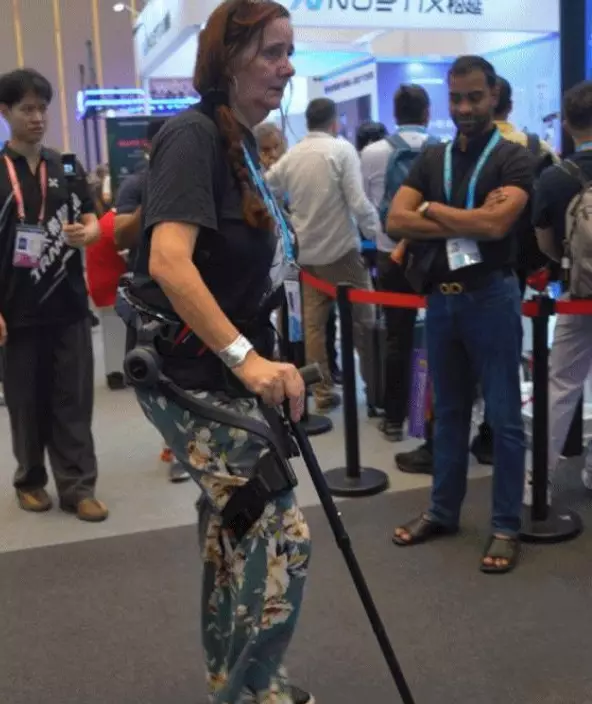
Susanna wears an exoskeleton robotic suit, taking measured steps with mechanical assistance. (Source: China.com photo)
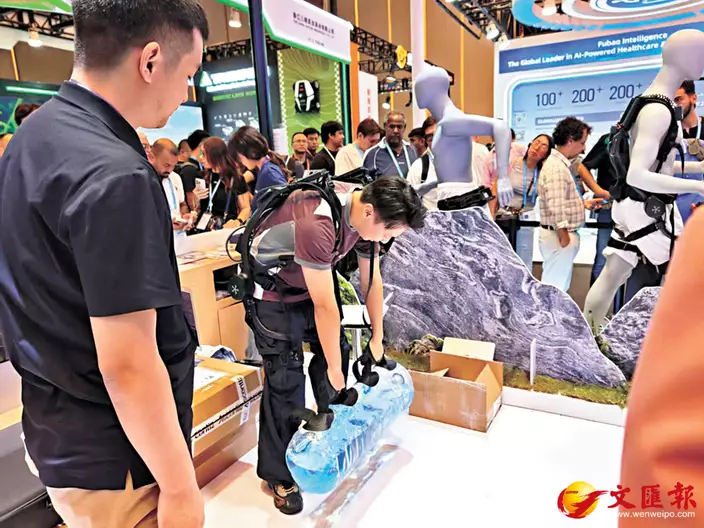
A Singaporean distributor tests an exoskeleton suit on the exhibition floor. (Source: Wen Wei Po photo)
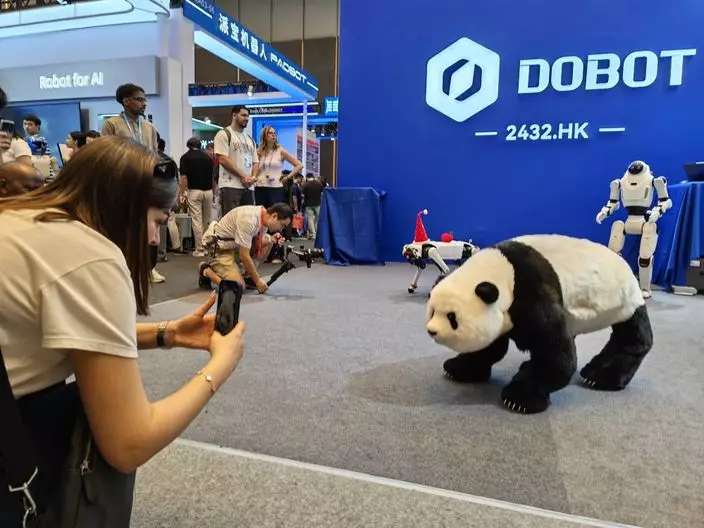
A plush robotic panda from DOBOT Robotics walks on all fours in the main gallery as an international visitor films the demonstration. (Source: CRI Online photo)
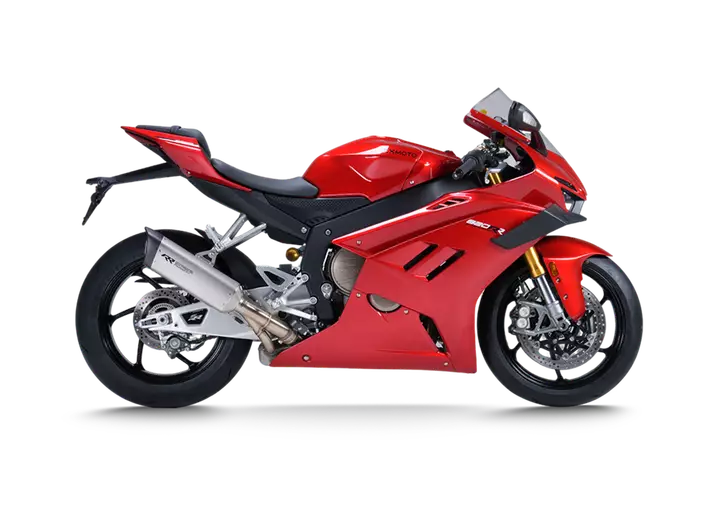
Side profile of the red Zhangxue Motorcycles 820RR featuring aggressive aerodynamic fairings. (Source: Autohome photo)

98-year-old Xue Rongxin receives the "70 Years of Canton Fair to the World" commemorative badge and certificate. (Source: New Youth Net photo)
The Service Robotics Zone: A Daily Influx of 25,000 Visitors
The most popular destination at this year's expo was the Service Robotics Zone, drawing an average of 25,000 visits per day. High-demand booths required crowd-control barriers, with visitors queuing up to an hour to test medical-grade exoskeleton devices. The most touching moment belonged to Susanna, a stroke survivor and British buyer: assisted by exhibitors, she strapped into an exoskeleton suit, stood up, and took her first slow steps in years, visibly overcome with emotion.
Susanna wears an exoskeleton robotic suit, taking measured steps with mechanical assistance. (Source: China.com photo)
A Singaporean distributor tests an exoskeleton suit on the exhibition floor. (Source: Wen Wei Po photo)
Hassan Al Marzouqi, a buyer from Dubai, could hardly contain his excitement: "These robots are incredibly impressive—I’m ready to buy them on the spot. They have huge potential for educational use in schools and kindergartens back home."
This enthusiasm is backed by hard industrial data: in the first half of 2026, China’s robotics exports reached RMB 24.85 billion—a 359% year-on-year surge—with Chinese manufacturers accounting for over 97% of global humanoid robot shipments.
From "Selling Off-the-Shelf" to "On-Demand Co-Creation"
An even deeper shift is reshaping business models. Huang Jian, co-founder of Lingdu Intelligence, shared: "Clients in the Middle East pointed out their severe water scarcity, so we re-engineered our products." His company’s automated window-cleaning robots consume just one-twentieth of the water required by traditional manual methods; today, Middle Eastern orders account for roughly 30% of the firm's total export sales.
Shi Yonghong, Vice President of the China Chamber of Commerce for Import and Export of Machinery and Electronic Products (CCCME), highlighted the overarching trend: electromechanical exhibits occupied over 80% of Phase 1 booths, where smart technology, eco-friendly design, and turnkey system solutions have become the new norm for Chinese exports. This edition featured 17 dedicated zones for emerging future industries, showcasing breakthroughs in commercial drones, advanced energy storage, brain-computer interfaces (BCIs), and next-generation displays. Over 12,000 enterprises exhibited in Phase 1, including more than 6,000 designated high-tech firms, "Little Giant" enterprises, and single-champion manufacturers—an 8.2% year-on-year increase.
Treasure Hunting for Chinese Innovation: Two Supreme Gold Award Winners
The innovation galleries were equally captivating: according to CCTV News, a quadruped robotic panda that walks, jumps, and waves "melted" foreign buyers' hearts; plush AI companions became interactive chat partners; and high-precision 3D printing systems won wide praise for their craftsmanship.
A plush robotic panda from DOBOT Robotics walks on all fours in the main gallery as an international visitor films the demonstration. (Source: CRI Online photo)
This year's Canton Fair Design Awards (CF Awards) recognized 222 products across 174 enterprises, with two Supreme Gold Awards stealing the spotlight: the Zhangxue Motorcycles 820RR—a 135-horsepower superbike accelerating from 0 to 100 km/h in 2.81 seconds, whose racing variant currently competes in the World Superbike Championship with five stage victories; and the Zhixun Smart Capsule Gastroscopy System, which requires patients merely to swallow a smart capsule. Guided by a mobile app for magnetic positioning, the device automatically completes a comprehensive stomach scan in 20 minutes without intubation or discomfort.
Side profile of the red Zhangxue Motorcycles 820RR featuring aggressive aerodynamic fairings. (Source: Autohome photo)
The 98-Year-Old "Perfect Attendance Veteran" and a Mobile Payment Code
Human stories best illustrate the expo's enduring appeal. Xue Rongxin, a 98-year-old Singaporean buyer who has attended every single Canton Fair from the 1st to the 140th edition without missing one, is affectionately known as the fair's "Perfect Attendance Grandpa." At this edition, he tested robotic dexterous hands and tried on the latest AI smart glasses: "The Canton Fair is my university—there is something new to learn every single time."
98-year-old Xue Rongxin receives the "70 Years of Canton Fair to the World" commemorative badge and certificate. (Source: New Youth Net photo)
By day, international buyers evaluate cutting-edge robotics across exhibition halls; by night, they explore city streets using mobile payments. WeChat Pay data reveals that in September 2026, mobile scan-to-pay transactions by foreign users in Guangdong surged over 90% year-on-year, demonstrating how trade show traffic directly translates into local consumer spending.
From oil-paper umbrellas and lacquerware to heavy-duty industrial robotics, the 70-year transformation of the Canton Fair shopping cart reflects the evolution of Chinese industry. When an exoskeleton helps a British mother walk again, when Middle Eastern buyers inspire water-efficient cleaning robots, and when a 98-year-old veteran marvels at new technologies, the relationship between China and the world has fundamentally evolved. They are no longer merely buyers and sellers, but co-creators defining the standard of global product excellence. This is the commercial essence of Chinamaxxing: it is not simply that the world needs Chinese products, but that global progress depends on the relentless iteration of Chinese innovation.
Chinamaxxing
** 博客文章文責自負,不代表本公司立場 **