/wp-content/uploads/blogger/2026/08/WhatsApp-Image-2026-08-13-at-12.21.36.jpg.webp)
If the previous wave of foreign tourists visited China to "see the mountains, the rivers, and the Great Wall," the 2026 itinerary has been rewritten: now, it is about robotic arms, automated production lines, and rocket launches. From stepping inside EV factories to observe human-machine collaboration, to watching a Long March 5 rocket blast skyward from a beach in Hainan, "tech tourism" is emerging as the most solid, pragmatic dimension of the "Chinamaxxing" trend. As The Financial Times observed, global curiosity about China's futuristic manufacturing has placed the country in "an unusually popular position."
27,000 Applicants on Day One, a 0.08% Acceptance Rate: The Hottest "Sight" in Town Is a Factory
Click to Gallery
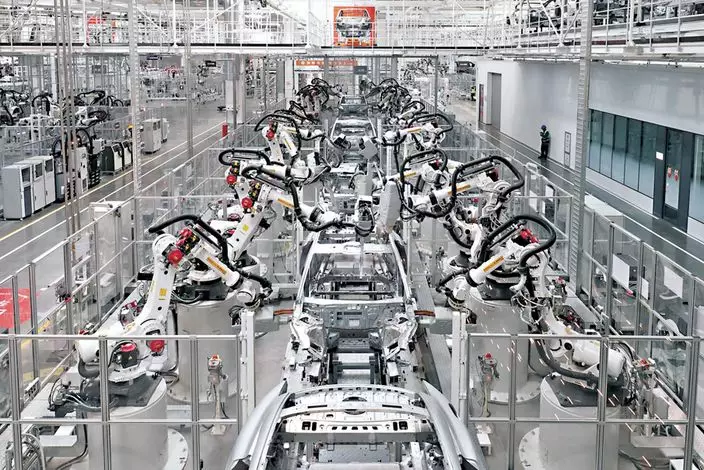
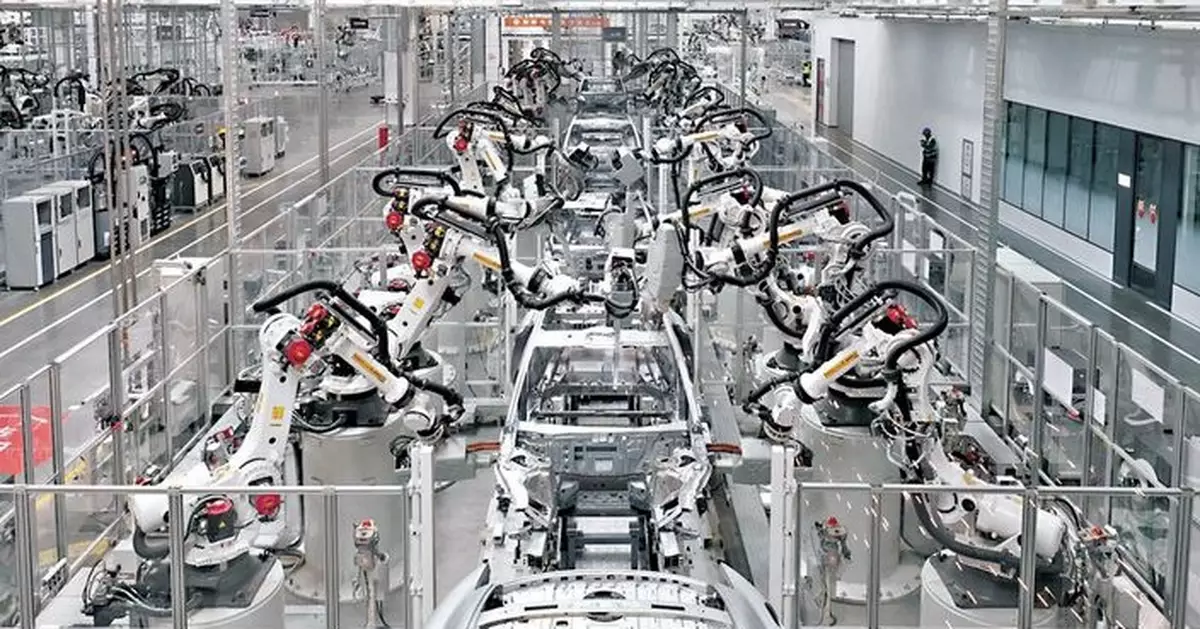
Inside the workshop of the Xiaomi EV Super Factory. (Source: Wen Wei Po photo)
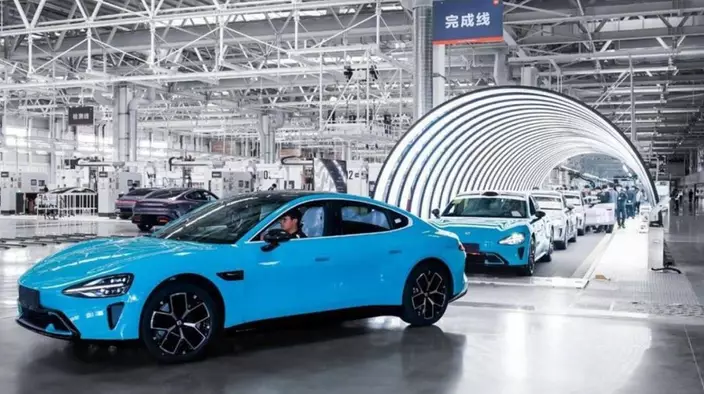
The Xiaomi EV Super Factory opens its doors to public tours. (Source: Beijing Daily photo)
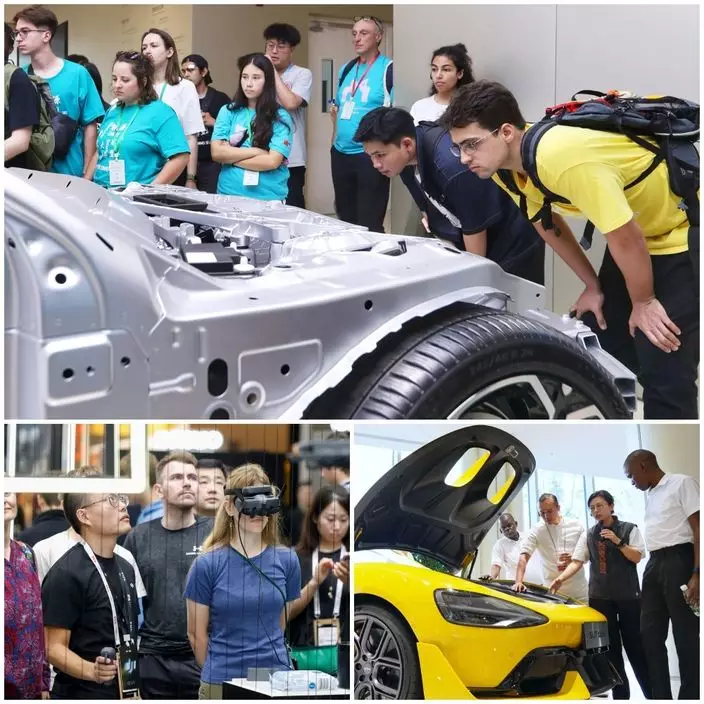
外國訪客圍着汽車車身仔International visitors closely inspect an auto chassis, some wearing VR headsets for the tour while others listen to a technical presentation in front of a display vehicle. (Source: China Today feature collage)
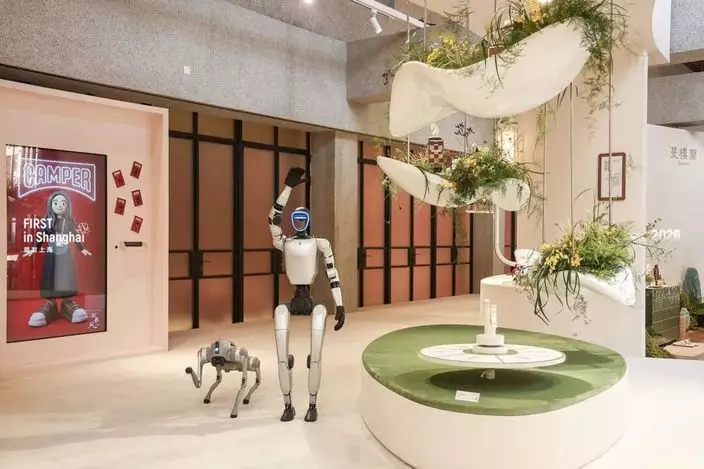
Humanoid robots and quadruped robotic dogs share the spotlight inside the experience center against the stylish backdrop of the Nanjing West Road shopping district, creating a futuristic retail atmosphere. (Source: Shanghai Observer photo)
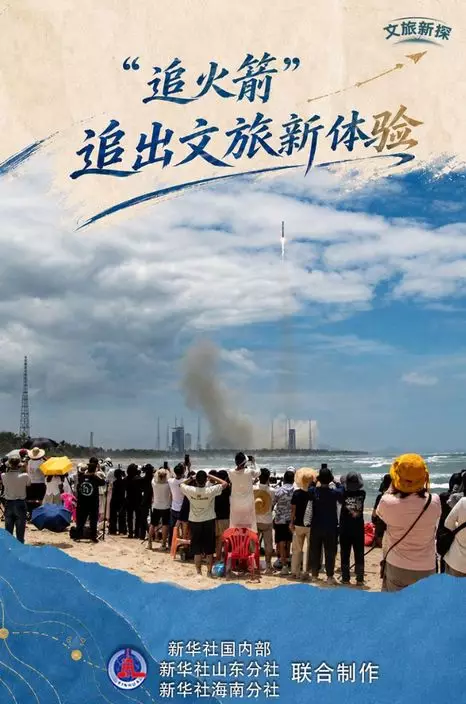
Spectators on the beach watch in awe as a rocket soars upward, its fiery trail piercing the clouds. (Source: Xinhua poster)
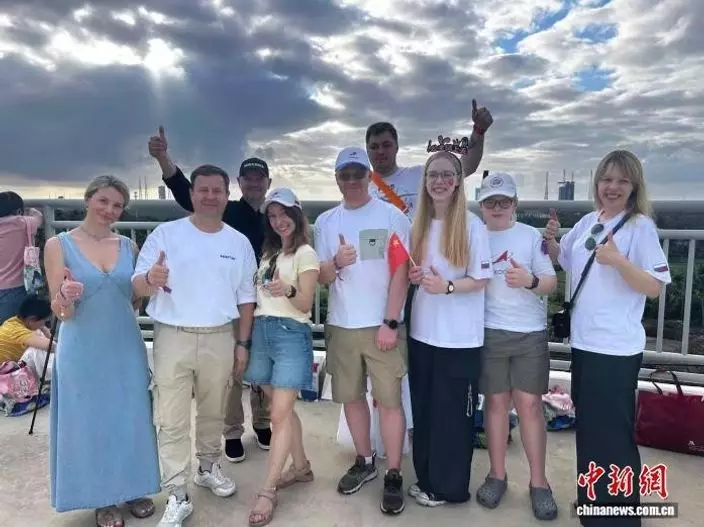
A Russian viewing group led by Khakim poses for a photo at the launch site. (Source: China News Service photo)
In Beijing’s Yizhuang district lies the Xiaomi EV Super Factory. Inside this 718,000-square-meter campus, a 9,100-ton integrated giga-press operates like a steel titan, molding over 70 distinct components into a single unit in a 100-second press cycle. On the main assembly line, a brand-new EV rolls off every 76 seconds. Since opening its doors to visitors, it has become the most elusive reservation in the city: Xinhua reported that 27,000 people rushed to register on the first day of booking, with recent lottery success rates hovering at a mere 0.08%—harder to land than hot concert tickets. The Wall Street Journal went so far as to describe securing a tour slot as "harder than getting into some highly competitive universities."
Inside the workshop of the Xiaomi EV Super Factory. (Source: Wen Wei Po photo)
Yang Xingyue, a 35-year-old content creator who won a slot in the lottery, recalled: "It is an incredibly advanced facility. I remember thinking, 'Ah, so this is how a modern car is built.'"
The Xiaomi EV Super Factory opens its doors to public tours. (Source: Beijing Daily photo)
The Assembly Line as a Classroom, the Tour as Due Diligence
For industry professionals, a "tech tour" functions as a physical, on-the-ground due diligence trip. A British traveler returning to Ningbo after two decades bypassed traditional tourist sites to inspect a kitchen appliance assembly line, a smart plug factory, and a chip-testing firm. Speaking to the camera, he marveled: "In China, a range hood or dishwasher rolls off the assembly line every 25 seconds... Twenty years ago, 'Made in China' meant cheap; today, it has been completely redefined."
外國訪客圍着汽車車身仔International visitors closely inspect an auto chassis, some wearing VR headsets for the tour while others listen to a technical presentation in front of a display vehicle. (Source: China Today feature collage)
Mumbai-based investor Chetan Shah was even more direct, noting that the tour allowed him to "witness the production capacity of Chinese enterprises firsthand, helping me reassess my own firm's global competitiveness." A Shanghai travel agency specializing in corporate tech tours reported hosting over 1,000 visitors from Southeast Asia and Europe in just 18 months.
Robots on the Sales Floor: A Store of the Future on Nanjing West Road
The second stop on the "tech tourism" circuit lies in the heart of downtown Shanghai. On May 31, 2026, Unitree Robotics opened its first Asian "Embodied AI Experience Center" in the Nanjing West Road commercial district, showcasing humanoid robots and quadruped robotic dogs that had previously performed on CCTV's Spring Festival Gala. Li Binjie, Senior Vice President of Unitree, explained the strategic location: Nanjing West Road attracts local tech enthusiasts as well as international tourists, "offering a high-profile platform to showcase China's home-grown robotics and advanced manufacturing prowess." Media visits revealed steady streams of international visitors gathering to interact with the robots, snap selfies with humanoid models, and film quadruped robotic dogs executing maneuvers. Xinhua commented that embodied AI is being transformed here into "a brand-new consumer lifestyle category."
Humanoid robots and quadruped robotic dogs share the spotlight inside the experience center against the stylish backdrop of the Nanjing West Road shopping district, creating a futuristic retail atmosphere. (Source: Shanghai Observer photo)
"Rocket Chasers": Plumes of Fire Over Palm-Fringed Beaches
Another popular route leads to Wenchang, Hainan. As China's only coastal, low-latitude launch site, it offers a spectacle rarely found anywhere else in the world: rockets ascending above coconut groves, their exhaust plumes lighting up the sea. While space enthusiasts once looked exclusively to NASA’s Kennedy Space Center in Florida, Wenchang has rapidly gained international fame as a premier space-watching destination for foreign tourists.
Spectators on the beach watch in awe as a rocket soars upward, its fiery trail piercing the clouds. (Source: Xinhua poster)
Khakim, a Saudi tour guide, has already organized four Russian tour groups to "chase rockets" in Wenchang. His most recent group of 25 consisted almost entirely of families. French tourist Nico shared his impression from Qishui Bay Beach: "The rocket lifting off, the fiery exhaust illuminating the ocean, the sound reverberating across sea and sky—it is an immersive spectacle that simply cannot be replicated anywhere else."
A Russian viewing group led by Khakim poses for a photo at the launch site. (Source: China News Service photo)
A supporting hospitality ecosystem has taken shape: in the launch town of Longlou, the number of hotels and guesthouses surged from just five in 2016 to over 150 today, with occupancy rates exceeding 95% on launch days and more than 5,000 local residents employed in space tourism. Andrei Novikov, head of the Russian travel agency "Rocket Tour," plans to leverage visa-free travel policies to launch dedicated space-tourism itineraries.
Behind the 17.815 Million Inbound Trips: The World Votes with Its Eyes First
Data reveals the scale of this influx: in the first half of 2026, visa-free entries into China reached 17.815 million trips. Meanwhile, the Xiaomi EV Super Factory has welcomed over 250,000 visitors since opening to tours in March 2024. Russia’s Kommersant noted that a growing number of global professionals now view Shanghai, Hangzhou, and Shenzhen as "viable alternatives to Silicon Valley"—recalibrating their assessment of China's industrial edge after on-site inspections.
This is the deeper story behind Chinamaxxing: travelers return home not just with souvenirs, but with firsthand observations. When a British visitor watches a vehicle built every 76 seconds, a Spanish tourist shakes hands with an AI robot, and a Russian child watches a Long March 5 vanish into the clouds, "China" transforms from a headline into an experienced reality. Tourism in China is no longer just a service sector—it has evolved into a showcase of industrial capability and national competitiveness. Before the world votes with its feet, it votes with its eyes. And what those eyes see is far more compelling than any narrative.
Chinamaxxing
** 博客文章文責自負,不代表本公司立場 **