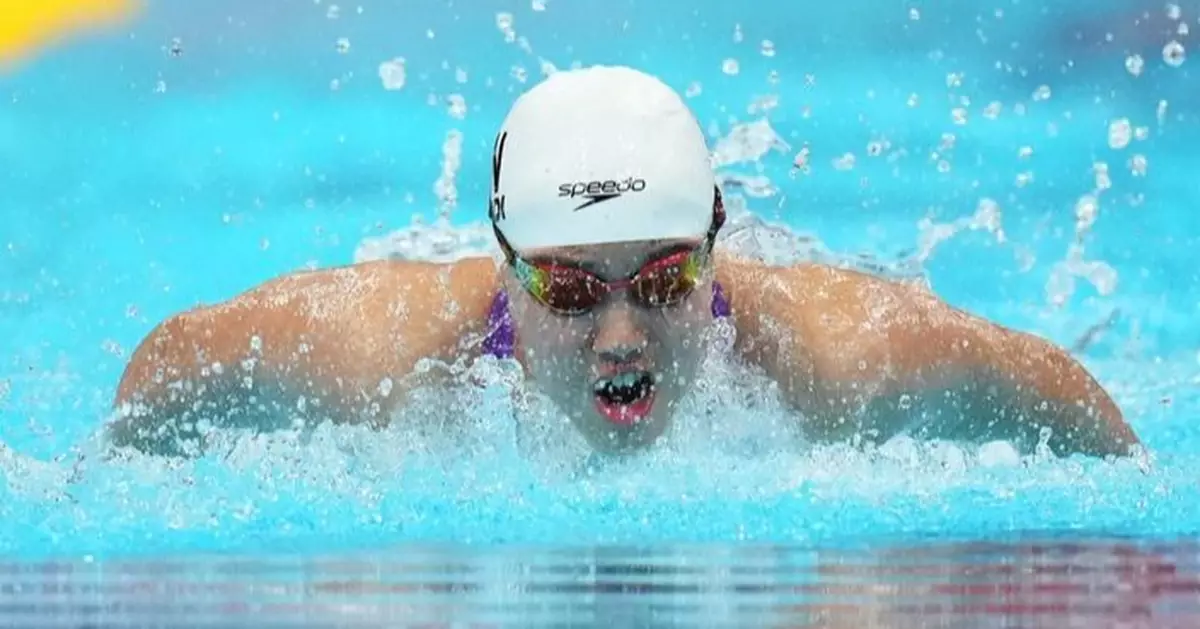
/wp-content/uploads/blogger/2026/08/WhatsApp-Image-2026-08-13-at-12.21.36.jpg.webp)
On September 20, the swimming competition at the Asian Games in Nagoya kicked off its first day of finals at the Tokyo Aquatics Centre. With seven events contested, six golds, one silver, two bronzes, and four Games records broken, the Chinese swimming team delivered a near-perfect opening statement on who truly calls the shots in Asian swimming.
The most gripping moment of the night was the men's 100m freestyle "flying fish" battle. World record holder Pan Zhanle trailed for the first 50 meters, only surging ahead in the final 15 meters to touch the wall first in 47.61 seconds. He edged out South Korean rising star Kim Young-beom by a razor-thin 0.04 seconds—less than a fingertip’s margin—while South Korean star Hwang Sun-woo claimed bronze in 47.79.
Click to Gallery
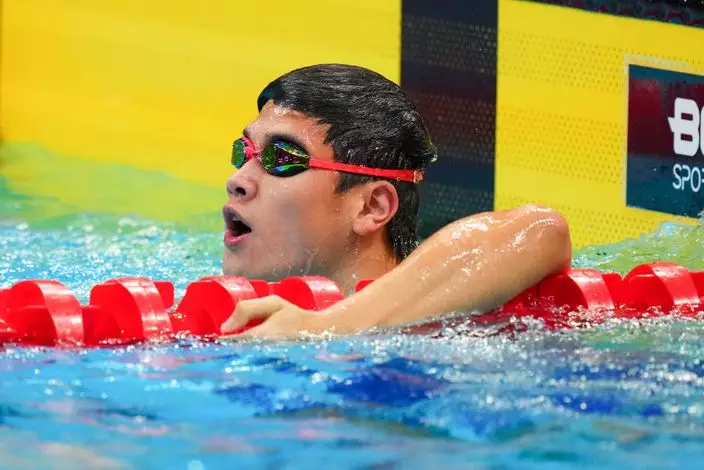
Pan Zhanle wins gold in the men's 100m freestyle. (Source: Xinlan Net screenshot)
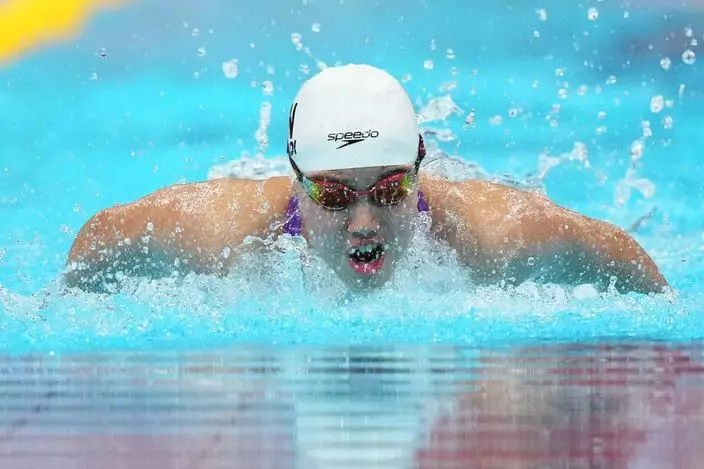
13-year-old Yu Zidi wins gold in the women's 200m butterfly. (Source: AP photo)
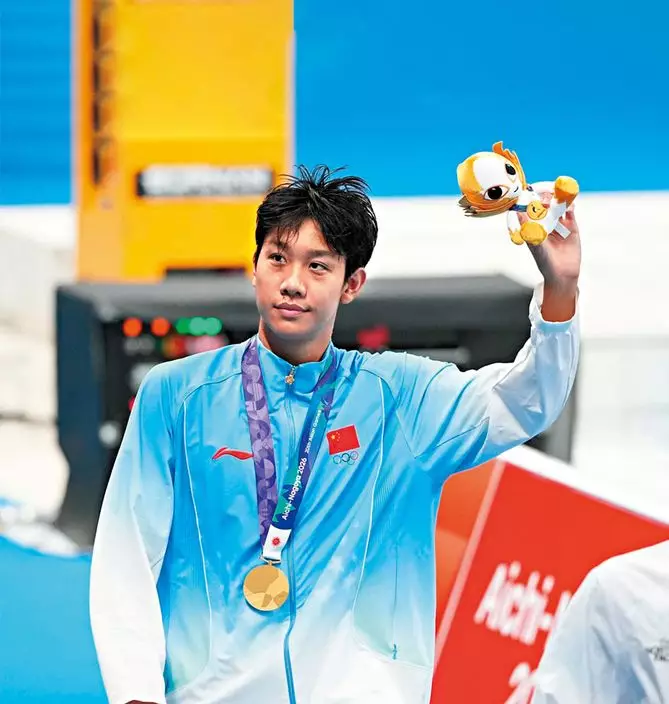
Zhang Zhanshuo claims gold in both the relay and the 800m freestyle. (Source: Wen Wei Po screenshot)
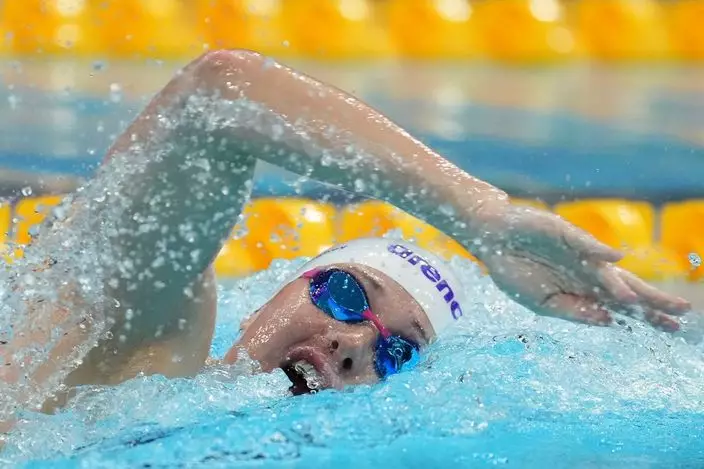
Siobhan Haughey successfully defends her gold in the 200m freestyle. (Source: AP photo)
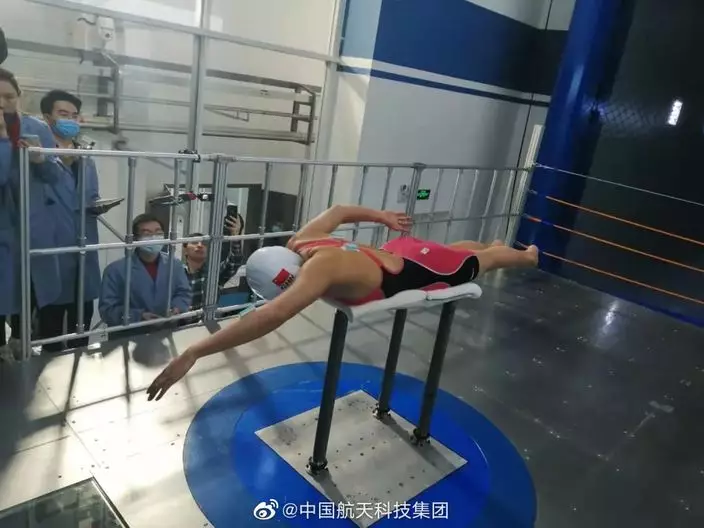
Swimmers undergo drag testing inside the wind tunnel. (Source: CASC Weibo)
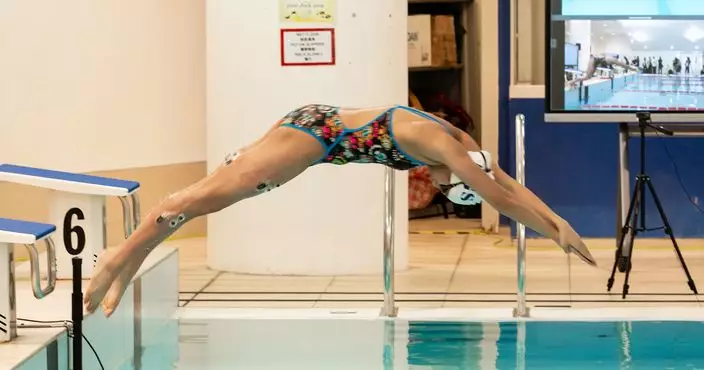
利用水下表面肌電採集系統,協助運動員及時改善起跳姿勢。(圖片來源:香港理工大學官網)
Pan Zhanle wins gold in the men's 100m freestyle. (Source: Xinlan Net screenshot)
From the Chaser to the Chased
Behind that 0.04-second victory lies a quintessential "Chinamaxxing" story. At the 2024 Paris Olympics, Pan Zhanle won gold in a world-record time of 46.40 seconds, becoming the first Asian swimmer since 1932 to take Olympic gold in the marquee event. But the moment he broke the world record, he became "everyone's target." Rivals declared that "Pan is not invincible," and he even missed out on the final at the World Championships in Singapore.
Rallying from his low point, Pan re-adjusted his mindset and unleashed a late-race burst rarely seen in recent years. He joked that while Kim Young-beom boasts a 2.16-meter wingspan compared to his own 1.9 meters, what secured the win was the sheer ferocity of his final stroke—and the determination built up over two years in the wilderness. Transforming from the underdog attacking the world to the target studied by all of Asia, this reversal of position is a true reflection of Chinese swimming today.
A 13-Year-Old Prodigy Takes the Baton
The manner in which China clinched its first gold of the night left rivals in awe. In the women's 200m butterfly, 13-year-old Yu Zidi surged to victory in 2:05.08, smashing the Games record held by Zhang Yufei and becoming the youngest swimming champion in Asian Games history. The lineage of dominance in this event is terrifyingly clear: from Liu Zige and Jiao Liuyang, to Zhang Yufei, and now Yu Zidi—China has now secured five consecutive Asian Games titles in the event.
13-year-old Yu Zidi wins gold in the women's 200m butterfly. (Source: AP photo)
Dominance in the Details
The rest of the results were equally formidable. The events concluded on September 25, with Team China securing 30 gold medals across 41 sub-events, breaking multiple records along the way. 19-year-old Zhang Zhanshuo swept six gold medals, including a new Asian record of 1:43.49 in the men's 200m freestyle. 13-year-old Yu Zidi already holds three golds, sweeping the 200m butterfly and two individual medley events. Meanwhile, 31-year-old Xu Jiayu expanded his career tally to 15 gold medals, making him the most decorated athlete in China's Asian Games history. In the men's 4×200m freestyle relay, China trailed by 1.89 seconds going into the final leg before executing a thrilling comeback to beat Japan, setting an Asian record of 7:00.17 and winning the event for the first time in 16 years.
Zhang Zhanshuo claims gold in both the relay and the 800m freestyle. (Source: Wen Wei Po screenshot)
Team Hong Kong also enjoyed a banner campaign, wrapping up the swimming events with two golds, three silvers, and one bronze. Siobhan Haughey successfully defended her titles in both the 100m and 200m freestyle—bringing her career Asian Games gold total to four—while adding a silver in the 50m freestyle. Ian Ho took silver in the men's 50m freestyle, while Natalie Kan earned bronze in the women's 100m butterfly in a record-breaking performance. In the women's 4×100m freestyle relay, Hong Kong secured silver in a record time of 3:36.59, marking the sixth consecutive Asian Games in which Hong Kong swimmers have reached the podium—a proud milestone for Hong Kong swimming.
Siobhan Haughey successfully defends her gold in the 200m freestyle. (Source: AP photo)
High-Tech Power Behind the Pool
The secret weapon behind China's dominance lies well outside the water. As early as the Tokyo Olympic prep cycle, the 11th Academy of China Aerospace Science and Technology Corporation began conducting wind-tunnel testing for the national swimming team. Six world champions, including Zhang Yufei and Xu Jiayu, evaluated drag patterns across various swimming postures inside the wind tunnel. Meanwhile, a 16-gram wearable inertial measurement unit (IMU) developed by the 9th Academy recorded athletes' posture, breathing, stroke rate, stroke length, stroke count, and turn times every second, offering precise, quantitative evaluations of every movement. As China's first comprehensive sports training wind tunnel, the facility has served 21 national teams and 392 athletes across 2,504 test sessions, helping produce six world champions to date.
Swimmers undergo drag testing inside the wind tunnel. (Source: CASC Weibo)
During the Paris Olympic cycle, Shanghai University of Sport partnered with Baidu to develop the "SUS Sports AI Model," taking technological analysis a step further. Utilizing one above-water camera and 16 high-precision underwater cameras, the team built a 50-meter 3D+AI training system. The moment an athlete enters or exits the pool, detailed diagnostic data is delivered directly to the coaches' hands. Pan Zhanle himself revealed the source of his confidence: "We have an incredible research team. Those machines analyze technical movements frame by frame, pinpointing flaws and underwater kick efficiency."
Professor Liu Yu of Shanghai University of Sport summarized it clearly: "The Olympic arena is no longer just a battle of athletes' physiological limits; it is a showdown between sports superpowers and technological innovation."
Notably, Hong Kong is actively participating in this technological transformation. Dr. Su Junlong's team at The Hong Kong Polytechnic University, in collaboration with Diocesan Girls' School, established an AI swimming technology laboratory. Utilizing an underwater surface electromyography (sEMG) acquisition system, the system captures real-time muscle activity during starts. Combined with reaction-time sensors and video analysis software, it delivers instant feedback on dive reaction, entry angle, and speed—improving the average starting speed of student swimmers by 0.127 seconds.
利用水下表面肌電採集系統,協助運動員及時改善起跳姿勢。(圖片來源:香港理工大學官網)
While tech-assisted training is not unique to China—NASA famously utilized wind tunnels to help streamline US swimmers years ago—China has systematized, scaled, and perfected this approach to an unprecedented degree.
A New Benchmark for Asian Swimming
Inside the Asian Games swimming venue, the competitive balance has clearly shifted. Thirty years ago, Chinese swimming was still chasing Japan; today, rivals across Asia are meticulously studying Chinese training regimes, analyzing technical mechanics, and hiring Chinese coaches. Chinamaxxing in the pool comes without flashy fanfare—just wave after wave of relentless Chinese speed.
Chinamaxxing
** 博客文章文責自負,不代表本公司立場 **