/wp-content/uploads/blogger/2026/08/WhatsApp-Image-2026-08-13-at-12.21.36.jpg.webp)
Some call this the most underrated industry racetrack of the century. Hong Kong drivers will soon share the road with a rather unique "colleague"—one that never gets fatigued, never takes unnecessary detours, and never refuses a fare. That’s because it isn't human at all; it is an algorithm trained by Baidu.
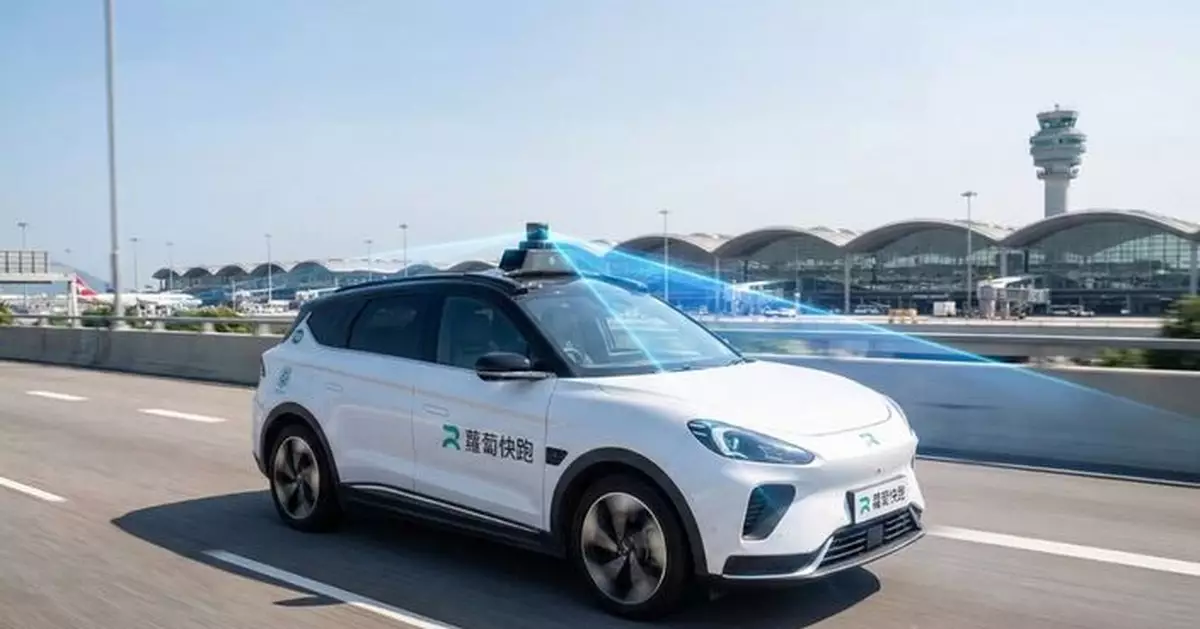
On July 23, 2026, the Transport Department issued "Apollo Go" (Luobo Kuaipao) Hong Kong’s first trial permit for fully autonomous driving without an in-vehicle safety driver. On July 27, tests officially kicked off on the Airport Island. This is no ordinary news headline; it is another major milestone certificate earned by Chinese AI technology in the world's most demanding proving ground.
Click to Gallery
The Apollo Go fleet enters the core area of Tung Chung. (Image: eZone)
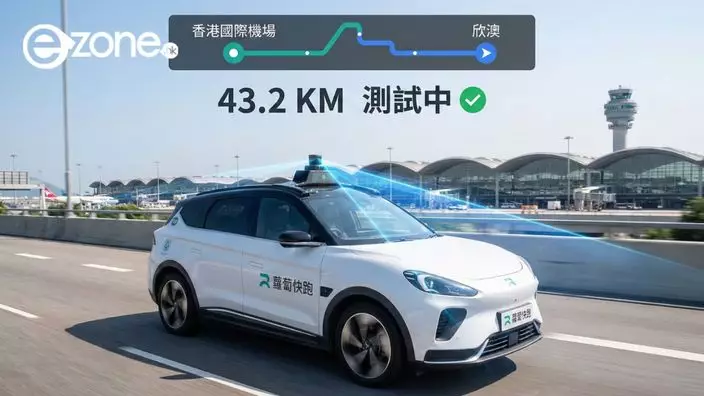
The Apollo Go test route expands to 43.2 kilometers, spanning from Hong Kong International Airport to Tung Chung and Sunny Bay. (Image: eZone)
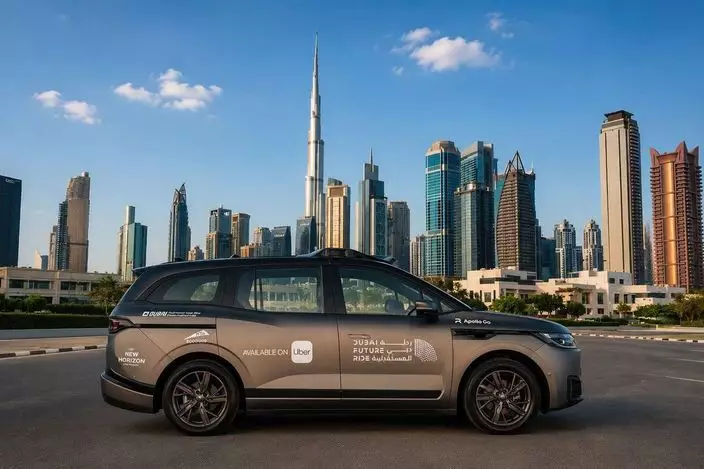
An Apollo Go autonomous taxi navigating the streets of Dubai. (Image: AP)
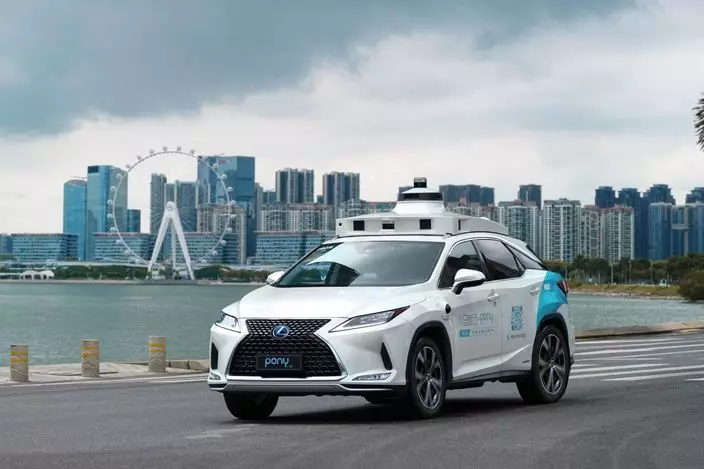
Pony.ai launches commercial autonomous operations in Bao'an District, Shenzhen. (Image: Wen Wei Po)
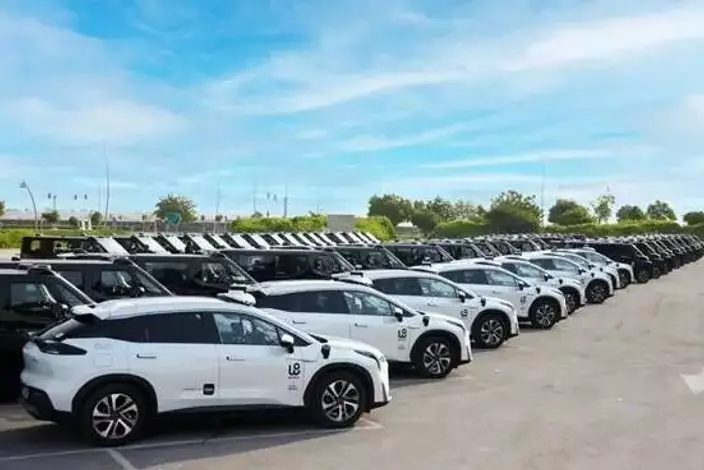
WeRide’s Robotaxi fleet deployed in Abu Dhabi. (Image: Sina Finance)
The Apollo Go fleet enters the core area of Tung Chung. (Image: eZone)
Why Smart Money Is Eyes-On with Hong Kong
Industry insiders fully grasp the weight of this permit. What kind of testing environment is Hong Kong? Right-hand drive with left-hand traffic, narrow streets, suffocating congestion, and aggressive taxis and buses weaving through traffic like guerrillas. Every kilometer tested here presents hurdles many times harder than in mainland China's flatland cities. Yet, Apollo Go has already logged over 240,000 test kilometers in Hong Kong, with the Transport Department confirming zero safety anomalies throughout the trials.
The Apollo Go test route expands to 43.2 kilometers, spanning from Hong Kong International Airport to Tung Chung and Sunny Bay. (Image: eZone)
This is the core logic behind Chinamaxxing: Chinese tech companies are no longer satisfied with polishing performance data inside their comfort zones. Instead, they are actively tackling the hardest nuts to crack—locales with the world's strictest regulatory standards and most intricate road conditions. Regulators in right-hand-drive cities worldwide—from Singapore to London and Tokyo—are now closely watching this Hong Kong test case. Pass this exam, and the entire technology stack can be seamlessly replicated and exported globally.
Numbers Don't Lie
Baidu’s Q1 2026 financial report speaks volumes: 3.2 million fully driverless rides provided in a single quarter, over 22 million cumulative passenger trips delivered, and operational footprints spanning 27 cities globally. Remember how Western media portrayed Robotaxis three years ago? Words like "a long way off" and "a money-burning pit" dominated headlines. Fast forward to today: while Waymo is still locked in regulatory tug-of-wars for permits in single cities, Chinese players have secured licenses across seven countries and are running fully driverless, revenue-generating operations across all four of China's top-tier megacities.
Uber’s strategic moves are the most telling. In February 2026, the global ride-hailing giant announced plans to enter Hong Kong's Robotaxi market. By August 20, it moved even faster by launching Apollo Go in Dubai—powered directly by Baidu’s underlying tech stack. When Silicon Valley powerhouses start integrating Chinese autonomous driving platforms, do you really need a clearer signal? Global mobility giants are casting their votes, and their capital is backing the Chinese supply chain.
An Apollo Go autonomous taxi navigating the streets of Dubai. (Image: AP)
The Game of Two Giants: One Deepening Mainland Roots, One Harvesting Globally
By late June 2026, Pony.ai’s Robotaxi fleet expanded to 1,975 vehicles, making it the sole operator to secure comprehensive regulatory approvals across Beijing, Shanghai, Guangzhou, and Shenzhen. Words from CEO James Peng are worth noting: "We’ve pushed through nearly a decade of groundwork to finally reach commercial scale. The market is vast, but not everyone will get a piece of the pie." The gross margin per vehicle for its 7th-generation model has already turned positive in Guangzhou and Shenzhen—meaning "adding another car no longer burns cash." With cash flows projected to turn positive as the fleet reaches 50,000 units by 2028 or 2029, the rollout is playing out right on schedule.
Pony.ai launches commercial autonomous operations in Bao'an District, Shenzhen. (Image: Wen Wei Po)
WeRide, on the other hand, is executing a distinct playbook: holding licenses across 7 countries and operating in over 40 cities across 11 nations, while forging tight alliances with Uber and Grab to export China's end-to-end tech stack to Abu Dhabi, Dubai, and Singapore. A Chinese firm operating the largest local Robotaxi fleet in the Middle East—a scenario utterly unimaginable a decade ago.
WeRide’s Robotaxi fleet deployed in Abu Dhabi. (Image: Sina Finance)
Morgan Stanley has dubbed 2026 the "singularity moment" for autonomous driving; CITIC Securities frames it as Year One of commercialization; Goldman Sachs forecasts that China’s Robotaxi market will hit US$14 billion with a fleet of 535,000 units by 2030. There is a palpable sense of irony in the fact that Western investment banks are showing far more optimism than mainland Chinese media.
Keeping a Cool Head Wins the Long Game
Chinamaxxing is not about blind optimism; it is a calculated strategy rooted in clear structural trends. Yet, essential risk factors must not be overlooked: WeRide still reported a Q1 net loss of RMB 389 million; shares of both "giants" listed in Hong Kong remain down 40% to 60% from their IPO prices—proving that while the market behaves like a voting machine in the short run, it remains a weighing scale in the long run. Furthermore, a system glitch on March 31, 2026, stranded over a hundred Apollo Go vehicles in Wuhan, underscoring that the flip side of massive scaling is the systemic risk of a Single Point of Failure (SPOF)—a point explicitly raised during the Hong Kong Transport Department’s press conference.
Nevertheless, these challenges offer the clearest lens through which to evaluate the sector: the core technological threshold has been crossed, commercial models are solidifying, yet valuations remain suppressed below IPO levels due to short-term losses and market sentiment. While traditional taxi operators worry about low-cost disruption and academics view current autonomous rides as novelty experiences, history consistently demonstrates one truth: once the cost curve of transport capacity drops, the pace of disruption moves far faster than anyone anticipates.
The Wheels Are Already Turning
As Apollo Go’s autonomous vehicles glide across Hong Kong's Airport Island, they validate far more than just algorithms—they demonstrate a fully exportable capability model for Chinese autonomous driving enterprises entering right-hand-drive global markets. While Waymo guards its turf in Phoenix and Tesla continues to sell pipe dreams about its Robotaxi, Chinese players are actively placing their strategic pieces across Asia, the Middle East, and Europe simultaneously.
The ultimate question is no longer whether Chinese Robotaxis can deliver—the streets of Wuhan, the deserts of Dubai, and the roads of Hong Kong's Airport Island have already given their verdict. The real question is: as this tide reaches Hong Kong, are we ready for it?
Chinamaxxing
** 博客文章文責自負,不代表本公司立場 **