/wp-content/uploads/blogger/2026/08/WhatsApp-Image-2026-08-13-at-12.21.36.jpg.webp)
When conversation turned to global style capitals, the answers used to be unanimous: Paris, Milan, and New York. Luxury meant European houses, and interior design oscillated between Western classical and Nordic minimalism. But the tide has turned dramatically. Reimagined by a new generation of designers, traditional Chinese aesthetics are not only captivating domestic consumers—they are reshaping the global fashion landscape.
A few recent milestones illustrate the sheer momentum of this shift.
Click to Gallery
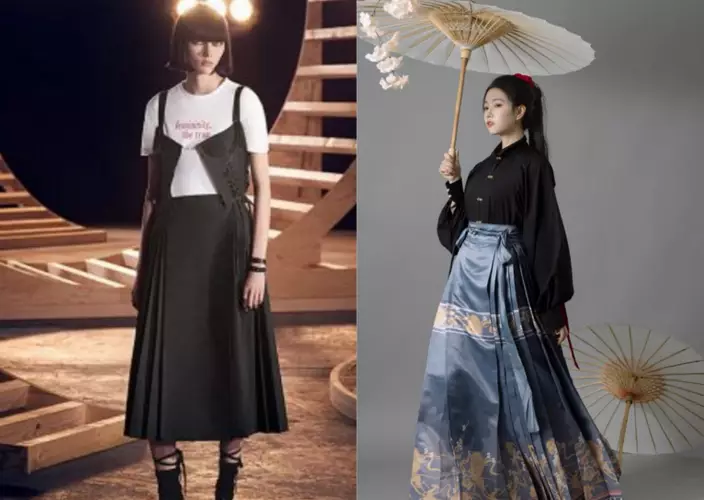
Dior faced intense backlash online over accusations of plagiarizing the traditional Hanfu mamian skirt. The item was subsequently pulled from markets. (Source: Jianliao Network)

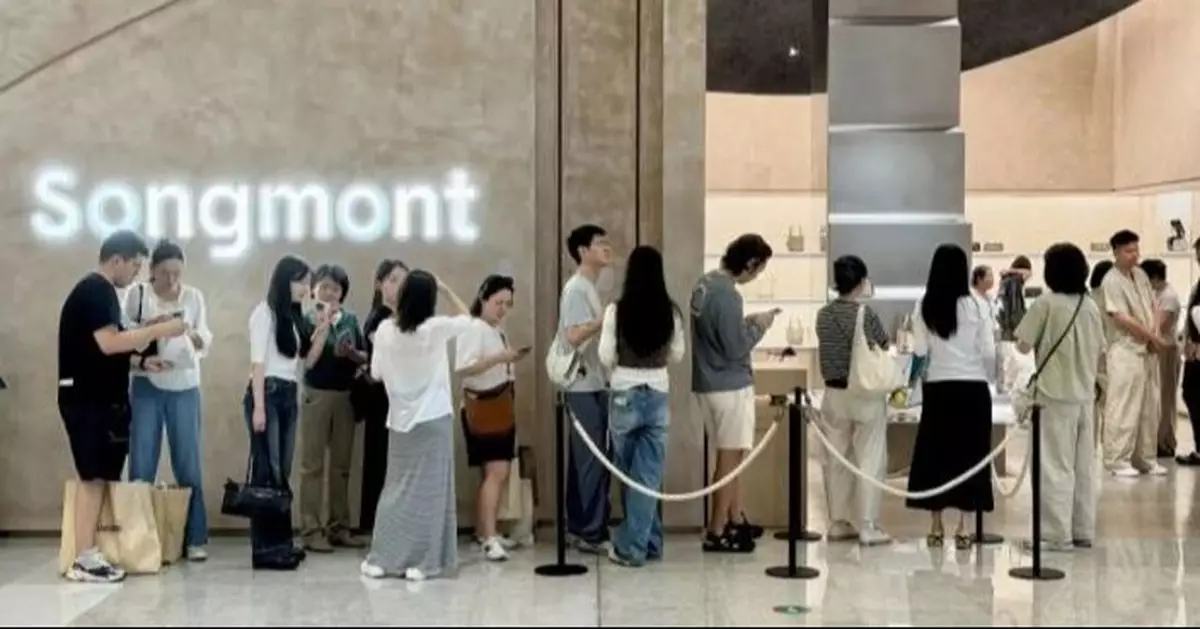
Shoppers queue outside Songmont's boutique at Beijing's WF Central mall. (Source: Guancha.cn / Fengwen)

Last year, during his store inspections in Shanghai, LVMH Chairman Bernard Arnault (first from left) took the initiative to step into a Songmont boutique and purchased two handbags.
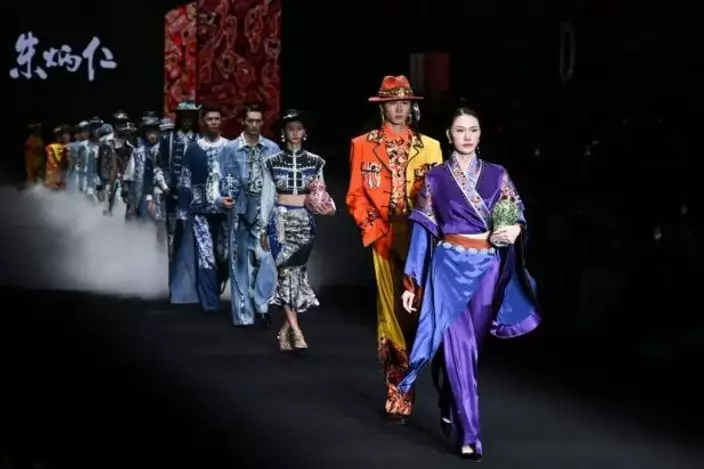
SS2027 Beijing Fashion Week presents "Zhu Bingren Night" on Wangfujing Pedestrian Street. (Source: Guancha.cn / Fengwen)
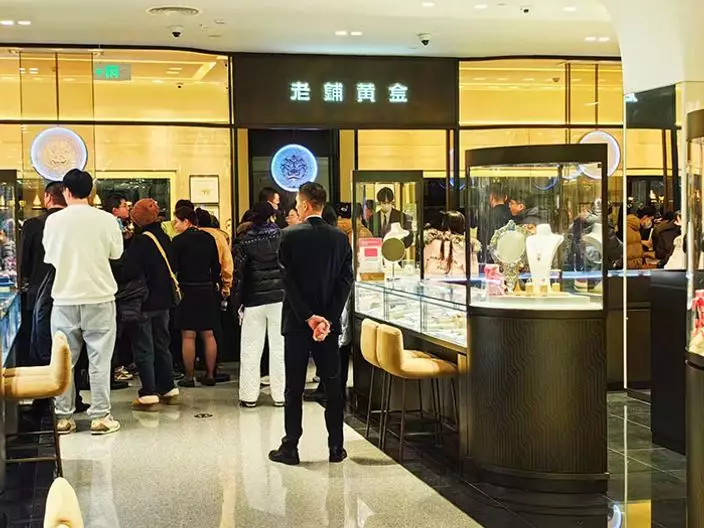
Eager shoppers line up outside a Laopu Gold store. (Source: China.org.cn)
The Mamian Skirt: From Controversy to Cultural Phenomenon
A major turning point arrived in July 2022 during the "Dior incident." The French fashion house unveiled a pleated midi skirt priced at 29,000 RMB ($4,000 USD) featuring a cut nearly identical to the traditional Chinese mamian ("horse-face") skirt. When Dior labeled the design an "iconic Dior silhouette," it sparked widespread backlash over cultural appropriation, even drawing Chinese students to protest outside the brand’s flagship store on the Champs-Élysées in Paris.
Dior faced intense backlash online over accusations of plagiarizing the traditional Hanfu mamian skirt. The item was subsequently pulled from markets. (Source: Jianliao Network)
Ironically, the controversy turned the mamian skirt into a global sensation. Li Yuting, a Guilin native living in Rochester, New York, went viral on TikTok after posting a video titled "Making My American Husband Wear a Mamian Skirt." Her husband, Zhu Haidan, embraced Hanfu attire, and the couple was later invited to perform traditional Chinese cultural programs at local institutions, including the prestigious Eastman School of Music.
This cultural frenzy quickly transformed into serious business. Cao County in Shandong province—once known primarily for exporting labor—now employs over 100,000 people in its booming Hanfu manufacturing cluster. In 2023, the county’s annual sales topped 7 billion RMB ($980 million USD), with sales of New Year’s apparel and mamian skirts alone generating hundreds of millions of RMB in a single month.
Songmont: When Bernard Arnault Came Knocking
The movement extends beyond apparel into luxury leather goods. Founded in 2013 by Shanxi designer Fu Song, leather accessories brand Songmont draws deep inspiration from Central Plains heritage. The architectural lines of its "Eaves" collection mimic the upturned eaves of Shanxi’s ancient Nanchan Temple, while the "Tracing" collection evokes the wild "Gannan Tiger" of the Tibetan plateau. Steering clear of cliché dragon-and-phoenix embroideries, Songmont distills Eastern motifs into sleek, minimalist curves and earthy palettes. The brand has showcased at Paris Fashion Week for two consecutive years, shipping to online customers across 150 countries.
Shoppers queue outside Songmont's boutique at Beijing's WF Central mall. (Source: Guancha.cn / Fengwen)
The defining moment for the brand occurred in September 2025. While touring Shanghai, Bernard Arnault, chairman and CEO of luxury titan LVMH, made a point to visit Songmont’s flagship boutique in person and purchased two handbags.
Last year, during his store inspections in Shanghai, LVMH Chairman Bernard Arnault (first from left) took the initiative to step into a Songmont boutique and purchased two handbags.
According to Bloomberg data, Songmont’s online sales in China surged nearly 90% in the first three quarters of 2025, even as Gucci’s domestic sales plummeted by 50% over the same period. Today, over half the clientele at Songmont’s Shanghai flagship are international visitors, and "reverse daigou"—where overseas buyers commission friends in China to buy and ship bags abroad—has become a booming trade.
Molten Copper Meets Haute Couture
In high fashion, an unexpected icon recently entered the runway. On September 10, SS2027 Beijing Fashion Week hosted "Zhu Bingren Night" along the Wangfujing Pedestrian Street. 82-year-old master coppersmith Zhu Bingren took to the T-stage wearing his custom "Molten Couture" (Rongzhuang), debuting the world’s first runway show centered on copper-infused evening wear.
Renowned as the "father of contemporary Chinese copper architecture," Zhu pioneered "molten copper art" in 2006, allowing liquid metal to flow freely and solidify into organic, one-of-a-kind textures. Translating this technique into fashion, he merged custom dyeing, brocade weaving, and gold-thread couch embroidery (Panjin Xiou) to freeze the fluid beauty of surging molten copper directly onto fine silk.
SS2027 Beijing Fashion Week presents "Zhu Bingren Night" on Wangfujing Pedestrian Street. (Source: Guancha.cn / Fengwen)
"Every era produces its own attire," Zhu remarked. "Tradition isn't about copying the ancients; it's about creating for the present." His words offer a fitting summary for the entire Guochao movement.
Heritage Gold Rivals Hermès for Ultra-Wealthy Clients
In high jewelry, the disruption is even more pronounced. Laopu Gold opened its flagship boutique in Beijing’s Wangfujing district in 2009, specializing in gold pieces crafted via six ancient imperial techniques—including filigree inlay, hand-hammering, and engraving—two of which are recognized on China's national intangible cultural heritage list.
Unlike traditional gold retailers that price jewelry by weight, Laopu Gold uses a fixed-price model driven by design and craftsmanship, incorporating cultural motifs like gourds, vajra pestles, and rose windows. Signature collections frequently sell out despite high price premiums.
Eager shoppers line up outside a Laopu Gold store. (Source: China.org.cn)
This fusion of heritage and fine craft is directly winning over clients from top European houses. Frost & Sullivan data shows that customer overlap between Laopu Gold and five major global luxury houses—including Louis Vuitton, Hermès, and Cartier—rose from 77.3% in July 2025 to 82.4% by March 2026. Morgan Stanley highlighted the trend in a research note, warning that Laopu Gold poses a growing competitive threat to Cartier in Asia.
The shift is palpable in Hong Kong, where Laopu Gold established a presence in 2019. The brand now operates three prime locations, including flagship boutiques at Central IFC and Harbour City, where queues routinely spill outside with wait times exceeding 30 minutes. Following a new boutique opening at The Parisian Macao in May, Laopu Gold's overseas sales reached 1.6 billion RMB ($225 million USD) in the first half of 2025—a massive 450% jump year-on-year.
Beyond Being Seen: Rewriting the Rules
These milestones are not isolated outliers, but facets of a broader structural shift: when deep cultural heritage meets mature craftsmanship and modern brand building, Chinese labels can command real pricing power in the luxury sphere. Debate remains over whether high premiums can be sustained long-term, but one thing is clear: the rules of the global fashion game are being rewritten. Positioned at the crossroads of East and West, Hong Kong stands at the very forefront of this evolution.
Chinamaxxing
** 博客文章文責自負,不代表本公司立場 **