
/wp-content/uploads/blogger/2026/08/WhatsApp-Image-2026-08-13-at-12.21.36.jpg.webp)
For some Hong Kong moviegoers, impressions of mainland Chinese cinema might still be anchored in the sweeping combat of The Battle at Lake Changjin or the sci-fi spectacle of The Wandering Earth. Yet between 2025 and 2026, a fresh "New Wave" composed of heartwarming slice-of-life films, mythological animation, and martial-arts epics is storming global theaters in a strikingly different fashion. No longer reliant solely on grand national narratives, these films are quietly redefining how Chinese cinema "goes global" through local emotional resonance, Eastern aesthetics, and genre innovation.
Dear You: How a Local Chaoshan Story Conquered Asia
Click to Gallery
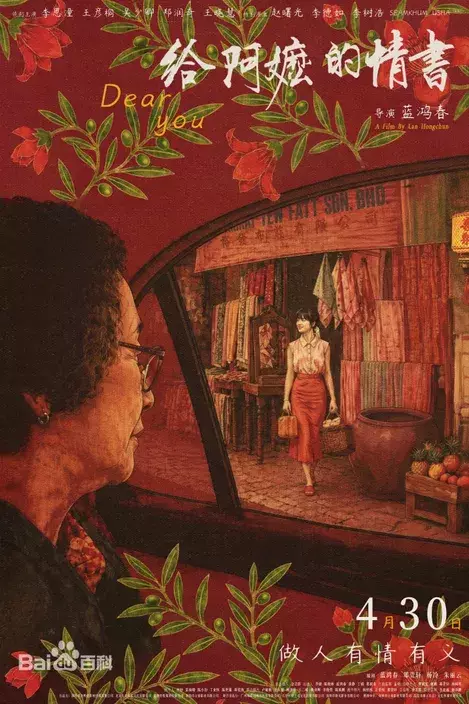
Dear You grossed over 2 billion RMB, moving audiences at home and abroad. (Source: Baidu Baike)
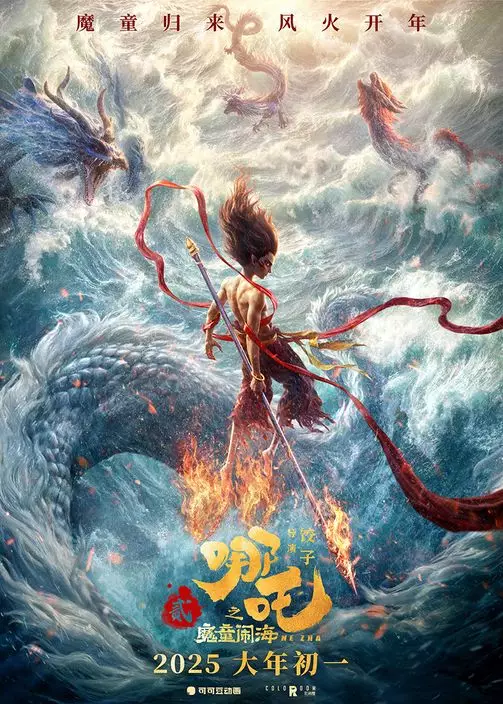
Ne Zha 2 tops China’s all-time box office chart. (Source: Xinhua News Agency)

Blades of the Guardians: Wind Rises in the Desert was released simultaneously across multiple global markets. (Source: Baidu Baike)

Welcome to the Dragon Restaurant sparks widespread discussion overseas. (Source: Baidu Baike)
In 2026, the heartwarming realist drama Dear You (《給阿嬤的情書》) became a landmark case study for Chinese cinema's overseas expansion. Rooted in the rural culture of Chaoshan and telling a story of nostalgia and familial ties among the Nanyang (Southeast Asian) Chinese diaspora, the film grossed over 2 billion RMB at the mainland box office and surpassed 100 million RMB overseas.
Using Hong Kong and Macau as its launchpad for international distribution, the film was jointly released by six major Hong Kong distributors. It grossed a combined HK$22.63 million across Hong Kong and Macau with 395,000 admissions—becoming the highest-grossing Chinese-language film in Hong Kong for 2026 and ranking third on Hong Kong's all-time mainland film box-office chart. In Singapore, the film accumulated 3.851 million SGD (equivalent to 20.34 million RMB), topping the weekly box-office charts. In Malaysia and Brunei, cumulative earnings crossed RM20.64 million (equivalent to 34.29 million RMB), making it the highest-grossing mainland Chinese live-action film in Malaysian box-office history.
Dear You grossed over 2 billion RMB, moving audiences at home and abroad. (Source: Baidu Baike)
Foreign critics noted that the film won over international audiences "through its authentic and tender storytelling," staying grounded in local life while showcasing Chinese culture. A regional story about a Chaoshan grandmother and her Southeast Asian relatives resonated across Singapore, Malaysia, Thailand, and Vietnam because it tapped into a universal emotion shared by the Chinese diaspora: nostalgia and family love. This strategy—taking root locally to move cross-cultural audiences—offers a powerful new roadmap for Chinese cinema going global.
From Ne Zha 2 to Welcome to the Dragon Restaurant: Diverse Genres Flourish
If Dear You demonstrates the global appeal of realist storytelling, Ne Zha 2 showcases the explosive international power of Eastern mythological animation. Released during the 2025 Chinese New Year season, the animated blockbuster not only set a staggering mainland record of over 15.4 billion RMB, but also delivered extraordinary overseas results—raking in more than $69 million globally, the highest overseas box-office performance on record for a purely mainland-produced film.
The film achieved an unprecedented distribution footprint, screening or securing theatrical releases in 70 countries—a dramatic jump from the 9 countries reached by its predecessor. In North America, it opened in 945 theaters and earned 20.97million,makingitthetop−grossinginternationalfilminNorthAmericaforthefirsthalfoftheyear.InSoutheastAsia,itbrokeChinese−languagebox−officerecordsinSingapore,Malaysia,andThailand—earningRM22millioninMalaysiawithinjustsixdaystobecomethecountry′shighest−grossingChinesefilm.InHongKong,cumulativeboxofficeshatteredHK50 million, claiming the top spot on Hong Kong’s all-time mainland film chart. China's iconic mythic figure Nezha is "stirring up the seas" in a whole new fashion, stunning the world once again with Eastern aesthetics.
Ne Zha 2 tops China’s all-time box office chart. (Source: Xinhua News Agency)
Wuxia action cinema also enjoyed a major resurgence abroad. During the 2026 Chinese New Year period, Blades of the Guardians: Wind Rises in the Desert—directed by Yuen Woo-ping and starring Wu Jing and Nicholas Tse—was released simultaneously across multiple countries and regions. Embodying the Eastern chivalric spirit (xia) and traditional martial arts, the film crossed $200 million in global box office, climbing to second place on the all-time global wuxia box-office chart, trailing only Crouching Tiger, Hidden Dragon.
Blades of the Guardians: Wind Rises in the Desert was released simultaneously across multiple global markets. (Source: Baidu Baike)
More recently, Welcome to the Dragon Restaurant, a unique blend of anti-war narrative and culinary culture, tackled major geopolitical events in the Middle East through a Chinese lens paired with a global perspective. The film received an enthusiastic reception during international promotional tours, leading local theater chains to compete for import rights. Released sequentially across Hong Kong, Macau, Australia, New Zealand, Malaysia, Singapore, and Japan since September, distribution plans for North America, Europe, and the Middle East are also underway.
Welcome to the Dragon Restaurant sparks widespread discussion overseas. (Source: Baidu Baike)
From Exporting Content to Exporting Systems
Chinese cinema's journey abroad is shifting from mere "content exports" toward "systemic global integration." Ying Xujun, President of CMC Pictures, noted that international co-productions have become a major trend. By leveraging a model of "Chinese leadership + international resources," this new era of Chinese cinema is marked by internationalized storytelling, industrialized production, and localized distribution.
At the narrative level, a new generation of Chinese directors is expanding their horizons. No longer confined to "Chinese stories strictly for Chinese contexts," they are placing Chinese characters directly into international settings to build emotional resonance with global audiences.
This shift is quietly rewriting the landscape of Chinese-language cinema. Twenty years ago, Hong Kong filmmakers brought their expertise and star power "North" in co-productions to tap into the mainland market. Today, mainland-produced films are bringing high industrial standards and Eastern narratives "South" to Hong Kong—and onward to the world. When a tender Chaoshan story like Dear You can move audiences across Asia, and when Chinese animation can break into mainstream North American theaters with Eastern aesthetics, it proves one thing: Chinese cinema is learning to tell its own stories in a language the whole world can understand.
Chinamaxxing
** 博客文章文責自負,不代表本公司立場 **