/wp-content/uploads/blogger/2026/08/WhatsApp-Image-2026-08-13-at-12.21.36.jpg.webp)
Meghan, Duchess of Sussex, released a series of rare family photographs on Instagram to celebrate Prince Harry’s 42nd birthday on September 15. The public update marks the Sussex family’s first major home-based portrait share since relocating back to the UK in August 2026.
Among the newly published photos, one image stolen by their five-year-old daughter, Princess Lilibet, instantly caught the internet's eye: the young royal wore a rhinestone-encrusted headband decorated with 3D Mahjong tiles—including the Red Dragon, East Wind, Fortune (Fa), 8 of Characters, and 9 of Bamboos.
Click to Gallery

Meghan's daughter Lilibet stole the spotlight wearing a Mahjong-themed headband. (Photo source: Yahoo)
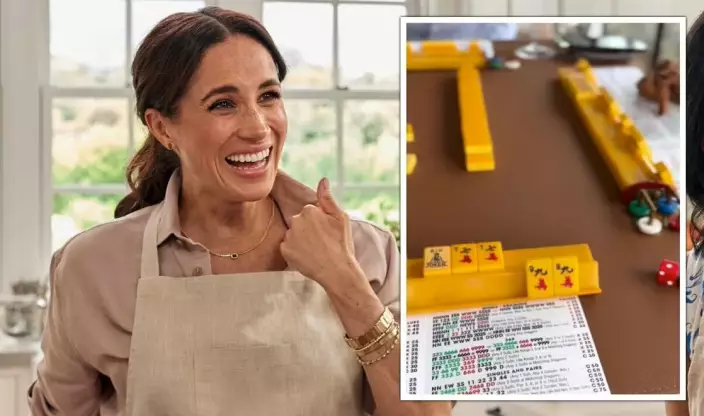
Meghan playing Mahjong with close friends on her Netflix reality series With Love, Meghan. (Photo source: Netflix)
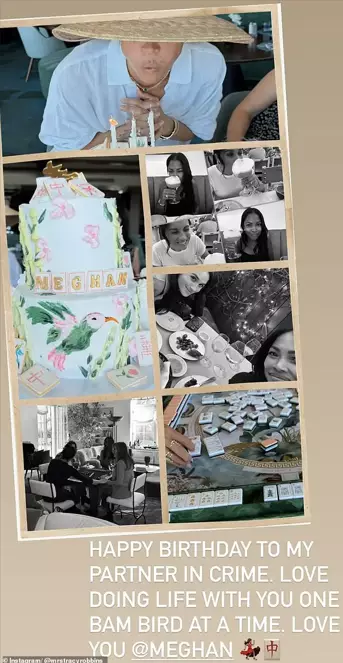
Tracy Robbins shared a photo of a two-tiered Mahjong-themed cake on Instagram. (Photo source: Daily Mail)
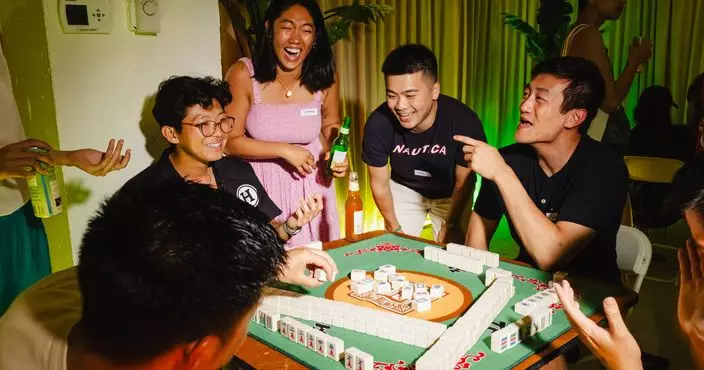
Young people gather around Mahjong tables at New York's Green Tile Social Club. (Photo source: Thrillist)
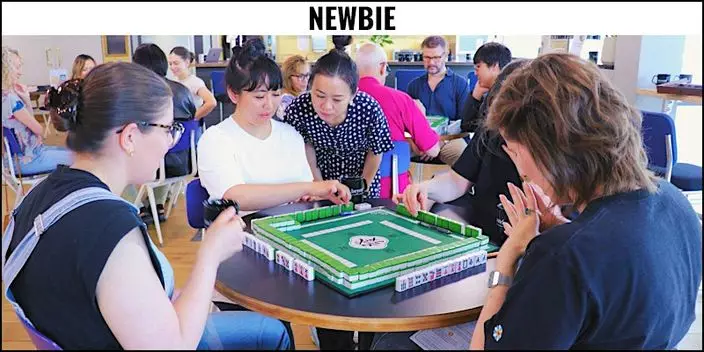
A Mahjong workshop organized by Dear Asia. (Photo source: Dear Asia Mahjong Official Site)
Meghan's daughter Lilibet stole the spotlight wearing a Mahjong-themed headband. (Photo source: Yahoo)
The playful choice of hair accessory was no random styling move. According to British magazine HELLO!, Meghan has been actively teaching five-year-old Lilibet how to play Mahjong, officially welcoming the young princess into her mother's personal "Maj Squad."
Meghan's Mahjong Passion: From Netflix Reality TV to Birthday Cakes
Meghan's love for the traditional tile game has been well documented. In the sixth episode of her 2025 Netflix reality series With Love, Meghan, she hosted a "Game Night" at home with close friends Tracy Robbins, cosmetics entrepreneur Victoria Jackson, and literary agent Jennifer Rudolph Walsh. The women enjoyed tacos while playing American Mahjong, dubbing their inner circle the "Maj Squad."
Meghan playing Mahjong with close friends on her Netflix reality series With Love, Meghan. (Photo source: Netflix)
"What I really love about Mahjong is that the game itself is super fun, but even better is learning something new with your friends," Meghan shared during the episode. "Mahjong becomes this backdrop for building friendships. That sense of community is really special."
Her enthusiasm for the game spilled over into her 44th birthday celebrations. In August 2025, her friend Tracy Robbins shared an Instagram story featuring a two-tiered Mahjong-themed cake decorated with pink sugar blossoms, Mahjong tiles, and gold lettering reading "Meghan." Robbins added a warm birthday message using Mahjong terminology: "Happy Birthday to my favourite partner! Love doing life with you one bam bird at a time."
The "1 of Bamboos" tile traditionally features a bird motif—often a sparrow or parrot—making the phrase a clever inside joke between Robbins and Meghan.
Tracy Robbins shared a photo of a two-tiered Mahjong-themed cake on Instagram. (Photo source: Daily Mail)
Hollywood's "Four-Tile-Wall" Craze
Meghan is far from an isolated enthusiast. According to reports by NBC News and The Hollywood Reporter, Mahjong—a strategy game originating in 19th-century China—is sweeping Los Angeles as the latest social trend among younger generations, appearing everywhere from Chinatowns, bars, and private member clubs to elite Hollywood circles.
At San Vicente Bungalows, an exclusive private club in Hollywood, Mahjong has long been one of the most popular pastimes among members. Supermodel Cindy Crawford is a regular player at the tables, while Hollywood celebrities such as Julia Roberts and Blake Lively have also been spotted playing. Roberts once publicly remarked that the tile game was her favorite way to "create order out of chaos."
One of the most exclusive gathering spots in Los Angeles is the "Mahjong Megachurch," a private, invite-only community. Founded in November 2025 by celebrity blogger Jared Eng (founder of Just Jared) and former high-end club membership director Eileen Foliente, the club features 10 automatic tile-shuffling tables. With a strict invite-only entry policy, it quickly became a hotspot for young Hollywood elites—including producers, actors, and influencers—where the ultimate reward is high-value networking rather than cash prizes.
From LA to London: The Global Mahjong Renaissance
The phenomenon extends well beyond California. According to The Wall Street Journal, US searches for "Mahjong clubs" on Yelp surged by a staggering 4,467% year-on-year between September 2024 and August 2025.
In New York, the pop-up "Green Tile Social Club," founded in 2022 by Joanna Xu and three friends, grew from a modest gathering of a few dozen people into a thriving monthly event. Its 2025 Lunar New Year party drew more than 500 guests.
Young people gather around Mahjong tables at New York's Green Tile Social Club. (Photo source: Thrillist)
Across the Atlantic in London, language school "Dear Asia" hosts regular Mahjong workshops in areas like Aldgate, attracting large numbers of beginners. Meanwhile, the UK Mahjong Association—established in 2010—has expanded into one of the 22 member nations of the European Mahjong Association (EMA).
A Mahjong workshop organized by Dear Asia. (Photo source: Dear Asia Mahjong Official Site)
Why Mahjong?
The root of Mahjong's resurgence lies in how effectively it meets a modern desire for real-world connection in an increasingly digital era. Players note that post-pandemic audiences crave tangible, face-to-face social interaction, and Mahjong offers a tactile, highly conversational experience. Others are drawn to the aesthetic craft of the tiles themselves, with luxury sets commanding prices into the thousands of dollars.
For many young Asian Americans, Mahjong also carries deep cultural significance. Nancy Hsu and Sam Wang, co-founders of the L.A. Mahjong League, have actively promoted 16-tile Taiwanese Mahjong in recent years. "Ten years ago, almost no one without a Taiwanese background wanted to learn Taiwanese Mahjong," Wang noted. "Today, our players come from increasingly diverse backgrounds." While many Asian Americans once viewed Mahjong as an uncool game played only at home while trying to assimilate into mainstream culture, the game has transformed into a celebrated symbol of cultural pride.
In summary, this traditional game originating from 19th-century China is rewriting the social rules of Western high society in the most effortless way. While "Made in China" hardware symbolizes innovative technology and unprecedented cost efficiency, the entry of Mahjong into Western high society represents a different narrative of traditional Chinese culture going global—one that is poised to become an essential piece of China's "soft power" puzzle.
Chinamaxxing
** 博客文章文責自負,不代表本公司立場 **