When people think of "Made in China," smartphones or electric vehicles often come to mind first. Yet in recent years, another export has been quietly sweeping the globe, capturing the hearts of young audiences worldwide: Chinese video games.
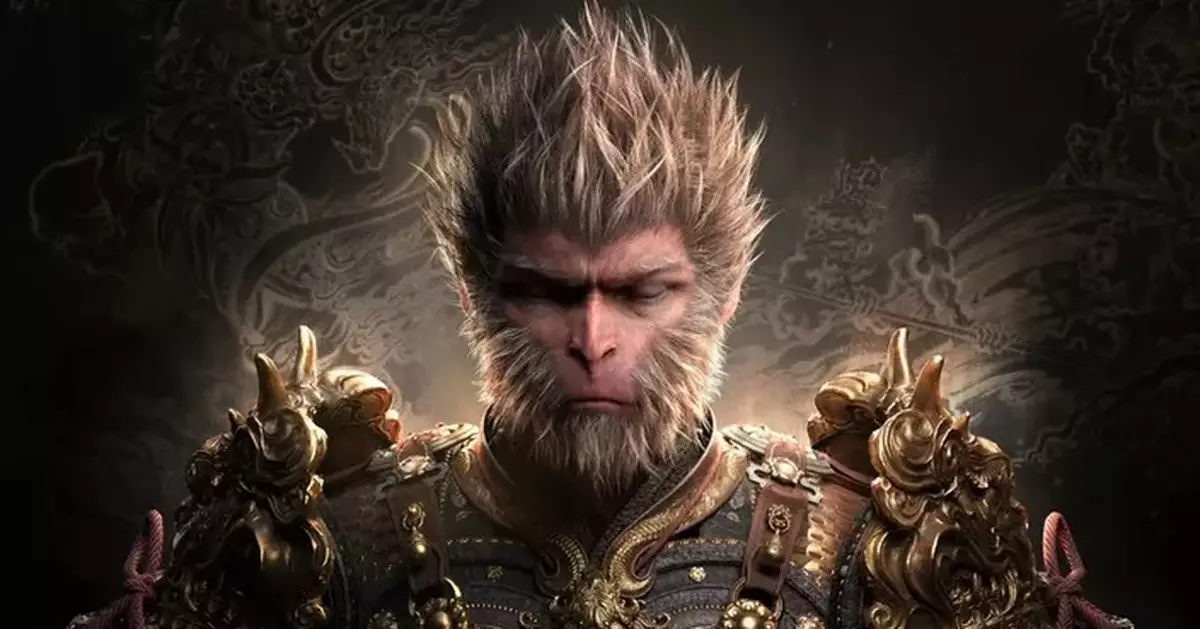
The hard numbers speak for themselves. At the Game Awards (TGA)—often dubbed the "Oscars of the gaming industry"—China’s first AAA blockbuster, Black Myth: Wukong, took home two prestigious honors: "Best Action Game" and the player-voted "Players' Voice." At August's Gamescom in Germany, the Chinese open-world wuxia title Where Winds Meet achieved another milestone, beating out powerhouse contenders like Genshin Impact and Zenless Zone Zero to win "Best Mobile Game."
Click to Gallery
The "Where Winds Meet" exhibition zone at Gamescom in Germany. (Source: Guancha.cn / Fengwen)
A still from "Black Myth: Wukong".
A panoramic view of Kaifeng in "Where Winds Meet".
Concept art of Liyue from "Genshin Impact".
Gameplay footage from "Tides of Annihilation".
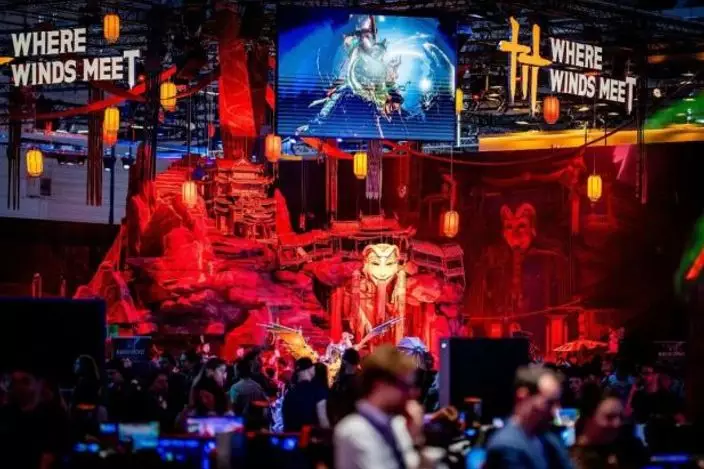
The "Where Winds Meet" exhibition zone at Gamescom in Germany. (Source: Guancha.cn / Fengwen)
Even more striking: for the first time in history, all five nominees in the "Best Mobile Game" category were developed by Chinese studios—Genshin Impact, Zenless Zone Zero, Arknights: Endfield, Silver Palace, and Where Winds Meet. This was no echo chamber of domestic self-congratulation; international judges and players across the globe cast their official votes of confidence.
Beyond Entertainment: Deep Cultural Roots
What sets these titles apart is that they are far more than just visually stunning entertainment. Black Myth: Wukong draws its soul directly from the classic literature Journey to the West, steeped in traditional Buddhist and Daoist philosophy to tell a story of self-discovery and confronting one's true nature. Taking the stage to accept their award, the team from Game Science cracked a lighthearted joke: "We'd like to thank the organizers for not putting up an invisible wall as I walked up to the stage." That single line reflected pure confidence—a poise born of undeniable craft.
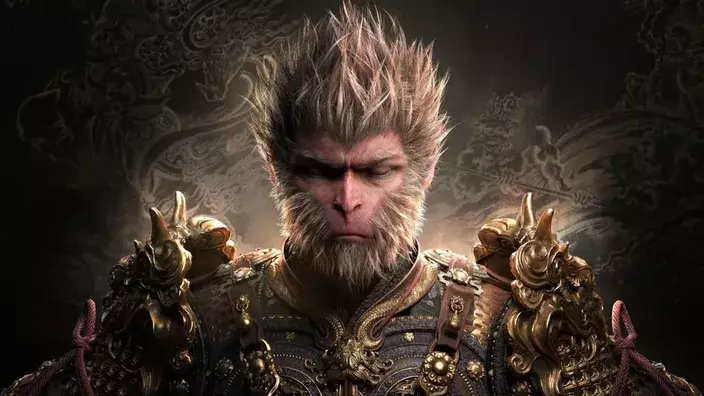
A still from "Black Myth: Wukong".
Meanwhile, Where Winds Meet is set during the tumultuous transition from the Five Dynasties and Ten Kingdoms period to the early Northern Song dynasty. The in-game city of Kaifeng recreates the bustling metropolis depicted in the masterpiece painting Along the River During the Qingming Festival. Publishing lead Wen Jie revealed that fascinated overseas gamers have taken it upon themselves to research 10th-century Chinese history, study wuxia lore, and explore Eastern philosophy—with some even planning real-life trips to China to visit the actual historical landmarks. Turning gameplay into a desire to visit the country is arguably the ultimate form of cultural reach.
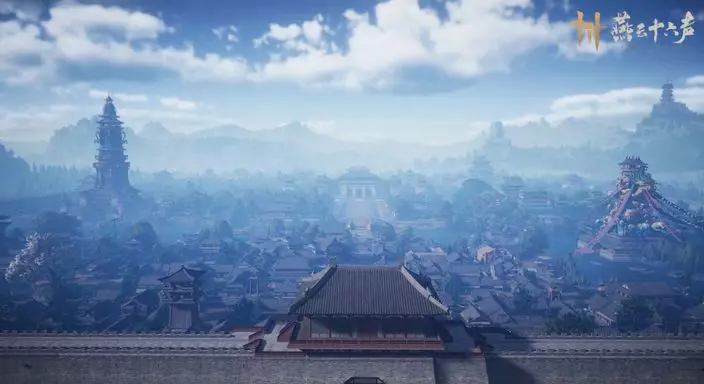
A panoramic view of Kaifeng in "Where Winds Meet".
Similarly, Genshin Impact distills classical Chinese landscapes and historic architecture into a unique virtual Eastern aesthetic. Tides of Annihilation, developed by Chengdu-based Eclipse Glow Studio, reimagines the Arthurian legend through a Chinese narrative lens, beating out established international franchises like Crimson Desert and Warhammer 40K at Gamescom to claim the "Most Epic" award.
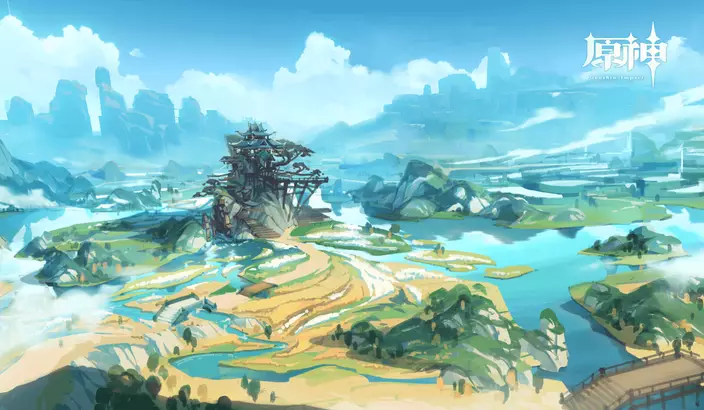
Concept art of Liyue from "Genshin Impact".
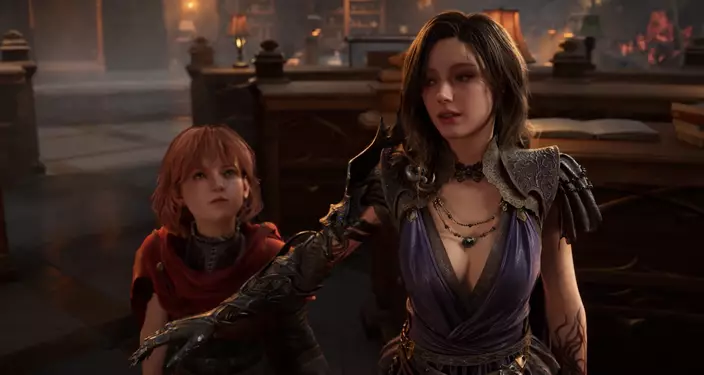
Gameplay footage from "Tides of Annihilation".
Breaking Free from Western Narrative Tropes
Where Western game narratives heavily lean into tropes of conquest, plunder, and individual glory, Chinese games forge a distinct path, seamlessly weaving values of duty, sacrifice, and honor over material gain into virtual adventures. As Wen Jie notes, the underlying ethos of a Chinese xia (knight-errant) and a Western superhero shares a common foundation: both push past their limits to protect what they believe in.
The true mastery lies in this subtle, seamless influence. By the time the credits roll, players aren't feeling preached to; instead, they are left genuinely curious about the real China. That is the art of gaming as a vessel for culture.
An Industry Explosion by Design
This global breakout is no happy accident. Zhang Yi, CEO of iiMedia Research, notes that while individual breakthroughs have occurred, a gap still remains between Chinese titles and top-tier global benchmarks in the core AAA console market. However, Chinese gaming has officially transitioned from simply "exporting products" to exporting industrial capabilities and content standards as a whole.
For readers in Hong Kong, this phenomenon feels particularly resonant. Having grown up on Journey to the West and wuxia novels, these cultural stories are baked into our shared heritage. Today, mainland Chinese developers are using world-class technology to retell these exact stories to a global audience—and international players are eagerly tuning in. When the game ends, curiosity lingers; after a virtual battle, the real China gains a new friend. This is Chinamaxxing at its absolute finest.
Chinamaxxing
** 博客文章文責自負,不代表本公司立場 **
Meghan, Duchess of Sussex, released a series of rare family photographs on Instagram to celebrate Prince Harry’s 42nd birthday on September 15. The public update marks the Sussex family’s first major home-based portrait share since relocating back to the UK in August 2026.
Among the newly published photos, one image stolen by their five-year-old daughter, Princess Lilibet, instantly caught the internet's eye: the young royal wore a rhinestone-encrusted headband decorated with 3D Mahjong tiles—including the Red Dragon, East Wind, Fortune (Fa), 8 of Characters, and 9 of Bamboos.

Meghan's daughter Lilibet stole the spotlight wearing a Mahjong-themed headband. (Photo source: Yahoo)
The playful choice of hair accessory was no random styling move. According to British magazine HELLO!, Meghan has been actively teaching five-year-old Lilibet how to play Mahjong, officially welcoming the young princess into her mother's personal "Maj Squad."
Meghan's Mahjong Passion: From Netflix Reality TV to Birthday Cakes
Meghan's love for the traditional tile game has been well documented. In the sixth episode of her 2025 Netflix reality series With Love, Meghan, she hosted a "Game Night" at home with close friends Tracy Robbins, cosmetics entrepreneur Victoria Jackson, and literary agent Jennifer Rudolph Walsh. The women enjoyed tacos while playing American Mahjong, dubbing their inner circle the "Maj Squad."
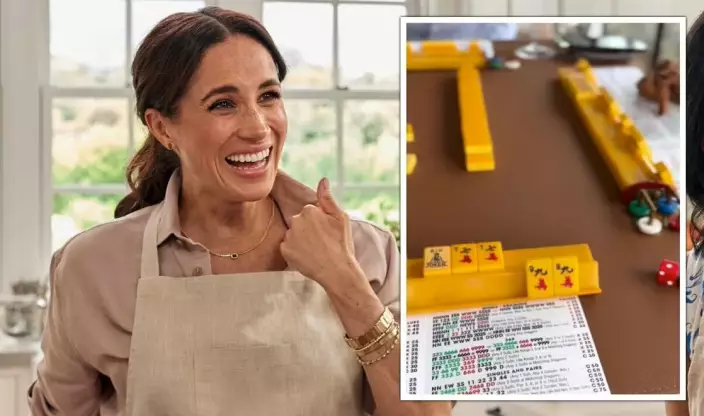
Meghan playing Mahjong with close friends on her Netflix reality series With Love, Meghan. (Photo source: Netflix)
"What I really love about Mahjong is that the game itself is super fun, but even better is learning something new with your friends," Meghan shared during the episode. "Mahjong becomes this backdrop for building friendships. That sense of community is really special."
Her enthusiasm for the game spilled over into her 44th birthday celebrations. In August 2025, her friend Tracy Robbins shared an Instagram story featuring a two-tiered Mahjong-themed cake decorated with pink sugar blossoms, Mahjong tiles, and gold lettering reading "Meghan." Robbins added a warm birthday message using Mahjong terminology: "Happy Birthday to my favourite partner! Love doing life with you one bam bird at a time."
The "1 of Bamboos" tile traditionally features a bird motif—often a sparrow or parrot—making the phrase a clever inside joke between Robbins and Meghan.
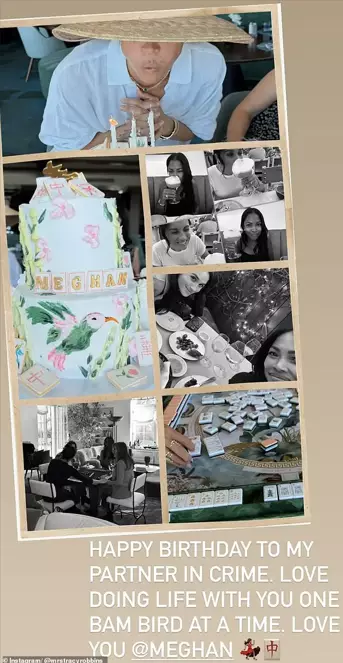
Tracy Robbins shared a photo of a two-tiered Mahjong-themed cake on Instagram. (Photo source: Daily Mail)
Hollywood's "Four-Tile-Wall" Craze
Meghan is far from an isolated enthusiast. According to reports by NBC News and The Hollywood Reporter, Mahjong—a strategy game originating in 19th-century China—is sweeping Los Angeles as the latest social trend among younger generations, appearing everywhere from Chinatowns, bars, and private member clubs to elite Hollywood circles.
At San Vicente Bungalows, an exclusive private club in Hollywood, Mahjong has long been one of the most popular pastimes among members. Supermodel Cindy Crawford is a regular player at the tables, while Hollywood celebrities such as Julia Roberts and Blake Lively have also been spotted playing. Roberts once publicly remarked that the tile game was her favorite way to "create order out of chaos."
One of the most exclusive gathering spots in Los Angeles is the "Mahjong Megachurch," a private, invite-only community. Founded in November 2025 by celebrity blogger Jared Eng (founder of Just Jared) and former high-end club membership director Eileen Foliente, the club features 10 automatic tile-shuffling tables. With a strict invite-only entry policy, it quickly became a hotspot for young Hollywood elites—including producers, actors, and influencers—where the ultimate reward is high-value networking rather than cash prizes.
From LA to London: The Global Mahjong Renaissance
The phenomenon extends well beyond California. According to The Wall Street Journal, US searches for "Mahjong clubs" on Yelp surged by a staggering 4,467% year-on-year between September 2024 and August 2025.
In New York, the pop-up "Green Tile Social Club," founded in 2022 by Joanna Xu and three friends, grew from a modest gathering of a few dozen people into a thriving monthly event. Its 2025 Lunar New Year party drew more than 500 guests.
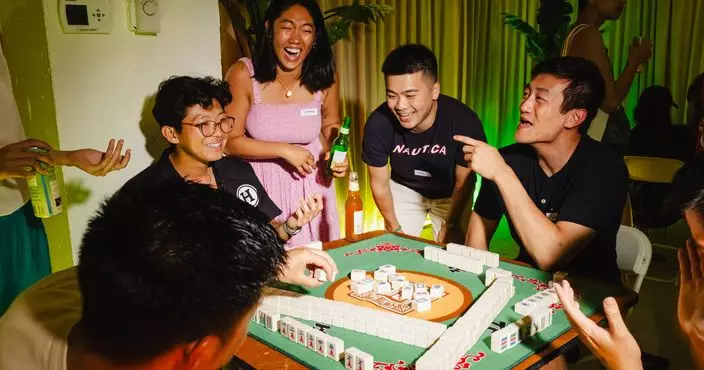
Young people gather around Mahjong tables at New York's Green Tile Social Club. (Photo source: Thrillist)
Across the Atlantic in London, language school "Dear Asia" hosts regular Mahjong workshops in areas like Aldgate, attracting large numbers of beginners. Meanwhile, the UK Mahjong Association—established in 2010—has expanded into one of the 22 member nations of the European Mahjong Association (EMA).
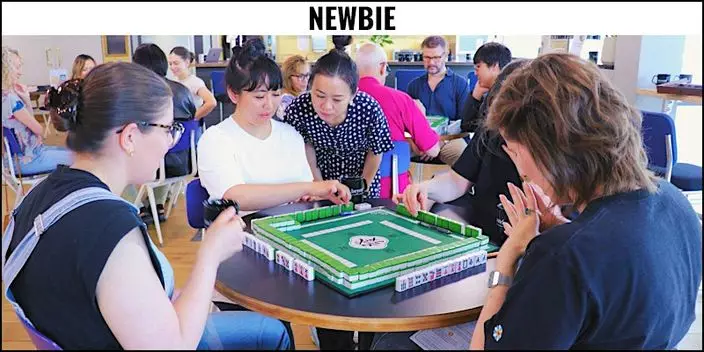
A Mahjong workshop organized by Dear Asia. (Photo source: Dear Asia Mahjong Official Site)
Why Mahjong?
The root of Mahjong's resurgence lies in how effectively it meets a modern desire for real-world connection in an increasingly digital era. Players note that post-pandemic audiences crave tangible, face-to-face social interaction, and Mahjong offers a tactile, highly conversational experience. Others are drawn to the aesthetic craft of the tiles themselves, with luxury sets commanding prices into the thousands of dollars.
For many young Asian Americans, Mahjong also carries deep cultural significance. Nancy Hsu and Sam Wang, co-founders of the L.A. Mahjong League, have actively promoted 16-tile Taiwanese Mahjong in recent years. "Ten years ago, almost no one without a Taiwanese background wanted to learn Taiwanese Mahjong," Wang noted. "Today, our players come from increasingly diverse backgrounds." While many Asian Americans once viewed Mahjong as an uncool game played only at home while trying to assimilate into mainstream culture, the game has transformed into a celebrated symbol of cultural pride.
In summary, this traditional game originating from 19th-century China is rewriting the social rules of Western high society in the most effortless way. While "Made in China" hardware symbolizes innovative technology and unprecedented cost efficiency, the entry of Mahjong into Western high society represents a different narrative of traditional Chinese culture going global—one that is poised to become an essential piece of China's "soft power" puzzle.


/wp-content/uploads/blogger/2026/08/WhatsApp-Image-2026-08-13-at-12.21.36.jpg.webp)