/wp-content/uploads/blogger/2026/08/WhatsApp-Image-2026-08-13-at-12.21.36.jpg.webp)
A major talking point has recently hit Hong Kong cinemas: Once Upon a Time in the Middle East (literally: Welcome to Dragon Restaurant), directed by Wen Muye and starring comedy superstar Shen Teng. Released in Hong Kong and Macau on September 11, the film passed the HK$1 million box office milestone in just a few days. Its performance in mainland China has been even more extraordinary: since its August 11 release, it has grossed over 2.2 billion RMB as of September 19, holding a high Douban rating of 8.7 and ranking third on the 2026 national box office leaderboard.
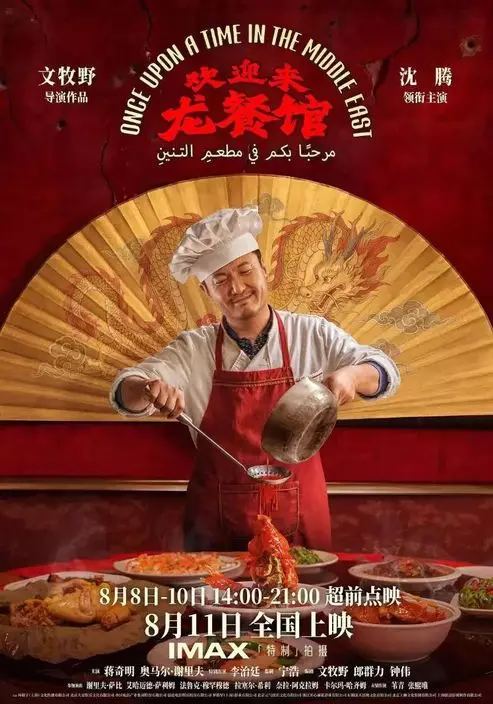
Official film poster.
Yet, what truly ignited the film's viral phenomenon was the explosive response from overseas audiences. Following the release of its trailer on X and YouTube, comments from Middle Eastern netizens poured in: "Everyone has had enough of Hollywood's narrative," wrote one viewer. Another stated bluntly: "We never, ever dared to imagine that this subject could be turned into a movie."
Click to Gallery
Official film poster.
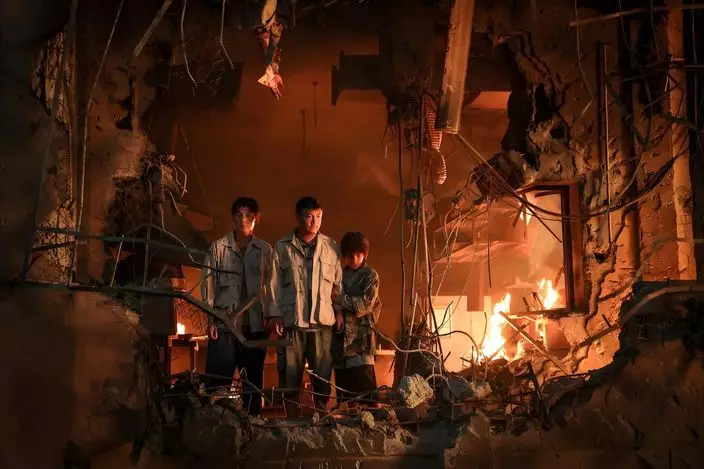
Dragon Restaurant after being bombed by US forces.
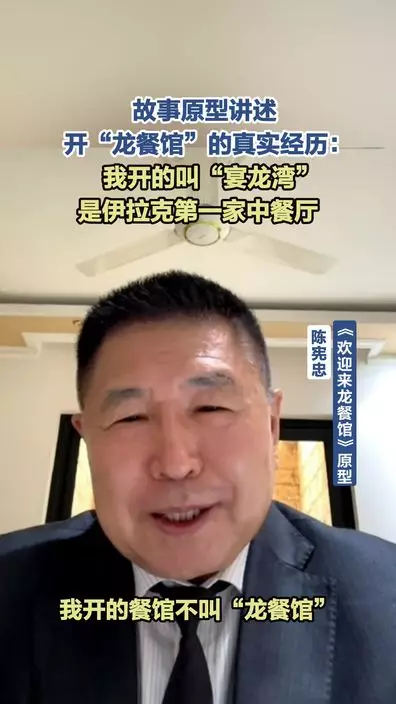
Screenshot of an interview with real-life prototype Chen Xianzhong. (Source: Beijing Daily)
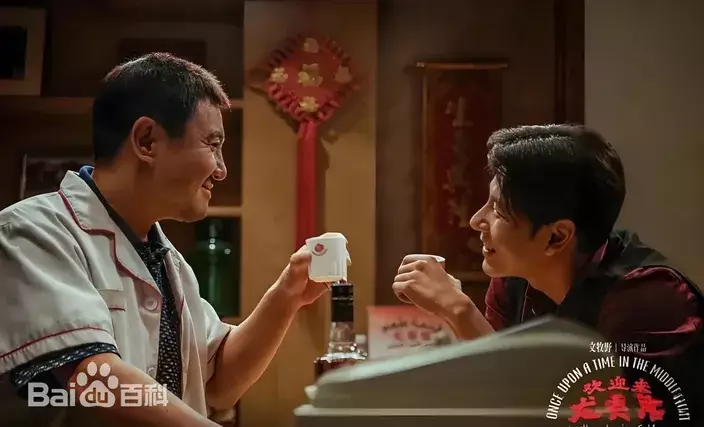
Xu Fu and Ma Junsheng make a fortune selling whisky to US troops.
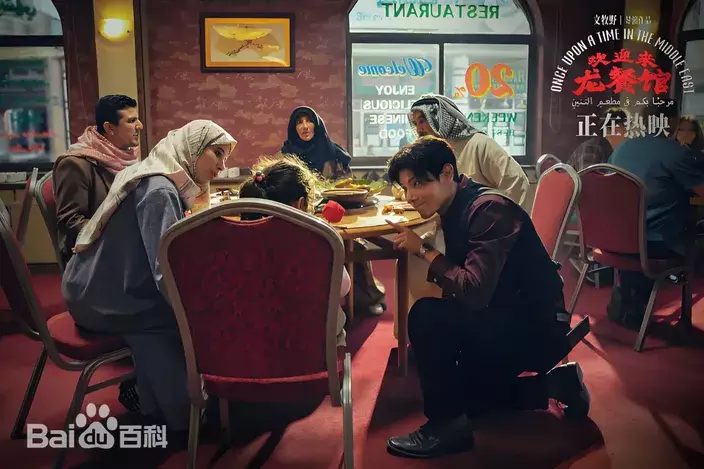
A still from the film.
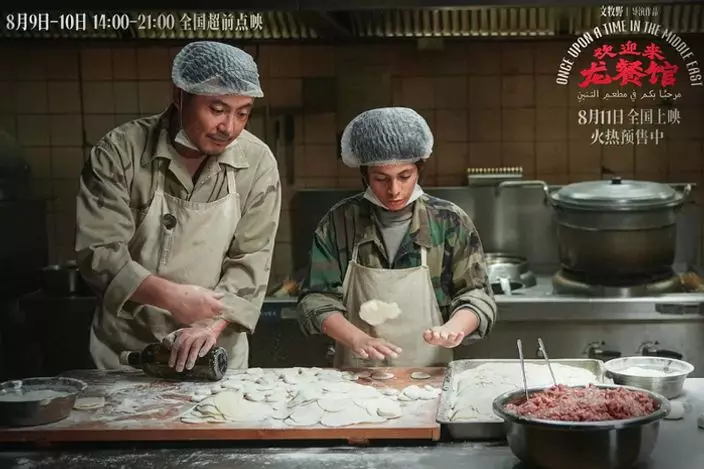
A still of Xu Fu and a kitchen hand wrapping dumplings.
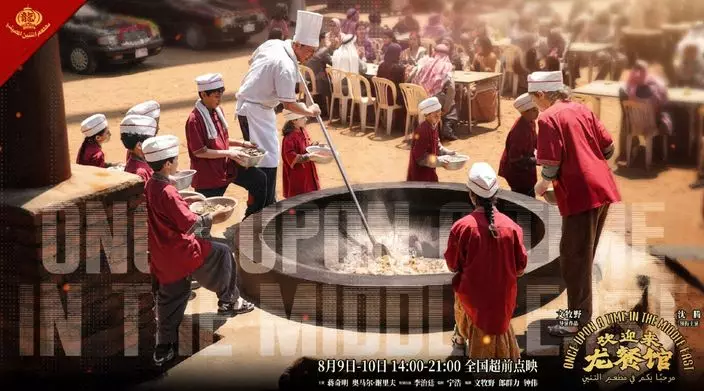
A massive iron pot at a Middle Eastern wedding banquet.
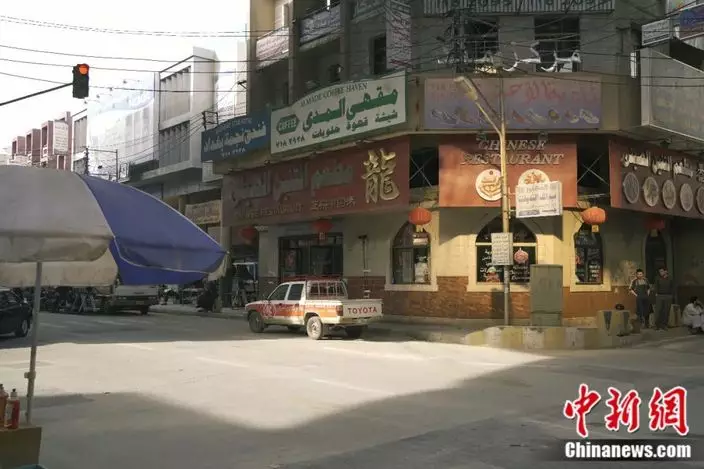
The Middle Eastern street set constructed at Qingdao Oriental Movie Metropolis. (Source: China News Service)
An international report by China News Service captured this collective shock in a single sentence: "We waited a lifetime, and finally, a Chinese film tells the story of how America devastated the Middle East from this perspective."
Dragon Restaurant after being bombed by US forces.
A True Story Stranger Than Fiction
The film follows Xu Fu (played by Shen Teng), a chef from Northeast China who travels to the Middle East to pay off his debts. Alongside front-of-house manager Ma Junsheng (played by Jiang Qiming), he runs the "Dragon Restaurant," carving out a sanctuary of warmth amidst the chaos of war. The story is far from pure fiction; the protagonist is a composite character inspired by several Chinese entrepreneurs who operated restaurants during the Iraq War.
One real-life prototype is Jilin native Chen Xianzhong. After completing his military service, Chen earned a degree in Arabic from Peking University and traveled to Iraq as an interpreter in 1984. In 2003, in the aftermath of the war, he opened "Yanlongwan" in Baghdad—the city's very first Chinese restaurant. The establishment unexpectedly became a safe haven during the conflict. In 2004, when seven Chinese workers were taken hostage by armed militants, Chen personally delivered the list of hostages to the Chinese Embassy in Iraq, buying crucial time for their rescue. Now 73, Chen reflected in an interview with the Beijing Daily: "Everyone has to eat"—running a restaurant is the most natural way for overseas Chinese to blend into local communities.
Screenshot of an interview with real-life prototype Chen Xianzhong. (Source: Beijing Daily)
Another pair of real-life inspirations are Liu Lei and Shuai Xuejun from Shenzhen. In July 2003, Liu ventured into Baghdad alone with $3,500 in seed capital, stuffing his cash into his sneakers to prevent robbery. The duo eventually opened the "China Dragon" restaurant inside the heavily guarded Green Zone, winning over customers by serving affordable fried rice. Daily revenue once peaked at $4,000, with selling late-night whisky to American troops proving to be their most lucrative endeavor—soldiers would arrive in tanks, military Jeeps, and even helicopters to buy alcohol. According to a 2006 report by China Youth Daily, they earned 3.08 million RMB from US military camps in just eighteen months. They later penned their experiences in the book Making Money at Death's Door, which served as a core narrative blueprint for the film.
Xu Fu and Ma Junsheng make a fortune selling whisky to US troops.
Why It Shook the World
The film's international title, Once Upon a Time in the Middle East, is both a homage to Sergio Leone's Once Upon a Time in America and a subtle challenge. For decades, Western soldiers have anchored Hollywood's Middle East war films, while local inhabitants were routinely reduced to helpless victims or radical extremists. Welcome to Dragon Restaurant avoids grandstanding or taking political sides. Instead, through the eyes of a Chinese chef simply trying to clear his debts, it highlights the shared humanity among all parties trapped in conflict—prompting popular media commentators to note that the film "shatters Hollywood's war narrative with a single meal."
A still from the film.
A Meal's War and Peace
The genius of Welcome to Dragon Restaurant lies in how it uses "food" as a poignant counterpoint to war. When director Wen Muye first pitched the project to Shen Teng, he offered a single guiding thought: "Food represents comfort and everyday life. War destroys food. The warmer the meal, the more haunting the reality of war becomes."
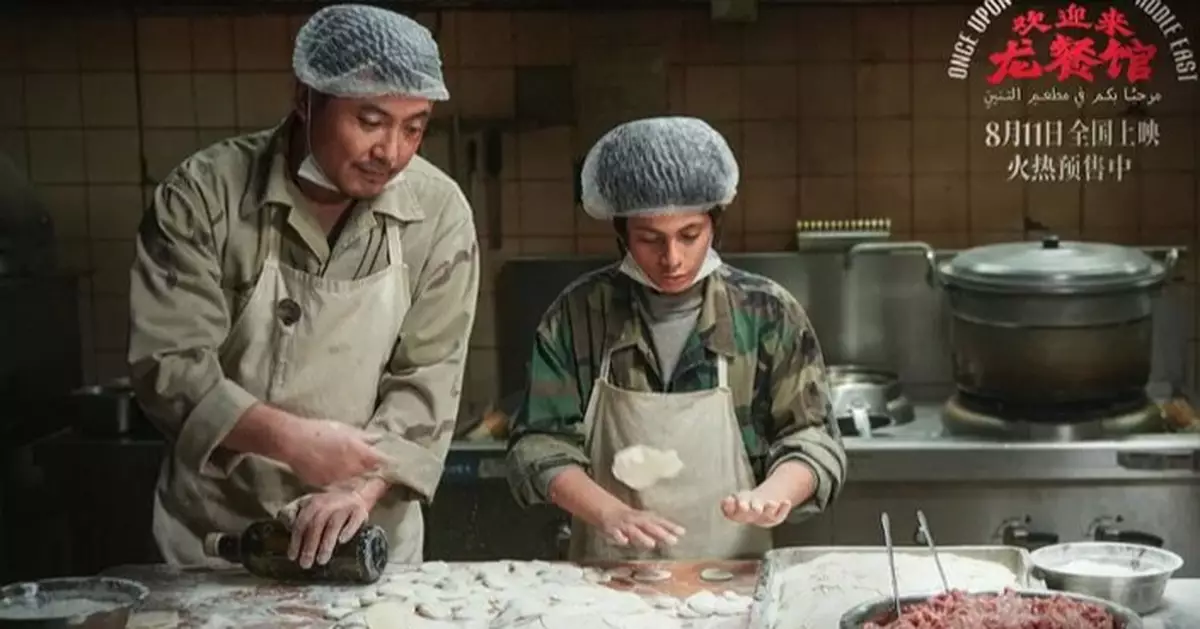
A still of Xu Fu and a kitchen hand wrapping dumplings.
The narrative is stitched together through a series of memorable meals: a bittersweet farewell breakfast, a cross-cultural wedding feast blending Middle Eastern grilled fish with Northeastern iron-pot stew, and a makeshift Christmas dinner inside a US military prison—where Xu Fu transforms Boston lobsters into a fiery "Spicy Lobster" dish and renames the Shandong snack "Scorpion Climbs the Snow Mountain" as "Scorpion Climbs the Christmas Tree." Even the humble bowl of stewed rice that Xu Fu self-deprecatingly calls "unpresentable" during their escape finds its way onto the Dragon Restaurant's permanent menu 20 years later.
A massive iron pot at a Middle Eastern wedding banquet.
The symbolism of food is strikingly visceral. A simple fried egg, scorched under intense heat, curls into a blackened ring of ash—a haunting visual parallel to a child turned into a human bomb, leaving behind only a dark, charred circle on the scorched earth. In the dramatic "Christmas Raid" sequence, the director uses parallel editing to alternate between glittering ornaments on a Christmas tree and golden sesame balls frying in hot oil, before a bomb lands right at the characters' feet in a terrifying instant.
Authenticity was paramount to the production. The crew spent six months constructing a 100,000-square-meter Middle Eastern street set at the Qingdao Oriental Movie Metropolis, meticulously recreating over 200 buildings. The restaurant kitchen was fully operational with real gas fires; Shen Teng underwent specialized culinary training before shooting, completing all cooking scenes himself. Remarkably, the actor playing the groom in the wedding scene is "Lao Wang in China," a mainland-based content creator who survived the real Iraq War—having been wounded in the conflict, he admitted that even the sound of firecrackers used to trigger intense anxiety for years.
The Middle Eastern street set constructed at Qingdao Oriental Movie Metropolis. (Source: China News Service)
China Begins to Tell Universal Stories
The global rollout for Welcome to Dragon Restaurant is expanding rapidly: it premiered in Singapore on September 17, Japan on September 18, and is slated for North America on October 9, with releases across Europe, the Middle East, and North Africa currently unlocking.
This film, telling a Middle Eastern story through a Chinese lens, embodies the deeper essence of the "Chinamaxxing" movement: China is no longer merely exporting products or cultural iconography, but is beginning to offer global audiences an alternative narrative framework—one that refuses to preach or judge, choosing instead to empathize. As director Wen Muye observed, the simple phrase "eat well" is a mundane greeting in peacetime; amidst the flames of war, however, it becomes the most resilient act of survival. This gentle yet unwavering Chinese perspective may very well be what global moviegoers have been "waiting a lifetime" to see.
Chinamaxxing
** 博客文章文責自負,不代表本公司立場 **