Skip to Content Facebook Feature Image

Fly In Empty, Fly Out Full: Why Foreign Tourists Are Heading to China with Three Suitcases to "Haul"

Blog

Fly In Empty, Fly Out Full: Why Foreign Tourists Are Heading to China with Three Suitcases to "Haul"
Blog

Blog

Fly In Empty, Fly Out Full: Why Foreign Tourists Are Heading to China with Three Suitcases to "Haul"

2026-10-03 10:45

This Mid-Autumn holiday, border checkpoints across China experienced a massive surge in travel. The National Immigration Administration reported an average of 2.236 million daily cross-border trips during the holiday period. Amid this influx, a striking scene has become increasingly common: foreign travelers arriving with empty suitcases and departing with luggage packed to the brim. On social media, a running joke has gained traction about tourists "bringing three suitcases each to shop till they drop." This trend, dubbed the "China Haul," is going viral across global social media platforms—and behind it lies a strategic, national-level vision far larger than any social media video.

What Is Filling These Suitcases?

More Images
Screenshot from Elliot Page's YouTube channel.
Screenshot from Elliot Page's YouTube channel.

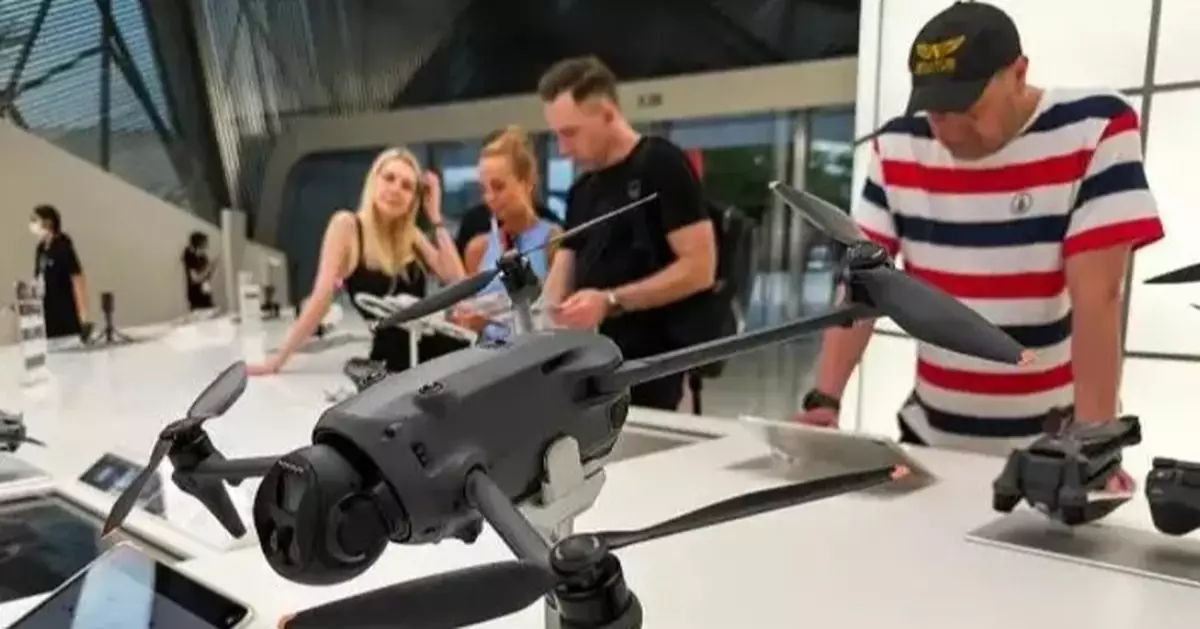
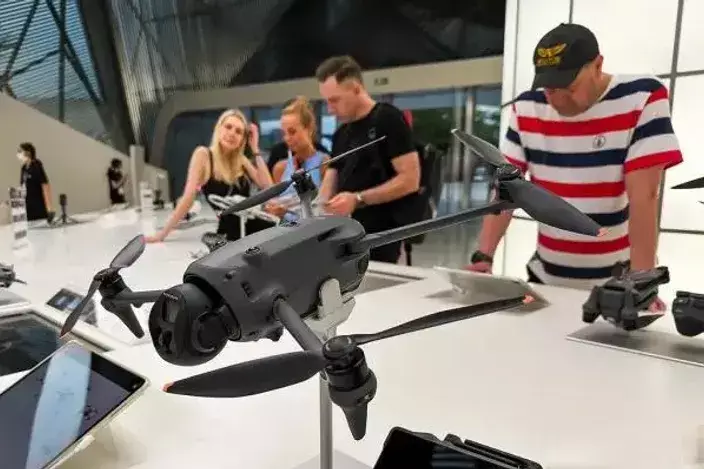
Experiential counters for DJI, Insta360, Huawei, and Xiaomi have become viral photo-ops for foreign tourists.

Experiential counters for DJI, Insta360, Huawei, and Xiaomi have become viral photo-ops for foreign tourists.

A Portuguese content creator posts a "China Haul" video on Instagram, sharing traditional wellness items like loquat syrup, Ganmaoling, and Guipi Wan. (Source: Instagram screenshot)
A Portuguese content creator posts a "China Haul" video on Instagram, sharing traditional wellness items like loquat syrup, Ganmaoling, and Guipi Wan. (Source: Instagram screenshot)

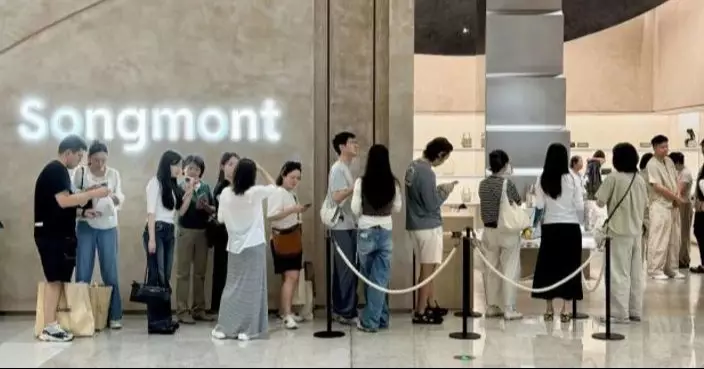
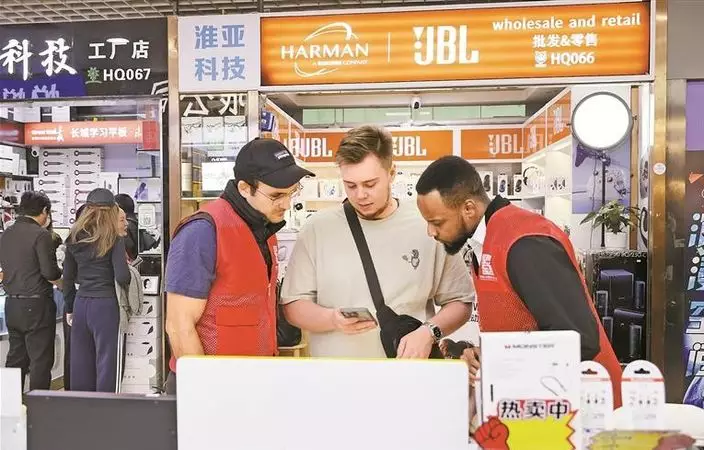
Foreign visitors shopping inside a commercial complex in Huaqiangbei. (Source: Shenzhen Government Online)

Foreign visitors shopping inside a commercial complex in Huaqiangbei. (Source: Shenzhen Government Online)

Foreign tourists sharing their "China Haul" videos on social media. (Source: Social media screenshot)
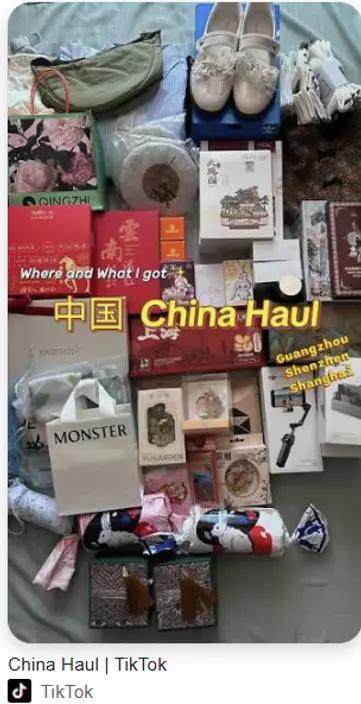
Foreign tourists sharing their "China Haul" videos on social media. (Source: Social media screenshot)

Foreign tourists sharing their "China Haul" videos on social media. (Source: Social media screenshot)

Foreign tourists sharing their "China Haul" videos on social media. (Source: Social media screenshot)

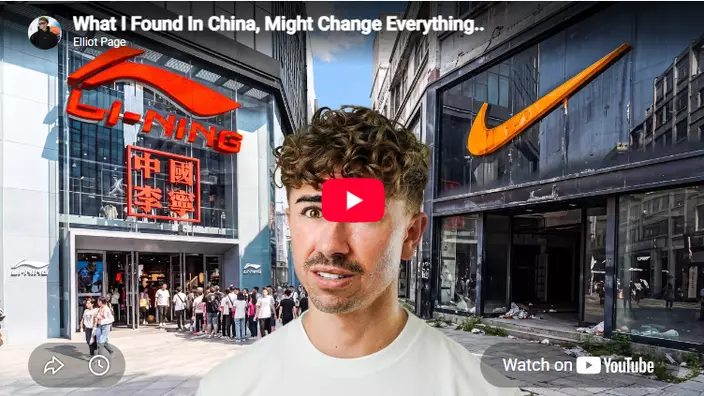
A "haul" video is a well-established genre in global internet culture featuring unboxings of shopping sprees. British YouTuber Elliot Page, who boasts 940,000 subscribers, uploaded a nearly 20-minute unboxing video on August 27, 2026, showcasing clothes and shoes he bought in Guangzhou and Shenzhen. By late September, the video had crossed 127,000 views. Another video following his shopping trip through Li-Ning and Anta flagship stores on Beijing Road racked up over 530,000 views in the same period.

Screenshot from Elliot Page's YouTube channel.

Screenshot from Elliot Page's YouTube channel.

The haul is remarkably diverse: high-tech products like DJI drones, Insta360 cameras, and Huawei foldable phones; "trendy local specialties" including designer bags, backpacks, apparel, home fragrances, and Pop Mart collectibles; as well as traditional wellness items such as Nin Jiom Pei Pa Koa (loquat syrup), herbal soaps, and moxibustion products.

Experiential counters for DJI, Insta360, Huawei, and Xiaomi have become viral photo-ops for foreign tourists.

Experiential counters for DJI, Insta360, Huawei, and Xiaomi have become viral photo-ops for foreign tourists.

A Portuguese content creator posts a "China Haul" video on Instagram, sharing traditional wellness items like loquat syrup, Ganmaoling, and Guipi Wan. (Source: Instagram screenshot)

A Portuguese content creator posts a "China Haul" video on Instagram, sharing traditional wellness items like loquat syrup, Ganmaoling, and Guipi Wan. (Source: Instagram screenshot)

A Ghana-born YouTuber living in China filmed himself testing a robotic dog in Shenzhen's Huaqiangbei electronics market, garnering 740,000 views. A top comment on the video captured the essence of the phenomenon: "I strongly advise everyone traveling to China to pack as lightly as possible—because you will shop until you are completely exhausted."

Foreign visitors shopping inside a commercial complex in Huaqiangbei. (Source: Shenzhen Government Online)

Foreign visitors shopping inside a commercial complex in Huaqiangbei. (Source: Shenzhen Government Online)

According to Dotdotnews, savvy travelers have even mastered an hyper-efficient shopping hack: using Chinese e-commerce apps to order products directly to their hotels ahead of time, then packing everything up on their final day. A ten-day itinerary essentially turns into a ten-day delivery frenzy.

Foreign tourists sharing their "China Haul" videos on social media. (Source: Social media screenshot)

Foreign tourists sharing their "China Haul" videos on social media. (Source: Social media screenshot)

Policy Tailwinds: Visa-Free Entry, Tax Refunds, and Strategic Subsidies

This trend is not merely a spontaneous grassroots phenomenon. As of August 2026, China has extended unilateral visa-free entry to 50 countries, alongside a 240-hour visa-free transit policy for 57 nations across 65 open ports in 24 provinces. Transit passengers can stay for up to 10 full days across multiple provinces, making "deep-dive multi-city travel" seamless. On departure tax refunds, the minimum purchase threshold has been lowered to RMB 200 per transaction, with "Buy-and-Refund On the Spot" services expanded nationwide. In May 2026, six government ministries launched Version 2.0 of the departure tax refund policy, extending the departure window to 28 days and enabling cross-regional refund processing. Furthermore, the Ministry of Finance and the Ministry of Commerce allocated up to RMB 200 million per city over two years to 15 key hubs—including Beijing, Shanghai, and Hangzhou—specifically to boost international retail tourism.

From Curiosity to Recognition: What Mid-Autumn Shopping Lists Reveal

During this year's Mid-Autumn Festival, many international tourists turned the holiday into a full-scale shopping season. Ayman, a tourist from Algeria, shared: "I've visited almost all of China. Every time I come back, there’s something new to discover. Since it's Mid-Autumn, I bought lots of gifts for my family and friends—especially mooncakes." Daniel, a visitor from Slovenia, offered a lighthearted reflection: "China has so much new technology and endless shops. The hard part isn't finding what to buy; it's fitting it all into your luggage."

Foreign tourists sharing their "China Haul" videos on social media. (Source: Social media screenshot)

Foreign tourists sharing their "China Haul" videos on social media. (Source: Social media screenshot)

The nature of consumer spending is also evolving toward higher-value experiences. A specialized cross-border consumption model blending "medical care, tourism, and shopping" is taking shape: herbal soaps, moxibustion wellness products, and medicinal cuisine are becoming staples on tourists' shopping lists. At the same time, "smart-factory tech tours" have emerged as a hot trend in inbound tourism, where visitors tour state-of-the-art automated automotive plants and witness cutting-edge manufacturing firsthand.

The Hard Data Speaks for Itself

Between January and August 2026, China recorded 61.287 million foreign inbound and outbound trips, representing a 19.5% year-on-year increase. Among these, visa-free entries reached 23.72 million, accounting for 77.6%—nearly eight out of every ten foreign visitors. In the first half of 2026, the number of foreign travelers processed for departure tax refunds nationwide surged by 366% year-on-year, while tax-free sales and total refund amounts rose by 69%.

"Reverse Daigou": The Next Chapter of Chinamaxxing

In the past, Chinese consumers traveled abroad to buy foreign goods; today, international consumers are making dedicated trips to China to purchase products from domestic brands that are unavailable, limited, or vastly more expensive back home. This phenomenon of "reverse daigou" (personal shopping) is not merely about cheap price tags—it represents a vote of confidence backed by real spending power toward the value transformation of Chinese brands. Analysts note that the core motivation of foreign tourists is shifting from "novelty buying" to "value recognition"—they are purchasing items not for exotic charm, but for genuine quality, design, and utility.

For China, the significance of the "China Haul" goes far beyond tourist dollars. "Made in China" is no longer just a cold statistic on container docks; it has materialized into tangible products being unboxed, tested, and genuinely lauded by global creators. From mooncakes to commercial drones, and from moxibustion patches to foldable smartphones, the space between an empty suitcase and a full one marks the final stretch of Chinese manufacturing's evolution—from OEM supplier to global brand. And that journey has only just begun.


Chinamaxxing

** 博客文章文責自負,不代表本公司立場 **
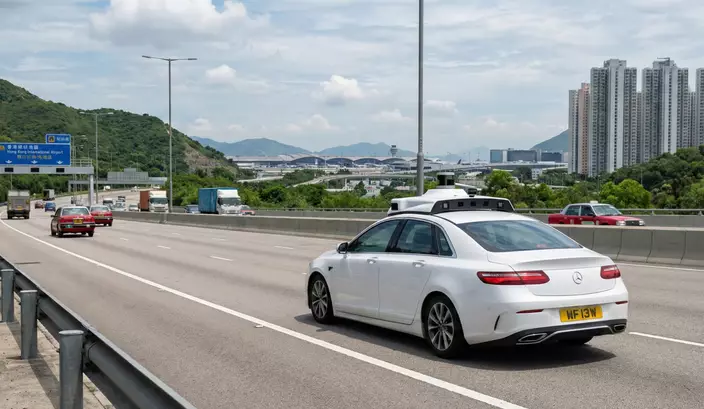
Some call this the most underrated industry racetrack of the century. Hong Kong drivers will soon share the road with a rather unique "colleague"—one that never gets fatigued, never takes unnecessary detours, and never refuses a fare. That’s because it isn't human at all; it is an algorithm trained by Baidu.

On July 23, 2026, the Transport Department issued "Apollo Go" (Luobo Kuaipao) Hong Kong’s first trial permit for fully autonomous driving without an in-vehicle safety driver. On July 27, tests officially kicked off on the Airport Island. This is no ordinary news headline; it is another major milestone certificate earned by Chinese AI technology in the world's most demanding proving ground.

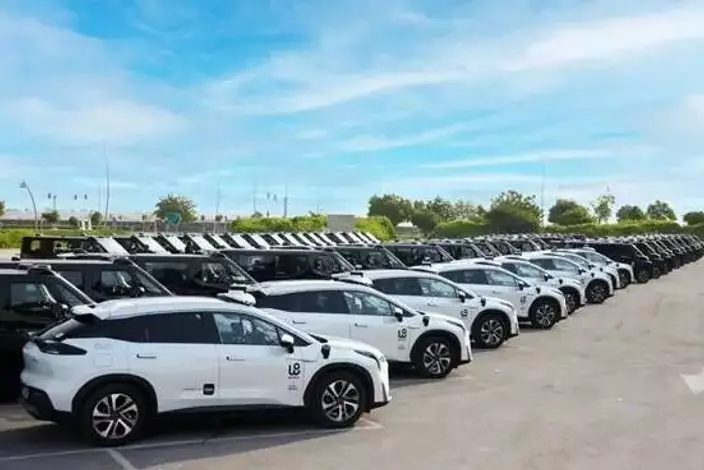
The Apollo Go fleet enters the core area of Tung Chung. (Image: eZone)

The Apollo Go fleet enters the core area of Tung Chung. (Image: eZone)

Why Smart Money Is Eyes-On with Hong Kong

Industry insiders fully grasp the weight of this permit. What kind of testing environment is Hong Kong? Right-hand drive with left-hand traffic, narrow streets, suffocating congestion, and aggressive taxis and buses weaving through traffic like guerrillas. Every kilometer tested here presents hurdles many times harder than in mainland China's flatland cities. Yet, Apollo Go has already logged over 240,000 test kilometers in Hong Kong, with the Transport Department confirming zero safety anomalies throughout the trials.

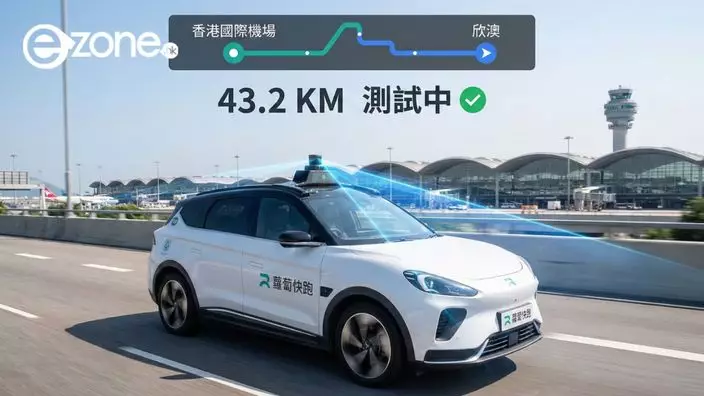
The Apollo Go test route expands to 43.2 kilometers, spanning from Hong Kong International Airport to Tung Chung and Sunny Bay. (Image: eZone)

The Apollo Go test route expands to 43.2 kilometers, spanning from Hong Kong International Airport to Tung Chung and Sunny Bay. (Image: eZone)

 This is the core logic behind Chinamaxxing: Chinese tech companies are no longer satisfied with polishing performance data inside their comfort zones. Instead, they are actively tackling the hardest nuts to crack—locales with the world's strictest regulatory standards and most intricate road conditions. Regulators in right-hand-drive cities worldwide—from Singapore to London and Tokyo—are now closely watching this Hong Kong test case. Pass this exam, and the entire technology stack can be seamlessly replicated and exported globally.

Numbers Don't Lie

Baidu’s Q1 2026 financial report speaks volumes: 3.2 million fully driverless rides provided in a single quarter, over 22 million cumulative passenger trips delivered, and operational footprints spanning 27 cities globally. Remember how Western media portrayed Robotaxis three years ago? Words like "a long way off" and "a money-burning pit" dominated headlines. Fast forward to today: while Waymo is still locked in regulatory tug-of-wars for permits in single cities, Chinese players have secured licenses across seven countries and are running fully driverless, revenue-generating operations across all four of China's top-tier megacities.

Uber’s strategic moves are the most telling. In February 2026, the global ride-hailing giant announced plans to enter Hong Kong's Robotaxi market. By August 20, it moved even faster by launching Apollo Go in Dubai—powered directly by Baidu’s underlying tech stack. When Silicon Valley powerhouses start integrating Chinese autonomous driving platforms, do you really need a clearer signal? Global mobility giants are casting their votes, and their capital is backing the Chinese supply chain.

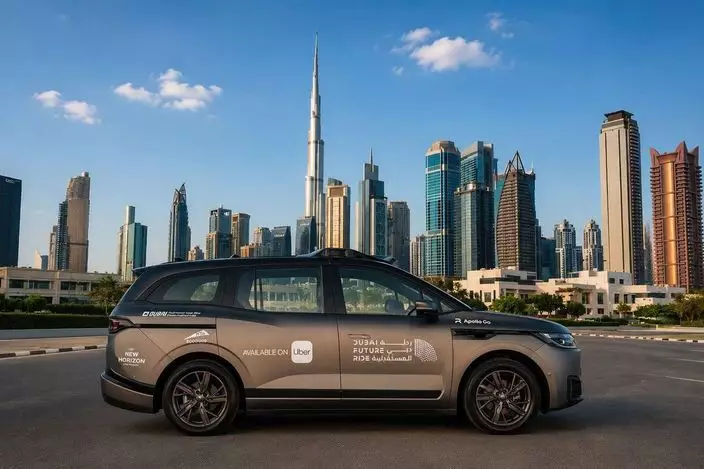
An Apollo Go autonomous taxi navigating the streets of Dubai. (Image: AP)

An Apollo Go autonomous taxi navigating the streets of Dubai. (Image: AP)

The Game of Two Giants: One Deepening Mainland Roots, One Harvesting Globally

By late June 2026, Pony.ai’s Robotaxi fleet expanded to 1,975 vehicles, making it the sole operator to secure comprehensive regulatory approvals across Beijing, Shanghai, Guangzhou, and Shenzhen. Words from CEO James Peng are worth noting: "We’ve pushed through nearly a decade of groundwork to finally reach commercial scale. The market is vast, but not everyone will get a piece of the pie." The gross margin per vehicle for its 7th-generation model has already turned positive in Guangzhou and Shenzhen—meaning "adding another car no longer burns cash." With cash flows projected to turn positive as the fleet reaches 50,000 units by 2028 or 2029, the rollout is playing out right on schedule.

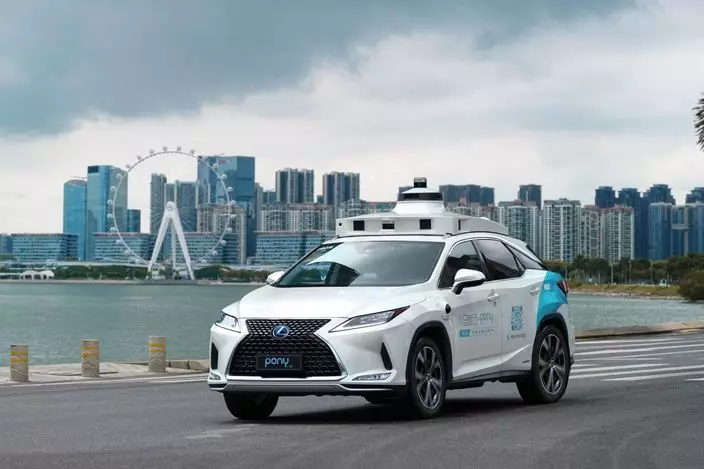
Pony.ai launches commercial autonomous operations in Bao'an District, Shenzhen. (Image: Wen Wei Po)

Pony.ai launches commercial autonomous operations in Bao'an District, Shenzhen. (Image: Wen Wei Po)

WeRide, on the other hand, is executing a distinct playbook: holding licenses across 7 countries and operating in over 40 cities across 11 nations, while forging tight alliances with Uber and Grab to export China's end-to-end tech stack to Abu Dhabi, Dubai, and Singapore. A Chinese firm operating the largest local Robotaxi fleet in the Middle East—a scenario utterly unimaginable a decade ago.

WeRide’s Robotaxi fleet deployed in Abu Dhabi. (Image: Sina Finance)

WeRide’s Robotaxi fleet deployed in Abu Dhabi. (Image: Sina Finance)

 Morgan Stanley has dubbed 2026 the "singularity moment" for autonomous driving; CITIC Securities frames it as Year One of commercialization; Goldman Sachs forecasts that China’s Robotaxi market will hit US$14 billion with a fleet of 535,000 units by 2030. There is a palpable sense of irony in the fact that Western investment banks are showing far more optimism than mainland Chinese media.

Keeping a Cool Head Wins the Long Game

Chinamaxxing is not about blind optimism; it is a calculated strategy rooted in clear structural trends. Yet, essential risk factors must not be overlooked: WeRide still reported a Q1 net loss of RMB 389 million; shares of both "giants" listed in Hong Kong remain down 40% to 60% from their IPO prices—proving that while the market behaves like a voting machine in the short run, it remains a weighing scale in the long run. Furthermore, a system glitch on March 31, 2026, stranded over a hundred Apollo Go vehicles in Wuhan, underscoring that the flip side of massive scaling is the systemic risk of a Single Point of Failure (SPOF)—a point explicitly raised during the Hong Kong Transport Department’s press conference.

Nevertheless, these challenges offer the clearest lens through which to evaluate the sector: the core technological threshold has been crossed, commercial models are solidifying, yet valuations remain suppressed below IPO levels due to short-term losses and market sentiment. While traditional taxi operators worry about low-cost disruption and academics view current autonomous rides as novelty experiences, history consistently demonstrates one truth: once the cost curve of transport capacity drops, the pace of disruption moves far faster than anyone anticipates.

The Wheels Are Already Turning

As Apollo Go’s autonomous vehicles glide across Hong Kong's Airport Island, they validate far more than just algorithms—they demonstrate a fully exportable capability model for Chinese autonomous driving enterprises entering right-hand-drive global markets. While Waymo guards its turf in Phoenix and Tesla continues to sell pipe dreams about its Robotaxi, Chinese players are actively placing their strategic pieces across Asia, the Middle East, and Europe simultaneously.

The ultimate question is no longer whether Chinese Robotaxis can deliver—the streets of Wuhan, the deserts of Dubai, and the roads of Hong Kong's Airport Island have already given their verdict. The real question is: as this tide reaches Hong Kong, are we ready for it?

Recommended Articles