America is racing China on computing power, and it is throwing up AI data centers at breakneck speed. What Donald Trump sees as a major bargaining chip against China is stirring controversy in local communities and turning into a hot potato in the US midterm elections.
Trump's China Bargaining Chip
Click to Gallery
Trump's AI data center boom fuels public anger.
Unchecked data center expansion sparks public resentment.
Unchecked data center expansion sparks public resentment.
AI data centers become midterm election wild card.
sk's Texas political and business empire faces uncertainty.
China, by contrast, plans its buildout methodically.
The computing-power race is not just about breakthroughs in chips and large models. Projects still have to win sites and actually get built, and the United States keeps stalling at exactly that step.
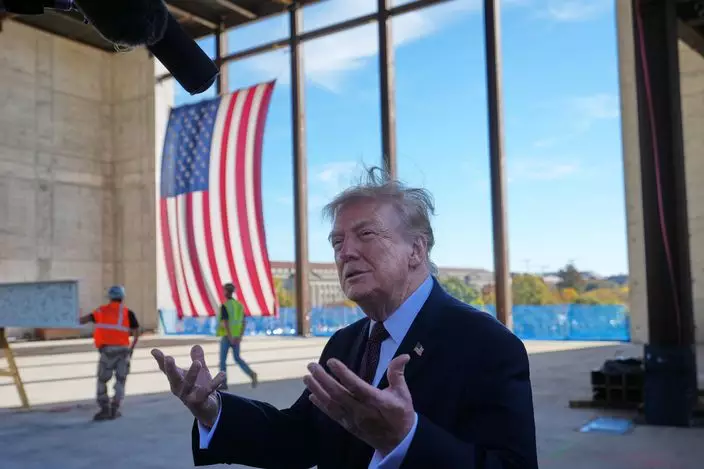
Trump's AI data center boom fuels public anger.
The steady spread of AI data centers across the United States has put electricity bills, water use and noise on local agendas. The buildout has also become one of the flashpoints in the midterm elections.
Trump wants to cast computing power as a key chip in the contest with China. But the pushback is spreading through the very areas where his supporters live.
The president defended the buildout at a campaign rally in Ohio, saying the projects could deliver local economic benefits. He warned that if the United States refused to develop them, the opportunities would flow to China.
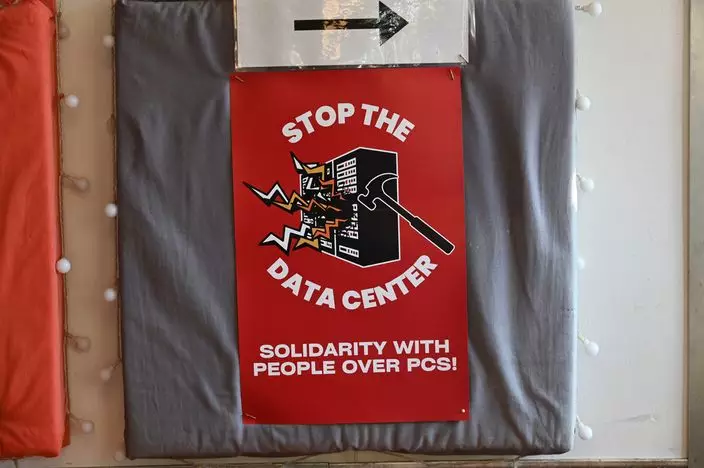
Unchecked data center expansion sparks public resentment.
According to the Associated Press, Trump appeared in Van Wert, Ohio, on October 3 to support Republican Senator Jon Husted. Discussing data centers, "Look, there’s so much money to be made for Ohio. You can’t just turn them off. They’ll go to China." He added that the government was taking measures to ensure that big tech companies' data centers benefit local communities.
Backlash Hits Home
Trump had earlier taken to a social platform to argue that communities rejecting data centers were choosing backwardness and poverty. He also claimed China would welcome an anti-data-center movement in the United States.
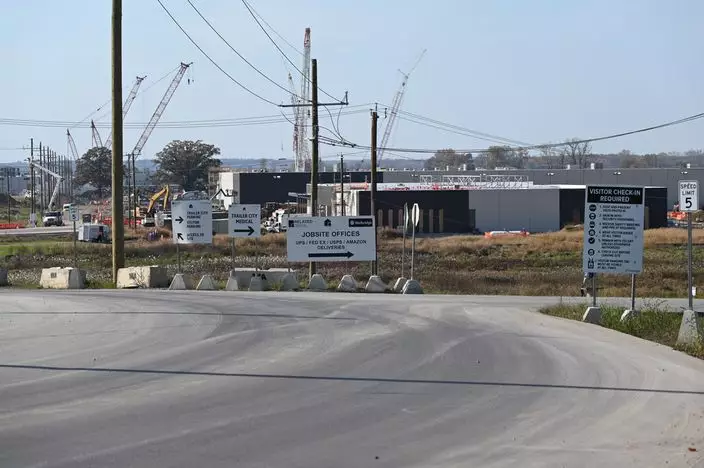
Unchecked data center expansion sparks public resentment.
But the fight on the ground is more basic. Power, water and land are all in demand, and the question of who pays for the supporting facilities has become the flashpoint.
In Ohio, a retired worker moved to New Albany for a quieter life. Then tech companies brought in data centers, and the constant hum of cooling equipment began to wear on nearby residents. He disagreed with Trump’s claim that data centers bring prosperity to local communities, saying he would rather be poor than have them built in his neighborhood.
Local resistance is now spilling into the campaign. The report noted that former Democratic Senator Sherrod Brown used a campaign ad to attack Jon Husted, a former Ohio lieutenant governor, for helping bring large data centers to the state.
Some residents are organizing to stop the projects from expanding further.
Polls and Texas Shocks
An October poll by ABC, The Washington Post and Ipsos found that 66% of Americans oppose building more data centers in the United States. Ask them about their own neighborhoods and the resistance climbs to 72%.

AI data centers become midterm election wild card.
The opposition crosses party lines. Some 81% of Democratic supporters, 76% of independents and 58% of Republicans object to data centers in their communities. A separate Politico poll in October found half of respondents against any data center within three miles of their homes, up sharply from 28% in the outlet's January survey. Together, the polls show data center siting has become a kitchen-table issue.
The numbers are staggering. The world has roughly 12,250 data centers, and the United States hosts 4,767 of them, according to mainland media reports. Yet localities across America are slamming the brakes on approvals, freezing about $260 billion in planned projects and leaving nearly $1 trillion in investment facing hurdles to landing.
Now Musk's Texas bets are wobbling too. The Trump ally poured more than $400 million into supporting Republicans this election cycle, multiple media outlets report. That money may have gone up in smoke.
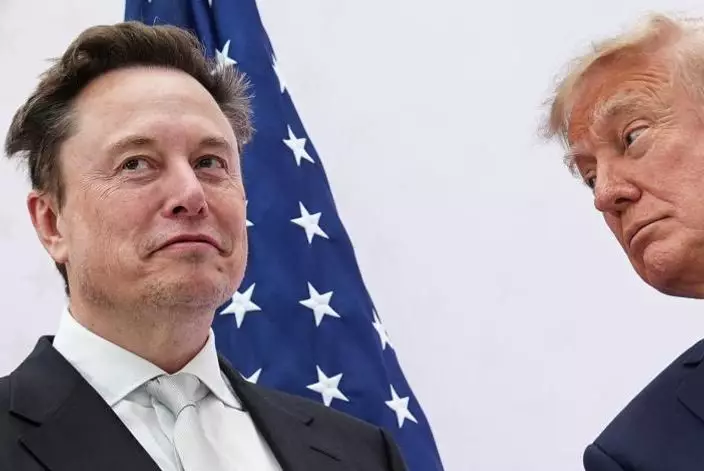
sk's Texas political and business empire faces uncertainty.
Democrat Gina Hinojosa unseated incumbent Republican Governor Greg Abbott to win the governor's race. During the campaign, he pushed to pause data center construction until the state legislature draws up community safeguards, and backed ending the related tax breaks.
Musk-backed Republican US Senate candidate Ken Paxton also lost. The defeats have markets bracing for tighter regulation of tech companies expanding in Texas after the election.
China's Coordinated Play
Donald Trump sees data center construction as a key pillar of America's AI competitiveness. But local resistance shows the policy comes with a cost-sharing question. How companies shoulder the extra electricity and infrastructure spending, and whether residents get tangible benefits from the investment, can decide whether a project wins support.
After this episode, the fragmentation of America's governance system is on full display.
Contrast that with China. Chinese companies control more than 70% of global high-speed optical module capacity, and the country's computing power grew 60-fold in just six months.
Beijing is also knitting its computing resources into a national layout through the 'East Data, West Computing' project. The scheme links the east's massive computing demand with the west's land and clean energy resources. It also ties data centers and power grids into one integrated plan, so computing, communications and energy facilities grow in step.
The build-out is still accelerating. Data released by the National Development and Reform Commission in August showed national intelligent computing power up 177% year on year as of the end of June. Officials also note that cross-regional transmission latency and supporting facilities still limit how much business can shift west, so applications with strict latency requirements must stay in the east.
The takeaway is clear. The Mainland's computing power build-out is not just about scale; it also weighs real demand, facility utilization and energy capacity, so growth does not run blind.

China, by contrast, plans its buildout methodically.
Deep Throat
** 博客文章文責自負,不代表本公司立場 **
South Korea wants its military back. Seoul hopes to reclaim wartime operational control of its own armed forces from the United States within two years. Washington refuses to commit to a specific transfer date.
Seoul Wants Control Back
Wartime operational control answers a simple question: if war breaks out again on the Korean Peninsula, who commands South Korean troops? For now, the answer is Washington. That authority has sat in American hands since shortly after the Korean War erupted in 1950, according to reports.
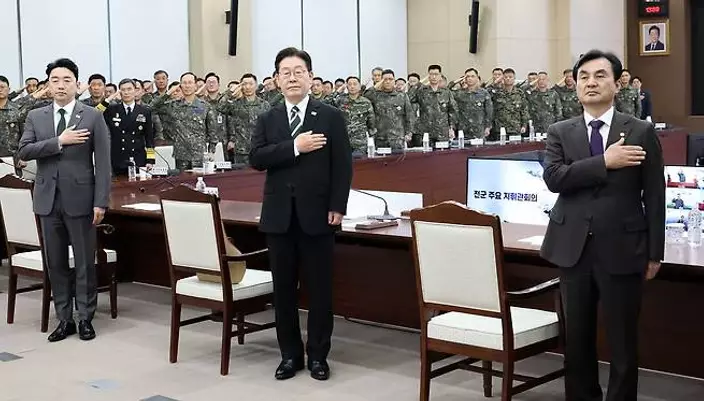
Lee chairs top military meeting, pushes wartime command transfer.
Under current arrangements, designated South Korean units would fold into the ROK-US Combined Forces Command in wartime, led by a US Army general. That general is Brunson, the commander of US Forces Korea. He also commands the roughly 28,500 American troops stationed in the South.
Exactly which units are involved is classified. But they are believed to include all of the South Korean Army's frontline combat units, plus most of its Air Force and Navy forces.
Washington Won't Commit
South Korean President Lee Jae-myung is pressing to take back wartime operational control. On October 19 he said Seoul "should take back wartime operation control at an early time" and is "fully capable of it". The government's target is to finish the transfer by 2028, two years before Lee's term ends in 2030.
The US military has its own timeline. At a congressional hearing in April, Brunson said it had already submitted a roadmap to hit the transfer conditions by the first quarter of 2029 at the latest. He was describing when the conditions could be met, not setting a handover date.
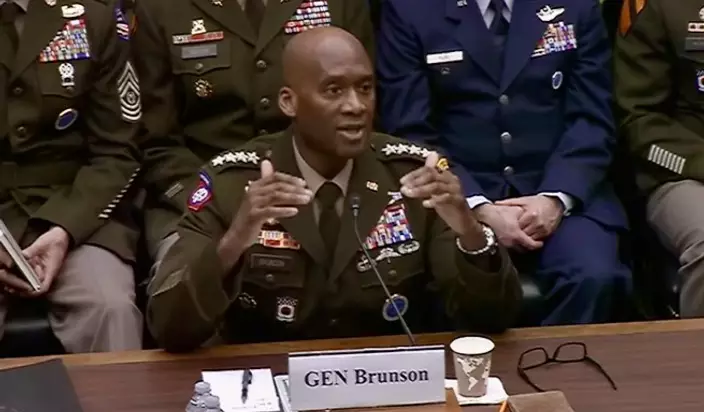
USFK's Brunson testifies on transfer timetable to Congress.
Washington's official line is simple: No transfer until agreed conditions are met. At a think tank seminar in Washington on October 14, Brunson said any handover must rest on satisfying the relevant conditions and cannot be tied to a political timetable. US officials repeated the message on October 27, saying "the United States intends to transfer OPCON to South Korea when the agreed conditions are met."
A South Korean defense ministry spokesperson voiced the fear out loud on October 15. In her personal view, the handover may never happen if Washington keeps moving the goalposts.
The Kyunghyang Shinmun reported on October 27 that, in midyear consultations, the US demanded that stronger air-ground communications through the SATURN program be added as a new yardstick for the transfer. SATURN is a next-generation, NATO-standard anti-jamming technology for upgrading military radios, and its full deployment has slipped from 2028 to 2032. That delay has some in the South Korean government worried that, if Washington keeps adding evaluation items, Lee's goal of finishing the transfer within his term will be at risk.
The two defense chiefs met in Cebu, the Philippines, on October 28. They agreed to push the annual security consultative meeting, originally set for October, to early 2027 and to hold talks in Washington in December.
South Korean media blamed scheduling difficulties. The Korea Herald, though, noted earlier speculation that the delay was tied to the fallout from the US-Iran conflict and the US midterm elections.
South Korean Defense Minister Kang Shin-chul said on October 30 that US Defense Secretary Pete Hegseth reaffirmed the transfer commitment at the meeting and dismissed talk of alliance discord as "fake news." National Security Office Director Wi Sung-lac said South Korea expects progress at the talks early next year.
DMZ Remark Sparks Uproar
Brunson stepped into another storm around the same time. On Oct. 14, he told the same seminar that, from the UN Command's point of view, South Korea starts at the barbed-wire fence on the southern edge of the Demilitarized Zone.
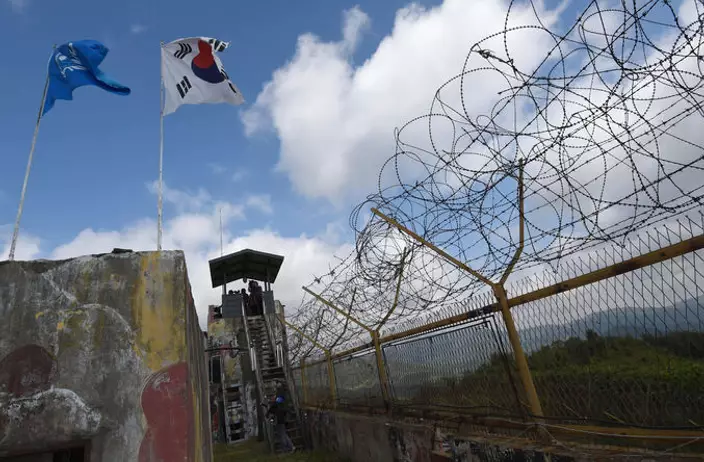
Barbed wire, guard posts on DMZ's southern side.
The DMZ is the buffer strip along the inter-Korean border, running about 2 kilometers on each side, and the fence sits on the southern side. Read literally, his line left the band north of the fence outside South Korean territory.
Kim Min-seok of the ruling Democratic Party said the remark was highly inappropriate on constitutional grounds. South Korea's Ministry of National Defense called it the UNC commander's personal view, and the Army chief of staff told a parliamentary audit he could not agree.
The UN Command said the comment was tied to management duties under the armistice agreement. One South Korean online program headlined the story by asking whether Brunson was a governor-general, a loaded reference to the top Japanese ruler of Korea from 1910 to 1945.
Foreign Minister Cho Hyun said on Oct. 27 that he had met US Ambassador to South Korea Michelle Steele the previous week and lodged a protest, according to reports.
Lawmakers Split on Transfer
The sparks flew on October 26, when the National Assembly grilled the Ministry of National Defense in a parliamentary audit and the command issue set off a fierce debate. Sung Il-jong of the opposition People Power Party warned that the matter concerns the life and death of the nation, and demanded the defense minister be extremely cautious when offering recommendations.
Kang Shin-chul pushed back. He called the claim that transferring command authority would endanger South Korea's security an exaggeration. Given the uncertainty in the global security environment, he questioned whether Seoul could keep betting everything on US forces.
Some commentators read those remarks as doubting the US military. The ministry clarified the next day that Kang was rebutting lawmakers' concerns about the transfer, and stressed the importance of mutual trust.
Within the ruling party, some wanted a harder line. Kim Byung-joo, a Democratic Party lawmaker who serves as the president's defense policy adviser, said that if Washington keeps obstructing the transfer process, South Korea should declare it will exercise wartime operational control on its own. He also proposed legislation making clear that the president can hold supreme command even in wartime.
The JoongAng Ilbo pushed back in an editorial. A unilateral declaration that bypasses consultations, it argued, would only damage the negotiations.
Kang Shin-chul rejected the approach the same day. Command authority, he said, must be transferred through close consultations between the two countries, on the premise of mutual trust.
China Looms Behind Conditions
So why does Washington insist on the conditions? Kim Yeol-soo, a senior researcher at the Korea Institute for Military Affairs, points to what he calls an undisclosed motive: keeping influence over the South Korean military to counter challenges from China.
The context he cites is telling. In May, Brunson compared South Korea to a dagger on a podcast at the US Army War College. Last year he went further, calling the country a fixed aircraft carrier between China and Japan.
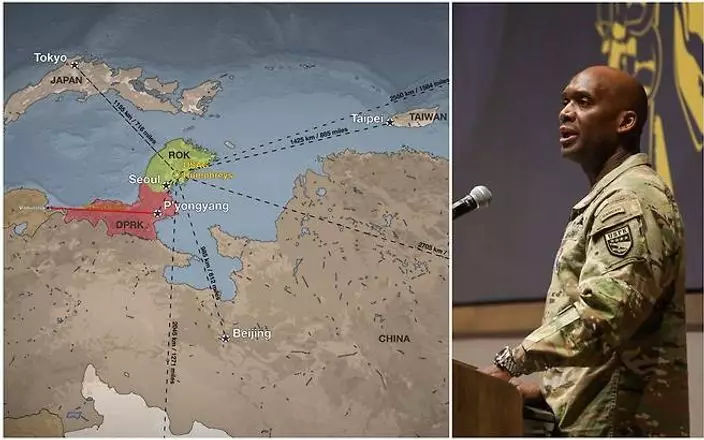
Brunson explains US East Asia posture at US Army War College.
Beijing fired back. A spokesperson for the Chinese Embassy in South Korea said on May 28 that his remarks had crossed the line.
Doo Jin-ho, a researcher at the Institute for Far Eastern Studies at Kyungnam University, sees it the same way. Washington, he said, wants to use the ROK-US alliance not only to deter North Korea but also to contain China.
The geography explains the stakes. China's Shandong Province sits only about 300 kilometers from the Korean Peninsula, he noted, and fighter jets could cross that gap in under 10 minutes. On strategic value alone, he said, the United States cannot afford to lose South Korea.