The Pentagon has a secret it has kept for months. Politico, citing informed sources, reported on October 22 that the US defense establishment has been quietly building an "elite new technology agency" to secretly disrupt and sabotage foreign technology programs seen as a threat to American military superiority.
A Secret Agency Surfaces
Click to Gallery
Politico: Pentagon quietly builds secret tech-sabotage agency targeting at America’s competitors.
Deputy Defense Secretary Feinberg pushed TSO; adviser Rakusan deeply involved.
TSO signals aggressive covert ops: cyber, sabotage, disinformation.
Hegseth, Pentagon officials never mentioned agency publicly.
Washington Post: Pentagon seeks deep-cover spy program.
Yet since the agency was set up in April, Defense Secretary Pete Hegseth and senior Pentagon officials have never mentioned it in public, the sources said. The Washington Post had earlier reported, also citing leaks, that the US Department of Defense plans to build a "more powerful" deep-cover spy program to wage "economic warfare" against America's competitors.
What is the mission? A former US intelligence official who once worked closely with the secret agency said its overall goal is to buy time and keep adversaries from developing key technologies.
The Shadowy TSO
Politico broke the story under a blunt headline: "The Pentagon is quietly building an elite new tech sabotage agency." At the center of it sits a technology support office, known internally as TSO, that barely exists on paper. Scour the Pentagon's website and you will find almost nothing. The office surfaces only in a handful of previously undisclosed Defense Department records and memos, and the specifics are highly classified.

Politico: Pentagon quietly builds secret tech-sabotage agency targeting at America’s competitors.
Yet even the insiders cannot agree on what TSO is. Politico interviewed 12 current and former US national security officials, and their grasp of the office varied widely.
Some of these anonymous sources helped create TSO or worked closely alongside it. Others sat in on briefings or discussed the matter with current Pentagon officials. A third group knows the Defense Department intelligence programs that have since been folded into TSO.
The Men Behind It
Every secret shop needs its architects. This one has two: US Deputy Defense Secretary Steve Feinberg, who drove the agency's creation, and his senior adviser Tom Rakusan, a former senior CIA official who once directed spy operations and was deeply involved in building TSO.

Deputy Defense Secretary Feinberg pushed TSO; adviser Rakusan deeply involved.
The pair built the agency by merging two classified US Department of Defense intelligence programs. Since 2023, those programs had been running similar covert technology sabotage on a smaller scale.
Standing up a dedicated agency to expand those efforts sends a clear signal: the Pentagon means to escalate a series of aggressive covert activities overseas. That could include cyberattacks, supply chain disruptions, and disinformation operations.
Sabotage by Design
Sources say America's adversaries are getting creative, exploiting artificial intelligence and advanced commercial tech, like drones, in ways that could eat away at the US military edge.
The TSO has no legal authority to run covert operations itself. But it works hand in glove with senior US military and intelligence officials, crafting strategies and building cutting-edge tools to keep critical defense technologies out of adversaries' hands.

TSO signals aggressive covert ops: cyber, sabotage, disinformation.
Its ranks are filled with engineers, special operations personnel and intelligence officers. Their work runs the gamut, from custom-built hacking tools to deception schemes that trick adversaries into installing potentially flawed components on key weapons platforms.

Hegseth, Pentagon officials never mentioned agency publicly.
Blueprint From a White Paper
The blueprint took shape in early 2025. Staff at the Office of the Under Secretary of Defense for Intelligence and Security (I&S), the outfit that oversees the Defense Department's intelligence programs, began drafting a white paper on how to expand the Pentagon's two existing classified technology disruption programs, according to three former intelligence officials.
The white paper was finished that fall. It weighed folding both programs into US Cyber Command, the Pentagon's digital warfare arm. In the end, it recommended something bolder: merging the two efforts into a new agency with its own budget and procurement authority.
That shift would hand the new agency far more muscle. It could pull cutting-edge technology out of the private sector faster. It could also think more strategically about which foreign defense technologies pose the greatest threat to US military organizations.
Spies Posing as Businessmen
In a telling coincidence, The Washington Post reported the same Wednesday (the 21st) that the Pentagon is seeking to set up a "deep-cover spying program" aimed at US competitors. The program would form part of a broader economic strategy.

Washington Post: Pentagon seeks deep-cover spy program.
The Post cited six people who know about the new plan, that US intelligence personnel known as "non-official cover" (NOC) operatives would pose as businesspeople or other private-sector staff, without disclosing their ties to the government.
The project is overseen by a former senior CIA official who now serves as a senior adviser to US Deputy Secretary of Defense Feinberg. That lines up closely with what Politico reported.
The risks are unusually high. Operating under non-official cover means these personnel cannot work at US embassies or other US government agencies, and if detained, they get no diplomatic immunity.
The program could also raise questions about legal authority and potential overlap with CIA intelligence operations, the report said.
The Pentagon pushed back. A deputy press secretary flatly rejected the reports, saying the story "appears to be built on information that is simply not true".
Deep Throat
** 博客文章文責自負,不代表本公司立場 **
The Japanese yen keeps sliding, and prices across Japan keep climbing. In recent days, a wave of Japanese supermarket shelf photos has swept Chinese social media and shot up the search rankings. The images show shrimp shells, chicken bones and watermelon rinds, the parts usually tossed straight into the trash during everyday cooking, washed, packaged, tagged with prices and neatly displayed, waiting for customers to buy.
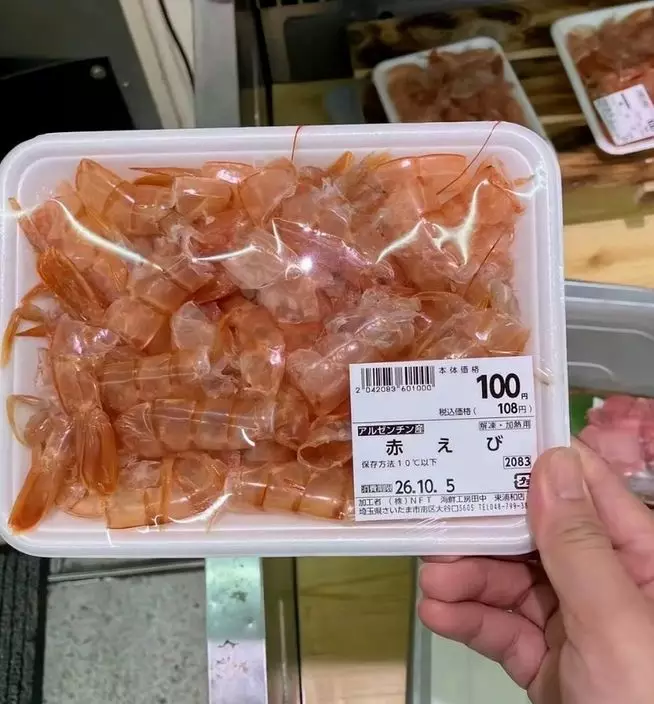
Japanese supermarket scraps—shrimp shells, bones, rinds—packaged and priced
Trash Becomes Merchandise: Shrimp Shells and Watermelon Rinds Hit the Shelves
Some netizens exclaimed that in their homes these scraps all go straight into the waste bin, while others questioned whether Japan has grown so poor that it must turn kitchen scraps into cash.
But the causes behind this trend run far deeper than the word 'poor' suggests.
Step inside a local supermarket, and the commercialization of offcuts turns out to be remarkably mature. Watermelon rind is cut into long strips, boxed in cling film and sold at a clearly marked price, while shrimp shells are packaged on their own at 108 yen a box, complete with a recipe card teaching customers how to simmer miso soup. Enoki mushroom stems, radish leaves, napa cabbage ribs, fish tails and other parts mostly discarded outright in China can be found everywhere in the refrigerated compartments.
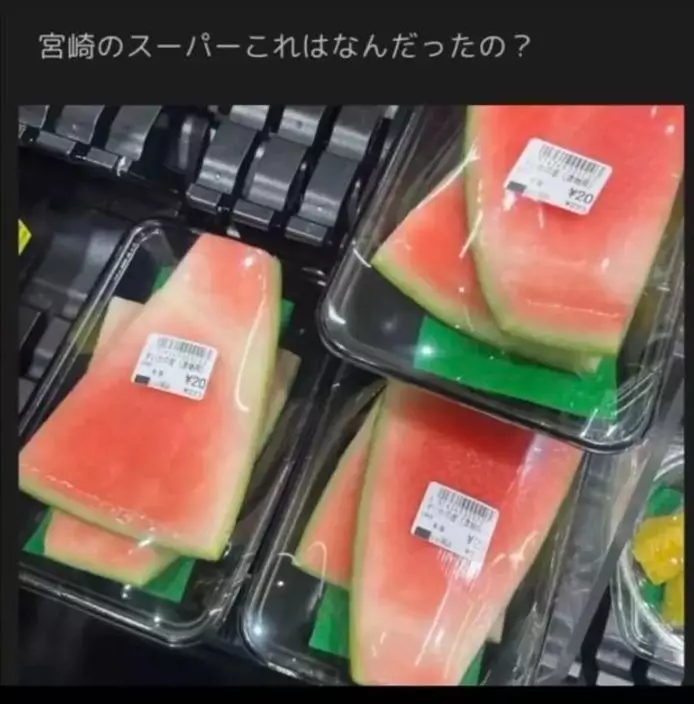
watermelon rinds
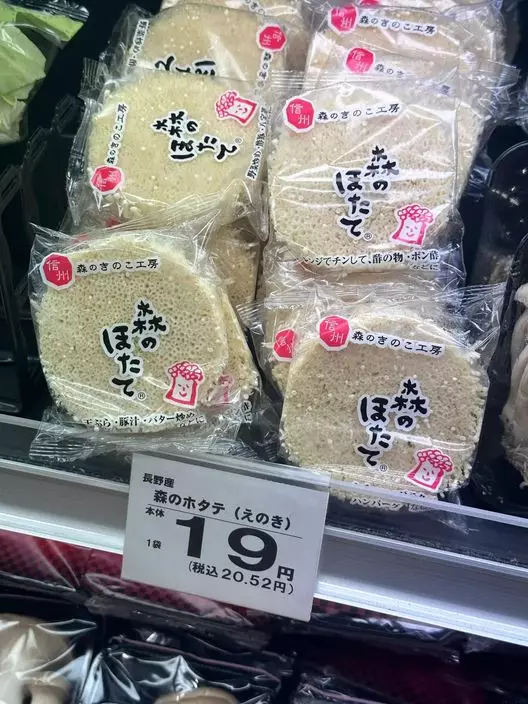
Enoki mushroom stems
Many people's first reaction is to assume the Japanese are simply born thrifty. Dig deeper, and the story changes. This is not a pure culture of thrift; it is a survival choice forced on ordinary people by the yen's collapse and persistently rising prices.
In fact, these offcuts were never entirely without value in Japan's culinary tradition. Shrimp shells can be simmered into soup stock, mushroom stems can be cooked once properly prepared, and watermelon rind can be pickled or stir-fried. Grilled pufferfish (fugu) fins are even one of the ingredients of Japan's distinctive hirezake (fin sake).
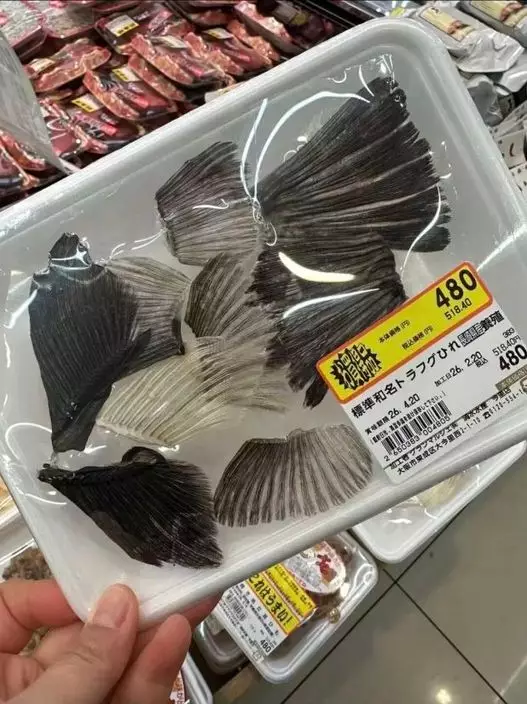
Grilled pufferfish fins flavor Japan's fin sake
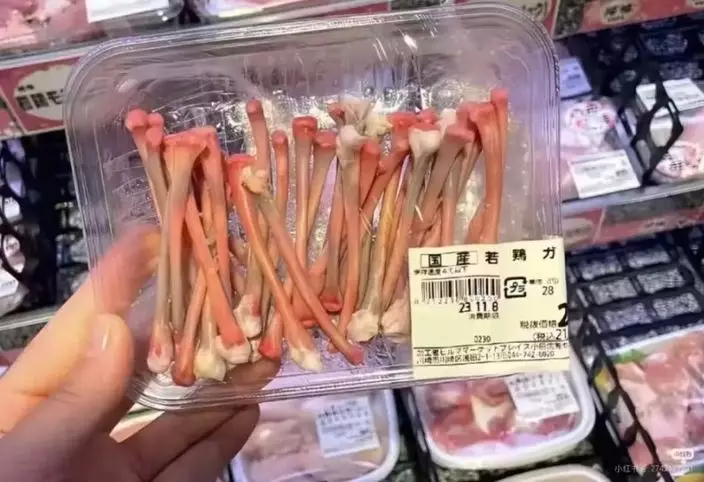
In the past, making use of these food scraps was mostly a private skill of Japanese housewives. They simmered stock from shrimp shells and fish bones, mixed radish leaves into side dishes, pickled watermelon rind and pan-fried enoki stems. Such practices circulated only within the household.
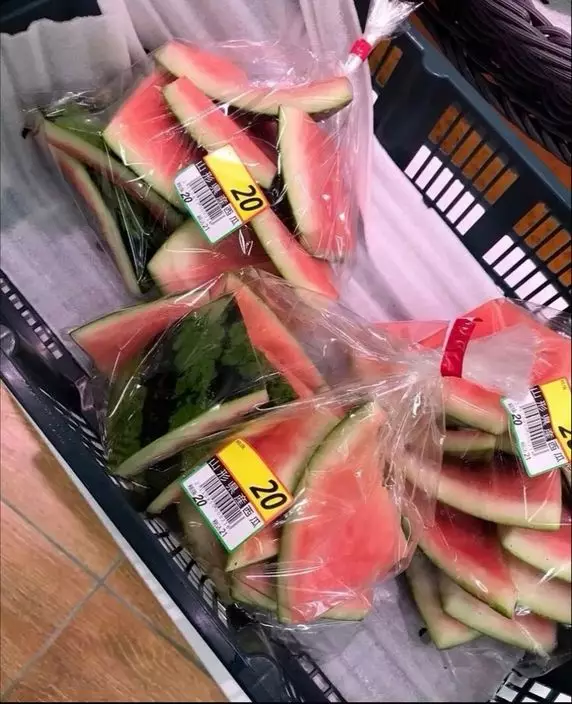
Japanese netizens: watermelon rinds feed pet insects
Today, supermarkets process, package and sell the offcuts directly. Ordinary people can simply pay for them, sparing themselves the trouble of collecting and preparing the scraps.
Some Japanese netizens explained that watermelon rinds are used to feed pet insects, while shrimp shells go into stock or get mixed into senbei rice crackers, insisting they are absolutely not food waste. They stressed that this is life wisdom that has existed in Japan since ancient times, though not all Japanese people do this.
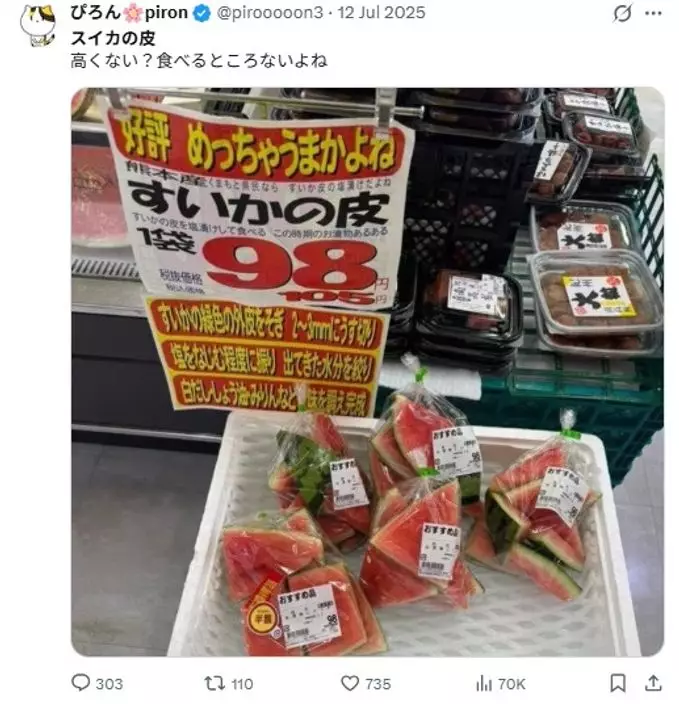
Japanese netizens: watermelon rinds feed pet insects
The Yen's Collapse Meets a Rain-Soaked Harvest
But there is a more realistic force at work right now, pushing irregular cuts onto store shelves.
Japan itself has scarce arable land and leans heavily on imported food. After the sharp depreciation of the yen, the cost of imported raw materials, energy and logistics rose across the board. Food prices then climbed one after another.
Nothing makes the point more bluntly than the price shock in local supermarket produce sections. Napa cabbage, long the cheapest standby vegetable of winter, now commands more than 1,000 yen for a single whole head, roughly 50 to 60 yuan. Even a quarter of a head costs nearly 300 yen.
Leafy greens such as spinach, komatsuna and lettuce are the hardest hit. A scrawny bunch of spinach, three or four stalks at most, once cost a little over 100 yen. Now it routinely fetches 300 to 400 yen.
Ordinary household income growth cannot keep pace with prices. So people squeeze their dining budgets by every means possible, and these irregular cuts become the substitute of last resort.
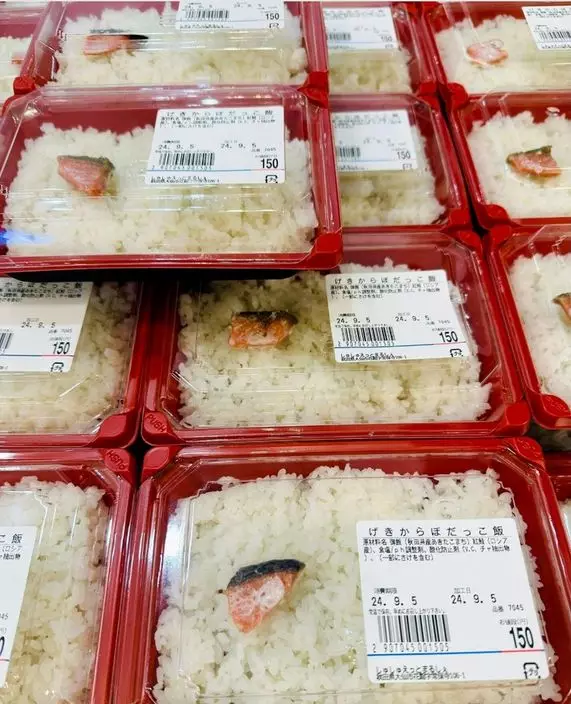
Wages lag prices; families slash food budgets
Behind the outrageous vegetable prices sits a pile-up of multiple factors. Weather ranks as one of the key reasons. By one account, Tokyo endured 37 consecutive days of rain after August 27.
September sunshine totaled just 45.8 hours, a low rarely seen for the same period in 38 years. The relentless rain and starved sunlight hurt vegetable growth and supply, sending prices of some leafy greens up rapidly.
On the other side of the ledger, fertilizer, agricultural fuel and logistics costs have all soared, pushing the supply chain cost of agricultural products to historic highs.
More fatally, Japan is confronting a full-spectrum price surge in which everything rises together.
According to data from an authoritative Japanese research institution, more than 3,000 kinds of everyday foods and beverages in Japan announced price increases on October 1 this year alone. The list spans bottled beverages, beer, milk and other everyday drinks. It also covers ham, bacon, frozen foods and other processed items, plus seasonings such as soy sauce, mayonnaise and soup stock cubes. Even public service fees like electricity, gas and postal delivery are climbing.
20,000 Price Hikes, Shrinking Paychecks
Price hikes are not just an October story. Teikoku Databank's count at the time put confirmed food price increases for all of 2026 at 20,187 items, the second straight year above 20,000. September and October alone saw more than 8,000 items go up.
Consumers are not dealing with a single supermarket suddenly jacking up prices. They are watching a widening lineup of everyday goods reprice, nonstop. What fills ordinary Japanese people with despair is not that prices are rising. It is that only prices are rising.
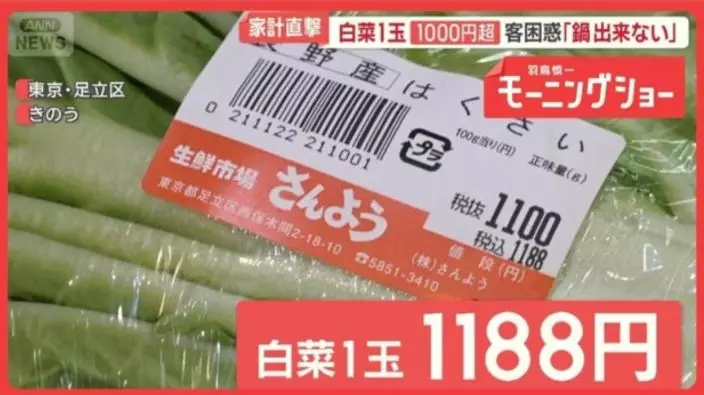
Rising prices have transformed Japanese supermarket habits
The Government of Japan keeps urging companies to pay workers more. The problem: the sliver of nominal wage growth gets devoured, instantly, by inflation running above three percent.
Numbers from the Japanese Trade Union Confederation (Rengo) show that after adjusting for price changes, Japan's real wages have posted dozens of consecutive months of negative growth. Translation: the figure on the pay slip looks bigger, but it buys less and less.
Relentless inflation has rewired how Japan shops. Housewives once raced the clock in the evening to grab half-price bento and near-expiry food. Now, waiting for discount windows to shop has become a mainstream way to consume.
Shoppers no longer buy a whole napa cabbage or a whole fish. They buy a quarter of a cabbage, or fish tails and bones, as needed. For an equally savory soup base, fish bones cost far less than a solid fillet.
Even picking habits have flipped. The old move was to reach deep into the shelf for the freshest expiration dates. Now plenty of shoppers deliberately choose the near-expiry items up front, just to snag the discount.
Bento has gone minimalist as well. The chase for polish and pizzazz is over. Many people now make their lunch boxes straight from refrigerator leftovers, prioritizing the clearing out of ingredients at home.
Campaigns against food waste have been preached for years. But the real force changing habits is prices that refuse to come down. Thrift has shifted from a virtue to a choice ordinary families are compelled to make.
The Real Difference: China's Supply Chain and the Limits of Comparison
Watching all this, many netizens start to wonder whether they themselves are too wasteful in everyday life. The truth is, no such comparison is needed.
Chinese supermarkets do not sell shrimp shells or watermelon rinds. The reason is not that Chinese people fail to understand thrift. The reason is that the country possesses a powerful agricultural supply chain.
The Vegetable Basket Project, greenhouse farming and a developed cold-chain transport system keep domestic vegetable supply abundant and ingredient prices affordable. That ample, stable supply is exactly what shaped today's consumption habits.
Thrift is always worth advocating. But we must also see clearly the differences in national conditions behind it.
Under high prices, every bit of grocery money ordinary people spend hides real life pressure. It is the hesitation when the wallet opens each day. It is the sigh at a napa cabbage priced at 1,000 Japanese yen. And it is the daily reality of having to learn to boil a whole pot of soup from shrimp shells.
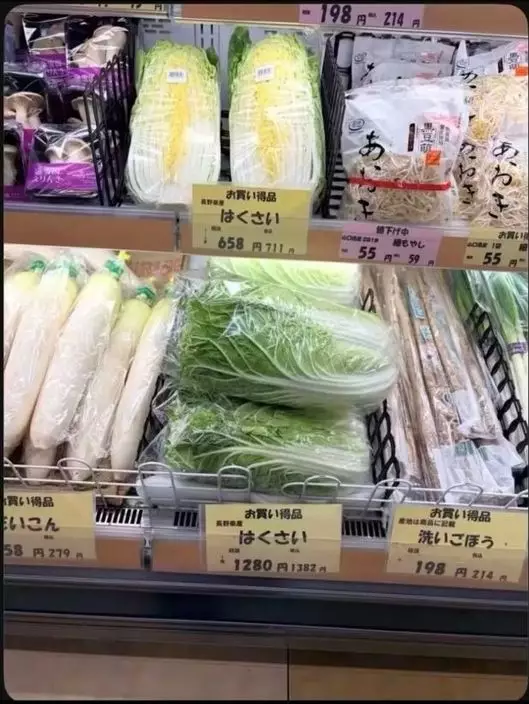
Every grocery purchase carries real cost-of-living pressure