
Skip to Content Facebook Feature Image

Kremlin Snubs CIA Director’s Secret Mission

Blog

Kremlin Snubs CIA Director’s Secret Mission
Blog

Blog

Kremlin Snubs CIA Director’s Secret Mission

2026-08-31 10:09 Last Updated At:10:09

CIA Director Ratcliffe slipped into Moscow on August 25 for a secret meeting with Russian officials. But first, the US had to ask its ally Ukraine to suspend attacks on Moscow. Just to clear a path for the visit.

The US always loudly proclaims its unwavering support for Ukraine. This time, it had to swallow its pride and fly to Moscow, begging for a meeting.

Four Hours, Kremlin's Terms

In the morning of August 25, a US Air Force C-17A Globemaster III slipped into Moscow's Vnukovo Airport, after a quiet transit through Riga, Latvia. Almost simultaneously, a US diplomatic motorcade was spotted on Moscow streets, and word of CIA Director Ratcliffe's visit began to leak.

The whole meeting lasted barely four hours. By 7 p.m., the transport plane was already gone, lifting off from Vnukovo.

It was Ratcliffe's first known trip to Russia as CIA director. And the highest-level US visit to Moscow since the Trump administration took power in January 2025.
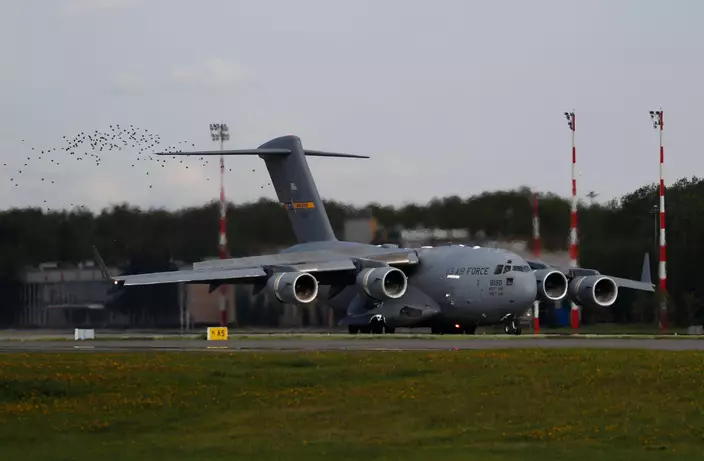
A US Air Force C-17A quietly lands at Moscow's Vnukovo Airport on August 25.

A US Air Force C-17A quietly lands at Moscow's Vnukovo Airport on August 25.

From start to finish, the Kremlin acted like a host in total control. Spokesman Peskov initially pleaded ignorance. No meetings with US officials were scheduled this week, he said. The message was clear: we decide if we meet, not you.

By August 26, Peskov confirmed the visit involved intelligence contacts. But he stressed that President Putin did not meet Ratcliffe in person. He only received a briefing afterward. As for whether this contact could pull Russia-US relations out of their deep freeze, Moscow was cool and reserved. Peskov said it was too early to draw any conclusions.

The reality is, Moscow decided everything: whether to meet, when, and who would do the receiving. The US could only follow Moscow's script.

Multiple US media outlets, citing informed sources on August 26-27, disclosed the secret meeting's content. Ostensibly, Ratcliffe went to Moscow to negotiate. In reality, it was more like a personal visit to test Russia's bottom line. He asked Russia not to take action against NATO members, especially the three Baltic states that have long feared being targeted.

Let's be blunt. These small European nations have been constantly complaining to the US, claiming they're under threat. The US, playing big brother, felt it had to at least make a gesture. So it flew to Moscow to say a few fair words on behalf of its little brothers, telling Russia not to bully them. As for the effect? That depends on whether Russia decides to give face.

Iran, Denials and Rumors

Beyond NATO, Ratcliffe also raised the Iran issue. He warned that if the Strait of Hormuz remains closed, the US will slap additional sanctions on Iran. But think about it: even this message had to be delivered in person by America's top intelligence official. That alone shows how limited Washington's real influence over Russia is. They had to send the CIA director just to pass a note.
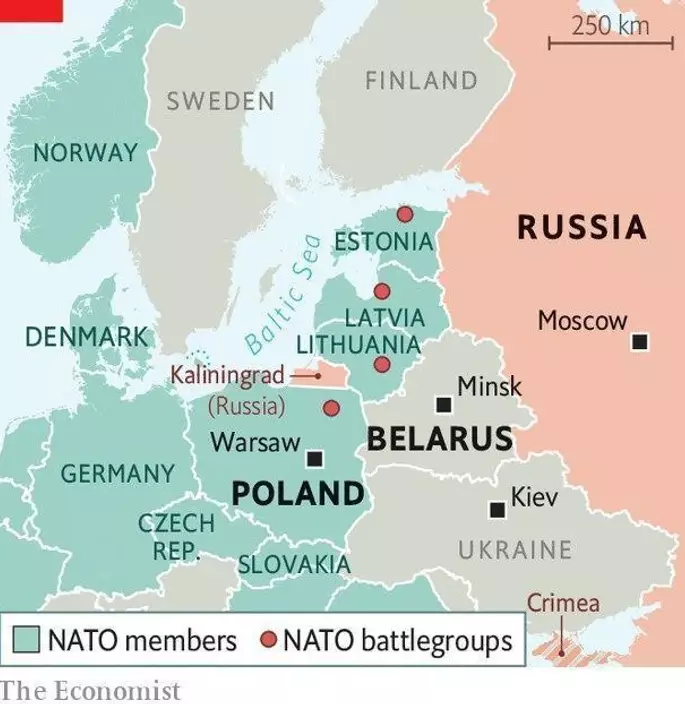
Ratcliffe's mission: persuade Russia not to target NATO's Baltic states.

Ratcliffe's mission: persuade Russia not to target NATO's Baltic states.

Then Trump stepped in. On August 26, he flatly denied the whole story in a radio interview. Ratcliffe's trip, he insisted, was about ending the Russia-Ukraine war. It had nothing to do with Russia testing NATO or Iran sanctions.

The problem? Washington can't even get its own story straight. The media says the trip was to stand up for European junior partners. The president says it was only about peace. That kind of chaos reveals a deeper truth: the US is on the back foot, scrambling to cobble together a coherent public line.

Swap Rumors, Empty Hands

Then there's the rumor mill. One online claim says Putin used the meeting to demand US guarantees: no future Western prosecution would force him into exile, and his frozen overseas assets would be released. It's a wild story. And it has no basis. Russia is a major power. Putin is a hardliner. He's not about to beg for exile guarantees.

So why do these rumors circulate? They reflect the anxiety gnawing at some in Washington. People are so jittery about these talks they're dreaming up unrealistic scenarios. And let's be clear: no Russian source has ever confirmed any of it.

But here's what really matters: the US choreography before the trip. Reports say Washington tipped off Ukraine well in advance. Ratcliffe was coming to Moscow, and Kyiv was told to hold its fire. No attacks on Moscow or other areas until the 'foreign guests' were gone. The ceasefire even stretched to St. Petersburg and northern Russia, lasting through August 26.

Think about that. The US constantly trumpets its support for Ukraine on the world stage. But when it needed to sneak into Moscow, it told its 'junior partner' to stand down. Hold your fire so we can do our secret diplomacy. That's the reality.

Some analysts see an echo of 2021. Back then, CIA Director Burns was dispatched to Moscow to lobby Putin: don't send troops into Ukraine. Now the US is sending envoys again, asking for restraint. But the ask has changed. This time, the message is: don't take further action against NATO.

Ratcliffe's trip lands at a stalled moment. The US-brokered peace talks are going nowhere. Since early this year, when Trump's envoy Witkoff and son-in-law Kushner visited Russia with a peace plan, negotiations have been stuck. The sticking points? Territorial division, security guarantees, ceasefire conditions. Meanwhile, the conflict grinds on.

Another online theory: the secret visit was about a prisoner swap. The possible prize? Charles Zimmerman, an American convicted in Russia. That's Ratcliffe's turf. He's personally led several US-Russia prisoner exchanges. But again, no confirmation.
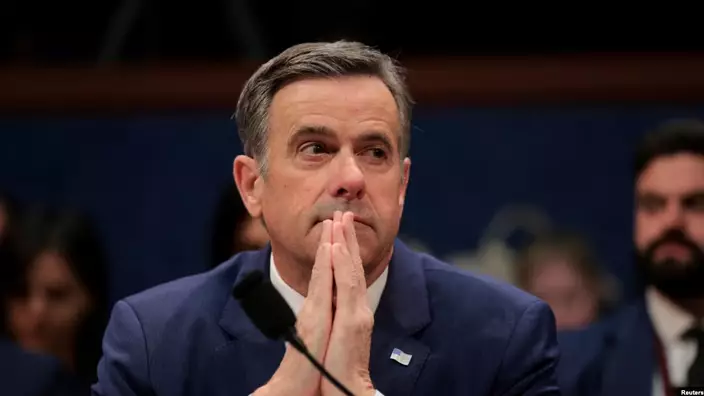
To clear his path, Ratcliffe reportedly asked Ukraine to stop striking Moscow.

To clear his path, Ratcliffe reportedly asked Ukraine to stop striking Moscow.

It was billed as a grand diplomatic offensive to unite allies against Russia. Instead, the US flew to Moscow, hat in hand, to seek talks, mouthing a few perfunctory words for its European junior partners. And it even told Ukraine, another junior partner, to step aside and cooperate.

The top US intelligence official personally boarded a transport plane and flew straight to Moscow. Would he be received? At what time? By whom? Moscow decided it all.


Deep Throat

** 博客文章文責自負,不代表本公司立場 **

The US aircraft carrier USS Abraham Lincoln spent more than nine months deployed to the Middle East. During that stretch, reports repeatedly emerged of sailors attempting to jump overboard to take their own lives. The military initially denied any crisis. But one week after the story broke, the Lincoln finally set sail for home on August 20.

The deployment traces back to the joint US-Israeli airstrikes on Iran in February this year. That operation triggered more than half a year of war in the Middle East. The Lincoln was originally stationed in the Pacific. It was urgently redeployed to support a military campaign single-handedly provoked by Washington, and it ended up away for a long nine months.

When reporters pressed Trump on August 14 over whether the deployment had run too long, he set off a firestorm with a single remark: "Not nearly long enough." He claimed a retired Navy admiral had privately told him the Lincoln was "in great shape." He dismissed reports of the dire conditions as fake news hyped up by CNN.

The comments immediately drew public fire from Maryland Governor Wes Moore, a Democratic governor and himself a veteran. Moore said Trump's response "pisses me off." A president who has never been to the battlefield, he argued, should show more compassion for families willing to offer up their loved ones to defend the country.

What the families never saw coming is that the Lincoln's return to San Diego may prove only a brief stopover. The Navy has internally confirmed that the carrier's homeport will be permanently relocated to Bremerton, Washington. Families have a window of just 58 days to pack up and move north. The exact moving date remains undisclosed.

Nine-Month Deployment Sets Post-Vietnam Record

The Lincoln (USS Abraham Lincoln) departed San Diego, California on November 21 last year. It was originally due to end its deployment in late May this year. Instead, it did not begin the journey home until August 20. That clocks 272 days at sea, more than 200 of them without calling at a standard port. The carrier made only brief stops in Guam last December and in Oman this July.

Analysts say the deployment sets a new record for the longest continuous US aircraft carrier deployment since the Vietnam War. Around 5,000 sailors and Marines are aboard. The carrier was originally assigned to the Pacific before being rerouted mid-deployment to the Middle East to support US military operations against Iran.

US military outlets Stars and Stripes and Navy Times broke the story in mid-August. Sailors aboard the Lincoln, they reported, were facing food shortages, poor sanitation and utter physical and mental exhaustion. Some had even attempted to jump into the sea.

Accounts circulating online were even more vivid. One family member quoted a text message from a sailor that read, "I hope I don't wake up tomorrow." Other reports claimed at least six sailors had tried to jump overboard. None of these details have been officially confirmed by the US side. For now, it is difficult for outsiders to separate fact from fiction.

CENTCOM Denies Rumors of Seven Deaths

US Central Command (CENTCOM) pushed back in a statement on August 14. There had been no fatal brawls among sailors and no seven deaths as rumored, it said. It described the related reports as grossly inaccurate.

Defense Secretary Pete Hegseth, speaking during a visit to Panama, said reporting by The Wall Street Journal and others was "completely misrepresented." He stressed that the US military has the capacity to maintain its maritime blockade of Iran "indefinitely." Ship rotation plans, he said, had long been in place and had nothing to do with recent coverage.

Acting Secretary of the Navy Hung Cao said in a statement on August 20 that the Lincoln had "crushed their deployment". The carrier would return home as scheduled under the rotation plan, he said. He gave no firm arrival date.

CENTCOM commander Admiral Brad Cooper boarded the carrier in person earlier this month. In a Wall Street Journal op-ed, he revealed that he had personally told the crew "you're going home." He praised the entire ship's company for an outstanding performance through a grueling deployment.

Veteran Recalls Life Aboard a "Floating Prison"

Jonny Burnell, a retired Navy photographer who once spent 111 consecutive days aboard a carrier, told the BBC about his time on the USS Carl Vinson during the 2001 war in Afghanistan. He described the ship as a floating prison. Sailors working in the lower decks, he said, might never get the chance to go up on deck for air. They remain trapped for long stretches in an enclosed space. "There was one point where there was a visible kind of deadness in the shipmates' eyes," he recalled.

Cramped living quarters and harsh conditions aboard the ship pose an enormous test to sailors' physical and mental health.

Cramped living quarters and harsh conditions aboard the ship pose an enormous test to sailors' physical and mental health.

Burnell also recalled one shipmate who did everything he could to break the rules. The sailor even dealt drugs and started an "underground rave club". His only goal was to get kicked off the ship.

Bunks on warships are often jokingly called "coffin racks" by sailors. Burnell said his own berth back then had no room even to turn over. The wall directly behind his pillow happened to be exactly where the arresting cables ran through when carrier aircraft landed. The noise never stopped.

Harold Kudler, former director of mental health policy at the US Department of Veterans Affairs, points out that the suicide risk among active-duty service members and veterans is 50 percent higher than that of the general public. The loneliness, boredom and hypervigilance that come with being cooped up at sea for long periods alternate with one another. That only compounds psychological problems.

It is worth noting that another US carrier, the USS George Washington, saw three sailors die by suicide within a single week in April 2022 while docked at a Virginia port. A report released afterwards by the military's oversight body stated bluntly: "collectively, Navy senior leadership, officer and civilian, let our standards slip — and in doing so we let our people down." The Washington has now arrived in the Middle East on August 19 to take over the Lincoln's combat mission.

The exhausted crew finally heads home. The nine-month deployment came at a heavy cost.

The exhausted crew finally heads home. The nine-month deployment came at a heavy cost.

A high-profile military operation trumpeted as an "indefinite blockade" has, in the end, been brought to a close by a weary carrier that took months longer than planned to limp home. This war was single-handedly provoked by Washington. Yet nine months on, the first to break were the rank-and-file sailors trapped inside a steel hull.

Recommended Articles