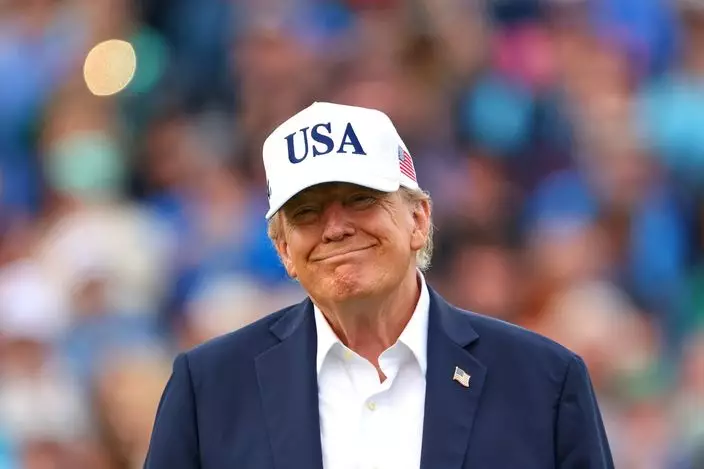

US President Donald Trump announced on September 18 local time via social media that the United States has finalized a formal agreement with Denmark and Greenland. The deal seeks to put permanent control of Greenland's security domain squarely in American hands.
The Deal and the Prize
Officially, this trilateral deal is open-ended. It is expected to be formally signed during the United Nations General Assembly next week and will fully enter into force after parliamentary procedures are completed.
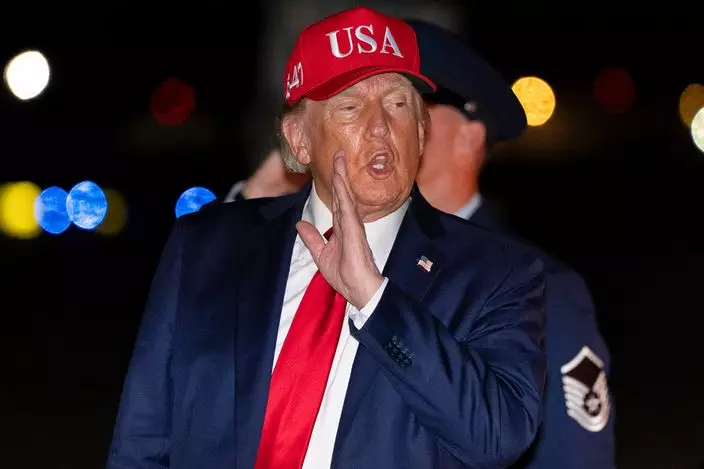
US President Trump
Once implemented, the agreement hands security deployments, regional defense and strategic control over Greenland entirely to the United States. Any other country that wants to deploy military forces or make sensitive investments there must obtain prior approval from the United States. Throughout the entire process, the United States pays nothing.
Greenland is no ordinary uninhabited island. It sits at the heart of the Arctic, a crucial node on Arctic shipping lanes and a key hub for polar military early warning.
The US Pituffik Space Base there is responsible for missile warning, space surveillance, Arctic defense monitoring and other core missions.
In addition, beneath Greenland lie abundant rare earths, oil, natural gas and other critical resources. Rare earths, in particular, are indispensable raw materials for the arms industry, semiconductors and high-end manufacturing. Their strategic value is almost incalculable.
For a long time, Trump has eyed this region covetously. He said repeatedly in public that he wanted to bring Greenland under control, and he did not rule out special means to achieve that goal. Through this agreement, he has finally turned years of carefully laid ambition into reality.
Denmark's Calculated Retreat
Greenland is an autonomous territory of Denmark. Its strategic position is enormous. So why did Denmark willingly step back and hand the island over to the United States for permanent control? Some analysts see the apparent concession as a carefully calculated move. It is self-preservation, and it is framed as a win-win.
First, Denmark is too weak to hold Greenland. As a small or medium-sized European country, it has limited military and financial power. It cannot sustain normal defense deployments in the Arctic, and it cannot protect the island's strategic resources.
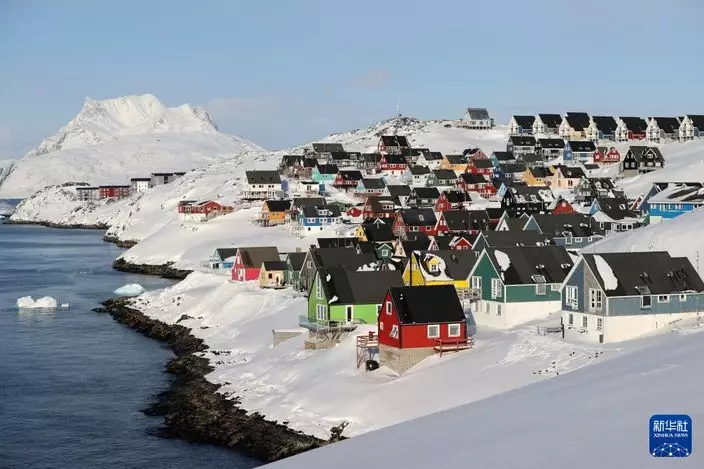
Greenland
The Arctic is becoming more tense. On its own, Denmark cannot withstand external competition and geopolitical pressure. If other countries are going to intervene later, it is better to hand control to the United States at this point in time. That preserves nominal sovereignty in exchange for security protection.
Second, Denmark can use this agreement to bind itself tightly to the United States. The payoff is national security. As a NATO member, Denmark's defense depends heavily on the United States. By actively helping the United States gain control of Greenland, Denmark is effectively handing the United States a pledge of loyalty.
From now on, the United States will back Denmark in European defense, Arctic affairs, and international diplomacy. Denmark gets US military protection free of charge. It does not have to spend its own money expanding Arctic military power. The cost-performance ratio is extremely high.
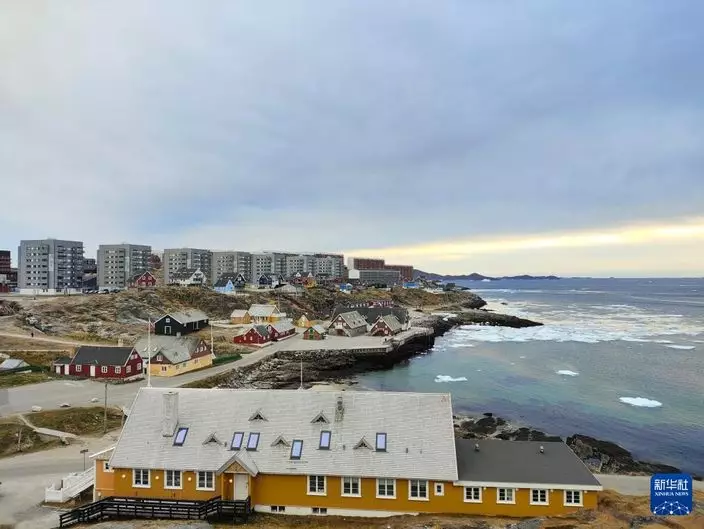
Greenland
Third, this is Denmark's best option for avoiding geopolitical risk. If Denmark firmly rejected the United States, the United States would most likely push ahead unilaterally, given its consistently assertive behavior. US-Denmark relations would rupture. Denmark would not only lose Greenland, it would also face US sanctions and diplomatic pressure.
Making concessions voluntarily avoids an open break with the United States. It maintains the stability of the autonomy system. The safest choice.
Winners, Losers, and the Illusion of a Win-Win
For Greenland, this agreement is a double-edged sword.
The benefits are concrete. First, security becomes far more certain. Once the United States takes over defense, it can shut out external interference and end the chaos of a regional security vacuum.
Second, Greenland gains development opportunities. The United States will later take part in local development and infrastructure construction. That will boost resource use, employment, and economic growth.
But the drawbacks are just as glaring. The core problem is a sharp loss of autonomy.
Greenland still keeps its autonomous status and nominally remains under Danish jurisdiction. But the United States can control the levers on security, strategy, and sensitive external cooperation.
From now on, Greenland's development plans, external cooperation, and resource development will all have to answer to Washington. Its independent decision-making space is gone. In effect, it has become a forward base for America's Arctic strategy.
For the United States, this agreement is a risk-free bargain.
Without spending a cent, it permanently gains a core strategic foothold in the Arctic and locks in absolute hegemony across the region.
On one side, America's Arctic missile warning, space surveillance, and polar combat systems are now firmly entrenched. On the other, it monopolizes Greenland's key resources and strategic passages, giving it a tight grip on the Arctic game.
Once the agreement takes effect, the Arctic's geopolitical landscape will be rewritten. America's hegemonic wall in the Arctic will take full shape, and almost no one will be able to shake it.
Thus, some analysts call the 'tripartite win-win' claim a self-deceiving fig leaf.
Strip away all the disguises, and for now the United States is the only real winner. Denmark and Greenland are both losers forced to compromise.
Without paying a cent, America will permanently control the Arctic's strategic choke point. It locks down its rivals' Arctic access routes, expands its hegemonic map again, and secures irreplaceable strategic gains.
The Bigger Warning
Denmark keeps the hollow title of sovereignty, but it has actually lost real control over its own territory. It has become a European vassal of the United States, with no leverage left to bargain.
Greenland seems to gain autonomous rights. But it has been strapped firmly to the American war machine and stripped of any independent diplomatic and security choices. It looks like it is breaking free from Denmark's chains, yet actually jumps into America's hegemonic cage, with every move now tightly controlled by the United States.
The bigger warning is that this is only the start of America's hegemonic expansion. Once Trump tastes the payoff of getting something for nothing, he will inevitably copy the playbook. He will reach toward Canada, Venezuela, Cuba, and other countries in the Americas.
The so-called security cooperation and tripartite win-win are just tricks. They let the United States eat away at other countries' sovereignty and expand its hegemony. In this geopolitical game that looks like everybody wins, there is no real winner.
The United States wins the current expansion of hegemony but overdraws its international credibility. Denmark and Greenland win a moment of dignity but lose long-term sovereignty and autonomy.
Deep Throat
** 博客文章文責自負,不代表本公司立場 **