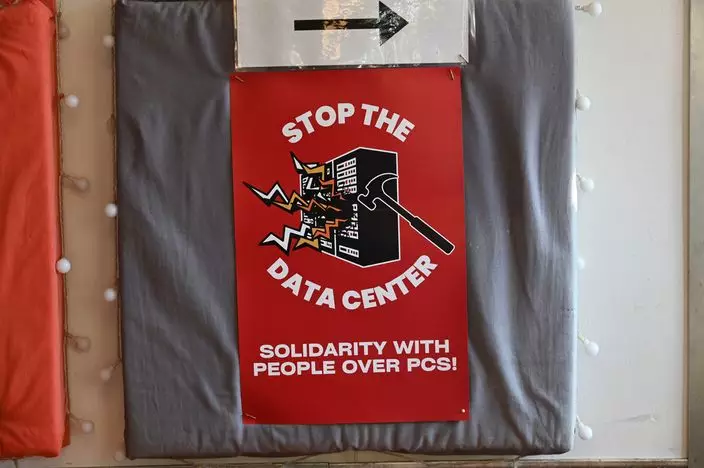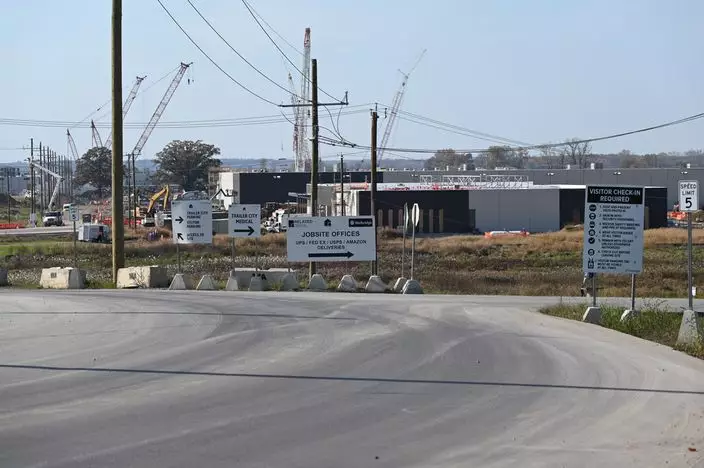



America's data center buildout has a credibility problem. A new study tallies 8,858 data center projects across North America, covering announced, under-construction and land-banked sites. Together they promise 586GW of capacity. Only 199GW, or 34%, is genuinely credible. The rest, roughly 387GW, is mostly 'Bragawatts' that will never get built.
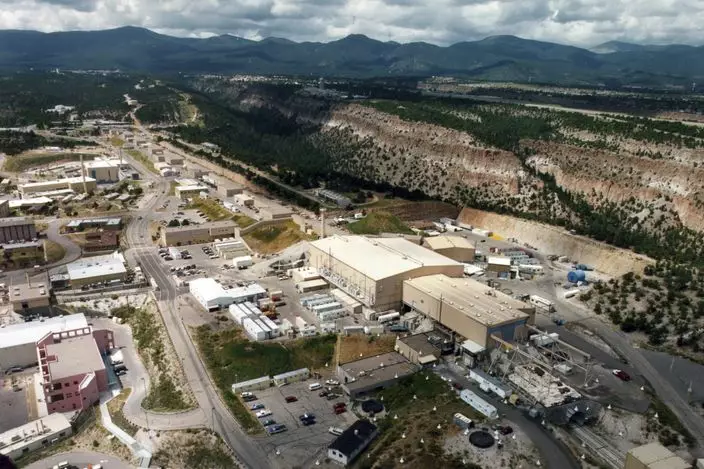
Only 34% of 8,858 North American data center projects credible.
Two-Thirds of It Is Vapor
Click to Gallery
Only 34% of 8,858 North American data center projects credible.
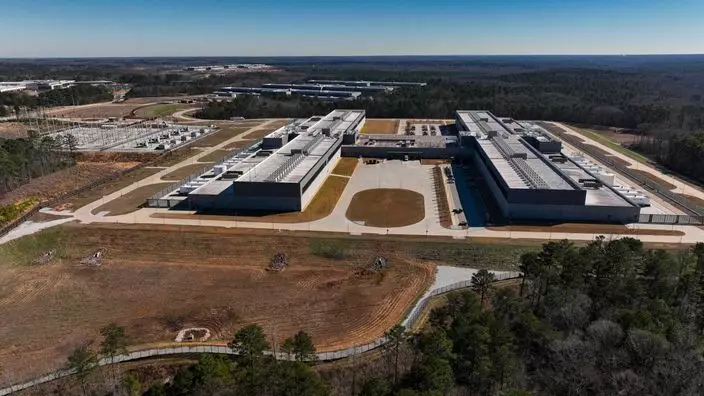
Three-year US AI boom pours trillions into data centers.
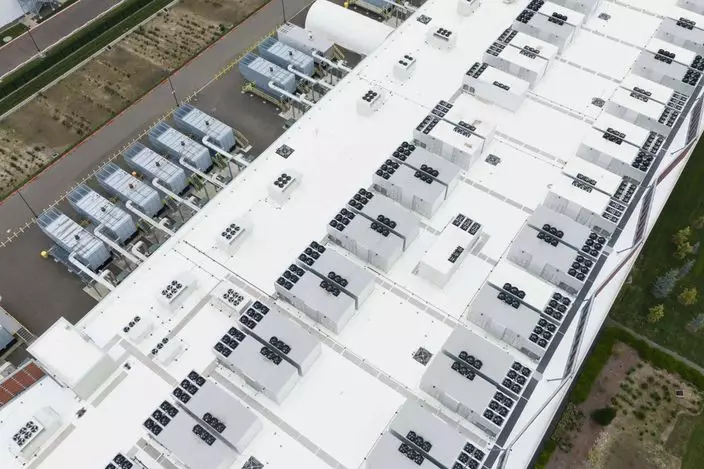
Three-year US AI boom pours trillions into data centers.
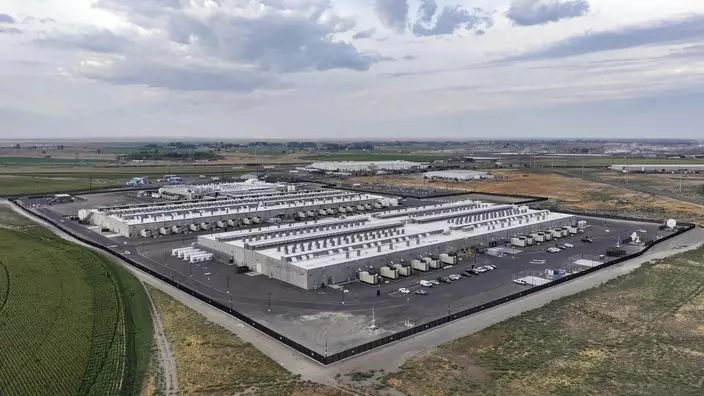
Data center
The study was first published on October 11. It was updated again after the midterm elections.
The U.S. artificial intelligence boom has run for more than three years now. Trillions of dollars have poured into data center construction across the country. Many plans have become reality in the past few years, propping up the U.S. economy, Wall Street stocks and the growth of technology companies.
Three-year US AI boom pours trillions into data centers.
But the risks may match the rewards. According to the Financial Times and Business Insider, a data center credibility model from Bernstein analyst Madison Rezaei's team shows that the potential dangers of these plans may be as big as the growth they deliver. Market forecasts for AI infrastructure demand rest largely on 'fake orders.' Upstream producers may be churning out chips and equipment for projects that will never exist.
How the Model Works
The trend line tells the real story. Across the three months measured, the credible share barely budged: 33% in July, 35% in August, and 34% in October.
Over the same stretch, announced capacity ballooned from 411GW to 586GW. Yet the credible share held at one-third, a sign that phantom projects have become a permanent fixture of the industry.
The study screens project credibility on four dimensions. Development stage knocks out 198GW, tenant quality removes 113GW, developer track record cuts 48GW, and state-level regulatory risk takes out 28GW.
That last category is the surprise. State regulatory risk has been the political factor Wall Street and data center investors have fixated on in recent weeks. In the model, it creates the smallest risk of all.
Projects stuck at the 'announced only' stage total 497GW, or 85% of the pipeline, and Bernstein expects only about a quarter of them to ever materialize. Meanwhile, 75GW of 'credible capacity' is already under construction, enough to more than double existing capacity.
If all 199GW of credible capacity gets built, it would be 3.4 times the current scale. The catch: the construction cycle runs 5 to 10 years.
Who Can Actually Build
The two biggest factors are development stage and tenant quality, and both hinge on how capable the developer actually is. Bernstein's numbers show why. Hyperscale cloud providers building their own sites, together with data center colocation providers, account for just 37% of announced capacity but 76% of credible capacity. Every other category of developer has announced 308GW of construction, yet only 33GW, or about 11%, is considered likely to get built.
Bernstein scored each developer from 0 to 5 across four dimensions: power supply (35% weighting), capital (30%), leases (25%) and execution (10%). Hyperscale cloud providers, Apple and blue-chip colocation providers all earned the top mark of 5.
The gap between the grades is brutal. Developers rated 4 to 5 are expected to complete 68% of their projects. Those rated 0 to 1 have a combined 142GW in the pipeline, about a quarter of the national total, but only 7GW is seen as buildable. That is a survival rate of 5%.
In other words, a large share of the massive buildout propping up the U.S. economy rests on the AI boom and investor optimism. That enthusiasm has allowed many developers with little or no proven construction capability to push projects forward and secure financing.
Three-year US AI boom pours trillions into data centers.
The Warnings Pile Up
The warnings have been piling up for months. On September 26, the Financial Times reported that chip sales forecasts do not match the number of completed data centers. Morgan Stanley ran the numbers on the available power gap and reached a stark conclusion: more than half of the GPU servers sold between 2026 and 2028 may have nowhere to plug in.
Satellite imagery tracked by SynMax Intelligence points the same way. Total capacity that can actually come online this year sits between 16 and 18GW. Another 2GW or so of projects are scheduled for completion in 2026 but have not even started clearing land, making on-time delivery impossible.
On October 16, the Financial Times struck again. Investors are losing faith that the AI boom will generate enough revenue to service the mountains of debt raised to build data centers.
The market is already voting. Bonds issued to finance Hyperion and Excalibur, two marquee data centers hosting the likes of Meta, Nvidia and Oracle, are trading well below face value. Debt tied to many AI infrastructure groups, CoreWeave among them, has been heavily sold off.
The backlash is spreading from trading desks to town halls. On October 18, the Financial Times cited Bernstein research showing that more than 1,000 communities across the United States have moved this year to slap moratoriums or other restrictions on AI infrastructure construction.
Data center executives say building permits are getting harder to secure across the industry, and utility regulators keep refusing grid connections to projects that cannot power themselves. One executive put it bluntly: money no longer flows into data centers the way it used to, and financing them has become far harder.
Data center
A Reckoning Ahead
The pattern is hard to miss. America's data center industry has been out of balance for a long time, squeezed by project delays, public opposition and a stubborn mismatch between what goes in and what comes out.
The past few months have made it worse. With the AI boom still roaring, market optimism has let data centers pull in financing far beyond their construction capacity. A sizable share of developers cannot turn that money into actual capacity.
In good times, cheap low-interest financing can paper over that risk. But the midterm election results are landing, tech-company growth is slowing, and investor confidence is fading with them. Outside observers expect the risk to be amplified from here.
Deep Throat
** 博客文章文責自負,不代表本公司立場 **