South Korea wants its military back. Seoul hopes to reclaim wartime operational control of its own armed forces from the United States within two years. Washington refuses to commit to a specific transfer date.
Seoul Wants Control Back
Click to Gallery
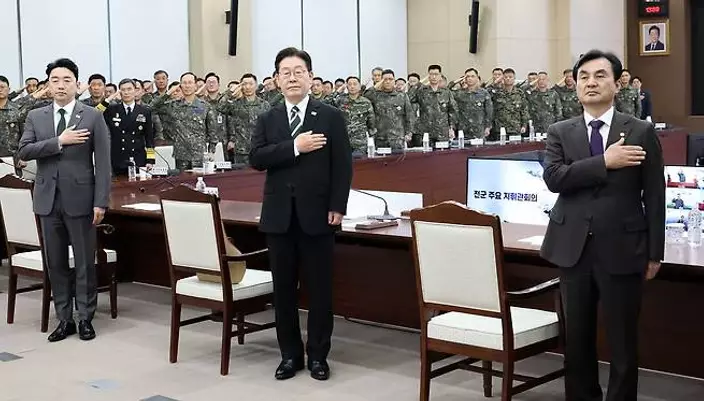
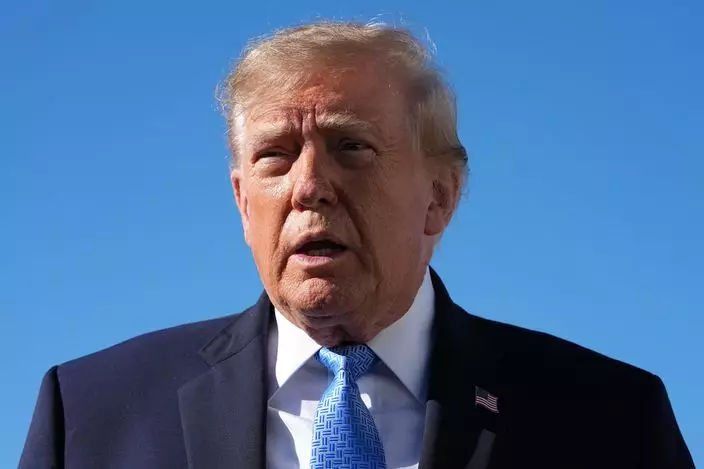
Lee chairs top military meeting, pushes wartime command transfer.
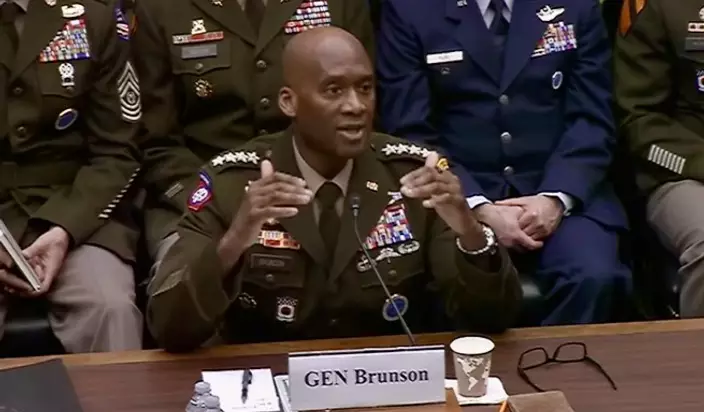
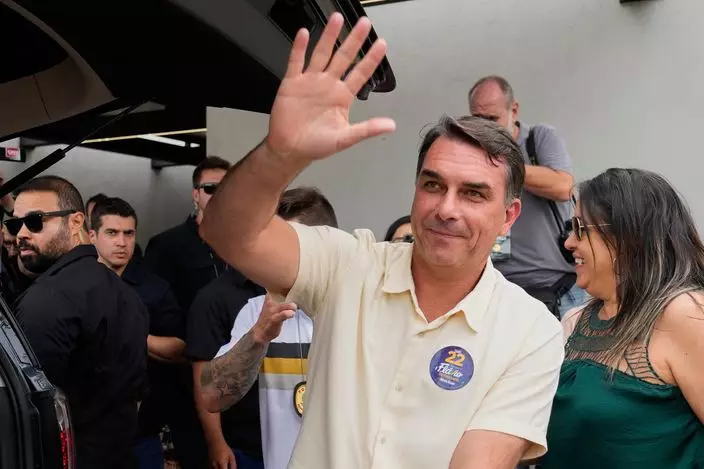
USFK's Brunson testifies on transfer timetable to Congress.
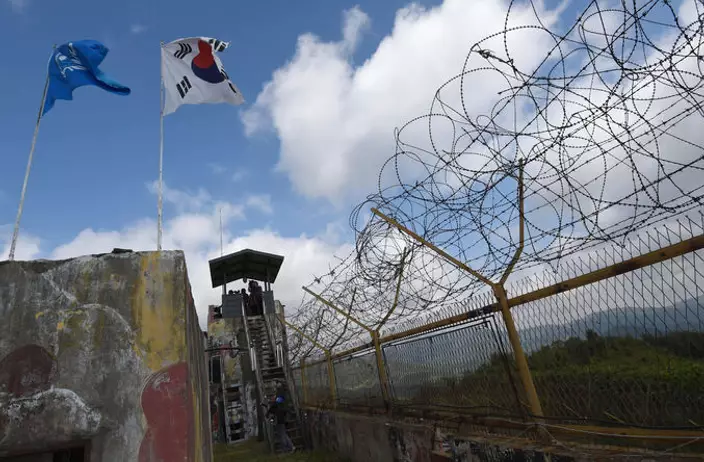
Barbed wire, guard posts on DMZ's southern side.
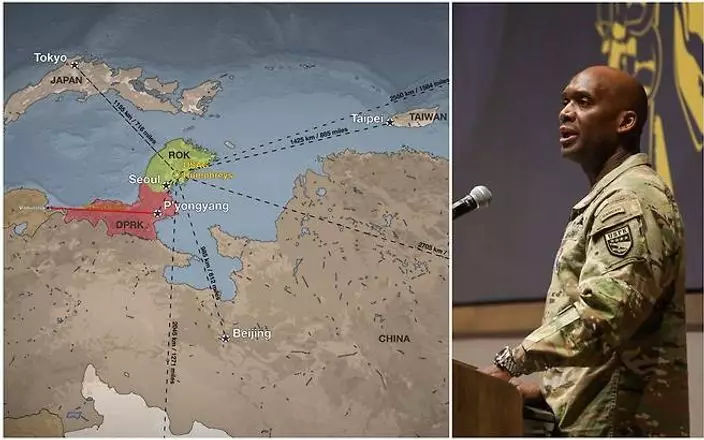
Brunson explains US East Asia posture at US Army War College.
Wartime operational control answers a simple question: if war breaks out again on the Korean Peninsula, who commands South Korean troops? For now, the answer is Washington. That authority has sat in American hands since shortly after the Korean War erupted in 1950, according to reports.
Lee chairs top military meeting, pushes wartime command transfer.
Under current arrangements, designated South Korean units would fold into the ROK-US Combined Forces Command in wartime, led by a US Army general. That general is Brunson, the commander of US Forces Korea. He also commands the roughly 28,500 American troops stationed in the South.
Exactly which units are involved is classified. But they are believed to include all of the South Korean Army's frontline combat units, plus most of its Air Force and Navy forces.
Washington Won't Commit
South Korean President Lee Jae-myung is pressing to take back wartime operational control. On October 19 he said Seoul "should take back wartime operation control at an early time" and is "fully capable of it". The government's target is to finish the transfer by 2028, two years before Lee's term ends in 2030.
The US military has its own timeline. At a congressional hearing in April, Brunson said it had already submitted a roadmap to hit the transfer conditions by the first quarter of 2029 at the latest. He was describing when the conditions could be met, not setting a handover date.
USFK's Brunson testifies on transfer timetable to Congress.
Washington's official line is simple: No transfer until agreed conditions are met. At a think tank seminar in Washington on October 14, Brunson said any handover must rest on satisfying the relevant conditions and cannot be tied to a political timetable. US officials repeated the message on October 27, saying "the United States intends to transfer OPCON to South Korea when the agreed conditions are met."
A South Korean defense ministry spokesperson voiced the fear out loud on October 15. In her personal view, the handover may never happen if Washington keeps moving the goalposts.
The Kyunghyang Shinmun reported on October 27 that, in midyear consultations, the US demanded that stronger air-ground communications through the SATURN program be added as a new yardstick for the transfer. SATURN is a next-generation, NATO-standard anti-jamming technology for upgrading military radios, and its full deployment has slipped from 2028 to 2032. That delay has some in the South Korean government worried that, if Washington keeps adding evaluation items, Lee's goal of finishing the transfer within his term will be at risk.
The two defense chiefs met in Cebu, the Philippines, on October 28. They agreed to push the annual security consultative meeting, originally set for October, to early 2027 and to hold talks in Washington in December.
South Korean media blamed scheduling difficulties. The Korea Herald, though, noted earlier speculation that the delay was tied to the fallout from the US-Iran conflict and the US midterm elections.
South Korean Defense Minister Kang Shin-chul said on October 30 that US Defense Secretary Pete Hegseth reaffirmed the transfer commitment at the meeting and dismissed talk of alliance discord as "fake news." National Security Office Director Wi Sung-lac said South Korea expects progress at the talks early next year.
DMZ Remark Sparks Uproar
Brunson stepped into another storm around the same time. On Oct. 14, he told the same seminar that, from the UN Command's point of view, South Korea starts at the barbed-wire fence on the southern edge of the Demilitarized Zone.
Barbed wire, guard posts on DMZ's southern side.
The DMZ is the buffer strip along the inter-Korean border, running about 2 kilometers on each side, and the fence sits on the southern side. Read literally, his line left the band north of the fence outside South Korean territory.
Kim Min-seok of the ruling Democratic Party said the remark was highly inappropriate on constitutional grounds. South Korea's Ministry of National Defense called it the UNC commander's personal view, and the Army chief of staff told a parliamentary audit he could not agree.
The UN Command said the comment was tied to management duties under the armistice agreement. One South Korean online program headlined the story by asking whether Brunson was a governor-general, a loaded reference to the top Japanese ruler of Korea from 1910 to 1945.
Foreign Minister Cho Hyun said on Oct. 27 that he had met US Ambassador to South Korea Michelle Steele the previous week and lodged a protest, according to reports.
Lawmakers Split on Transfer
The sparks flew on October 26, when the National Assembly grilled the Ministry of National Defense in a parliamentary audit and the command issue set off a fierce debate. Sung Il-jong of the opposition People Power Party warned that the matter concerns the life and death of the nation, and demanded the defense minister be extremely cautious when offering recommendations.
Kang Shin-chul pushed back. He called the claim that transferring command authority would endanger South Korea's security an exaggeration. Given the uncertainty in the global security environment, he questioned whether Seoul could keep betting everything on US forces.
Some commentators read those remarks as doubting the US military. The ministry clarified the next day that Kang was rebutting lawmakers' concerns about the transfer, and stressed the importance of mutual trust.
Within the ruling party, some wanted a harder line. Kim Byung-joo, a Democratic Party lawmaker who serves as the president's defense policy adviser, said that if Washington keeps obstructing the transfer process, South Korea should declare it will exercise wartime operational control on its own. He also proposed legislation making clear that the president can hold supreme command even in wartime.
The JoongAng Ilbo pushed back in an editorial. A unilateral declaration that bypasses consultations, it argued, would only damage the negotiations.
Kang Shin-chul rejected the approach the same day. Command authority, he said, must be transferred through close consultations between the two countries, on the premise of mutual trust.
China Looms Behind Conditions
So why does Washington insist on the conditions? Kim Yeol-soo, a senior researcher at the Korea Institute for Military Affairs, points to what he calls an undisclosed motive: keeping influence over the South Korean military to counter challenges from China.
The context he cites is telling. In May, Brunson compared South Korea to a dagger on a podcast at the US Army War College. Last year he went further, calling the country a fixed aircraft carrier between China and Japan.
Brunson explains US East Asia posture at US Army War College.
Beijing fired back. A spokesperson for the Chinese Embassy in South Korea said on May 28 that his remarks had crossed the line.
Doo Jin-ho, a researcher at the Institute for Far Eastern Studies at Kyungnam University, sees it the same way. Washington, he said, wants to use the ROK-US alliance not only to deter North Korea but also to contain China.
The geography explains the stakes. China's Shandong Province sits only about 300 kilometers from the Korean Peninsula, he noted, and fighter jets could cross that gap in under 10 minutes. On strategic value alone, he said, the United States cannot afford to lose South Korea.
Deep Throat
** 博客文章文責自負,不代表本公司立場 **