If Donald Trump is a true villain, then the Democratic Party is a hypocrite. And sometimes the hypocrite is more frightening than the villain.
The Wave Hits
The Republican Party just suffered an avalanche of a defeat in the midterm elections of the United States, heralding the end of the Trump era. When Donald Trump is truly gone, I fear we will look back with nostalgia on the colorful days of his time in power.
The New York Times projects the Democratic Party to win the national popular vote for House seats by 13 percentage points. That is a huge margin, and the biggest advantage either party has posted in a congressional election since 1976.
The New York Times argues that the scale of the Democrats' victory sends a clear signal. Yes, the president still has two years left in his term and can still wield enormous power. But Americans are saying the Trump era has begun to end.
Congress Grabs the Levers
The Democratic Party now controls both chambers and a string of states, and the first casualty will be the American investment in AI. Democrats oppose new data centers in multiple states. But for China, the real fight is political.
Start with the anti-China bills.
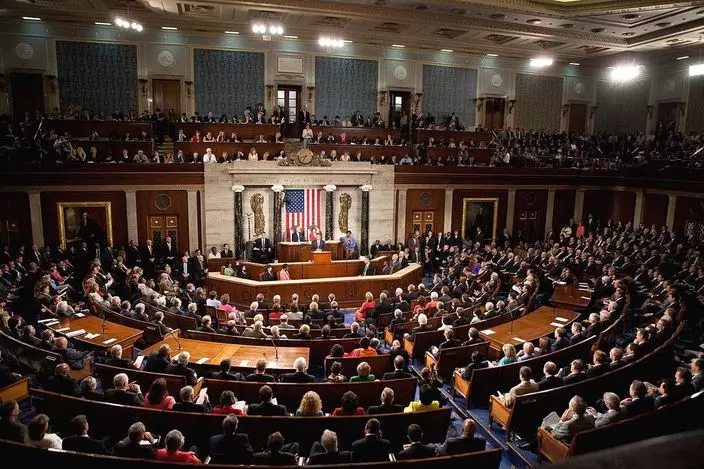
Congress holds the power to write laws and control the purse strings. With both the Senate and the House in hand, Democrats can seize committee chairmanships, pick which bills get a hearing, and push anti-China legislation on everything from tech competition and supply chain security to tariffs and human rights.
The budget is the other weapon. By attaching riders to appropriations bills, Democrats can ring-fence or restrict funds for specific policies: containing China, deploying forces in the Indo-Pacific, or clamping down on research.
There is a catch. Trump is still in office, and he has warned he will veto any bill he dislikes. Overriding a presidential veto takes two-thirds of both the Senate and the House, a bar that is almost impossible to clear in practice.
So Democrats will not go it alone against China. A hard line on Beijing is one of the few areas of bipartisan consensus in Washington. When Democrats push new anti-China bills, they will pull in Republican lawmakers as co-sponsors, ratcheting up the pressure on the White House and even forcing Trump to give ground on some China issues.
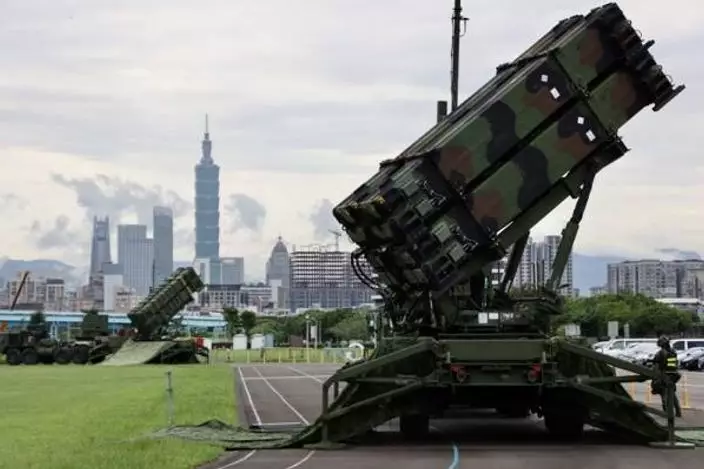
Taiwan arms sales top the list. Congress had already approved a $14 billion package, but Trump froze it to smooth ties with President Xi Jinping. After the midterms, moving those arms sales forward is one issue where Democrats can plausibly find bipartisan support.
Four Anti-China Bills
The US Congress also has four bipartisan anti-China hostile bills in motion.
The first is the "PROTECT Taiwan Act", which has already cleared the House. It says that if mainland China threatens Taiwan's security, financial threats will follow.
The second is the Stop Transnational Repression Act. It is aimed squarely at countering China's implementation of the Ethnic Unity and Progress Promotion Law, and it also reaches Iran and other countries.
The bill defines the crime of transnational repression in federal law for the first time. It has only been introduced in the Senate, and not even a full Senate vote has taken place.
The third is the Protecting American Industry and Labor from International Trade Crimes Act, which has already been passed by the House. It targets what it calls Chinese companies' violations of US trade law through fraud, tax evasion, transshipment and other means.
The fourth is Countering the PRC Malign Influence Fund Authorization Act, also through the House. It would authorize more than $1.6 billion over five years to create a dedicated fund against what it calls China's malign influence around the world.
For now, the four bills have cleared only one chamber at most. But with the Democratic Party set to control both houses, the odds of these malicious bills passing jump sharply. In the end, it comes down to how Trump wields his veto.
The Clock Starts Ticking
Now for the next shock.
The midterm results leave the Republican Party badly exposed for the next presidential race. If a Democrat takes the White House two years from now, the China containment agenda will come roaring back.
Trump followed an America First brand of the Monroe Doctrine. He refused to spend money projecting military power in the Indo-Pacific, even renamed the Indo-Pacific Command as the Asia-Pacific Command, and stopped building one China-targeting regional bloc after another. A Democratic president would do the opposite: encircle China across the Indo-Pacific.
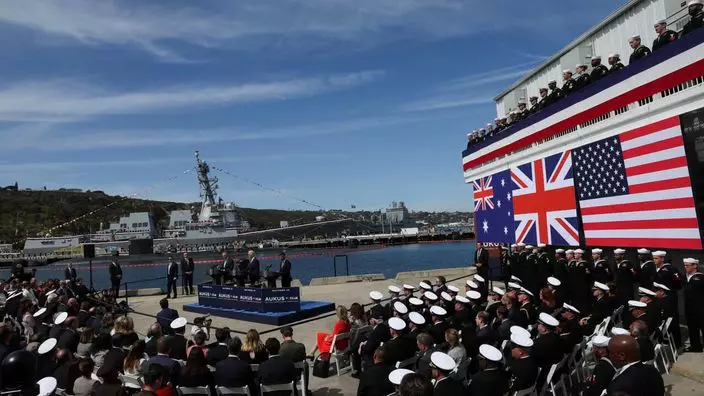
Under the last Biden administration, Washington pushed two groupings. The first was reviving the "Quadrilateral Security Dialogue" (QUAD), billed as promoting a free and open Indo-Pacific, which pulled India directly into an anti-China club.
The second was AUKUS, the military, diplomatic and security partnership created in 2021, with the United States roping in the United Kingdom and Australia. This one carries a much stronger military flavor: under AUKUS, Washington arranged the sale of nuclear submarines and had Australia dump France to buy nuclear submarines jointly built by the US and UK instead.
Count on it: if a Democratic president takes office, these China-encircling organizations will be switched back on.
The conclusion: the Chinese Mainland and Hong Kong must make good use of the next two years to build themselves up and grow stronger, ready to fight tough battles again two years from now.
Lo Wing-hung
Bastille Commentary
** 博客文章文責自負,不代表本公司立場 **
Joshua Wong is back in the dock. Already serving time in the case “35+” Conspiracy sto Subert the State Power, he has pleaded guilty to one count of conspiracy to collude with foreign forces and collected another 10 years behind bars. The spectacle brings to mind a famous line from the French fabulist Jean de La Fontaine, about a person that was nothing more than a cat's-paw.
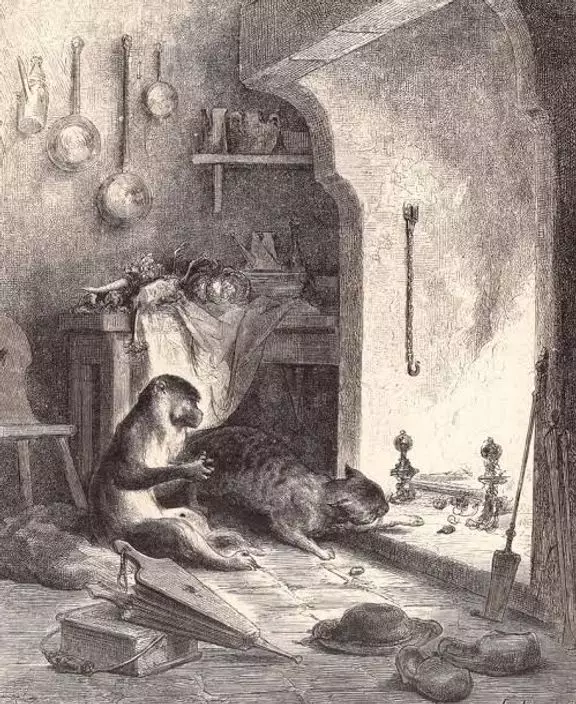
La Fontaine's fable: The Monkey and the Cat
A Fable Comes Alive
In The Monkey and the Cat (Le Singe et le Chat), La Fontaine spins the classic tale of the cat pulling chestnuts out of the fire. The monkey Bertrand and the cat Raton live under the same roof. One day they spot chestnuts roasting in the hearth.
The cunning monkey talks the cat into raking the chestnuts from the embers with its paw, promising to share the tasty spoils. The cat takes him at his word and, enduring the burn, pokes the chestnuts out one by one. Yet each time a chestnut comes free, the monkey snatches it and eats it on the spot. The promise of sharing is never honored. The cat ends up with a scorched paw and nothing else.
In the real-life version, the United States plays the monkey and Joshua Wong the cat. The other cat, Nathan Law, was not quite so foolish; he fled before the Hong Kong National Security Law took effect on June 30, 2020. Wong wanted to run too, but he ran too late. His biggest mistake was pinning his hopes on Washington.
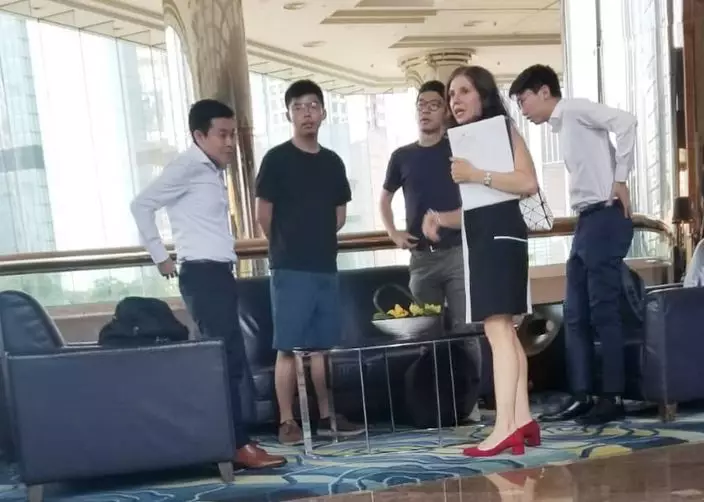
Joshua Wong (second from left), Nathan Law secretly met US diplomat Julie Eadeh (now the Consul General), in August 2019
The Book That Spills It
In 2023, two American journalists blew the story open. Shibani Mahtani, The Washington Post's former Southeast Asia and Hong Kong bureau chief, and the Post’s contributing writer Timothy McLaughlin co-authored "Among the Braves." The book tracks Joshua Wong's close collusion with officials of the US Consulate General in Hong Kong before and after the Hong Kong National Security Law took effect.
The book does more than tell a tale. It stands as proof of Wong's crime of "conspiracy to collude with foreign forces." It also documents, in damning detail, his failed bid to seek political asylum from the United States.
According to the book, Hong Kong police had already confiscated Wong's passport over other political cases. Desperate to slip into the US Consulate, win asylum and flee China, he made his move on the eve of the National Security Law. On the morning of June 30, 2020, hours before the law took effect at 11 p.m. that night, he walked into St. John's Building in Central. The building sits opposite the US Consulate General and houses its offices. There, he met with two American diplomats.
As the meeting wrapped up, Wong told the two men that he did not want to go back and that he wanted to enter the US Consulate. But the offices in St. John's Building are not the consulate itself, and they fall outside the scope of consular protection. Wong wanted into the Consulate General building across the street. US consulate officials turned him down flat.
The episode the book lays out says it all. Joshua Wong is no hero ready to face death without flinching. He is a discarded pawn with nowhere left to turn.
Pleas to Washington
The book says Wong's asylum bid had a helper in the United States: Au Cheuk-hin, a comrade-in-arms and former standing committee member of Demosisto. Au went through a middleman to an adviser to Josh Hawley, the Missouri Republican senator with direct access to Trump. The plea got no answer.
By July 1, the day after the Hong Kong National Security Law took effect, Washington's position had not budged. Wong was still barred from the US Consulate, and his bid for political asylum from outside US territory would not be accepted. So Au sent an email in Wong's name to then-US Secretary of State Mike Pompeo. It says "there is a legitimate danger that I become a prime target of arrest and detention … I request US protection so that I may apply for asylum, including as necessary traveling to the US for the purpose of applying for asylum.”
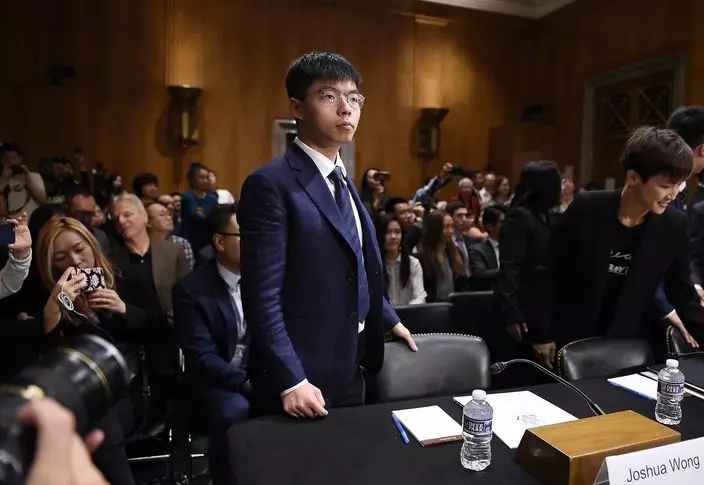
Joshua Wong openly urged sanctions on China
Pompeo called in senior officials to weigh Wong's case. Timing was the problem. Washington was about to shut China's consulate in Houston over espionage claims, and the officials feared that if the announcement landed while Wong was holed up in the US Consulate General in Hong Kong, Beijing might retaliate by closing the Hong Kong consulate. Worse, it could arrest Americans in the city at any time to trade for Wong.
The group also looked at getting Wong out. The only escape route was by sea, through the Taiwan Strait to the Philippines, and a run-in with the Chinese Navy could blow the flight up into an international incident. Pompeo and his advisers made the call: Wong would not be let into the US Consulate, and Washington would not help him leave Hong Kong. An official involved in the process admitted to the authors that when national interests and individual’s interests collide, you try to strike a balance between the two.
Discarded but Still Loyal
The national interests in question were America's. Joshua Wong pulled chestnuts out of the fire for the United States. His reward was to be cast aside.
Wong's real folly came after he had already become a discarded pawn. He still played the willing cat, reaching into the embers to fetch more chestnuts. The Hong Kong National Security Law was already in force. Had he stopped right there, the law's lack of retroactivity would have protected him, and the SAR government could not have prosecuted his earlier acts.
But Wong did not stop. After the law took effect, he kept meeting senior foreign officials face to face. Exiled activists overseas were openly calling for sanctions and hostile measures against China. Wong, still in Hong Kong, stayed in touch with them, reposted their statements, endorsed their appeals, and spread their posts widely through his social media accounts.
By then the evidence against him was conclusive. Once charged, Wong had no choice but to plead guilty.
The Monkey Moves On
Trump was US President in 2020, and he returned to the White House in 2025. On September 23 this year, President Xi Jinping visited the United States, flying into Joint Base Andrews on the outskirts of Washington aboard his special plane.
Trump and First Lady Melania broke with protocol and went to the airport in person, waiting at the foot of the stairs of President Xi's plane to welcome him. Could those who believed Trump back then and went on to betray their country ever have imagined such a scene?
A monkey goes wherever the good things are. Why would it still remember the cat it once tricked?
Lo Wing-hung