

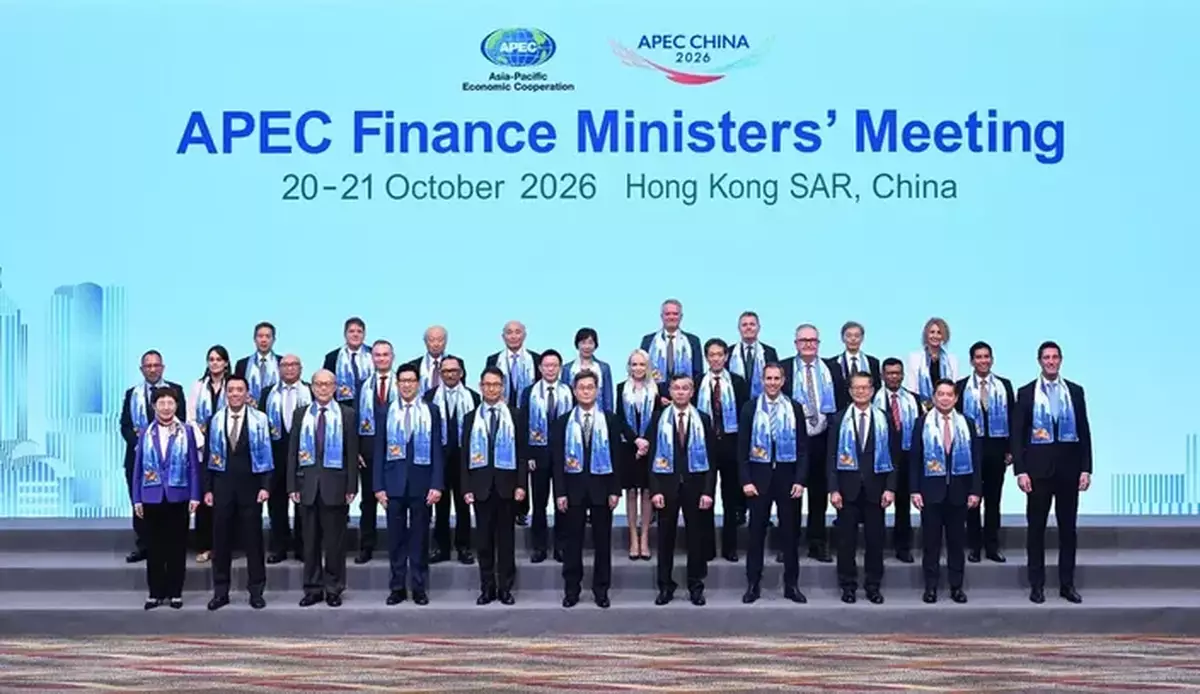
Hong Kong is hosting the Asia-Pacific Economic Cooperation (APEC) Finance Ministers' Meeting on behalf of the country. The gathering serves as a high-profile prelude to the 33rd APEC Economic Leaders' Meeting, which China will host in Shenzhen this November.
Hong Kong's APEC Moment
It is China's third turn as APEC host after an 11-year gap, and Hong Kong's first time staging the finance ministers' meeting. More than 500 financial officials, delegates and business leaders from 21 member economies have descended on the city.
The timing tells its own story. In early October, the US-hosted Group of Twenty (G20) trade ministers met in Milwaukee, where Washington tried to rally a statement targeting so-called "China's overcapacity." The push ended in failure.
The contrast could hardly be sharper. While Washington plays confrontation, Beijing plays cooperation. This APEC Finance Ministers' Meeting zeroed in on areas where members can work together, from closer macroeconomic policy communication to the new opportunities opened up by artificial intelligence.
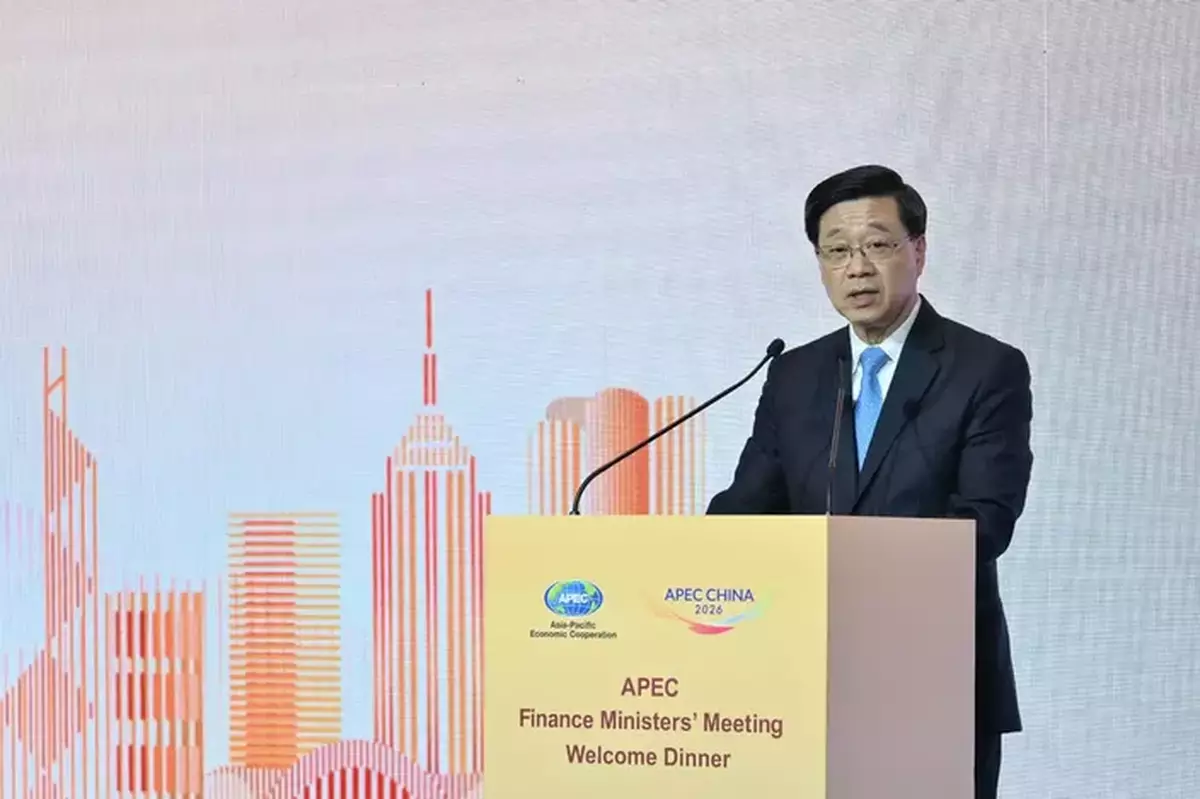
Chief Executive John Lee said on October 20 that the Hong Kong Special Administrative Region is hosting the APEC Finance Ministers' Meeting for the first time. Hong Kong will seize this high-level international platform and put its role as an international financial center to work, showing the attending APEC finance officials, international organization representatives and the wider world its all-round development across the economy, finance and society.
Lee will also introduce Hong Kong's combined strengths as a core city of the Guangdong-Hong Kong-Macao Greater Bay Area, a hub that connects national opportunities with international ones.
Hong Kong has been here before, and the memories are not all fond. The last time the city hosted a major international conference was 21 years ago, in December 2005, when it staged the Sixth WTO Ministerial Conference. Crowds of Korean farmers came to protest the World Trade Organization, and together with local demonstrations the event erupted in repeated clashes.
This time, the APEC Finance Ministers' Meeting came off peacefully, a success from start to finish.
A Deliberate Signal
China is this year's APEC host economy, and its decision to stage the Finance Ministers' Meeting in Hong Kong carries a deliberate message.
The backdrop is tense. The United States began sanctioning Chinese Mainland and Hong Kong officials in 2020, and the Chief Executive himself is on that list. The aim was to undercut Hong Kong's standing as an international financial center.
Lately, though, China-US relations have thawed slightly. US Secretary of State Marco Rubio, himself under Chinese sanctions, traveled to China in May alongside President Donald Trump. Chief Executive John Lee, meanwhile, hosted a welcome dinner for the APEC Finance Ministers' Meeting. Both sides are playing down the effect of their mutual sanctions.
Hong Kong's turn as host of the APEC Finance Ministers' Meeting helps burnish the city's status as an international hub. That can be seen on several levels.
First, the meeting amounts to rock-solid backing from Beijing.
This APEC Finance Ministers' Meeting is hosted by China's Ministry of Finance and organized by the Hong Kong SAR Government. That arrangement is widely read as a strong endorsement of Hong Kong's role as an international hub.
The timing matters. Hong Kong is rolling out its first five-year plan and aligning with the national 15th Five-Year Plan. Handing the city such a high-level multilateral financial dialogue shows the world that Hong Kong's unique place in the Asia-Pacific financial landscape is not fading. It is growing stronger.
Show, Don't Tell
Second, it puts Hong Kong's existing strengths under the global spotlight.
The meeting brings together financial and economic policymakers from 21 APEC member economies. By hosting it, Hong Kong gives these officials and business leaders a chance to see the city firsthand, clearing away their misunderstandings and biases.
Consider what I hear from foreign diplomats and consular officials posted here. Even their own families and friends have doubts about the assignment. The usual questions: Is Hong Kong chaotic? Can you even get on the internet there?
Bringing these visitors, who rarely came to Hong Kong in the past, to see the situation for themselves helps erase bias and misunderstanding.
It also opens their eyes to Hong Kong's institutional strengths: a mature offshore renminbi market, a financial management and regulatory framework aligned with international standards, comprehensive legal and professional services, and a free and open business environment. That is Hong Kong showing its strengths, live and on the ground, to the Asia-Pacific business community.
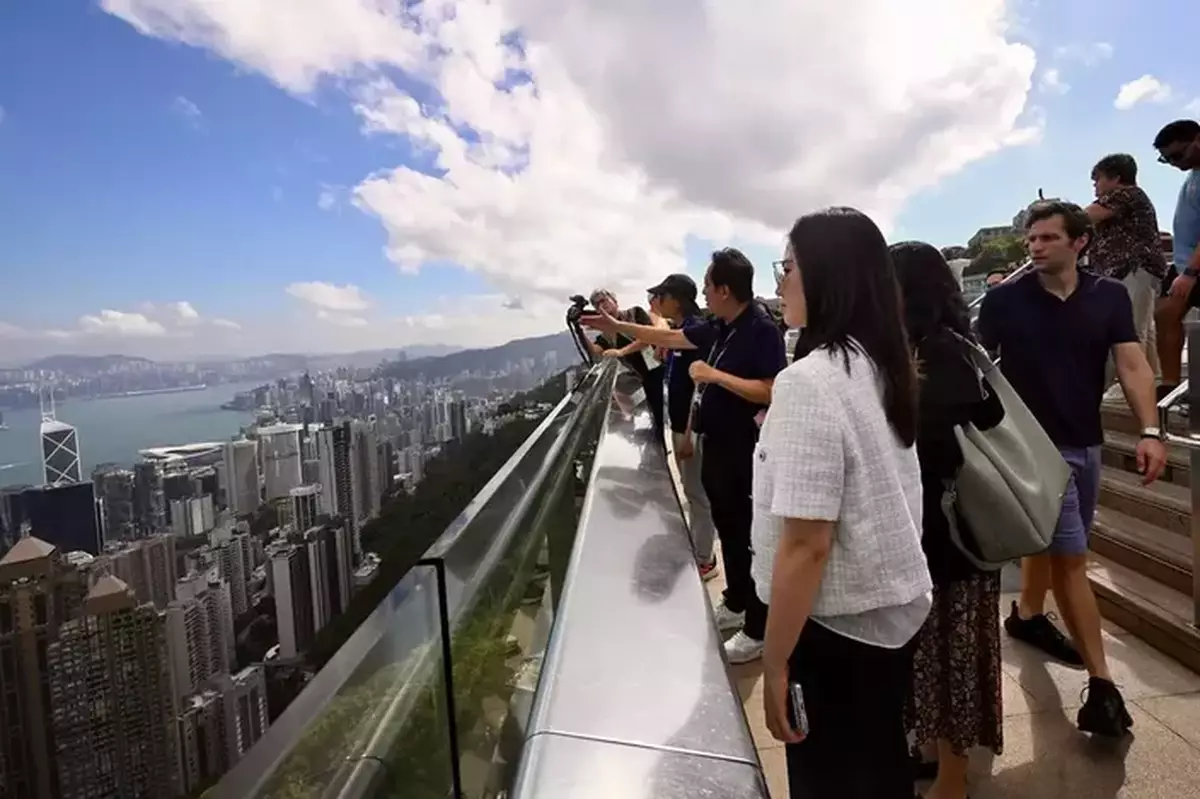
Hong Kong has lined up a program of visits for these foreign APEC members and business leaders. Day one is mostly sightseeing. Day two takes in the Science Park, Cyberport and the International Mediation Institute, along with the Palace Museum and the Museum of Art.
Every stop drives home the role Hong Kong can play in innovation and technology, culture, and even international affairs.
The Bigger Prize
Third, it highlights Hong Kong's status as an international center.
Geopolitical rivalry used to be less fierce. London, New York, Switzerland, Singapore and Hong Kong were all international centers that China could put to work.
That era is ending. As a once-in-a-century upheaval arrives and China-US competition intensifies, China has no choice but to weigh the security of those centers. Under One Country, Hong Kong's status comes into full relief.
There is no ISO-style certification for an international center, but some institutions have built yardsticks. The International Exchange Center City Index, released by Tsinghua University and Deloitte, defines one as a city that connects and serves the world, gathers high-end international factors, and carries real influence in global affairs.
Its framework has three first-level indicators: attractiveness, influence and connectivity. Those sit above 11 second-level measures, including livability, business friendliness, international affairs, technological innovation and transport facilities.
In the 2025 assessment, Hong Kong ranks seventh. Ahead of it, in order, are London, Paris, New York, Seoul, Singapore and Beijing. That is a strong position, with room still to rise.
For the specific role of international financial center, the Global Financial Centres Index (GFCI) is one of the most authoritative systems. It continually assesses major financial cities across five dimensions: business environment, human capital, infrastructure, financial-sector development, and reputational and general.
In that system, Hong Kong has long ranked third worldwide. It stands in the first tier alongside New York and London.
Overall, with national support, Hong Kong keeps advancing along the path toward becoming an international center.
An international city's central standing rests on lasting inflows of capital and talent, predictable law and regulation, and deep links to the real economy.
The role is not just to be a node for international exchange, or only a market that follows established rules. It is to fight for a say where rules are made. Hong Kong's progress on that front is crucial, and hosting the APEC Finance Ministers' Meeting is only a beginning.
Lo Wing-hung
Bastille Commentary
** 博客文章文責自負,不代表本公司立場 **