Skip to Content Facebook Feature Image

A Happy Life for the People Is the Truest Democracy

Blog

A Happy Life for the People Is the Truest Democracy
Blog

Blog

A Happy Life for the People Is the Truest Democracy

2026-10-06 10:45 Last Updated At:10:45

On October 1, the nation celebrated its 77th birthday. Seeing the people's happy lives on the mainland truly gave one the feeling that a golden age has arrived.

A Golden Age on Display

The real scenes witnessed on the mainland and the image of the mainland projected by Taiwan are sometimes as different as heaven and earth. The gap has become laughable.

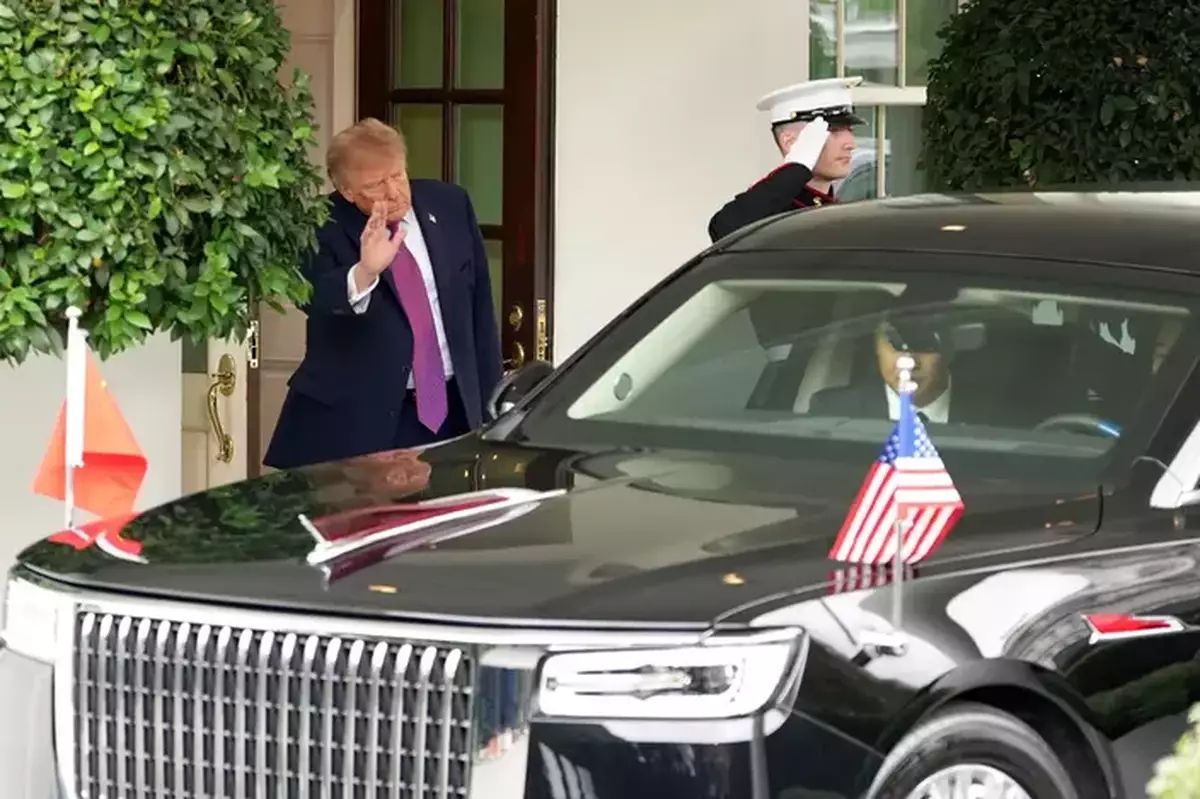
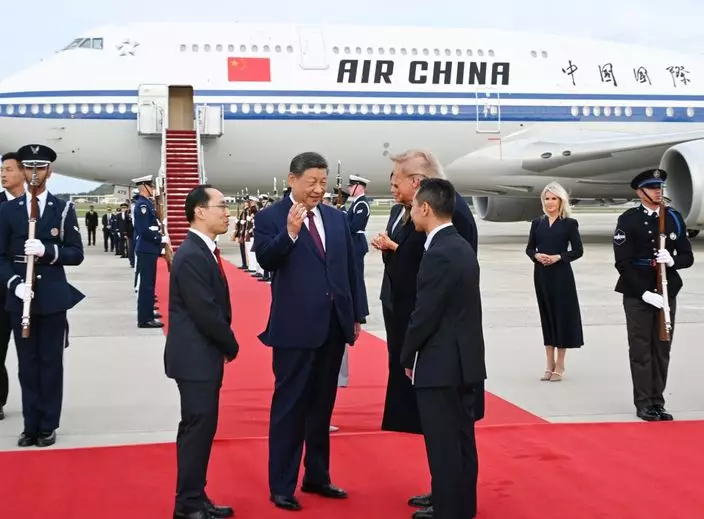
President Xi Jinping's recent visit to the United States came with a reception of the very highest order. US President Donald Trump stood at the bottom of the gangway of Xi's plane to welcome him.

The picture sent shockwaves through diplomatic circles and tolled a death knell for Taiwan's Pan-Green Coalition. America's policy of abandoning Taiwan is now plain as day.

But once President Xi wrapped up the visit, Taiwan's media filled up with all kinds of strange "news."

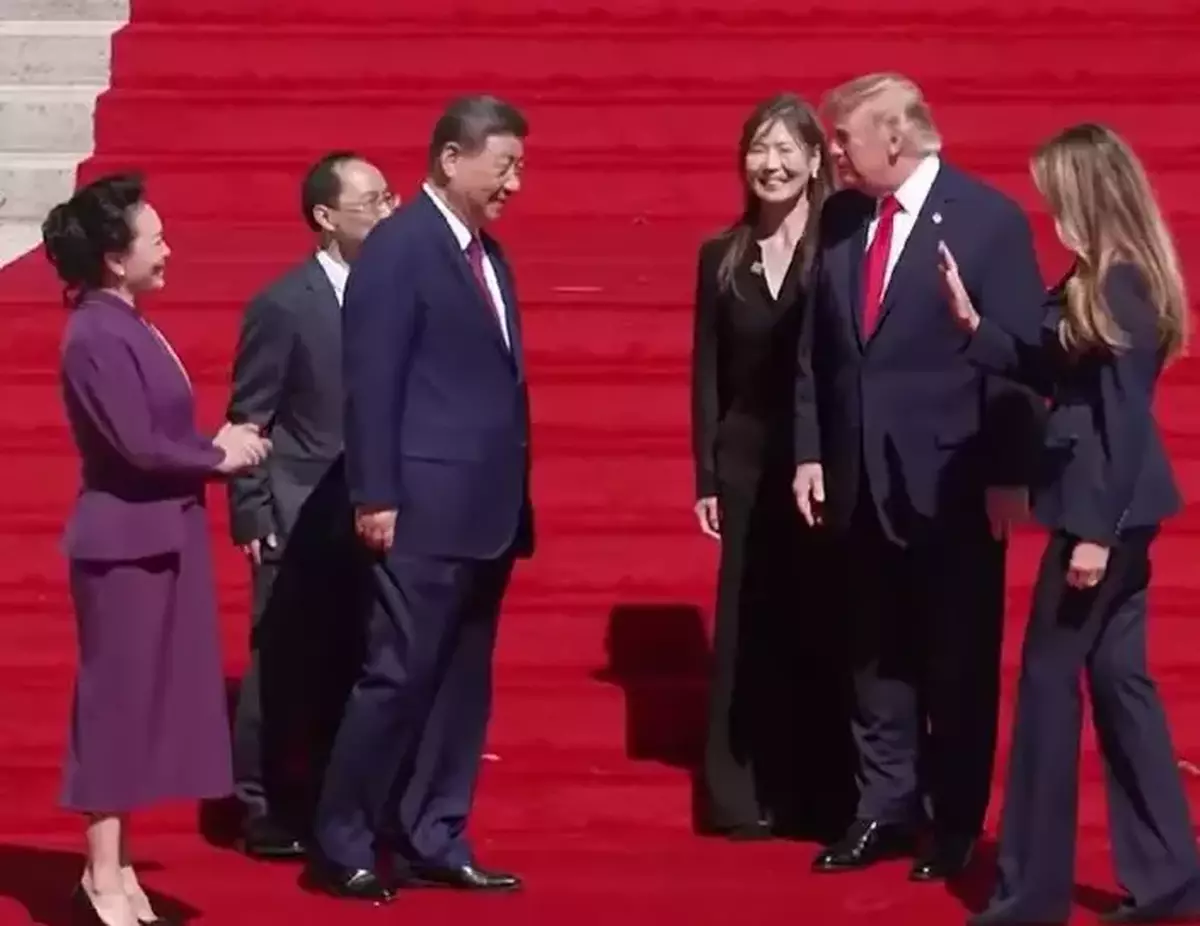
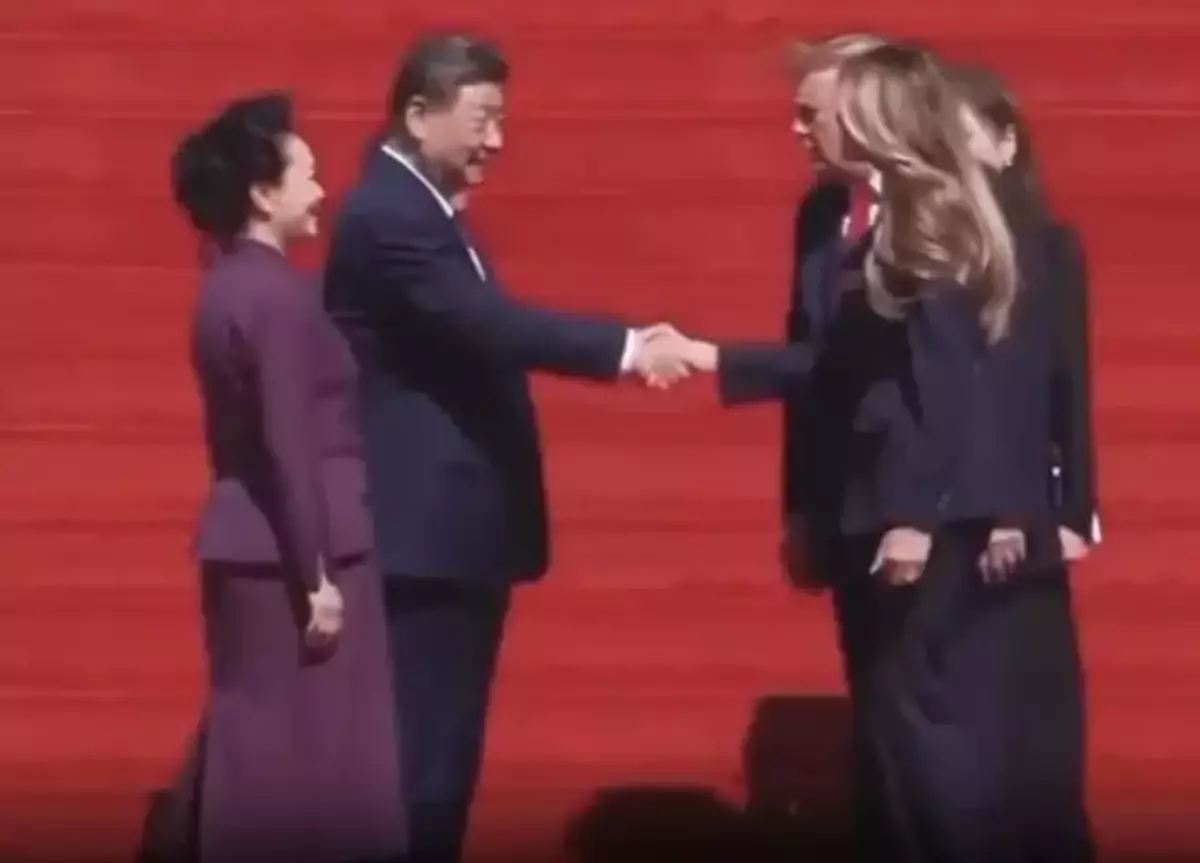
One offering: a spliced clip of Trump welcoming President Xi, used to claim that US First Lady Melania Trump was unwilling to shake hands with him. In truth, the whole thing was a rumor cooked up through video editing.

Check the full live broadcast and the story collapses. When the four said their farewells, they all shook hands with one another. The so-called "refused handshake" footage simply shows the standard choreographic positioning for a diplomatic group photo.

Melania did not just shake hands with President Xi. She also took an active part in the activities welcoming him. The entire state banquet, staged with red as the dominant color scheme, was designed by Melania herself.
Rumors Escalate to Health Smears

The most absurd part is who pushed the handshake rumor. It was not just Taiwan's internet trolls. Formal media outlets did it too.

From there it escalated fast. A Taiwan television station went on air and recklessly claimed that President Xi had health problems.

First, they zoomed in on video of Peng Liyuan holding President Xi's hand as he stepped off the plane. That, they said, "proved" he could not walk off on his own.

Then they spread word that when President Xi returned to the mainland, he was "carried off the plane for emergency treatment" . They cursed his health as already failing.

These fake reports collapsed within a day or two. On the morning of September 30, Xi Jinping and other Party and state leaders joined representatives from all walks of life to lay flower baskets to the people's heroes at Tiananmen Square.

That evening he appeared at the National Day banquet. More than a thousand Chinese and foreign guests saw that President Xi was in very good health.

Taiwanese media only spread rumors, by they never clarify them even after they are proven false. This habit of spreading rumors without debunking them has become a typical tactic of some Taiwanese media.

Rumor Mills,  Obvious Motives

But check the comments under the rumor posts on their Facebook page. The verdict runs one way: readers overwhelmingly accuse the outlets of fabricating the stories. Hardly any Pan-Green Coalition figures even step forward to defend such fake news. The outlets publish it anyway.
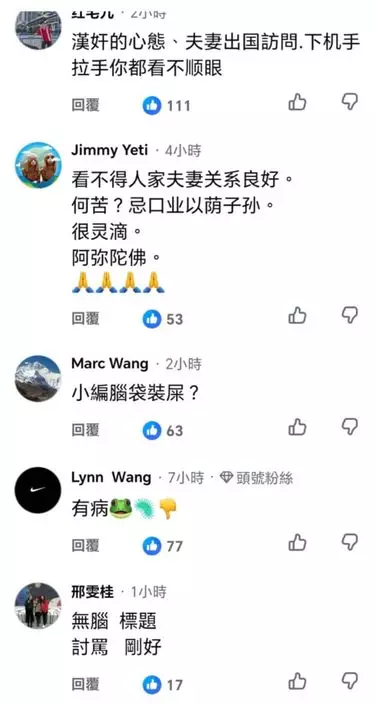
Netizens not buying the rumor-mongering posts

Netizens not buying the rumor-mongering posts

The motive? Probably what some netizens already claim. Posting these rumors earns the outlets "dog food" from the Democratic Progressive Party (DPP) government. Once the handouts arrive, whatever consequences the rumor-mongering triggers no longer matter to them.

Taiwan's rumor-mongering about Mainland China is nothing new. Today it burns hotter than ever.

Take Wang Yichuan, a former Taichung Transportation Bureau director turned Taiwanese talking head. On a political talk show in 2023, he claimed Ma Ying-jeou had been deceived during his trip to the mainland. Mainland high-speed rail seats have no backrests, Wang argued, and the dining table and place settings prepared for the photo were all faked by the mainland side.

Anyone who has traveled to the mainland naturally knows just how ignorant such claims sound.

Absurd Claims About the Mainland

By August, the rumor mill had recruited a fortune-teller. Liao Meiran was at it again on a Taiwanese political talk show, claiming that in Beijing's 42-degree-Celsius summer, the city has no refrigerators at all, and hotels have no refrigerators either.

Does Liao Meiran know that China is the world's leading producer of household refrigerators? Cumulative output reached 109.24 million units in 2025, nearly 60% of global production.

But none of this matters anymore. If you dare to spread rumors, someone will dare to believe them. And once they believe, the mainland looks utterly backward in their eyes. They conclude the mainland's leaders all have health problems, and that the mainland's system will collapse tomorrow.

The result? These believers brim with confidence in Taiwan's Democratic Progressive Party (DPP) government and keep the "self-hype" going.

Even though Donald Trump has already abandoned Taiwan, they remain willing to serve as pawns of the United States in confronting the mainland.

The Cost of Living on Lies

That leads to a more fundamental question: Taiwan's democracy itself.

Taiwan brags about its electoral system every day, insisting the island has democracy.

But in this ballot-box democracy, when the public is misled day after day by internet trolls and even legitimate media outlets spreading completely false news, the image that takes shape is of mainland China as a demonic regime on the verge of collapse. Voters holding that image will naturally cast their ballots for the "vigorous" politicians of the DPP.

Is a system truly democratic when votes are cast on the basis of false information?

Western political scientists used to stress that democracy in the United States and the West prizes procedural justice, and that good procedures naturally produce good results.

But if voters reach their political judgments through fake news, is the procedure that elects a government really without problems?

The world offers far too many real examples of this pattern. These fame-stealing charlatans in politics dupe voters into casting their ballots and backing them into power.

The result? They drag an entire country or region into the abyss of disaster.

Ukraine's actor Zelensky is a textbook case. He conned his way into power and ultimately steered Ukraine into war with Russia.

Today Ukraine has lost 20 percent of its territory. On top of that, it pays the price of 30,000 deaths every month, a figure supplied by Trump.

Look at our country's development and the answer is clear. Striving for a good system is not about letting people "get a thrill" from a process that merely seems wonderful.

The ultimate goal is to secure good outcomes and let the people live happy lives. Our country has now achieved exactly that.

Lo Wing-hung


Bastille Commentary

** 博客文章文責自負,不代表本公司立場 **
The real story of the China-US summit may be written in the blank spaces of the outcome statements each side issues.

Everyone knows the ostentatious, high-spec reception the United States gave President Xi Jinping was pure Trump. He is a man who bullies the weak and fawns on the strong, and perhaps he really does admire President Xi somewhat. That is why he received him with the highest courtesies.

But on substance, White House officials pull Trump back to reality. Only what can reach consensus gets announced. Anything without consensus is left blank.

Scheduling Chemicals, Sentencing People

The White House statement puts fentanyl first on its list of achievements. It stresses that China agreed to place a class of lethal opioid substances (orphines) on its controlled list.

It adds: "The United States also noted China’s new export controls on two fentanyl precursor chemicals, while strongly encouraging the permanent scheduling of these and other substances and chemicals to help stem the flow of illicit precursors to dangerous narcoterrorists in North America."

China is the world's largest producer of pharmaceutical raw materials. Fentanyl itself is a medicine. Many drug traffickers turn those raw materials into drugs, then smuggle and traffic them into the United States.

The United States wants China to sentence some of the Chinese people involved to death. That sits awkwardly with the humanitarianism Washington has long preached. In the past, the United States even asked China not to execute Americans who trafficked drugs in China, and to release them back to the United States.

But China has always sentenced drug traffickers to death. Dealing harshly with traffickers, in short, poses no great difficulty for Beijing.

Iran and the Strait of Hormuz

The White House said President Trump urged President Xi Jinping to ramp up refined petroleum output to stabilize global supply. That is not a hard ask for China.

The Chinese Foreign Ministry listed one outcome: "Iran should honor its commitment to not developing nuclear weapons, and no country or institution can be allowed to impose tolls on international waterways."

Voice of America said China has good relations with Iran. China not only agreed with President Trump's position that Iran must not possess nuclear weapons, but also listed it as the third major outcome of the summit. That, VOA said, is a major breakthrough.

But China has never supported Iran possessing nuclear weapons, and it advocates resolving the Iran nuclear issue through political and diplomatic channels. There is nothing new in that point.

What is truly new is the line that "no country or institution can be allowed to impose tolls on international waterways." China also did not support Iran charging fees for navigation through the international shipping lanes of the Strait of Hormuz in the past.

But Trump previously said that if Iran charges fees, the United States would also charge fees. This is tantamount to Trump agreeing to no longer say that the United States will also charge fees for navigation through the Strait of Hormuz.

Trade: Unspoken Rare Earth Lever

China and the United States agreed to push the "China-US Trade Committee" and the "China-US Investment Committee" into actual operation. Under the trade committee framework, the two countries reached consensus on a proposal to grant each other more preferential tariff treatment on US$30 billion of non-sensitive goods.

The US$30 billion of US exports that enjoy preferential tariffs include agricultural products, fish and seafood, logs and wood products, cosmetics, and medical devices. The US$30 billion of Chinese exports that enjoy preferential tariffs include consumer goods such as small home appliances, toys, holiday decorations, and children's car safety seats.

The US side boasted that China will buy an additional 10 million metric tons of US coal each year going forward, and that it will remove barriers to agricultural market access. According to the Ministry of Commerce's explanation, this is in fact entirely covered within the framework of China's US$30 billion in reciprocal goods imports.

In addition, what the Chinese statement did not mention is rare earths. The US statement said the United States and China will continue working to address US concerns about shortages in the supply chain for rare earths and other critical minerals, with the goal of ensuring that transportation volumes for relevant goods return to an appropriate level.

The Chinese statement did not mention this at all. It is believed that China is retaining control over rare earths as leverage on the Taiwan issue.

Taiwan Left Blank, Japan Stung

Neither side's statement mentioned the Taiwan issue.

Bonnie Glaser, executive director of the Indo-Pacific program at the German Marshall Fund, a US think tank, said the two sides appear to have more differences than consensus on the Taiwan issue.

But VOA also cited some commentators who argue that President Trump has already shelved $14 billion in arms sales to Taiwan and is unwilling to bring the issue up again. The Chinese side, they suggest, may also want to avoid pushing too hard and straining the relationship between Xi Jinping and Trump.

On Japan, however, the US side is believed to have taken a position at China's request.

One outcome China listed was this: "The two leaders recalled that (the) United States and China were allies in World War II and fought side by side to win the war."

Those two sentences hit Japan very painfully.

Pageantry Over Progress, China Comes Out Ahead

Overall, the two sides produced no groundbreaking new agreement. Danny Russel, who served as Assistant Secretary of State for East Asian and Pacific Affairs in the Obama administration, put it bluntly: the two leaders spent more time on social and ceremonial activities than on actual talks, and the closed-door meeting lasted about 90 minutes.

Russel's verdict: "Pageantry and protocol don't add up to progress. Pandas are cute, but what America needs are rare earths,"

China clearly gained more than the United States. The reception standards were extraordinarily high, and they overawed U.S. allies such as Japan and Europe. But the summit's most practical achievement was simpler: against a backdrop of deep China-US hostility, the two sides introduced no new confrontational measures.

The summary of the China-US outcomes did not mention Taiwan, and China's summary did not mention rare earths. That reflects President Xi's care for Trump's feelings after Trump backed down on the Taiwan issue, and his reluctance to push too hard. The United States has already shelved the US$14 billion arms sale to Taiwan anyway.

China sent two pandas and held back a rare earth card. It knows you're not going anywhere.

Lo Wing-hung

Recommended Articles