Nations speak from strength, not from boasts.
Trump's Boast Meets Reality
On the eve of the trilateral meeting of China, the United States and Russia in Shenzhen, Donald Trump posted on November 16: "The United States, China, and Russia are entering the final 48 hours of preparation for what could be the most significant meeting since 1945."
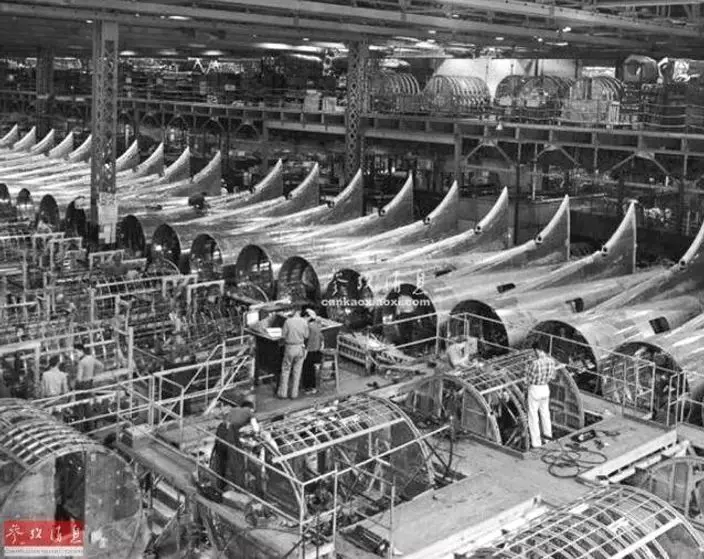
American industry, 1940s
Trump put it this way: "Compare what is being staged in Shenzhen to the state of the world only three years ago, and the scale of what Trump's diplomatic architecture has produced in a single term becomes visible in a way that routine coverage tends to obscure."
Trump talks as if he can fix everything. Reality says otherwise: America's national strength has fallen sharply from 1945, when Britain, the United States and the Soviet Union met at Yalta.
Back then, America was at its zenith. Its wartime machine ran flat out and its factories led the world. That America is gone.
Electricity Tells the Real Story
Electricity generation is a hard proxy for comprehensive national strength, and the numbers are blunt. In 2025, China generated about 10.6 trillion kWh, roughly 33.3% of the global total, ranking first in the world. The United States produced about 4.5 trillion kWh, around 15%, in second place, while Russia generated 1.2 trillion kWh, about 3.8%, in fourth. China's output is 2.3 times that of the United States and about 8.9 times Russia's. It alone matches the combined generation of the countries ranked second through fifth globally, though China's population is only 67% of those four countries combined.
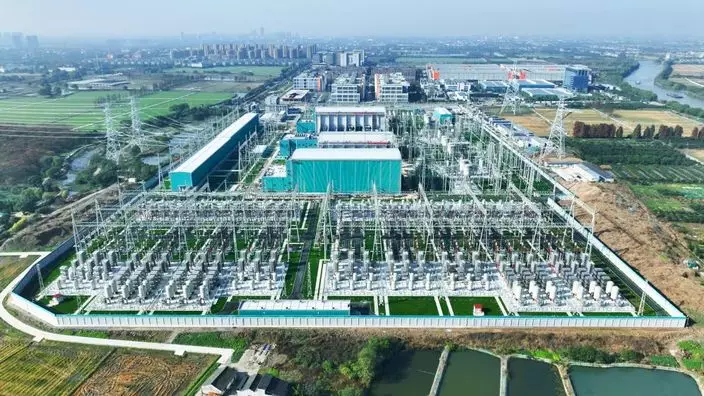
Time magazine recently ran an article titled "The Rise of Electrostates Will Reshape the Global Economy," floating the idea of a coming age of electrostates. It used the Strait of Hormuz energy disruption to show how countries that depend on imported fossil fuels are exposed to violent swings in international oil and gas prices. Energy security decisions will shape where factories go and who controls high-end equipment manufacturing. They will also decide which countries become electrostates and seize command of the future economy.
Time judged electrification competitiveness on two fronts: market application of electric technologies and the supporting policy environment. China scored highest on deployment and market use, powered by the spread of electric vehicles and a complete industrial system. More than 80% of the world's battery cells are made in China. Electricity's share of final energy consumption has doubled since 2005, and electrification now runs through industry, buildings and transport.
Europe wants to raise electricity's share of consumption, but progress has crawled for a decade. High industrial power costs and limited grid access make it hard to turn policy into commercial investment. The United States has a solid electrification base, yet it is hemmed in by policy reversals and grid infrastructure while still expanding fossil energy. That could cost it competitiveness as the new energy trend gathers forceThe article also says China has a policy environment suited to electrification. Time stops short of directly calling China an electric power giant. But it acknowledges that the shift from fossil energy is taking shape.
Four Measures of Power
By four core measures, China is already the world's undisputed electric power giant.
First, China ranks first in the world in installed power generation capacity. Being an electric power giant is not just about how much electricity a country generates. It is also about how much capacity it has built.
As of May this year, China's total installed generation capacity topped 4.01 billion kilowatts, making it the first country in the world to reach that scale. The United States has about 1.28 billion kilowatts and the European Union about 1.21 billion. Neither comes to even one-third of China's.
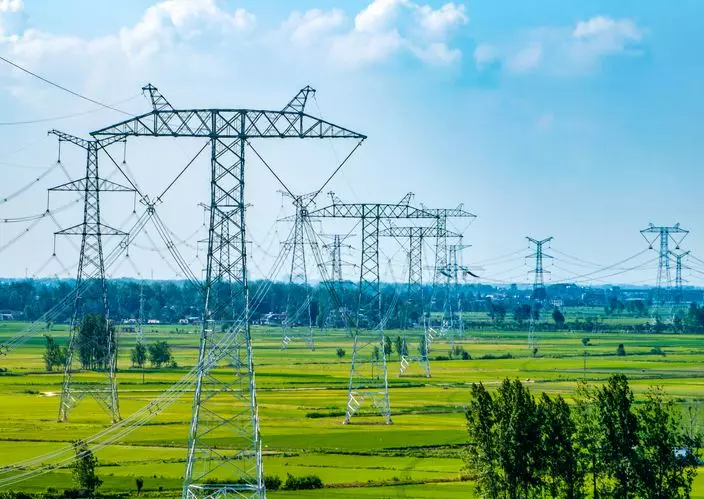
Second, China is out in front on new energy and ultra-high-voltage equipment. Its ultra-high-voltage transmission technology ranks first globally, moving electricity over long distances while cutting power losses.
The +/-1,100 kV ultra-high-voltage direct current project is the most powerful transmission project in the world. China also controls more than 80% of global battery cell production capacity, cementing its edge in electric equipment manufacturing.
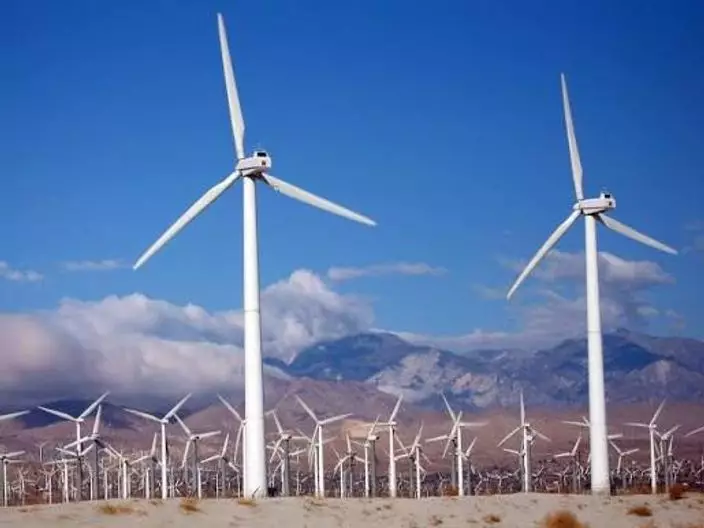
Third, the sheer scale of China's green transition. As of September that year, combined wind and solar installed capacity topped 2 billion kilowatts, roughly half of the world's new-energy installations. China has ranked first for years, and no country is close to catching up.
Fourth, reliable supply and cheap electricity. In 2024, China's power supply reliability hit 99.924%, with users losing an average of only about 6.71 hours of power a year. Its first-tier cities perform at world-class levels.
Residential electricity costs 0.47 to 0.6 yuan per kWh, about 25% of what Germans pay and 60% of what Americans pay. In an era of wild swings in international energy markets, stable and affordable power is a formidable competitive weapon.
A Seat at the Table
China now stands firmly as the world's largest power producer. That muscle is not just about manufacturing capacity in the Industry 4.0 era; it is the infrastructure backbone for the coming AI age.
Cast back to 1945. China was nominally a victor of World War II, yet at Yalta, where the victors carved up the world, it could not get a seat at the table.
Eighty-one years later, the table has moved to Shenzhen. Britain no longer holds a seat, and the United States and Russia are more eager than China to convene a three-power summit.
Weak nations have no diplomacy; this holds true across all times and places.
Lo Wing-hung
Bastille Commentary
** 博客文章文責自負,不代表本公司立場 **
Just days ago, Washington was still playing the wounded champion, rallying ten countries to issue a statement over Joshua Wong's 10-year prison sentence and loudly vowing to defend democracy and freedom in Hong Kong. Days later, the mask came off.
Rubio Shows His Hand
On November 10, Rubio spoke to reporters after attending the G7 foreign ministers' meeting in France. He said it with total confidence: "We work for America. We don't work for the global order. We don't work for other countries." On any policy question, he went on, from bilateral ties with any given country to the current state of artificial intelligence, the United States always puts the interests of America and the American people above all else. That often brings conflict and disagreement with other countries, China included, and Washington is realistic and clear-eyed about it.
Less than a week earlier, on November 6, Rubio had issued a statement strongly condemning the Hong Kong court for once again sentencing Joshua Wong to prison for exercising freedom of speech.
Washington went further, rounding up nine other Western countries for a 10-country joint statement. The cases, the statement said, "are further examples of how the NSL is being used to target individuals for political expression and participation," referring to the Hong Kong National Security Law. The ten countries called for an immediate end to “all unjust prosecutions of individuals under the law and for Hong Kong people to be granted their full rights and freedoms.”
When "the Joshua Wongs" read the statements from Rubio and the ten US and Western countries, their blood ran hot. They believed America would fight for Hong Kong's democracy and freedom. Then Rubio changed venues, changed faces, and reminded everyone at once that he serves only American interests.
Interests Decide Everything
America's logic is easy to follow. If supporting the Joshua Wongs, confronting China and weakening China serves American interests, Washington will speak up for them. It may even collude with Joshua Wong and others to fuel violent protests, as it did in the 2019 Black Riots, quietly raising America's bargaining chips in the trade war with China.
But when Washington decides that improving ties with Beijing and managing differences better serves American interests, the Joshua Wongs get tossed aside the moment they are no longer useful. A hypocritical statement is all they get.
Think the Trump administration respects freedom of demonstration that much? Think again. We do not go around meddling in other countries' internal affairs the way America does, so we paid little attention to what was happening on its own doorstep.
After Donald Trump took office in January last year, he went hard after illegal immigrants. His weapon of choice was ICE, US Immigration and Customs Enforcement, which bypassed normal law enforcement agencies to hunt down ethnic minority immigrants across the country. The crackdown at one point triggered fierce opposition in many parts of the United States and erupted into riots. Trump crushed them with force.
The flashpoint came on the night of July 4 last year, America's Independence Day. The Prairie Land ICE detention center in Alvarado, Texas, was holding a group of suspected illegal immigrants, and a crowd of demonstrators gathered outside to protest. They set off fireworks and damaged vehicles. When police arrived, members of the anti-fascist movement (ANTIFA) on the scene clashed fiercely with them.
Then the shooting started. Benjamin Hanil Song, a 32-year-old Korean American demonstrator, opened fire with an AR-15 rifle during the clash and wounded a police officer. In his defense, Song claimed he mistakenly believed the officer had fired first, so he shot back. The wounded officer survived. The US government rounded up and charged a large number of demonstrators.
In June this year, after a three-week trial, all nine demonstrators were handed heavy sentences. The reason runs deeper than one wounded officer. The Trump administration has designated the anti-fascist movement as a terrorist organization, so prosecutors framed the defendants as carrying out a terrorist attack and punished them accordingly.
The lead defendant, Benjamin Song, who shot and wounded the officer, got 100 years in prison. That is the maximum term under federal law.

Benjamin Song sentenced to 100 years.
Hong Kong Looks Lenient
Another defendant, Maricela Rueda, was sentenced to 70 years in prison.

Rueda left before shooting, still got 70 years.
She took part in the protest at the scene and was charged with providing material support to terrorists, even though she had already left before Benjamin Song opened fire. Prosecutors also tacked on an obstruction of justice charge. Her offense: after her arrest, she asked her husband to move boxes of anti-fascist publications.
Six other demonstrators were each sentenced to 50 years. They were convicted mainly of rioting, providing material support to terrorists, and conspiracy to use explosives, namely the fireworks set off during the protest.
The case of another demonstrator, Daniel Rolando Sanchez-Estrada, is even more extreme. He was sentenced to 30 years in prison, yet he was not even at the protest that night. His crime: he later helped move boxes of anti-fascist propaganda, and was convicted of conspiring to conceal documents.
The anti-fascist movement in the United States is no single organization with a unified leadership. It is a highly decentralized, leaderless left-wing movement. Yet the Trump administration has branded it a terrorist organization.
You might accept that Benjamin Song deserved punishment for shooting a police officer. But a 100-year sentence is unheard of in Hong Kong.
When Jimmy Lai was sentenced to 20 years in prison, many of his supporters said he might die behind bars. At 32, Benjamin Song almost certainly will.
So have any of those Jimmy Lai fans spoken up for Song? Have any of them condemned the Trump administration as utterly inhumane?
Rueda, the woman sentenced to 70 years, is a doula and an artist. She has a 12-year-old child.
She had already left when the shooting happened, yet the protest and the concealed political documents earned her 70 years. Joshua Wong, who plainly colluded with foreign governments, got just 10. By that measure, Hong Kong looks merciful indeed.
Have any of Joshua Wong's supporters sought justice for Rueda?
The Final Warning
Sanchez-Estrada’s fate is even more pitiful. On the night of the incident, he never even showed up at the protest site. His only offense was helping to move political propaganda materials, and for that he must serve 30 years behind bars.
Rubio cares so deeply about Hong Kong's freedom of speech. But has he given Americans theirs?
The whole affair makes one thing crystal clear: the democracy and freedom America champions comes with a precondition. That precondition is American interests. And who gets to define "American interests"? The administration in power.
The Biden administration decided that those who stormed Capitol Hill to protest the 2020 presidential election result were violating American interests, so it arrested them and sentenced them heavily. The Trump administration decided that those who oppose its immigration arrests violate American interests, so it stripped them of any right to free speech and assembly and sentenced them heavily too. The only real difference is that Trump hits harder and sentences longer.
In this Texas detention center protest case alone, nine defendants drew a combined 450 years in prison. That number alone is staggering.
The Joshua Wongs need to wake up. By helping the United States sanction and attack the Chinese government, they are serving America, and Hong Kong, China will naturally not treat them kindly.
Hong Kong sentenced Joshua Wong to 10 years in prison. Set that against the 100 years the United States handed Benjamin Song, the 70 years given to Rueda, and the 30 years given to Sanchez-Estrada. Hong Kong's punishment is truly lenient by comparison.
If the length of a prison sentence can reflect the rule of law in a place, then Hong Kong's rule of law stands immeasurably higher than America's.
Lo Wing-hung