Skip to Content Facebook Feature Image

The Sanctions Maze: Who Gets to Buy Russian Oil

Blog

The Sanctions Maze: Who Gets to Buy Russian Oil
Blog

Blog

The Sanctions Maze: Who Gets to Buy Russian Oil

2026-10-14 14:07 Last Updated At:14:07

The world is a mess, and everyone has to fend for themselves.

A lot happened last weekend. China-EU trade talks reached a preliminary agreement, finally bringing a measure of stability to turbulent international trade relations.

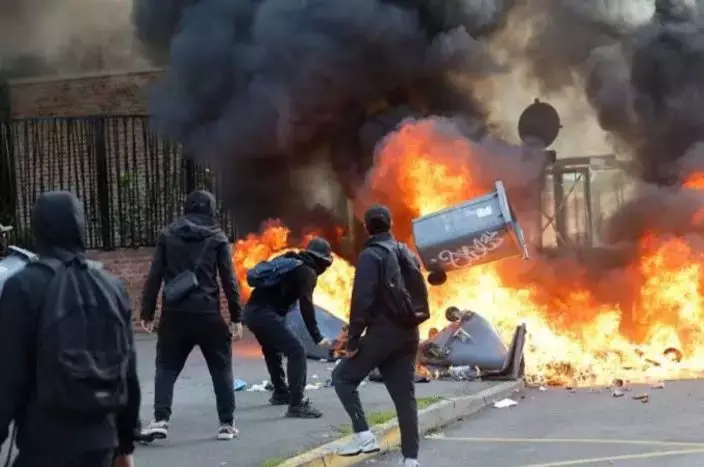
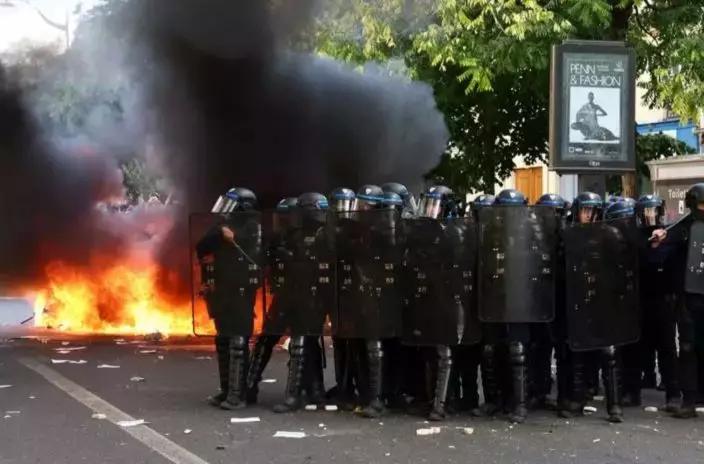
The crisis in France kept heating up. Student riots raged on, and the damage showed no sign of stopping.

On another front, the Saudi-led coalition had earlier backed the Yemeni government's counteroffensive and at one point claimed to have recaptured the coast along the Bab-el-Mandeb Strait. The move ended in disaster.

The Houthis struck back at Saudi Arabia, unleashing four consecutive attacks on Saudi airports and inflicting heavy casualties. Riyadh airport in the Saudi capital was completely shut down.

But none of it was as shocking as what came next. After US President Donald Trump and Russian President Vladimir Putin spoke by phone on October 9, the United States announced that Russia would immediately supply 300,000 tons of diesel to the United States and global markets.

The about-face was dizzying. Not long before, Trump had just signed a bill tightening sanctions on Russia. But the US midterm elections were looming, and diesel prices stayed stubbornly high because of the two wars in the Middle East and Ukraine.

Trump had no other choice. He struck a deal with Putin, and after hanging up the phone even said he wanted to thank him.

The US-Russia agreement left Ukrainian President Volodymyr Zelensky furious. He publicly slammed Trump's move as a weak decision and warned that lifting sanctions would give Russia the funds to attack Ukraine.

Trump did not back down. He first leaked to the media that the reason he had to reach an agreement with Russia was that Zelensky had repeatedly ignored US calls to stop attacking Russian oil refineries.

Then Trump stepped in personally. He told reporters at the White House on October 10 that Ukraine should get a new president. He blasted Zelensky for continuing to attack Russian oil refineries, accused him of trying to make trouble for the whole world, and warned that Zelensky had "better damn well stop".

A day later, Donald Trump turned to social media with a fresh claim: Russia and Ukraine had agreed to an energy ceasefire. Neither the Russian nor the Ukrainian side has confirmed it so far.

The energy price chaos gripping the United States is, basically, self-inflicted. The entire Russia-Ukraine war disaster erupted during the Biden era, with US backing. And the Iran war? That was orchestrated single-handedly by Trump.

Two wars have cooked up a giant global mess. Yet the United States can suddenly change face and strike a diesel supply agreement with Russia. That raises several questions.

First, where are the principles?

When the mood suits, the US sanctions Russian energy, convinced this can cut off Russia's war funding.

But when its own livelihood is squeezed and votes are on the line, the country can suddenly loosen those sanctions and freely buy Russian diesel. America's logic here is pretty messy!

In the "justice versus evil" narrative that the US has long championed, the US and the West embody the alliance of justice, while Russia, Iran, and North Korea are all evil regimes.

When others do not support US sanctions against these "evil regimes," the US will sanction those third parties. That is how the United States extends its long arm, imposing secondary sanctions on people around the world.

Back then, the US even asked Canada to arrest Huawei's CFO, Meng Wanzhou. The accompanying charge: that Meng had failed to comply with US orders on Iran sanctions.

These unilateral US sanctions never had United Nations authorization, and they have always lacked a legal basis. Now the United States can scrap them at any time, purely to suit its own needs. Sanctions pop in and out with zero logic, and the only explanation behind it all is these words: "American interests."

Anyone who still believes in America's democracy-lighthouse narrative is an absolute idiot.

Second, what happens next?

Ukraine has bombed Russia's own refining facilities hard, and the country's refining capacity is already down at least 20 percent. Even if Russia truly reaches a deal with Ukraine to pause mutual strikes on energy facilities, the diesel Russia can supply will remain quite limited.

A US-Russia deal can offer only a brief dose of psychological comfort. As long as the two wars have not truly stopped, the global energy crisis will keep worsening.

Rising energy prices push up inflation. Inflation pushes up bond yields. And yields stuck at high levels could at any moment bring the economies of heavily indebted countries such as France crashing down. That is where the real danger of the war trigger lies.

Third, stability is opportunity

There was a time when both Dubai in the UAE and Riyadh in Saudi Arabia counted as hubs of the Middle East and paradises for investment.

But after Trump ignited this Middle East war, it took barely half a year to send them plunging from heaven into hell. They lost their security, and they lost everything.

Their examples speak the truth: safety and stability bring opportunity. And Hong Kong is fortunate enough to be seizing exactly that kind of opportunity right now.

We can’t  save the world or stop these two wars. All we can do is mind our own house, get our work done, and brace for whatever risks come next.

Lo Wing-hung


Bastille Commentary

** 博客文章文責自負,不代表本公司立場 **

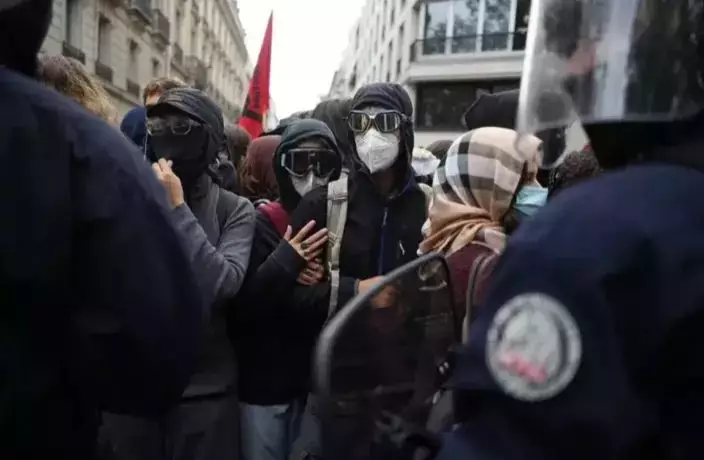
Nationwide riots have erupted across France. The scenes feel eerily familiar. They carry more than a trace of Hong Kong's Black Riots movement in 2019.

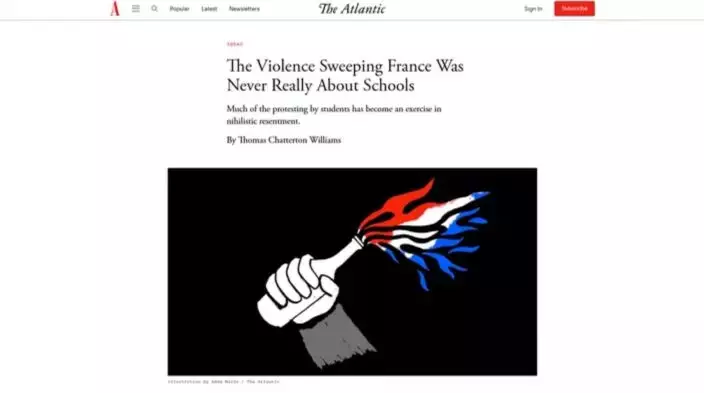
On October 7, the American magazine The Atlantic published an article titled "The Violence Sweeping France Has Nothing to Do With Schools." The author, Thomas Williams, is a visiting professor in the humanities at Bard College. He argues bluntly that the French protests have degenerated into a nihilistic venting of resentment.

The backdrop is sobering. Over the past two decades, France has repeatedly seen riots erupt over various issues, with arson and looting commonplace. This time, teachers' discontent over staffing and funding shortages lit the fuse. Students later joined in to demand better educational resources.

Professor Williams believes the real problem lies elsewhere: society at large has lost faith in the future. People believe the government cannot meet expectations; that social resources are a zero-sum game, and that various groups refuse to yield to one another. In the end, that resentment turns into violence.

The article points to five widely circulated videos. Together, they show how far the protests have strayed from the demands for education reform.

In the first video, a 15-year-old boy dressed in black and wearing a mask appears in Marseille. He uses a homemade flamethrower to spray fire at a woman's face, leaving her burned.

The second video captures a major fire raging through the hall of Nelson Mandela High School in Nantes. The school opened in 2014 at a cost of 75 million euros. Yet demonstrators left it extensively vandalized.

In the third video, a Paris teenager is asked about a female police officer chased and tripped by youths. He actually smiles and says that any means can be used to achieve the goal.

In the fourth video, a masked teenager stands on top of a car and yells to phone-wielding classmates that only 10 police are on the scene. He then shouts even louder, declaring that, in the name of Allah, they can kill them all. The crowd erupts in cheers.

The fifth video catches a group of teenagers in the Loire Valley chanting "MRH," a song by French rapper Boro700.

The title is said to allude to the French terrorist Mohamed Merah. The lyrics go further, invoking the 2015 Bataclan theater attack that killed 90 people and using that murderous content to provoke emotions.

These five videos reveal more than discontent with the government. They show violence repackaged as entertainment, with extremist ideas cheered and celebrated.

When arson, killing police, and even terrorist attacks become slogans and songs, violence can spiral into collective frenzy.

Professor Williams adds another point: France's problems cannot be blamed simply on immigrants. The participants came from diverse backgrounds. One was even a white girl filming a video of herself singing "MRH" inside a Catholic church.

He also criticizes France for tolerating its protest culture in recent years. The 2018 Yellow Vests movement once pushed Emmanuel Macron's government into crisis. Prolonged chaos, meanwhile, benefits the far-right National Rally all the more.

Some left-wing politicians stand accused of exploiting that protest sentiment. Bally Bagayoko, the mayor of Saint-Denis, once sang "La Marseillaise" with students in front of burning barricades. He later went further, declaring that "in certain circumstances violence is legitimate".

Those five videos instantly took me back to Hong Kong in 2019. Masked protests, demonstrators chasing and beating police, people set on fire, violence glorified, extreme political ideas preached. Every image felt eerily familiar.

When Western commentators dissect political violence in Hong Kong, they often blame the city's lack of democracy. Some even hail the protests as a "beautiful sight."

But if democracy suffices to prevent violence, why has France, which follows the same democratic system, also seen such serious violent protests?

I propose the opposite theory. Political violence is born of governance failure and laissez-faire permissiveness.

Hong Kong's governance failed at the time for one main reason: opposition filibustering paralyzed the government's operation. Of HK$100 billion in annual public construction funding, only HK$10 billion was approved as the opposition paralyzed the Legislative Council . The SAR government simply could not operate effectively.

The second reason was laissez-faire permissiveness. After the Article 23 legislation failed in 2003, foreign forces and the local opposition vigorously incited violent protests. In the end, everything spun completely out of control.

France suffers from governance failure as well. So-called Macronomics amounts to endlessly expanding fiscal spending, and backing Ukraine's war effort drains away vast resources. People's lives grow worse by the day, and schools lack the resources to improve services and attract teachers into the profession.

And the French are more permissive than the Americans. Macron pursues left-wing political correctness and does not confront protesters as toughly as the British and American governments do. One Yellow Vests protest dragged on for more than two years. The people developed the habit of taking to the streets at the slightest provocation, and in the end the situation became completely unmanageable.

Ultimately, the government must have the capability to get things done. That means managing the economy well and improving people's livelihoods. And it cannot simply let protests run their course. Otherwise, disaster is inevitable.

Lo Wing-hung

Recommended Articles