
The world today is in the grip of "profound changes unseen in a century." Big corporations are like lone boats on a raging sea. Only by choosing their strategic positioning well can they have a chance to lay the foundation for a century-long enterprise and seize major development opportunities.
HSBC's Singapore AI Center Sparks Questions
HSBC Holdings recently announced that it will establish a global artificial intelligence center in Singapore in the second half of this year. According to foreign media reports, the Hong Kong Monetary Authority had inquired with HSBC about the matter, questioning why the bank chose to set up the AI center in Singapore rather than Hong Kong. Earlier reports also indicated that HSBC planned to recruit 100 AI experts in Singapore to fully boost its local wealth management services.
Foreign media reports said the HKMA raised the question to defend Hong Kong's status as Asia's leading international financial center and fintech hub. HSBC's explanation was that setting up the AI center in Singapore was mainly to fulfill a commitment made to the Singapore government when it previously sold its local insurance business. The bank said it will continue to deepen its presence in and fully support the development of the Singapore market.
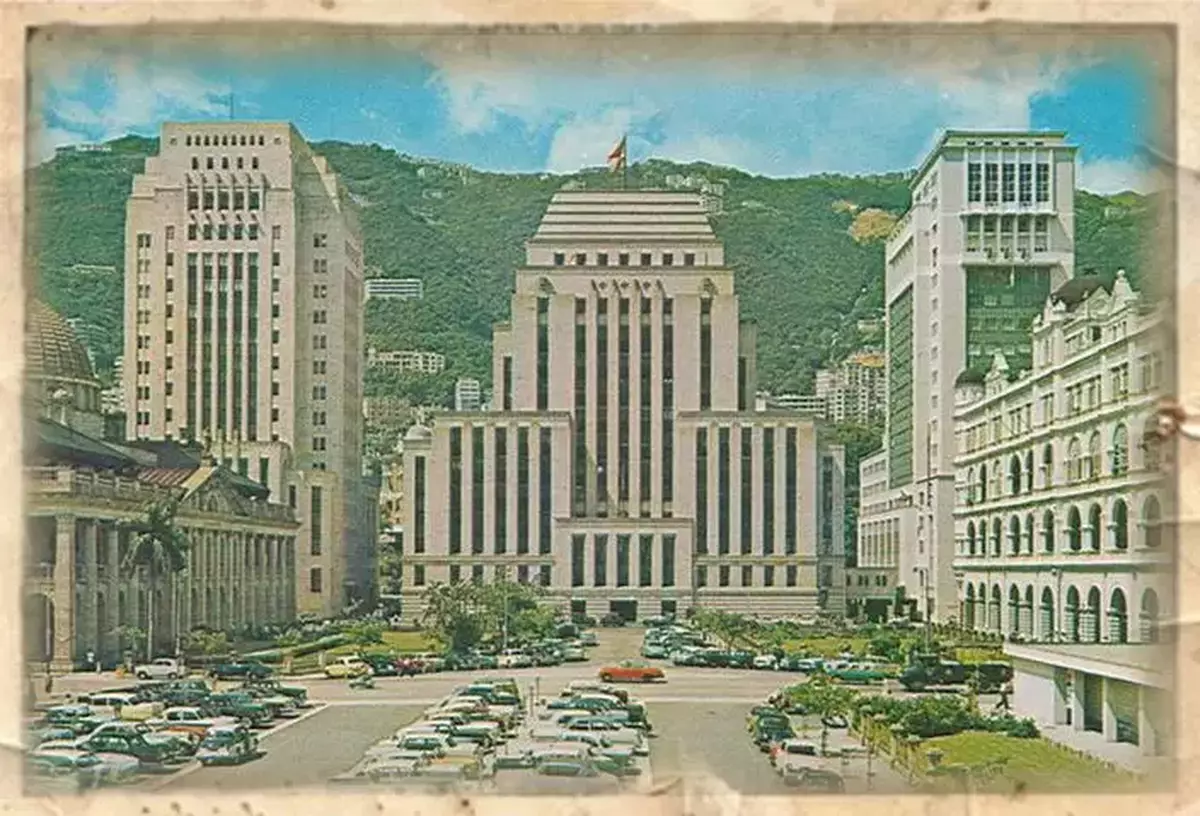
HSBC's move this time takes me back more than 30 years, to an old story. I have been an HSBC shareholder since childhood, buying in when the shares cost just a few dollars each. That is why I have always paid close attention to the direction of this semi-central bank of Hong Kong.
Rewind to the eve of Hong Kong's return to China, and the city was in turmoil. Jardine Matheson moved first, re-domiciling to Bermuda in 1984 and shifting its Hong Kong listing to Singapore.
HSBC then cast its own vote of no confidence in Hong Kong's return, putting its re-domiciliation plan into action in 1991. The method was a shell game. HSBC set up a new holding company in the United Kingdom, HSBC Holdings, which acquired HSBC Bank's North American and Middle Eastern businesses.
HSBC Bank, now a subsidiary, kept the Hong Kong and Asia-Pacific operations, and HSBC Holdings listed simultaneously in Hong Kong and London.
At the time, I was a political editor at a television station, and I still remember how seismic the news felt the day it was announced. I was in the middle of another assignment, but I dropped all the work at hand and rushed straight to another venue to interview Zhang Junsheng, then deputy director of the Xinhua News Agency Hong Kong Branch.
Later, HSBC Group Chairman William Purves and Vincent Cheng, the Chinese chief executive of the Hongkong and Shanghai Banking Corporation, traveled to Beijing together to meet Premier Li Peng. After they returned, I invited Vincent Cheng to dinner, and he recounted the meeting in detail.
He told me that before the meeting, both his former boss Purves and he himself were deeply worried. They feared Premier Li Peng would give them a fierce scolding and denounce HSBC for moving its headquarters to Britain. The outcome defied all expectations: Li Peng glossed over the matter lightly and expressed understanding of HSBC's restructuring.
Vincent Cheng, thrilled, said at the time that he never imagined they would get through so easily. He could not stop laughing as he talked about it. In truth, this was only the beginning of HSBC's nightmare.
The Cost of Turning Away from Hong Kong
At that time, China was sanctioned by Western countries such as Britain and the United States after the June Fourth Incident. Beijing wanted to improve relations with the West, so it held back and did not pursue HSBC's relocation of its domicile severely.
HSBC's real disaster was that it earnestly shifted its business focus away from Hong Kong. It moved to a three-legged structure across Hong Kong, Britain, and the United States. It acquired Midland Bank in Britain and Marine Midland Bank in the United States, and vigorously expanded its US and UK businesses. After more than 20 years of going back and forth in this way, its US and UK businesses both ended in losses.
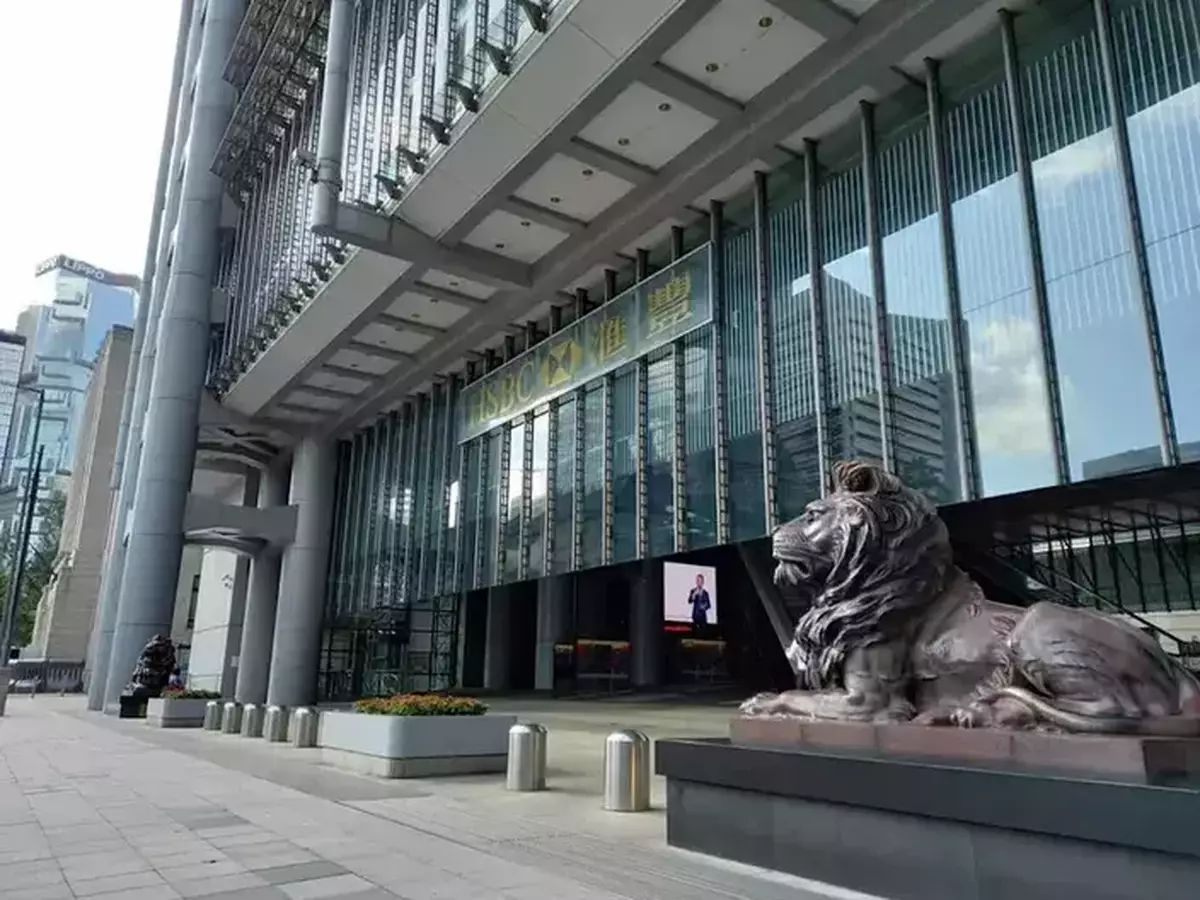
In recent years, HSBC has learned from its painful experience. It not only sold off its US operations, but also vigorously shrank its British and European businesses. Although its headquarters remains in London, its soul has already returned to Hong Kong and mainland China, the Asia-Pacific profit center.
Recently, HSBC spent HK$100 billion in real money to privatize Hang Seng Bank. At the time, there were some rumors in the outside world saying that because Hang Seng had suffered loan losses, HSBC Holdings wanted to cover up Hang Seng's accounts and privatize Hang Seng. I scoff at these analyses.
To say that HSBC would spend HK$100 billion to cover up its accounts is truly to underestimate the decision-making ability of this global bank.
I believe HSBC is optimistic about Hong Kong's development prospects, which is why it placed such a heavy bet, and it deeply understands Hang Seng's value. Through privatization, it can also merge part of the two banks' businesses and back-office management processes, maximizing synergies.
Privatizing Hang Seng is a low-risk, high-return move, and behind it is an assessment of Hong Kong's prospects. HSBC has taken an important strategic step in the right direction.
Why the Singapore AI Center Is a Strategic Error
Setting up an AI center in Singapore may look like small change. In reality, it does serious damage to HSBC's image of deep commitment to Hong Kong.
On the surface, the decision reads as a minor administrative move, made only to honor a pledge given when HSBC sold its Singapore business. But the decision completely ignores the negative signal behind the move.
Honoring the Singapore pledge would have been simple. Put a 100-person AI center in Singapore as the branch, and a 300-person AI center in Hong Kong as the trunk. That setup would fulfill the promise and spotlight a stance of keeping the development focus in Hong Kong and standing behind the city at all times.
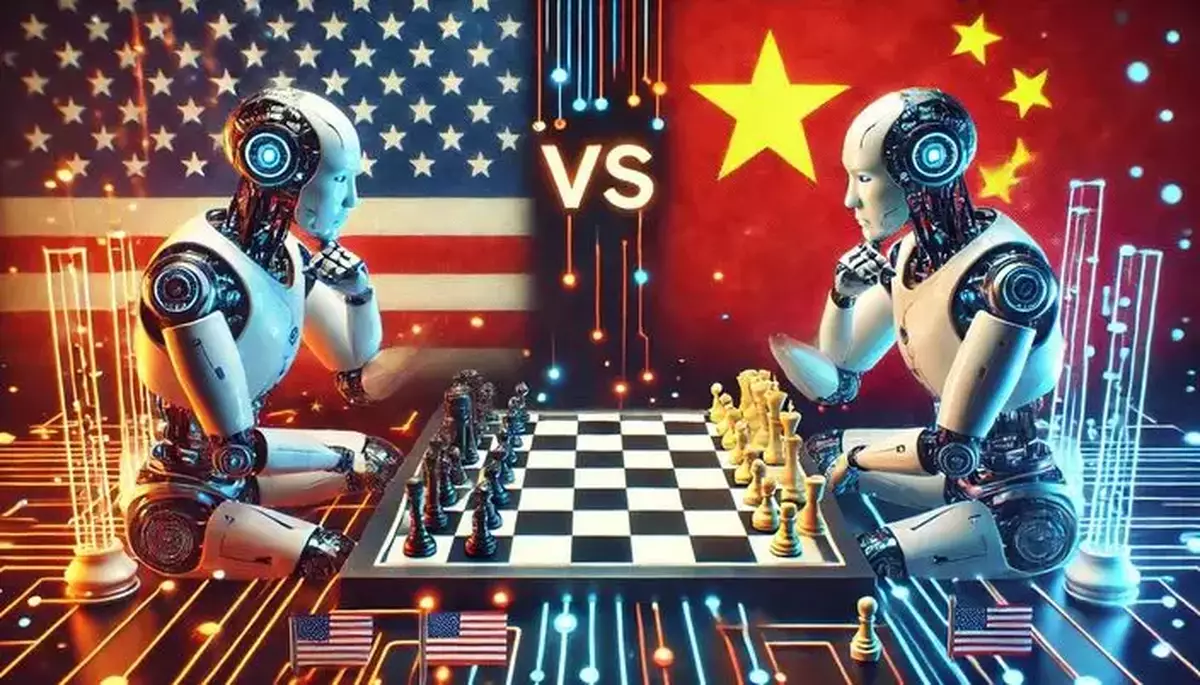
Some say Hong Kong simply cannot use the latest American models. Anthropic's Claude large model, for one, recently blocked even Hong Kong users who reached it through a VPN to bypass restrictions. On that logic, basing the AI headquarters in Singapore is only natural.
But the real issue is this: if HSBC Holdings were a small, faceless company, it would not matter where the headquarters sat. As one of Hong Kong's major note-issuing banks, it must be prudent in making these decisions.
Research suggests China's large AI models trail the American ones by just 3 percent. Dropping Anthropic's model for DeepSeek's would make little practical difference.
And if the true reason for siting the AI center there is to run American models in Singapore, a major security risk hides behind the plan.
Consider Huawei. During Trump's first term, his administration hit the company with heavy sanctions. Huawei had been running on Oracle's operating system, and at a stroke, Oracle dropped the business altogether and cut off Huawei's supply.
So in an era of high geopolitical risk, running a bank's critical operations on American large models is a gamble. The day they suddenly cut you off, you might not even be able to open customers' accounts. Make no mistake: that is a real security risk.
HSBC Must Choose: Repeat the 1990s or Secure Its Future
HSBC is a major Hong Kong bank. In this storm of global geopolitics, it can play neutral on the surface. The reality is that it must still make a choice to lay the foundation for its next century of business.
HSBC must firmly remember the lessons of its mistakes in the 1990s. It must not repeat them now.
Lo Wing-hung
Bastille Commentary
** 博客文章文責自負,不代表本公司立場 **